Car-Free Kea: A Cycladic Island Escape Near Athens
Just an hour from Athens, Kea...

© Shutterstock
Messolonghi holds a special place in the hearts of Greeks. Designated the Sacred City in 1937, it is forever linked with the Exodus of Messolonghi, when its starving residents, having resisted the Ottomans until the end, attempted a desperate escape from their besieged city. The tragedy stirred enormous support for the Greek cause across Europe. Delacroix’s famous painting immortalized the moment, amplifying the struggle on the international stage.
Messolonghi is home to the Garden of Heroes, a memorial garden of monuments and tombs honoring the heroes of the revolution and famous Philhellenes. The garden is the place most closely associated with the city and an essential stop for any visitor. But the Messolonghi experience is much broader.
For a town of fewer than 20,000 residents, Messolonghi has an outsized cultural footprint. The Battle of Lepanto – the 1571 naval battle between the Holy League and the Ottoman Empire and a significant victory for Christian Europe – was fought near the Echinades Islands, west of here. One of the Greek War of Independence’s most celebrated Philhellenes, Lord Byron, was drawn to Messolonghi, and it was here that he died. Prime Minister Harilaos Trikoupis changed the face of the nation with tremendous infrastructure projects like the Corinth Canal and new railroads (but he also had to declare the nation bankrupt). Trikoupi was also the first to envision the Rio-Antirrio bridge, now named after him. Finally realized over a century later, this impressive work of art and engineering is a highlight of the journey to Messolonghi for those travelling from Athens.
Originally located on the seaside, before the city’s expansion on the lagoon, the Trikoupis family’s grand home is now a museum (Alexandrou Mavrokordatou; Tel. (+30) 26310.262.83). The Palamas family were the Trikoupis’ neighbors, and the poet Kostis Palamas, who wrote the words for the Olympic Hymn, lived here as a boy.
The Museum of the History and Art of the Municipality of the Holy City of Messolonghi (1 Botsaris Square; Tel. (+30) 26310.221.34) features original paintings and reproductions (including Delacroix’s iconic image) commemorating the Exodus of Messolonghi, as well as a manuscript section dedicated to Lord Byron. The Diexodos Center for Literature and Arts (Ath. Razikotsika 25; Tel. (+30) 26310.512.60) houses a permanent collection of historic and religious artifacts, manuscripts, painting, and sculpture, many relating to the era of the Greek War of independence. The center also hosts temporary exhibitions and cultural events.
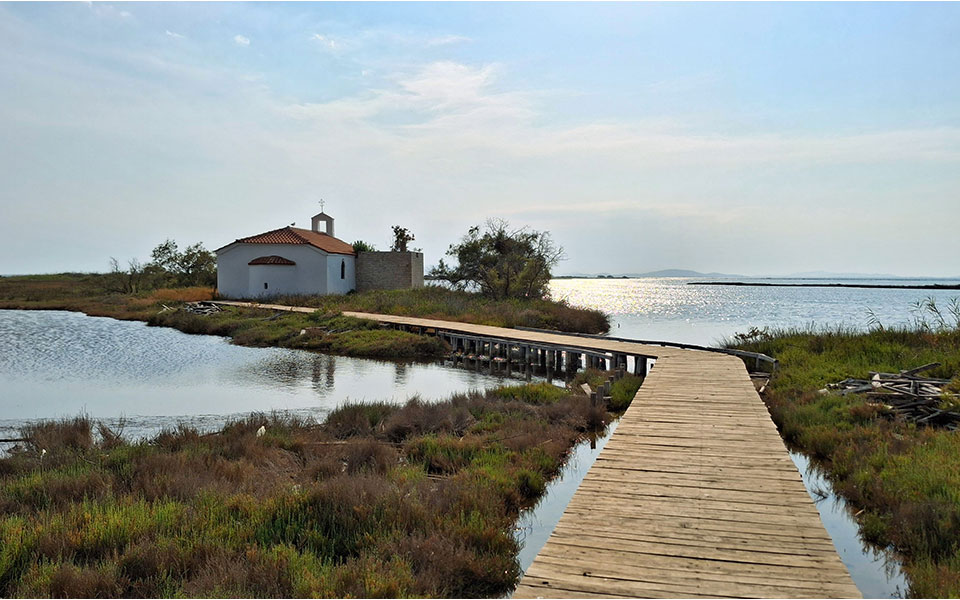
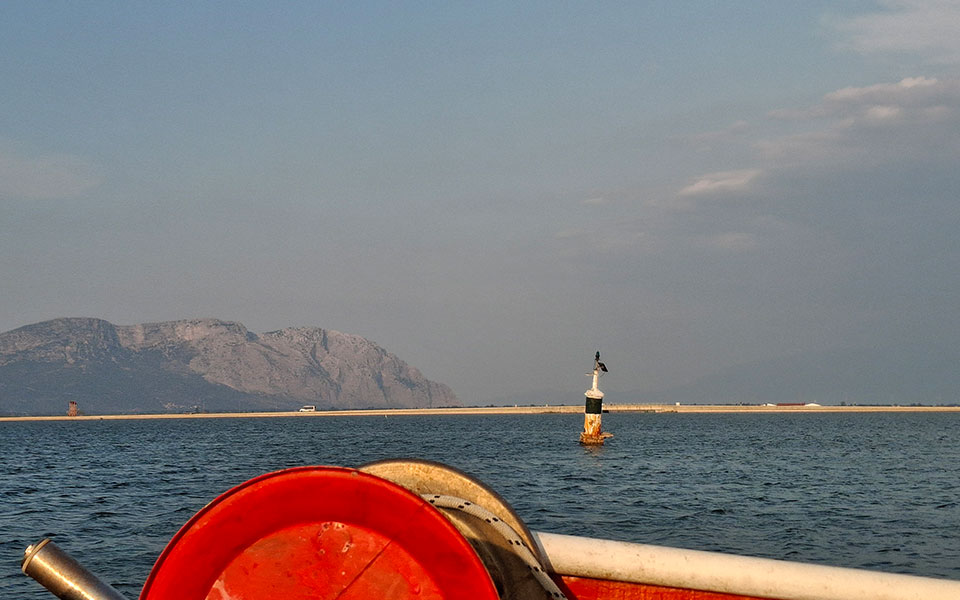
Messolonghi has one of the most unusual and dramatic settings in Greece. The small, flat town lies at the edge of the Klisova lagoon, part of the greater National Park of the Missolonghi-Aitoliko Lagoon, a 616,000-hectare protected biotope. With the deltas of the rivers Evinos and Acheloos, mudflats, saltmarshes, sand dunes, and hydrophilic forests, this is one of Europe’s richest wetlands, remarkable for both the diversity and abundance of its species. It’s also a fragile ecosystem, with large areas under complete protection. The region is part of the Natura 2000 network and is protected under the Ramsar convention.
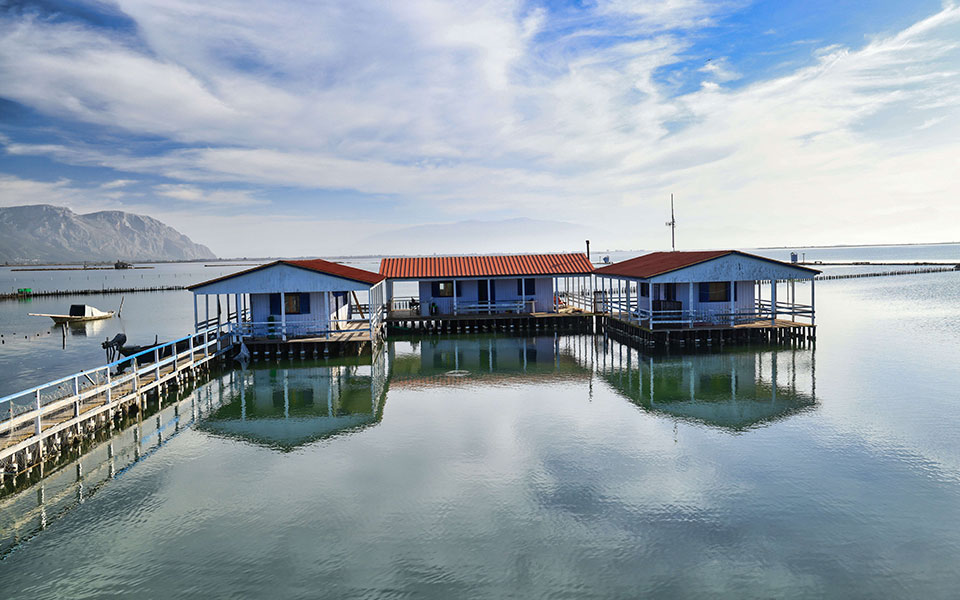
From the town, a narrow causeway leads through the lagoon to the tiny islet of Tourlida. Flamingoes and other waterbirds thrive here and are easy to spot along the way. Dotting the seascape are the colorful “Pelades,” traditional fishermen’s shacks suspended on stilts just above the surface of the lagoon. They’re reached by precarious suspended walkways over the lagoon or by boat.
Despite its size, Messolonghi has a huge personality. It’s a small spit of land jutting out into the lagoon, and the size is key to its appeal. Tourism infrastructure is minimal; there are very few places to stay, and the tavernas and cafes cater to the local community. The lagoon, with its light and tranquility, defines the Messolonghi experience. The vista is overwhelming at sunset, with the changing colors reflected on the usually glassy surface of the lagoon. The sense of remoteness, poised as the city is on the quiet edge of western Greece, is enchanting.
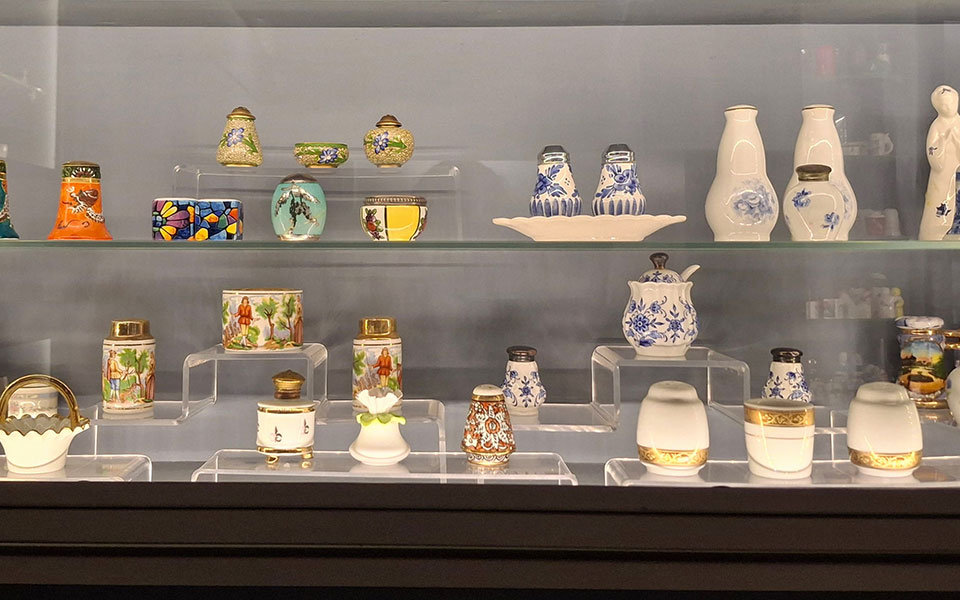
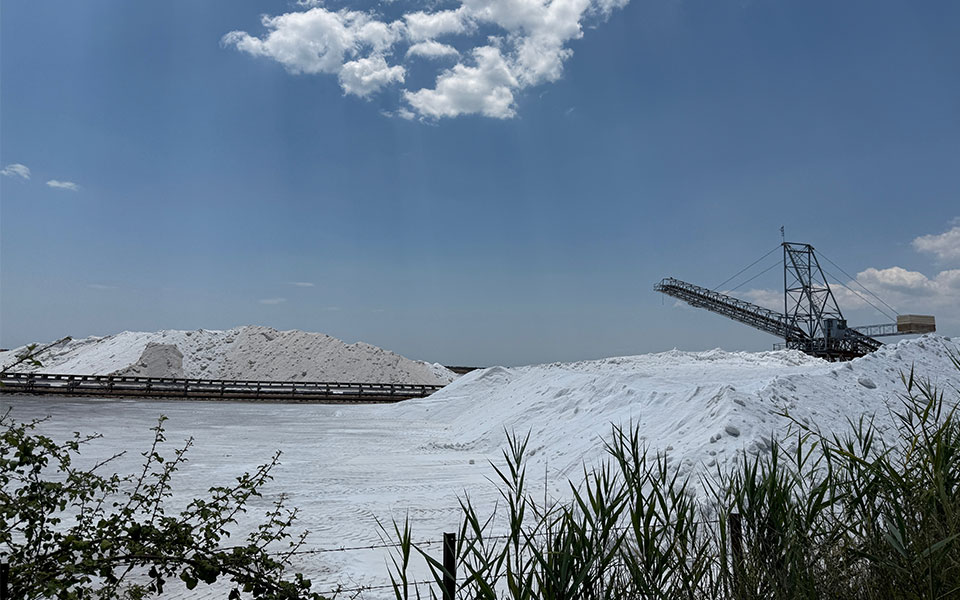
The culture of the Messolonghi-Aitoliko lagoon area is shaped by salt: salt pans, salterns, and white hills of salt sparkling in the sun. Much of Greece’s salt comes from this area. Salt has been central to the town’s fortunes, supporting generations of families. The salt is extracted naturally, as the summer breezes slowly draw the water from the salty lagoon. What remains is the prized glittering top layer – “afrina” – and more crystals of salt beneath. There’s an informative and also quite evocative museum dedicated to salt, founded by Mr. Nikos Kordosis and Ms. Despina Kanelli. The museum and its shop are located in the middle of the lagoon, in a former dormitory for salt workers. Visiting this unique museum brings the Missolonghi experience into focus (Tourlida; Tel. (+30) 26310.252.93; saltmuseum.gr).
The lagoon’s high salinity translates to especially delicious fresh fish. Here, kefali (flathead grey mullet), not particularly prized elsewhere, reigns supreme. The local preparation is “pasto”: simply cured with salt and cut into generous chunks, the better to preserve its buttery texture. Another great treat is rich, white-fleshed eel, split open and grilled. These two dishes are reason enough to visit Messolongi. But if you’re feeling flush, add some avgotaracho. Known internationally as bottarga, this pressed roe of the kefali, cured with local salt and dipped in pure beeswax to preserve it. Served in thin shavings, this local artisanal product, enjoyed all over Greece and prized abroad, tastes like the concentrated, slightly sweet, freshness of the sea. Enjoy it in one of the lagoon’s most atmospheric settings: Sunset Tourlida (Tourlida, Tel. (+30) 26310.253.60; tourlis.gr), among the reeds, boats and pelades.
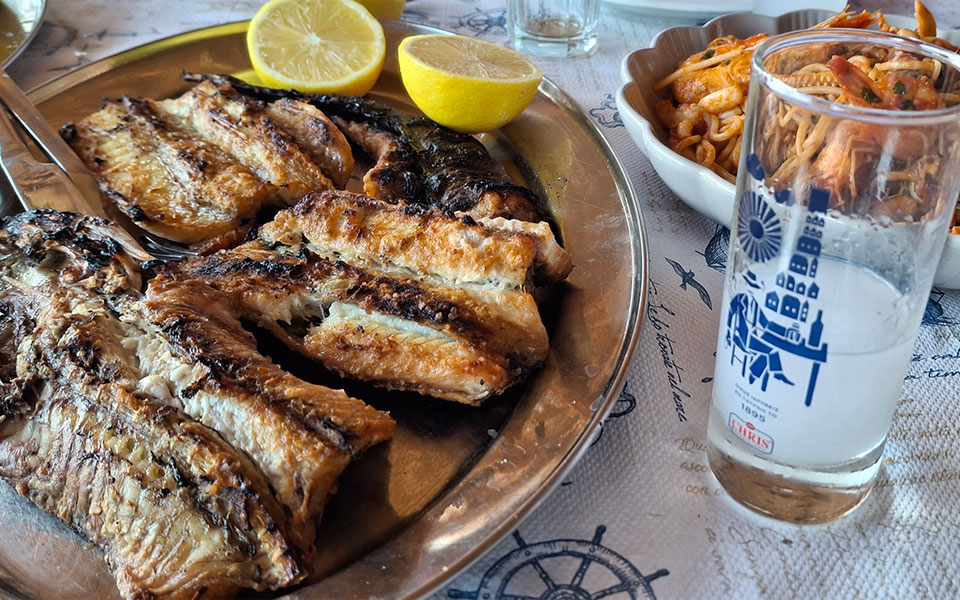
Ouzo is the perfect companion to Messolonghi’s excellent seafood. The label of choice here is Trikene (accent on the third syllable), bottled on a shady street in a historic space so picturesque it looks like a film set. The brothers Panos and Tassos Trikenes opened the distillery in 1901, using the deliciously anise-forward recipe of their grandfather, a shipowner from Kefalonia. The recipe and business have been handed down through the Trikene family for generations – a local treasured tradition.
Ouzo Trikene, located right in the center of town, has been a social hub since the day it opened, when the scent of anise drew patrons to the gorgeous large marble bar for a drink. Ioanna Trikene, the latest generation to run the family distillery, shares its story: “Until the 1970’s this was also an ouzerie, a meeting place for people from all walks of life to come together over a glass of ouzo and some meze. These small circles, deeply etched in the top of the marble bar, they’re from the vinegar that was used to clean the glasses – a record of sociable afternoons of the past.”
The smooth blend, distilled with aniseed, star anise, fennel, and coriander, goes down easily. The Trikene family also makes some very tasty liqueurs: colorful rose, mint, or banana, and a clear mastica or triple sec. It’s a great treat to stop by a place that so beautifully preserves the past and is so alive today (Trikene; Dimitriou Makri 12, Tel. (+30) 26310.222.70; trikene.gr).
“Messolonghi has the most bikes per capita of any place in Greece,” says Aris Souflis of Escape Bikes. This is no surprise: with such perfectly flat, smooth roads, and relatively few cars, Messolonghi is made for biking. Escape Bikes (Grigoriou liakata and Varnakioti; (Tel. (+30) 694.800.5537) rents bikes of all kinds, equipped with helmets and bike chains.
In summer, Tourlida beach, a long spit of sand in the calm waters of the lagoon, makes for good swimming. When it’s still warm enough, locals might seek out the mineral-rich mud baths of Aghia Triada, Tourlida, and Foinikia. Birders will be happy any time of year, but the peak migration seasons of autumn and spring are particularly fine. With such a long golden autumn and mild winters, Messolonghi makes a fine destination in the cooler months, with the lagoon reflecting the dramatic winter skies. At any time of the year, whether for a glass of ouzo, superb local fish meze, or grilled fish fresh from the lagoon, you can do no better than Messolonghi.
Just an hour from Athens, Kea...
A challenging summer ride across the...
Without noise or concrete, the Old...
From ancient healing sanctuaries to legendary...