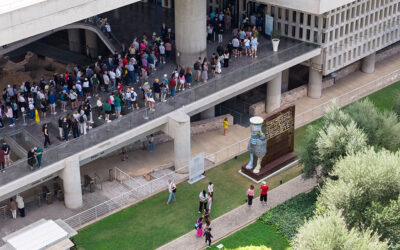
A New and Exotic Visitor at the Acropolis…
Michael Rakowitz’s acclaimed “Lamassu of Nineveh…

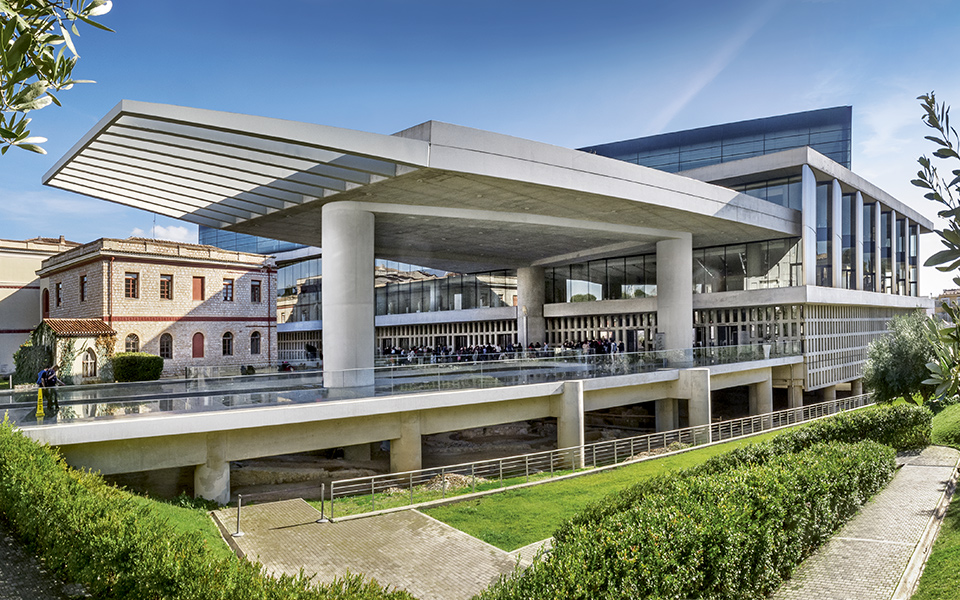
The Acropolis Museum, designed by Swiss architect Bernard Tschumi and his Greek collaborator Michael Photiadis, was opened to the public on June 20, 2009.
© Giannis Giannelos
Acropolis Museum Birthday Celebration
Acropolis Museum, 15 Dionysiou Areopagitou, Tel.: (+30) 210.900.0900
Sunday, June 20, 08:00-20:00
The general admission fee (5 euro for this particular day).
Health protection measures It is necessary to wear a protective mask (not provided by the Museum) and to use the whisper guide system headsets (provided by the Museum).
Marathon-Salamis: In Traces of Myth and History
English: 10.00 & 14.00
Greek: 12 noon, 16:00 & 18:00
To register for the interactive presentation, please refer to the Information Desk at the Museum entrance on the same day. First-in first-served. Limited to 8 visitors per session.
Following the Museum’s birthday, the thematic presentation will be offered to Museum visitors every Friday and Sunday.
This Sunday, June 20, marks 12 years since the the opening of the Acropolis Museum in Athens. To celebrate, the museum will be open from 8:00 to 20:00 with a reduced entry fee (5 euros) to all exhibition areas, and visitors will have the opportunity to participate in a brand new interactive presentation on the Persian Wars (499–449 BC), “Marathon-Salamis: In Traces of Myth and History.”
The format of the presentation will involve museum archaeologists discussing the significance of the wars on subsequent Greek and world history while fielding questions from the public. Themes will include the impact of the Greek victories at the battle of Marathon (490 BC) and the naval battle of Salamis (480 BC) on the consolidation of Athenian democracy, the different psyches of the Greek and Persian combatants, the role of the gods, the destruction of the Acropolis, and its rebirth in the subsequent classical era.
Visitors and archaeologists will further discuss how these themes are presented among the exhibits in the museum.
Available in both Greek and English, the presentations are limited to 8 visitors per session on a first come, first served basis, and will continue after the Museum’s birthday, offered to the public every Friday and Sunday.
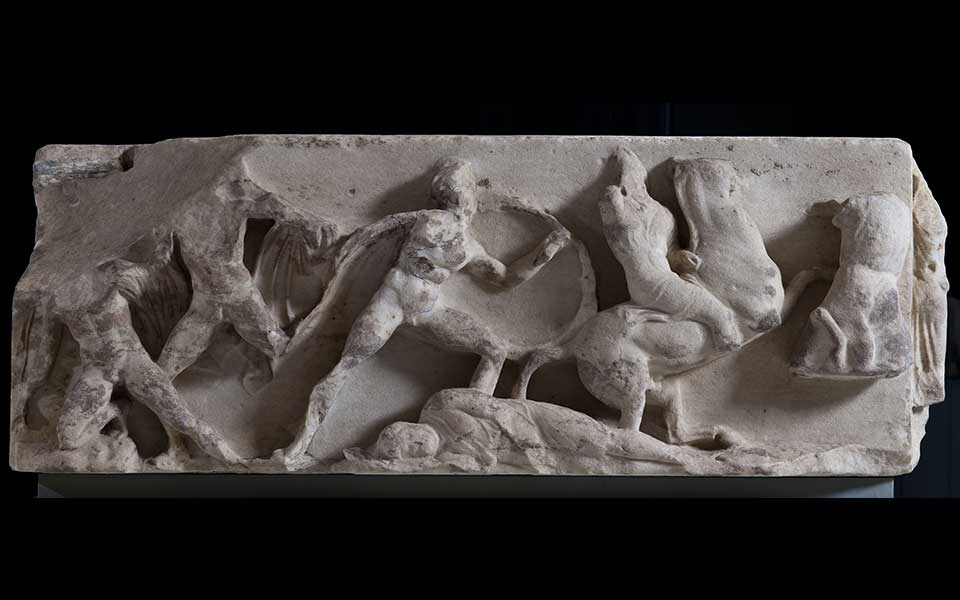
Corner block "a" of the south frieze of the Temple of Athena Nike (Ακρ. 18135) depicts Greek hoplites in pursuit of a Persian cavalryman, a scene from the battle of Marathon.
© Acropolis Museum / Hellenic Ministry of Culture
In a year that has been like no other, challenging for both the Greek tourism and cultural heritage sectors, the world-famous museum closed its doors to the public last November due to the Covid-19 pandemic, reopening again on May 14.
Making the most of the enforced lockdown, museum staff, under the directorship of Dimitrios Pandermalis, seized the opportunity to catch-up on maintenance and restoration projects, and make further additions to the permanent exhibition, inlcuding an excavation gallery showcasing the ancient Athenian neighborhood located below the museum building, the Makrigiannis plot.
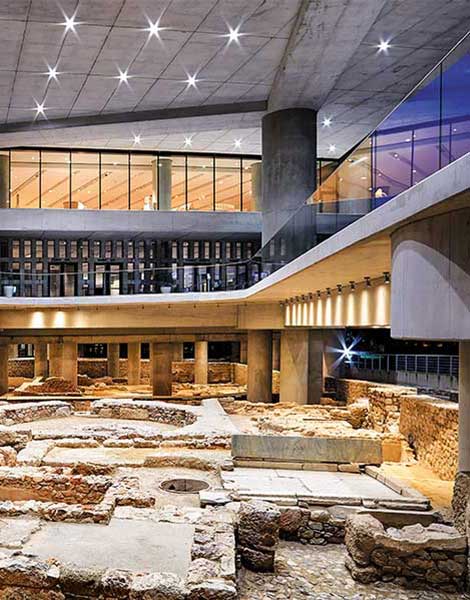
The excavation site of the Makrigiannis plot, including remnants of an Early Byzantine neighborhood, lies beneath the Acropolis Museum.
© Giorgos Vitsaropoulos
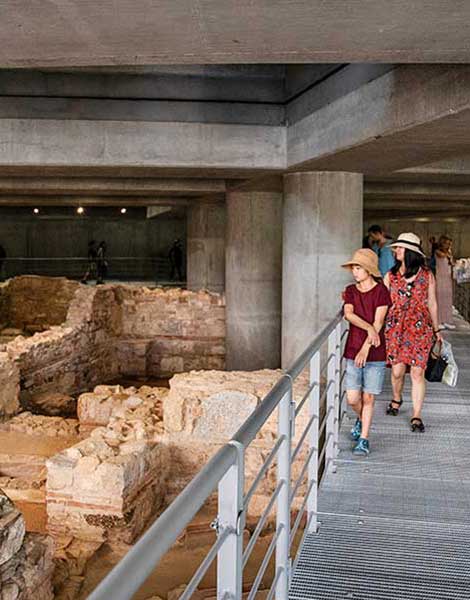
Walkways allow visitors a close-up view of the ancient houses, baths and workshops.
© Reuters/Alkis Konstantinidis
At the end of last year, the museum announced that it had undertaken a comprehensive digitization project, becoming the first museum in Greece to go fully digital. Showcasing exhibits in high definition alongside an array of multimedia applications, the website provides detailed information on 2,156 artifacts in the museum’s permanent collection, as well as a dedicated website for children, the Acropolis Museum Kids.
Since its opening in the summer of 2009, the museum has drawn international praise and awards for its visitor-friendly design and innovative exhibitions, offering an in-depth look at the history of the Sacred Rock and the development of ancient Athenian culture.
Housing over 4,000 exhibits, inlcuding masterpieces of Archaic and Classical Greek art, the Acropolis Museum is widely regarded as one of the best museums in the world, welcoming well over a million local and international visitors each year.
In the purpose-built Parthenon Gallery on the third floor, ceiling-high glass walls offer uninterrupted views of the nearby temple and of Athens. Housing the Parthenon’s sculpted friezes and metopes in sequence, the gallery further presses the case for the reunification of the marbles currently on display in the British Museum.
Michael Rakowitz’s acclaimed “Lamassu of Nineveh…
The removal marks a rare moment…
Join archaeologists on a journey through…
Fresh polling shows growing UK support…


