
Echoes of Blood: The Murders That Shaped Thessaloniki
From the fall of a monarch...

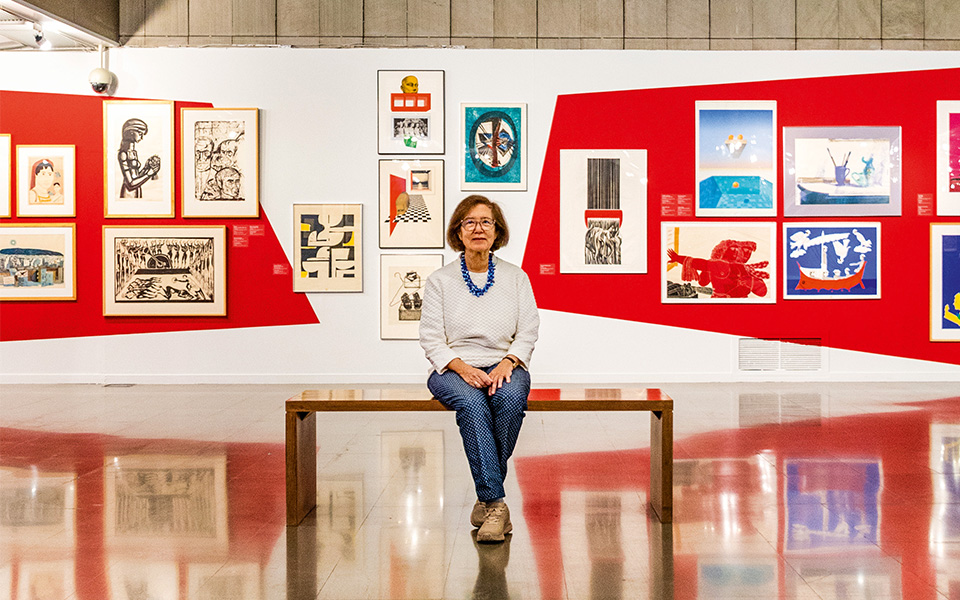
Alexandra Goulaki-Voutyra
© Perikles Merakos
Director, Teloglion Foundation of Art, Aristotle University of Thessaloniki
“For me, the city is Dinos Christianopoulos’s short stories. I had read them when I was younger, but now, through the exhibition ‘Techni – Diagonios and the Museum That Never Came to Be’ I returned to them with the maturity to truly understand what he was talking about.”
Christianopoulos (1931-2020) was one of Thessaloniki’s most distinctive literary figures – a writer of poetry and prose, and the founder of Diagonios, the legendary postwar magazine and cultural circle that nurtured an entire generation of northern Greek artists and intellectuals. Alongside Techni, the city’s pioneering art association founded in the 1950s to promote contemporary Greek art, Diagonios helped shape Thessaloniki’s modern cultural identity.
Voutyra remembers the 1970s, when these two institutions defined the intellectual life of the city. “Every Tuesday there was a lecture at Techni, in a small hall on Komninon Street. Afterwards we’d go to Diagonios, in the arcade between Mitropoleos and Tsimiski. There you were welcomed by Christianopoulos himself, standing before portraits of Cavafy and Tsitsanis, and he would personally guide you around, eager to introduce you to the city’s future, its young artists.”
The exhibition “Techni – Diagonios and the Museum That Never Came to Be,” at the Teloglion Foundation of Art in Thessaloniki until February 10, 2026, celebrates the foundation’s 25th anniversary and revisits that vibrant era when the city’s cultural scene was being redefined through dialogue, experimentation and friendship. Voutyra believes Thessaloniki has always had this spirit because it is, above all, a city of youth. “You see young people in the streets, sometimes joyful, sometimes angry, and you know that they are the source of its rhythm and its energy.”
For her, Thessaloniki is also the music of Aimilios Riadis, which she first encountered as a student at the State Conservatory, as well as long walks along the seafront and through Ano Poli. “Thessaloniki is a city made for walking – from monument to monument, from its Byzantine churches to its archaeological sites and museums. But with scarce parking, crowded pavements and constant noise, visitors are often deprived of the simple pleasure of exploring it on foot.” She acknowledges, however, that the city has improved greatly in recent years. “The entire waterfront has been redesigned with new thematic parks, and Ano Poli, too, has become more accessible. The city’s markets have been beautifully restored. Yet progress must go hand in hand with balance; I sometimes fear that authenticity is slipping away.”
She closes our conversation with an image that, for her, captures Thessaloniki’s enduring allure: “The city has been portrayed countless times in Greek art, in every style and medium, yet the subject is always the same. Ιts sunset.”
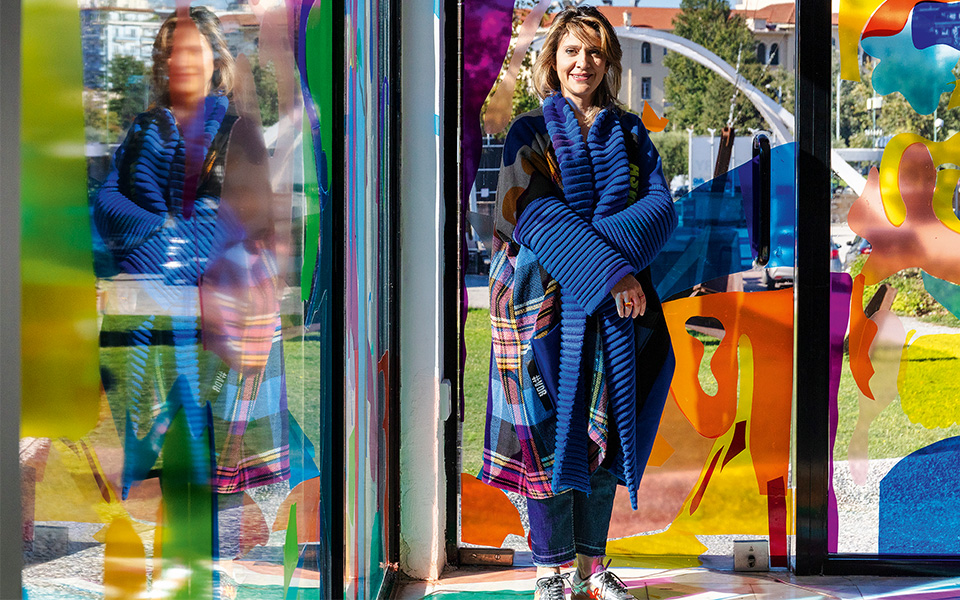
Thouli Misirloglou
© Perikles Merakos
Artistic Director, MOMus – Museum of Contemporary Art
For Thouli Misirloglou, the small 14th-century Byzantine Church of Aghios Nikolaos Orphanos, perched on the edge of Ano Poli, remains a personal refuge. “Its exquisite frescoes and the lovely garden with its orange trees help you shut out the city’s noise and gather your thoughts.”
When asked to choose works that capture Thessaloniki, she pauses. There are, she says, easy and obvious ways to answer – but the city’s memory runs deep, layered with stories that can’t simply be left out.
If Thessaloniki were a film, she says, it would be “Salonika, Nest of Spies” (1936) by Wilhelm Pabst. “For some reason, it still feels like a compelling reference – though it isn’t really about Thessaloniki, it captures a fragment of its character, seen from a slightly off-center angle.”
If the city could be revealed through the pages of a book, her choice would be “Salonika: City of Ghosts” by the British historian Mark Mazower. “Mainly because it prompted us to look at major parts of our own history, such as the Holocaust and the story of the city’s Jews, through the prism of trauma.”
And if Thessaloniki could be translated into color, it would have been painted by the self-taught artist Nikos-Gabriel Pentzikis. “Because his subjects reflected the many layers and meeting points that compose the city.”
She believes Thessaloniki is changing – not only in terms of infrastructure, but also in its intentions and self-image. What could truly support this transformation, she says, would be for people capable of formulating a shared vision to sit together and shape a coordinated plan for how to make the best use of the city’s potential.
“There should be a clear calendar of Thessaloniki’s major cultural events,” she adds. “It would help both residents and visitors plan what they want to see – rather than discovering things by chance at the moment they happen.”
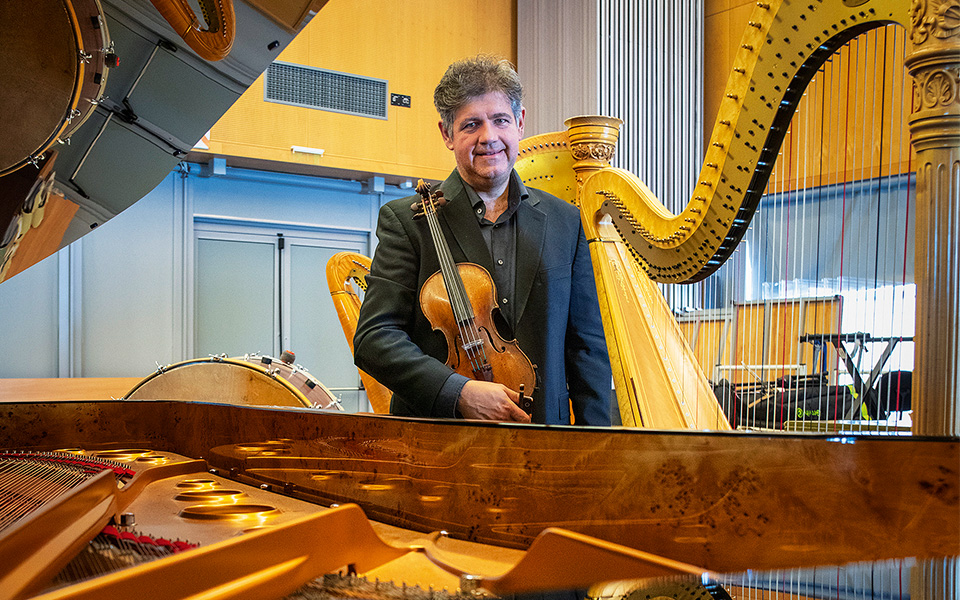
Simos Papanas
© Perikles Merakos
Director, State Orchestra of Thessaloniki
Raised in the leafy suburban village of Filiro overlooking Thessaloniki, Simos Papanas believes that all you need to grasp the city’s long and often contradictory history is to walk through it. “Even if you know nothing about it, history will find you on every street. In the center, among postwar modernist apartment blocks, you come across Roman ruins, Bauhaus details, Art Nouveau façades, Byzantine churches and eclectic buildings – testimonies to the city’s many layers of influence. In Ano Poli, you’ll meet its Balkan soul and the legendary walls built by Emperor Theodosius the Great as an act of repentance for the massacre of Thessalonians in the Hippodrome in AD 390.”
“Every step here,” Papanas says, “carries a historical weight that can transport you, without warning, from past to present, from East to West.”
His favorite spot is the Byzantine Bath in Ano Poli, known as the Koule Hamam. “This bathhouse, part of a tradition from the Roman era that survived through Ottoman times, bridges different periods of the city’s history.”
If Thessaloniki were a song, it would be “Jasmines and Minarets” (“Giasemia kai Minaredes”) by Aimilios Riadis, the Thessaloniki-born composer (1880-1935) often described as the “Schubert of Greece.”
If Papanas could change one thing, it would be the way his fellow citizens treat public space. “Because of my work, I travel constantly, and nowhere else is graffiti so out of control. Here it’s no longer about creativity but about the idea that anyone can grab a can of paint and scribble whatever they like, wherever they like.”
Another welcome change is already underway; Papanas is looking forward to the day when the State Orchestra will finally have a permanent home, sharing space with the Kostakis Collection in the historic former FIX brewery complex, now undergoing renovation.
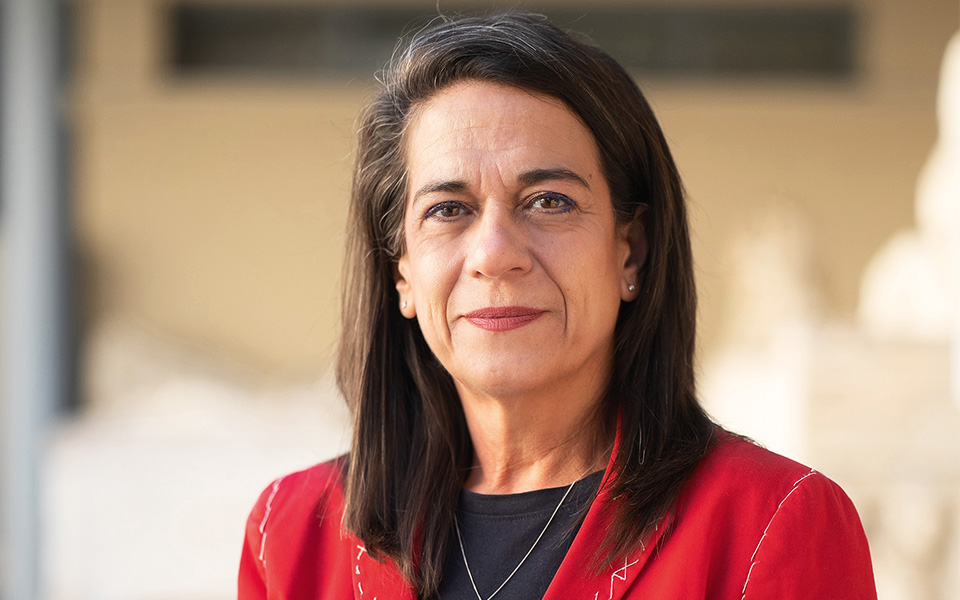
Anastasia Gadolou
© Yannis Gutman
Director General, Archaeological Museum of Thessaloniki
“Thessaloniki is the image that unfolds before your eyes as you approach the shore from the sea. If you set off in a small boat from Karabournaki toward the city center, the splendor of the city reveals itself: the walls, Ano Poli and the Eptapyrgio.”
Having grown up in Patras, she is well acquainted with open seascapes, yet what she finds unique about Thessaloniki is the way the city seems to rise above the water, built in layers that connect land and sea.
She finds it difficult to name a single place that inspires or calms her, yet she speaks with genuine passion about an orchestra. “I feel uplifted every time I attend a concert by the State Orchestra of Thessaloniki, whether at the Concert Hall, in the Ceremonial Hall of the Aristotle University, or in the foyer of the Archaeological Museum, where once a month they perform chamber music.”
Thessaloniki is known for its unhurried pace, yet she would like to see a little more momentum. “If I could change one thing, it would be the pace at which things move forward,” she says. She would also love to see the museum’s surroundings upgraded. “Ideally, I would want an extension to display more of our collection’s unique finds, which are now confined to a very limited space.”
The object that best symbolizes Thessaloniki for her is a marble base inscription preserved in the Archaeological Museum. It’s part of a pedestal bearing statues of Philip II’s family, dating to the 2nd century AD. The inscription reads: “Thessalonike, daughter of Philip, Queen.”
“I associate it with the city because it bears the name of the woman from whom the city itself took its own.” Thessalonike, daughter of Philip II and the Thessalian Nicesipolis of Pherae, and half-sister of Alexander the Great, married Cassander, the founder of the city, who named it after her.
The inscription is displayed in the gallery dedicated to the city’s Roman past. “For me, it’s the most profound link between Thessaloniki and its history; a tribute to its queen, about whom we know so little.”
From the fall of a monarch...
From historic landmarks to edgy street...

Major infrastructure projects, a significant urban...
From ancient healing sanctuaries to legendary...