Evangelos Gerovassiliou: In Love with the Vineyard
The Thessaloniki-born winemaker welcomes us to...

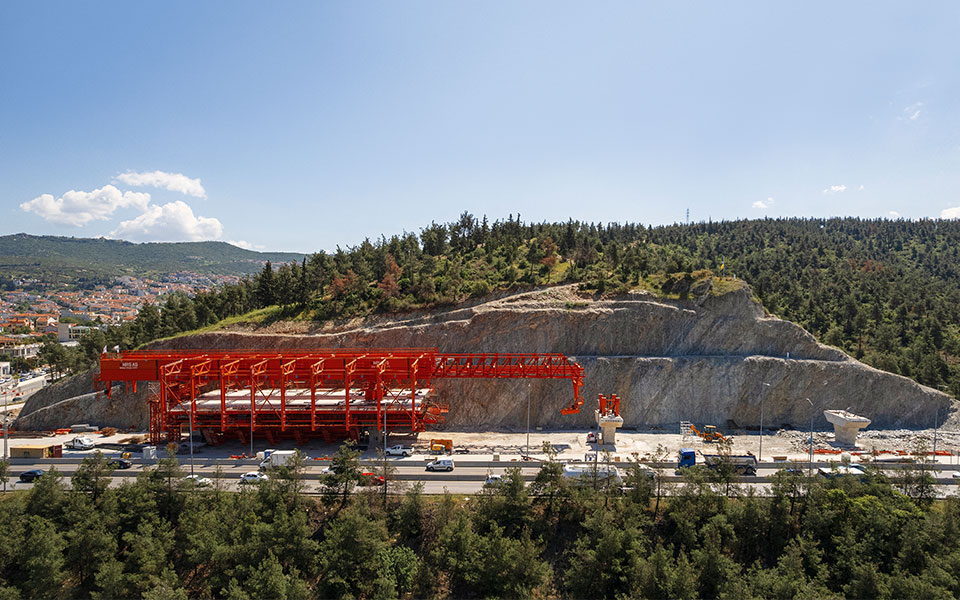
Construction is already underway on the city’s Flyover project.
© Konstantinos Tsakalidis
Anyone driving along Thessaloniki’s ring road these days can witness first-hand the impressive progress of the Flyover project, a new elevated expressway that will double the capacity of the city’s main traffic artery. Scheduled for completion by May 2027, the Flyover is designed to handle up to 10,000 vehicles per hour and is expected to significantly ease congestion in and around the city.
For now, however, traffic woes persist, especially during the morning rush. But at least drivers won’t be waiting decades, as they did for the city’s long-anticipated metro system, which is finally delivering results. Almost a year after the inauguration of the main metro line, Thessaloniki is finally beginning to reap the benefits of this long-awaited project.
The numbers speak for themselves: in its first ten months of operation, the Thessaloniki Metro recorded 22 million validated tickets, proving that many residents are already using it daily, reducing car traffic across the city. The metro isn’t just easing traffic; it’s revitalizing entire neighborhoods. Along Delfon Avenue, east of the city center, three new stations – Efkleidis, Fleming, and Analipsi – have sparked renewed activity, and property values there have soared in response.
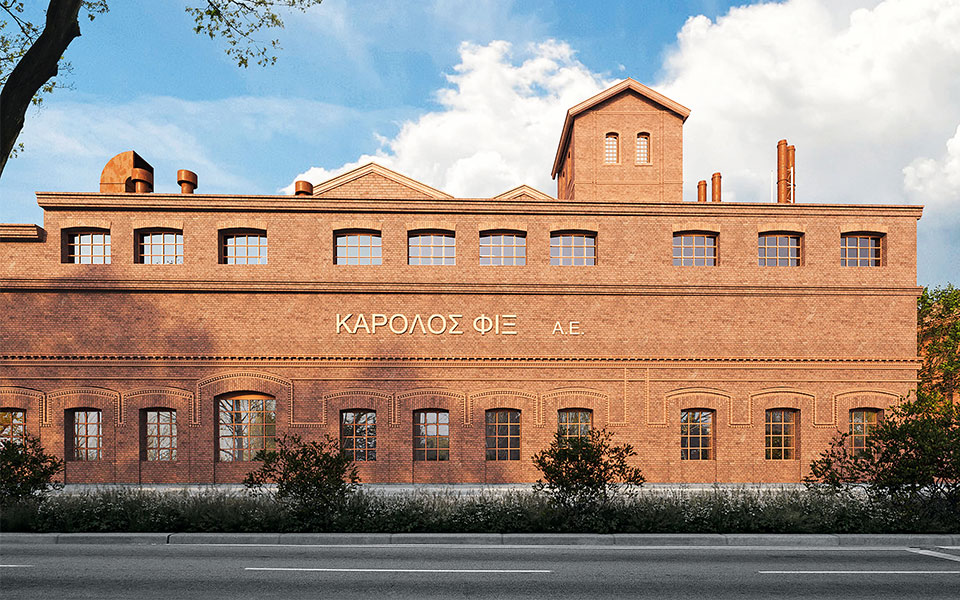
The old FIX brewery is set to become a museum space for the Costakis Collection.
According to Bank of Greece data, apartment prices in Thessaloniki rose by an average of 7.3% in the second quarter of 2025 compared to the same period in 2024, outpacing even Athens, where property values increased by 5.9% over the same time frame.
The forthcoming metro extension to Kalamaria, with five new stations expected to open by late March 2026, is also energizing the city’s eastern side. Meanwhile, despite the lingering presence of “For Rent” signs on central streets such as Tsimiski and Mitropoleos, Thessaloniki’s urban core appears to be experiencing a revival.
New retail chains are opening, new hotels are joining the city’s hospitality scene – among them the recently launched NYX and a new five-star Electra Group property under construction near the YMCA – and new commercial pockets are emerging. Egnatia Street, which for two decades was hidden behind metal sheets and construction dust from the metro works, is thriving again. Around the Church of the Acheiropoietos, near the Aghia Sofia and Venizelou stations, a lively new food and café scene has also sprung up.
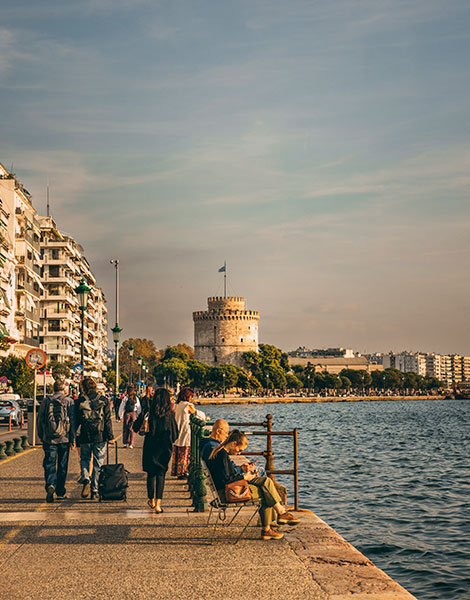
Work has begun on expanding the Old Waterfront.
© Olga Deikou
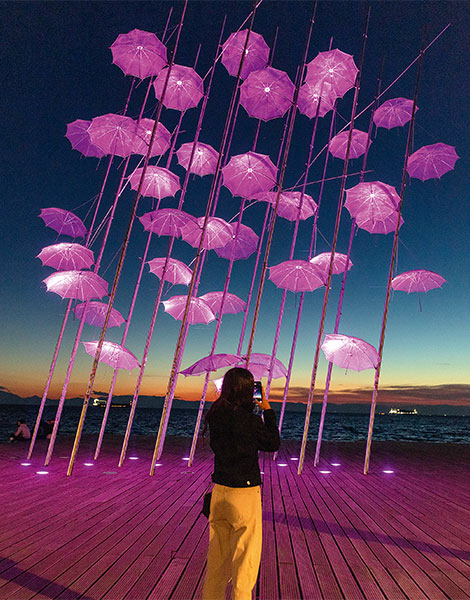
The artwork “Umbrellas” by sculptor George Zongolopoulos, an iconic presence on the New Waterfront, has been removed temporarily for conservation work.
© Perikles Merakos
Beyond the metro, Thessaloniki’s resurgence is also being driven by a series of smaller-scale projects that promise to make the city more beautiful and boost its economic growth even further. Eleftherias Square is set to be transformed into a Memorial Park honoring the victims of the Holocaust, and the redevelopment of the Aristotelous Axis is awaiting final approval. Major changes are also in store for Thessaloniki’s seafront.Work is progressing on the creation of an additional deck along the old promenade on Nikis Avenue. The quay stretching from the White Tower to the port will resemble a “ship” moored along the old waterfront: a boardwalk extending 12 meters over the water and stretching 1.1 km in length. The project includes a new bicycle lane and a tactile path for the visually impaired. Once completed, it will allow residents and visitors to enjoy their stroll along the city’s historic waterfront without the current congestion of pedestrians, cyclists and scooters sharing a narrow strip of land.
If the famous work “Umbrellas” by sculptor George Zongolopoulos is on your list of Thessaloniki must-sees, you might be disappointed to find it missing – for now. The 13-meter-high, stainless steel sculpture, one of the city’s most iconic and most photographed landmarks, has been taken to Athens for restoration. Originally installed on the New Waterfront in 1997, when Thessaloniki was the European Capital of Culture, the work has endured harsh winds as well as the weight of countless love locks that couples used to hang from its rods – a romantic habit that had to be stopped to preserve the sculpture.
Just west of that spot, another major infrastructure project is advancing along the seafront: the redevelopment of Thessaloniki’s commercial port, a €180 million investment that includes the expansion of Pier 6. Once completed, the port will be able to accommodate the largest mainline container ships, significantly enhancing its competitiveness in the global market.
Plans are also in motion to pedestrianize the southern section of Aghia Sofia Street, which will make that central area more welcoming to walkers.
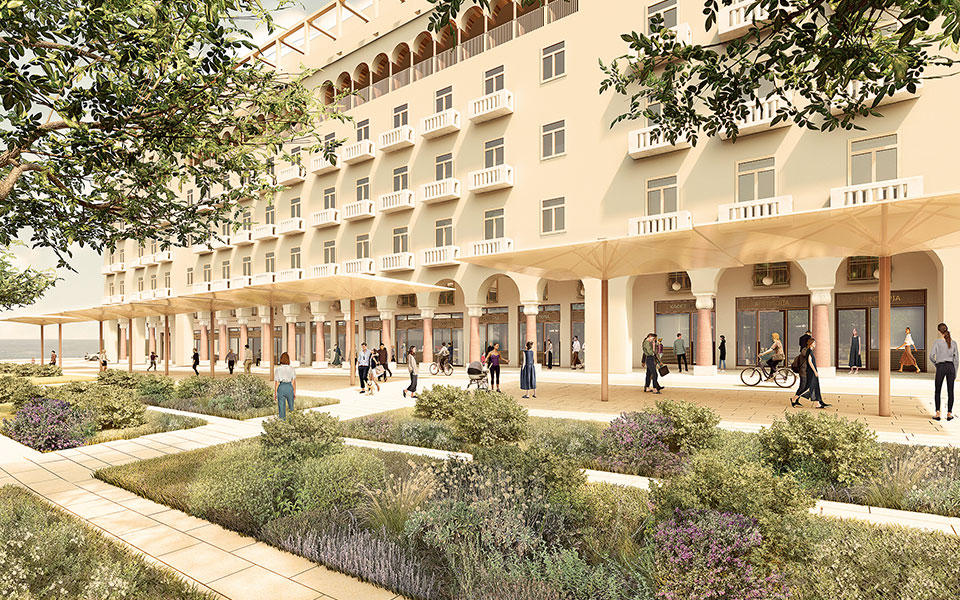
Aristotelous Square, the central hub of the city, is undergoing renovations.
Alongside Thessaloniki’s urban transformation, the past three years have also brought a remarkable cultural awakening. The Thessaloniki International Film Festival continues to shine as the city’s flagship event, drawing audiences and artists from around the world. Also on the city’s annual calendar is the Dimitria Festival, Thessaloniki’s oldest cultural event. With international collaborations – such as this year’s partnership with composer Goran Bregović – and bold performances such as last year’s Tiger Lillies concert at the Olympion, the festival is once again drawing crowds from across Macedonia and the Balkans.
The most significant recent development, however, came in mid-October, when Minister of Culture Lina Mendoni announced a major cultural milestone: the Kostakis Collection, a treasure trove of 1,275 works of Russian Avant-Garde art, some of which are currently displayed at MOMus–Museum of Modern Art, will soon be permanently housed in the historic S2 building of the former FIX brewery complex. The venue will also host the State Orchestra of Thessaloniki.
“The permanent exhibition of the Kostakis Collection will help transform Thessaloniki into a cultural destination of international importance, as the Russian Avant-Garde is one of the most influential artistic movements of the 20th century,” says Epaminondas Christofilopoulos, president of MOMus.
At long last, Thessaloniki seems ready to make the most of its cultural legacy; hopefully, it will continue to do so. After all, it takes more than infrastructure to make a city bloom.
The Thessaloniki-born winemaker welcomes us to...
A living portrait of Olympou Street,...

From the fall of a monarch...
A Thessaloniki expert selects 13 spots...