A Summer Visit to the Acropolis: What Tourists...
Tourists share the highs and lows...

© Stelios Papardelas
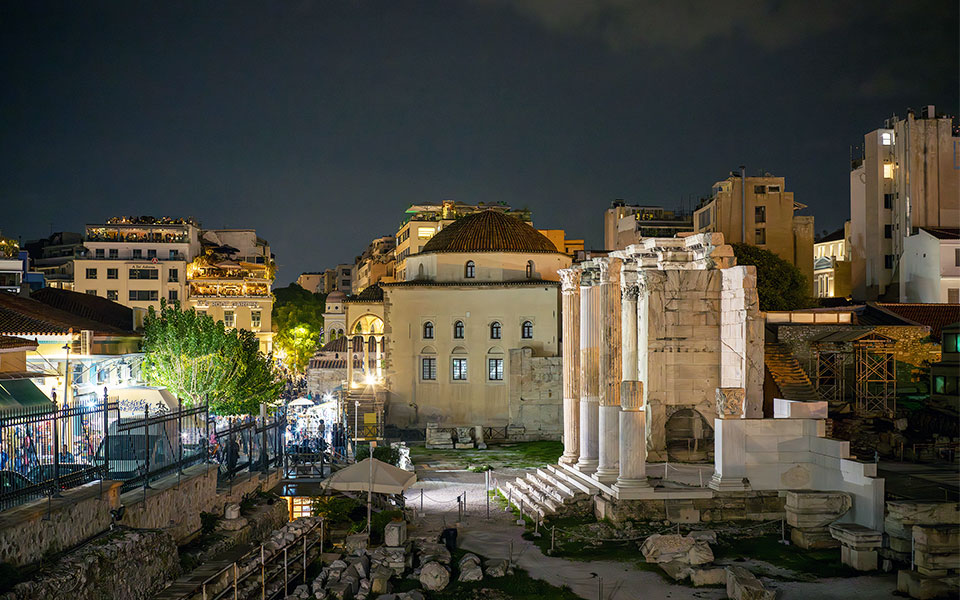
In June 1456, the Ottoman army captured Athens. For nearly four centuries, until the Greek Revolution of 1821, the city was filled with mosques, hammams, markets, madrasas, coffeehouses and mansions built in the Ottoman style. With the founding of the modern Greek state and the renewed emphasis on the country’s ancient past, much of this architectural legacy was erased. Neoclassicism prevailed, and buildings that did not align with the emerging national narrative were dismissed as expendable or unfashionable.
The themed walk “A Guided Tour of Ottoman Athens” traces the surviving monuments of the era, from the Benizelos Mansion – the city’s oldest preserved residence, with its ontas and sachnisi – to the Hammam of Abid Efendi and the Bathhouse of the Winds, a public bath from the early Ottoman era that remained in use until 1965. The route continues to the Medrese, where Arabic, Turkish, and Persian were once taught, and the Fethiye Mosque, a rare and eloquent example of Ottoman architecture in Greece. The walk concludes at the Tzistarakis Mosque, set in the heart of the former Lower Bazaar, today’s Monastiraki Square. Xenia Georgiadou
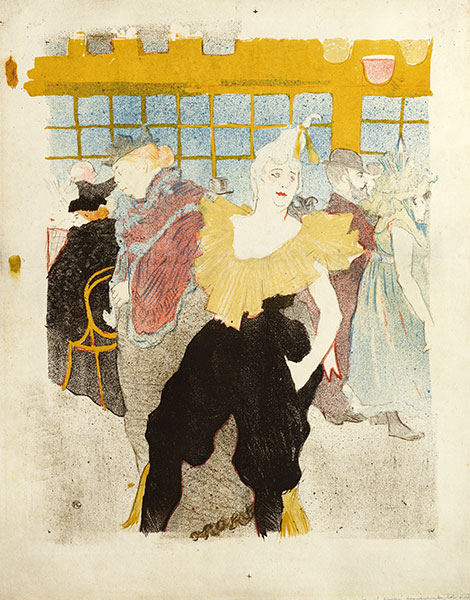
Henri de Toulouse-Lautrec (1864-1901), The Clowness at the Moulin-Rouge, 1897.
© Chris Doulgeris
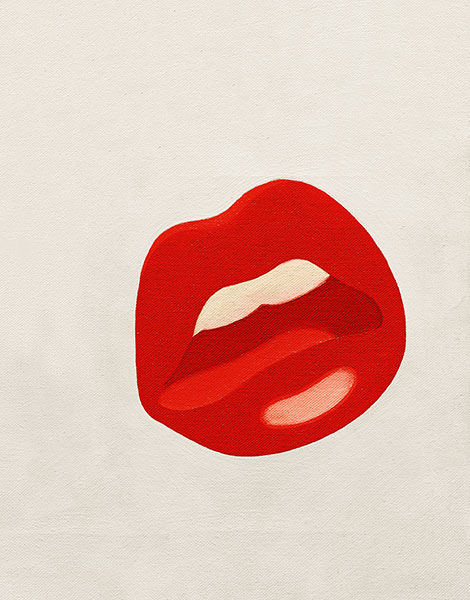
Tom Wesselmann (1931-2004), Mouth Study for Minneapolis Catalogue Cover, 1968.
© Chris Doulgeris
The new temporary exhibition at the Basil & Elise Goulandris Foundation, “From Monet to Warhol. Three Generations, One Collection, A Journey Through the Evolution of Modern Art,” presents 83 masterpieces by 45 leading international artists, drawn from a landmark European private collection. Visitors will have the opportunity to explore more than twelve artistic movements ranging from Impressionism to Pop Art and spanning approximately 130 years of creative expression. Among the featured artists are Bonnard, Chagall, De Kooning, Kandinsky, Magritte, Monet, Matisse, Picasso and Warhol.
The exhibition, curated by Marie Koutsomallis-Moreau, Head of Collections at the B&E Goulandris Foundation, and Marina Ferretti, Scientific Director Emerita of the Musée des Impressionnismes Giverny, offers a compelling journey through pre-war and post-war Modern Art. Xenia Georgiadou
To 11/04/2026 Basil & Elise Goulandris Foundation 3 Eratosthenous goulandris.gr
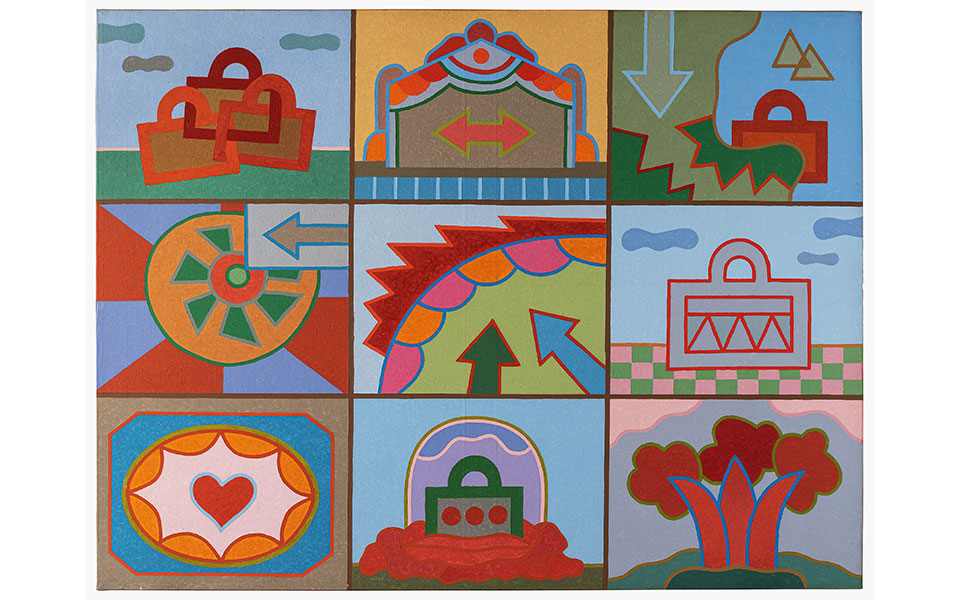
Alexis Akrithakis, Nine stories, 1973
© Photo by Boris Kirpotin © The Estate of Alexis Akrithakis. In partnership with ROLEX
“I remember that when I wanted to paint a tree, I could never get it right – I would make another tree, not the one I saw. And I knew my tree was more what I wanted than the one I was seeing,” wrote Alexis Akrithakis (1939-1994) in his diaries. From an early age he knew he didn’t paint like the others – and he never sought to. Blending surrealism, pop art and expressionism into a language entirely his own, Akrithakis created playful cityscapes and seascapes, incisive portraits, and wry reflections on the political and social climate of his time. Everyday life, filtered through humor and gentle subversion, became his enduring subject.
The retrospective “Alexis Akrithakis: A Line Like a Wave,” curated by his daughter Chloe Akrithaki and curator Alexios Papazacharias, traces the evolution of one of modern Greek art’s most singular voices, presenting, for the first time, major works from both private and public collections. Xenia Georgiadou
© Stelios Tzetzias, ANDREAS SIMOPOULOS
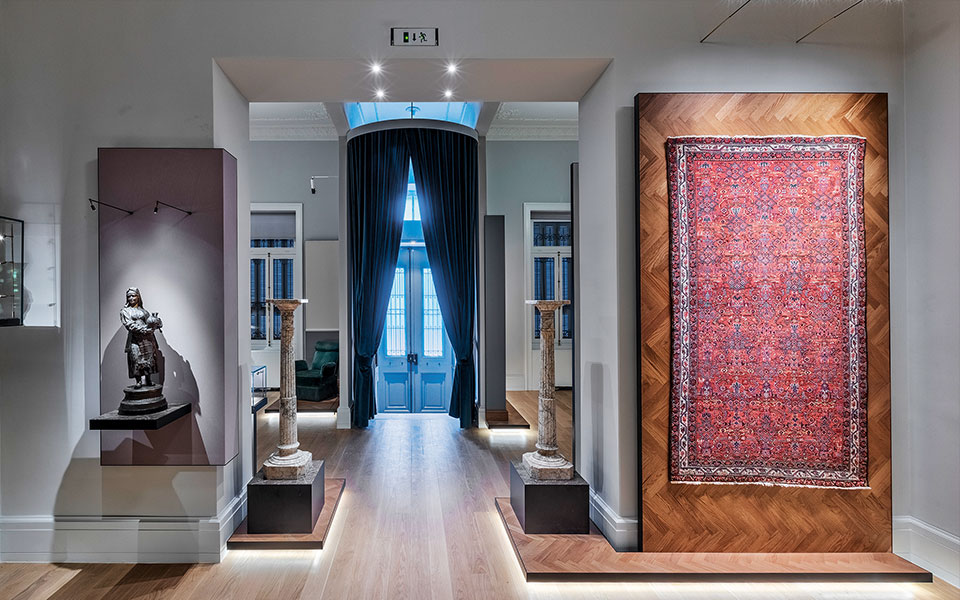
On Frinichou Street in Plaka, the Cavafy Archive unfolds as a living homage to the Alexandrian poet. The Onassis Foundation, which acquired the archive in 2012, ensured not only that it would remain in Greece but also that it would be fully accessible to the public and researchers alike. More than 2,000 items are housed here: poetry manuscripts, self-published editions, letters, photographs, articles and the poet’s personal library of 966 volumes.
The rooms reveal facets of Cavafy’s life through personal objects such as vases, frames and porcelain items, as well as his desk and six portraits by artists of his era that evoke the atmosphere of his home in Alexandria. His poems converse with these objects, and there are rooms featuring artworks inspired by the poet that range from work by contemporaries to recent creations shown during the 2023 “Archive of Desire” Cavafy festival. The reading room is a place for reflection and study amidst portraits and works that testify to his enduring international reach. Maro Vasileiadou
16B Frinichou
Opening hours: Tue, Thu & Sat 11:00-18:00
Mon, Wed, Fri & Sun: Closed
© Charis Akriviadis
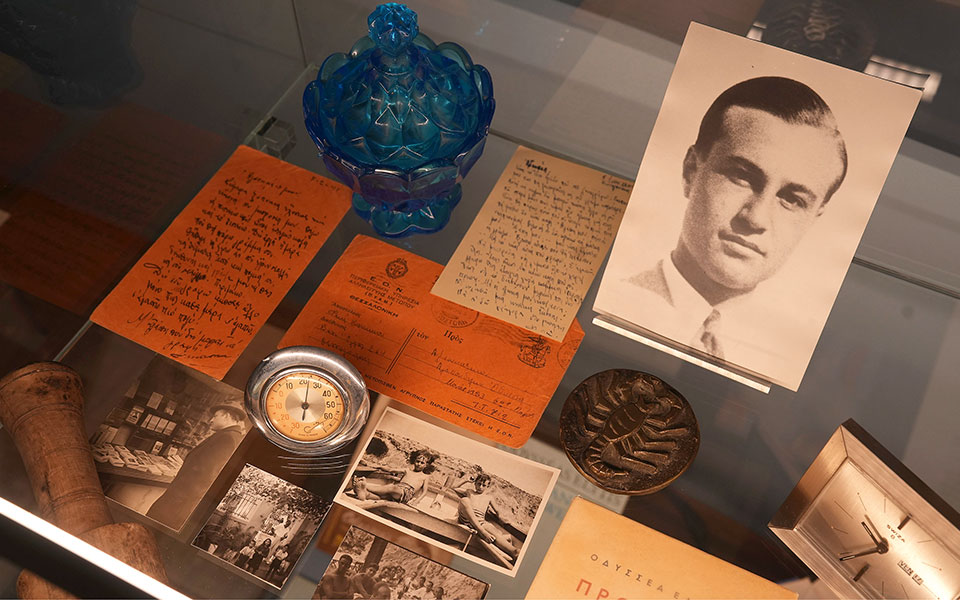
After the noise of bustling Monastiraki Square and the crowded narrow lanes of Plaka, the Elytis House Museum on Polignotou Street feels like an oasis of calm. Presented with meticulous care, the space gently introduces visitors to the aesthetic and philosophical universe of Odysseas Elytis. At its heart stands the poet’s desk, his armchair, typewriter, glasses and a photograph from his military service, arranged with such intimacy that one half-expects his return. Around it are wooden bookcases, a Skyrian sofa, and small handmade objects; paintings by Nikos Hadjikyriakos-Ghikas, Yannis Tsarouchis, and Nikos Nikolaou add to a setting that mirrors the restraint and precision of his writing.
Display cases reveal the many sides of his life and work: family photographs, notebooks, musical scores, records, poetry manuscripts and his own amateur paintings. Seemingly minor objects – a starfish, a few stones – hint at his deep bond with the sea. A dedicated section focusing on his Nobel Prize features video footage from the ceremony. Compact yet intensely personal, the museum seeks not merely to inform, but to convey the poet’s sensibility. Maro Vasileiadou
4 Dioskouron & Polignotou
Opening hours: Wed 13:00-18:00
Thu 12:00-18:00, Fri-Sat-Sun 10:30-18:00, Mon & Tue: Closed
© Jeff Koons. Photo: Ela Bialkowska, OKNO Studio, Courtesy Palazzo Strozzi
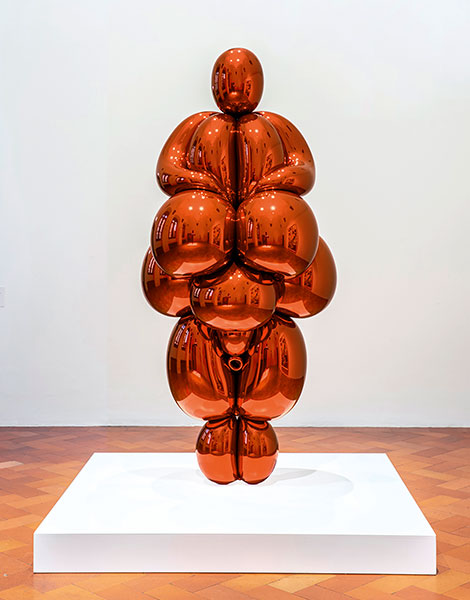
Balloon Venus Lespugue (Orange), 2013-2019, mirror-polished stainless steel with transparent color coating one of five unique versions. Homem Sonnabend Collection.
© Jeff Koons. Photo: Ela Bialkowska, OKNO Studio, Courtesy Palazzo Strozzi
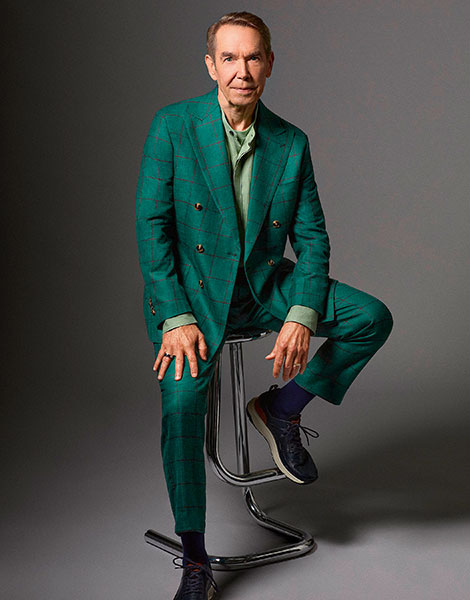
“Art has this ability to reconnect you with history, the same way biology does. I’m always looking for the original material, the source,” says Jeff Koons. For Aphrodite – among the most enduring figures in the visual canon, from Botticelli to Duchamp and Brancusi – the American artist draws on the Paleolithic Venus of Lespugue, a mammoth-ivory figurine dating back some 28,000 years. His sculpture “Balloon Venus Lespugue (Orange),” made of polished, reflective stainless steel, captures the curved forms of the original with striking fidelity while also creating the illusion that it is made of balloons. Koons’ work will be presented alongside ten replicas of Upper Paleolithic “Venus” figurines on loan from the museums that house the originals. Xenia Georgiadou
From 03/19 to 08/31/2026 Museum of Cycladic Art, Stathatos Mansion Vasilissis Sofias & 1 Irodotou cycladic.gr
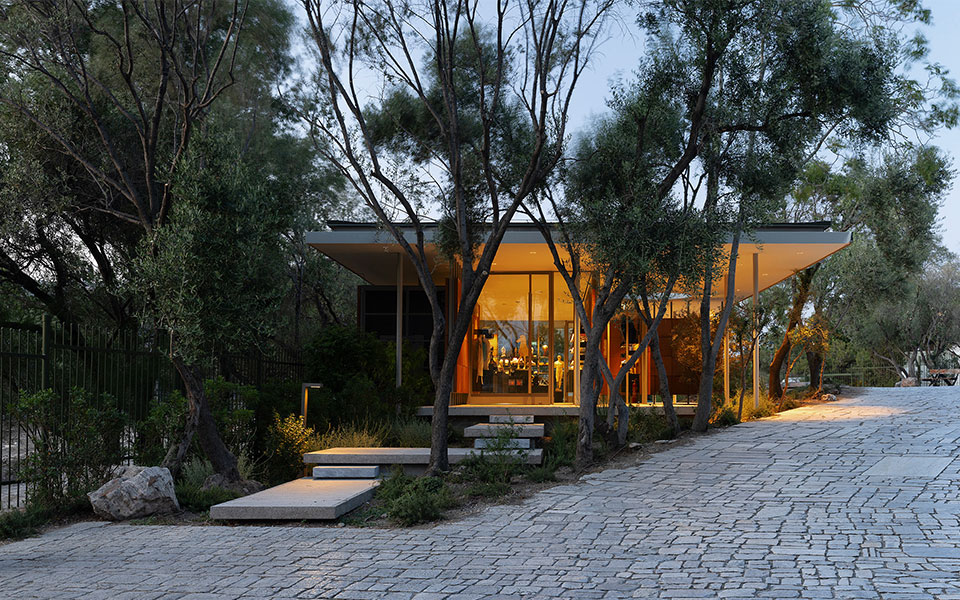
© Paris Tavitian
Located at the edge of the archaeological site and Areopagus Hill, a new souvenir shop stands at the end of the historic stone-paved path designed in the mid-20th century by pioneering architect Dimitris Pikionis. Designed by Flux Office, the building, which draws on the legacy of Greek modernism, sits in quiet harmony with its surroundings. A pine tree rises through the roof, a living presence within a space shared by customers seeking out mementos of their Acropolis experience. The selection of objects for sale includes faithful replicas of artifacts housed in Greece’s archaeological museums; miniatures of Caryatids and figures from Greek mythology; studies and monographs; and a plethora of other souvenirs. Pantelis Tsompanis
Acropolis Shop Hellenic Organization of Cultural Resources Development (ODAP)
Open 8:00-17:00 during the winter season
Tel. (+30) 210.322.2816

Autel doré, 1962 Objects and gold paint, wood 160x111x17.5 cm Donated by Niki de Saint Phalle, MOMus-Museum of Contemporary Art.
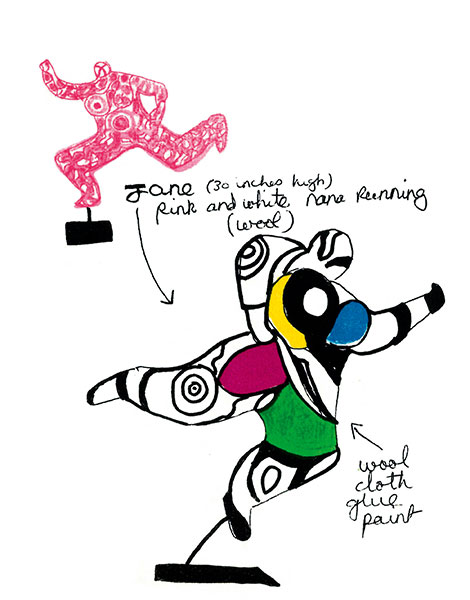
Niki de Saint Phalle's drawings, from the catalog Niki Nanas, Iolas Gallery, Paris, Genève, New York, 1966.
“Most people don’t see the edginess in my work. They think it’s all fantasy and whimsy,” Niki de Saint Phalle once remarked. The artist who transformed the anger and pain of childhood abuse into art that feels like a perpetual celebration is being revealed in Greece for the first time through “Niki de Saint Phalle: From Shootings to Freedom.” Anchored by three works from the collection of MOMus – Museum of Contemporary Art in Thessaloniki (via donations by Alexandros Iolas and the artist herself) and enriched with objects loaned from the Niki Charitable Art Foundation and documentary material, the exhibition traces the path of the self-taught, fiercely independent artist from the series Tirs – her shooting paintings of the 1960s that aligned her with Nouveau Réalisme – to the life-affirming sculptural figures known as the Nanas. “I don’t know how the Nanas happened; I never know how things happen. But suddenly, after all those tortured women, they appeared – women who enjoyed life, as if they were saying ‘yippee.’” Xenia Georgiadou
To 05/24/2026 MOMus Alex Mylona 5 Aghion Asomaton Square, Thiseio momus.gr
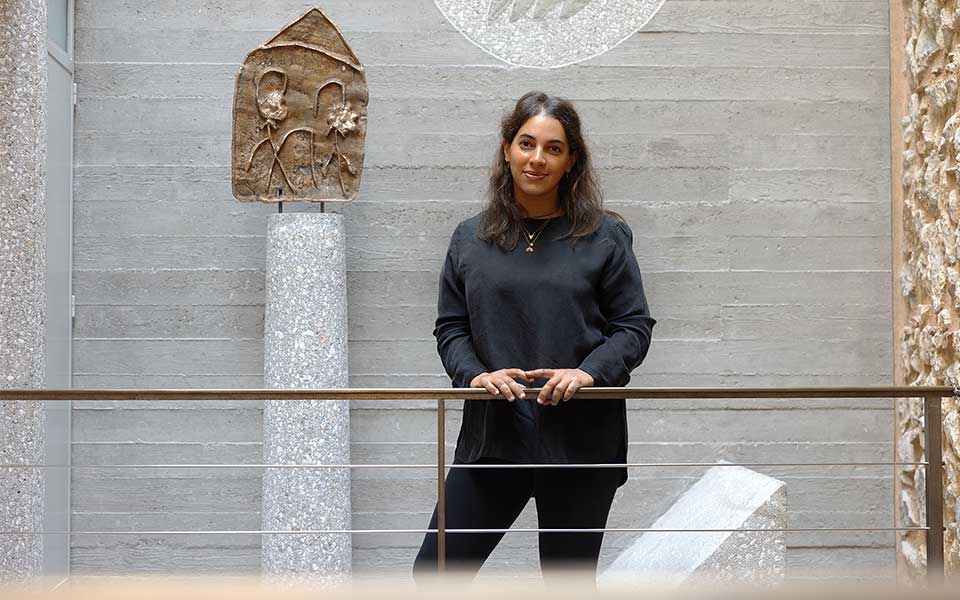
© Paris Tavitian
For Alekos Fassianos, art was never confined to the canvas. His visual language flowed effortlessly into the materials of everyday life; there were wheat sheaves carved into marble, designs embroidered on garments, iron suns embedded in doors, and ceramic vessels festooned with butterflies and birds, as well as his own take on toys and sculptural objects.
“It was this everyday dimension of his work – his photographs, sketches and painted objects – that made me truly connect with him,” says visual artist Eugenia Vereli. Invited to participate in the Contemporary Intervention Program organized by the Alekos Fassianos Museum, Vereli drew inspiration from Fassianos’ expansive approach to space and authorship, responding in a distinctly personal idiom.
The exhibition “Eugenia Vereli: In the stories of your life, I often answer with a shiver. Dialogue with Alekos Fassianos” brings together bronzes and ceramics – flowers, reptiles, and other forms – that form a dialogue with the motifs found in Fassianos’ work. Xenia Georgiadou
To 01/18/2026 Alekos Fassianos Museum 15 Neofitou Metaxa & Chiou alekosfassianos.gr

© Adrianna Glaviano
Niche perfumes begin with ideas shaped by intuition rather than trend forecasts. Bold and inventive, they aren’t made to please everyone, yet they continue to attract a growing audience. “You experiment with raw materials and allow the scent to emerge freely. It’s an exercise in personal expression,” says Ioanna Melidi, an Athenian perfumer with experience at Korres and Naxos Apothecary who recently launched a line called The Things Past. Melidi is particularly drawn to the “Proust phenomenon,” the way scent and taste unlock memory, a fascination that inspired both the name and philosophy of her collection. The line, which can be found at the More Than This shop, currently comprises seven eaux de parfum and five candles. Standouts include the radiant Glitter Bomb – a luminous blend of mandarin, bergamot, and clove – and Driftwood, a composition layered with coconut water, rosemary and frankincense.
Just a short walk from Melidi’s store in Exarchia is Phāon. Alexandros Kalogiros and Dimitra Louana Marlanti’s design-forward cabinet of curiosities is devoted to perfumes, showcasing established and emerging niche perfume houses that you’ll rarely find elsewhere in the city. Georgia Papastamou
The Things Past, thethingspast.com
Phāon, 29 Lykavittou, Kolonaki, Tel. (+30) 211.001.8719
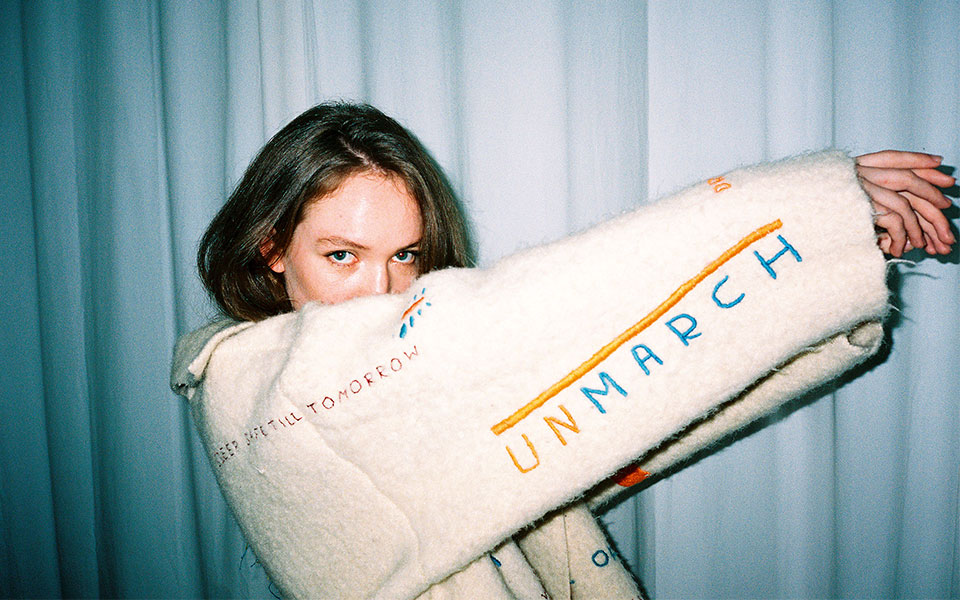
Unsung Weavers
Athens has always enjoyed a wonderful climate, with mild autumns, seasonal rains, winters that cool without ever biting, and warm, sun-soaked summers. Today, however, the sweet Athenian winter may pass without even a single truly cold day – hardly an excuse for heavy clothing. But still, if you’re looking for a knitted gift from the city, there are two makers that should be on your radar.
Unsung Weavers is devoted to the revival of ceremonial textile production. Working with wool from a family-run farm in Epirus and vintage fabrics often sourced from monasteries or timeworn dowry chests, the atelier reinterprets historic patterns. Each piece is handcrafted, singular and quietly radical in its intent: to resurrect forgotten rituals of textile production and garment-making for contemporary life.
Ioanna Kourbela approaches knitting through a philosophy of conscious design. Founded in 1971, her brand is committed to sustainable creation and the preservation of Greek craftsmanship. Kourbela is known for beautifully textured fabrics and high-quality cotton yarns, resulting in garments that feel light on the body yet provide remarkable warmth – perfect for layering during a mild Athenian winter. Konstantinos Sarantis
© Christina Georgiadou
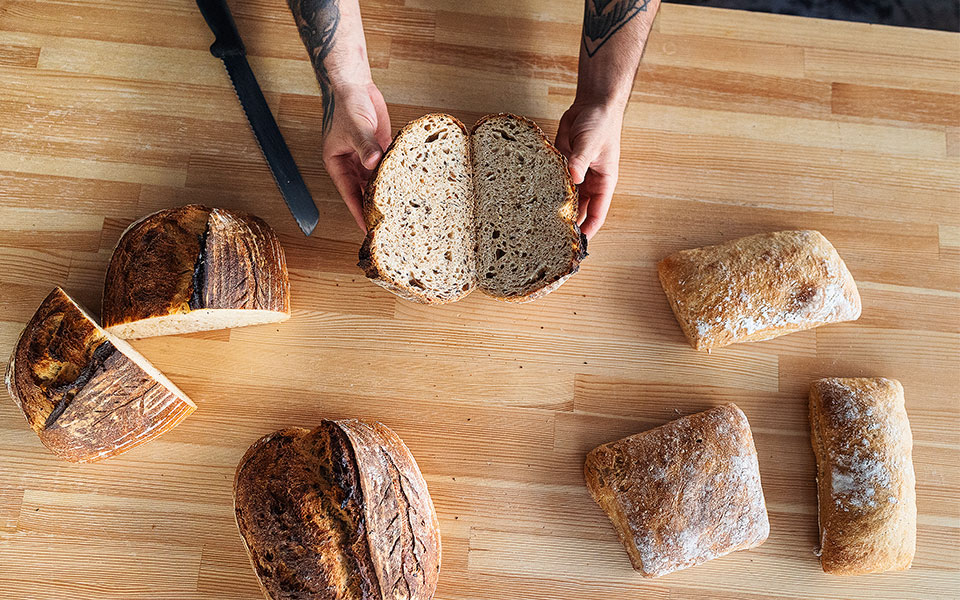
From slow-fermented sourdough to pastries that marry French technique with Greek ingredients, Athens’ newest downtown bakeries turn the daily ritual of bread-making into an art form. Deux Amis specializes in slow-fermented sourdough made exclusively with organic flours. It also makes an excellent cheese pie with homemade puff pastry that melts in your mouth, and a Thessaloniki-style sesame rings made with sourdough and fragrant, unshelled sesame seeds.
At Temps Perdu, sweet and savory viennoiserie is displayed like fine jewelry. Try the “snail” pastry filled with barrel-aged feta, tsalafouti, and aromatic za’atar; sandwiches on bread made from Lemnos flours that they source and mill themselves; and croissants with soumada (bitter almond extract), almonds, and pear.
In Exarchia, Alouatou operates as a micro-bakery by day and a bistro by night. Among its bestsellers are traditional pies with homemade filo, including a classic cheese pie with feta and graviera, a minced-meat pie, a spinach-and-cheese pie, and a sweet galatopita (custard pie). Georgia Papastamou
Deux Amis, 8 Dragatsaniou, Klafthmonos Square, Tel. (+30) 210.324.8929
Temps Perdu, 2 Axarlian, Syntagma, Tel. (+30) 210.331.1767
Alouatou, 87 Asklipiou, Exarchia, Tel. (+30) 210.362.2132
Tourists share the highs and lows...
This summer, Pelagos at Four Seasons...
Discover how Christos, Athens’ master souvlaki...

Discoveries along Amalias Avenue, from the...


