Tyrokafteri: Greece’s Spicy Cheese Spread (with a Bonus...
Explore the story and flavor of...


The thicker the "kaimaki" (the foam on top), the better the coffee.
© Shutterstock
Served anywhere else in the world, it has somewhat of an exotic vibe; boiled in sand and served in tiny cups with a thick foam on top, it’s certainly not your regular cup of drip brew. But in Greece, a country with a contemporary coffee culture that produces brewing championship winners, the humble Greek coffee is all nostalgia.
Technically speaking, Greek coffee is produced from very finely ground beans, boiled with water in a small, narrow pot with a long handle known in Greek as a “briki” (you may also recognize it as a cezve or an ibrik). The coffee is heated slowly over low heat, until it reaches the boiling point when the all-important foam, the “kaimaki,” rises, indicating that it’s done. For extra slow and evenly distributed heat, some cafés imitate the original way of making coffee with a briki, using special equipment known as “hovoli” to heat sand, in which the pot is placed until the coffee rises. But most commonly it’s made on the stovetop or on a small gas burner.
The biggest difference between Greek coffee and most popular brews is that the grounds aren’t steeped, but boiled, and never strained out of the drink. The result of this technique is an opaque drink with very rich, velvety texture, and one downside in that the grounds are also poured into the cup.
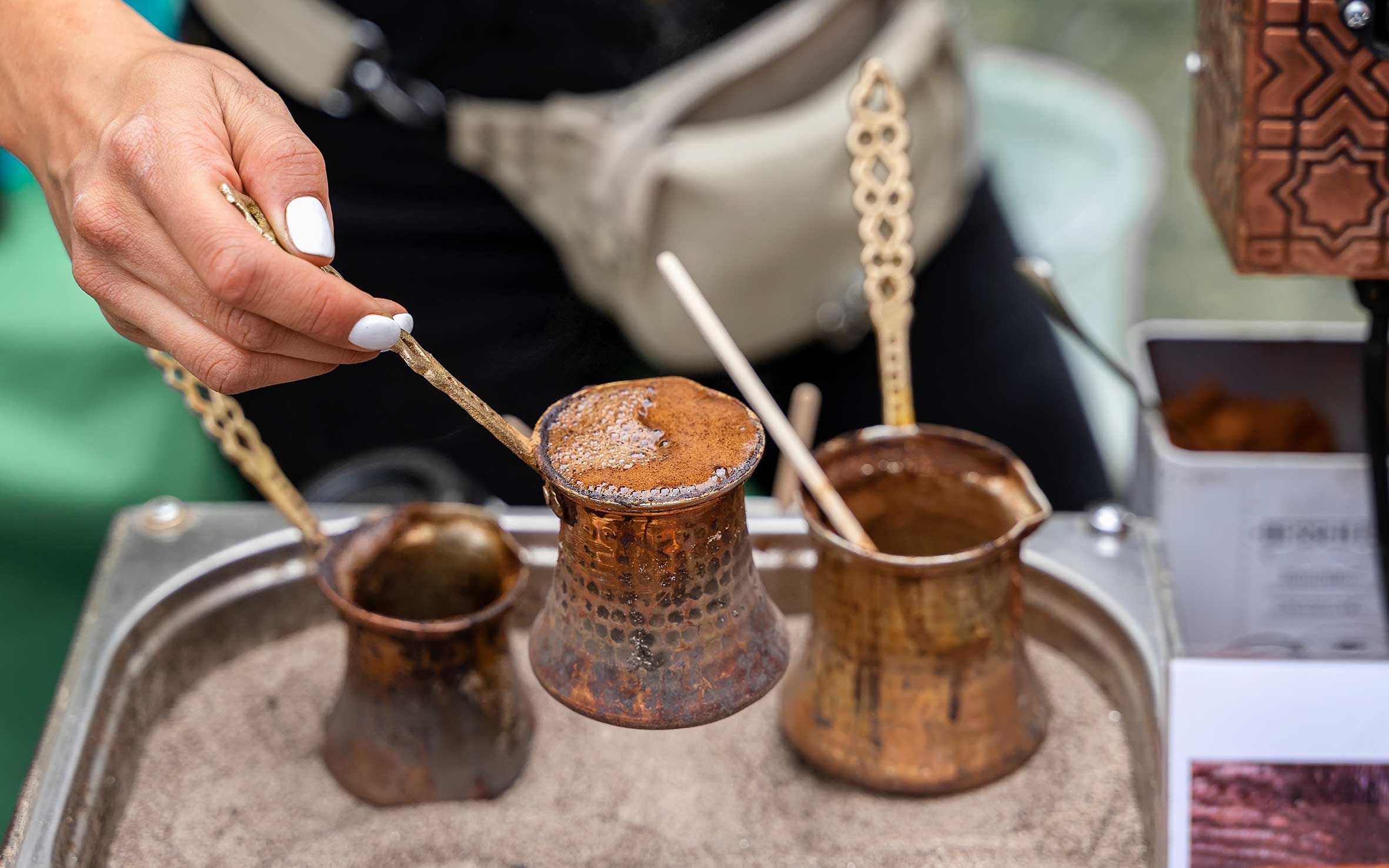
Greek coffee prepared in hot sand (hovoli).
© Shutterstock
The coffee beans used to prepare Greek coffee are imported. The briki, meanwhile, has been traced back more than 500 years, when it’s believed to have been invented in Yemen. It was brought to Greece during the Ottoman Empire, and, as in most of the world, this type of coffee was actually known as Turkish coffee in Greece until the 1970s, when the name was changed due to political issues between the countries. But despite its origins not tracing all the way back to ancient Greece, to Greeks it is ultimately considered traditional – a comforting drink for every occasion, and everyone, it is the beverage preferred by elders, the first coffee a child tries, and the drink served at funerals. In fact, Greeks consume more of it than any other people in the world.
In Greece, you can purchase bags of Greek coffee directly from roasters, but also in every supermarket and kiosk. In many other countries, you can find it in Greek or ethnic markets.
You can also order it online from various e-shops. We found the popular “Loumidis” brand from Attica at Yolenis.com, while at Ergonfoods.com you can choose between “Kekeri”, from Komotini, or their own brand, which offers a dark and a light roast.
View this post on Instagram
To make Greek coffee at home, you need:
Method:
Because it’s served with the grounds in the cup, remember to handle your Greek coffee carefully. Wait a couple of minutes before you drink, in order for them to settle at the bottom. Do not stir the coffee or drink it too fast. Remember, it might be served in a small cup, but it’s not espresso – it’s made to be sipped.
Greeks often don’t eat breakfast, but will enjoy a cup of coffee in the morning. Some have it with one or two Petit Beurre biscuits (the “Papadopoulos” brand) or rusks, briefly dipped to soften. Another classic companion of the Greek coffee is a “spoon sweet,” a syrupy preserve made from fruit or vegetables.
Explore the story and flavor of...

Souvlaki joints started appearing in earnest...
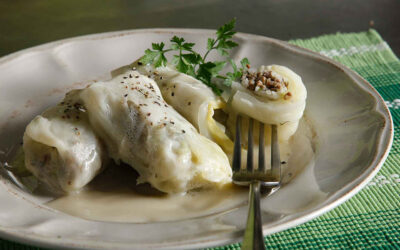
Cabbage rolls with egg-lemon sauce are...

A traditional honey-and-cheese pie from Mykonos,...