Don Dines in Athens: O Skoufias, Pangrati
A hidden gem in Pangrati where...


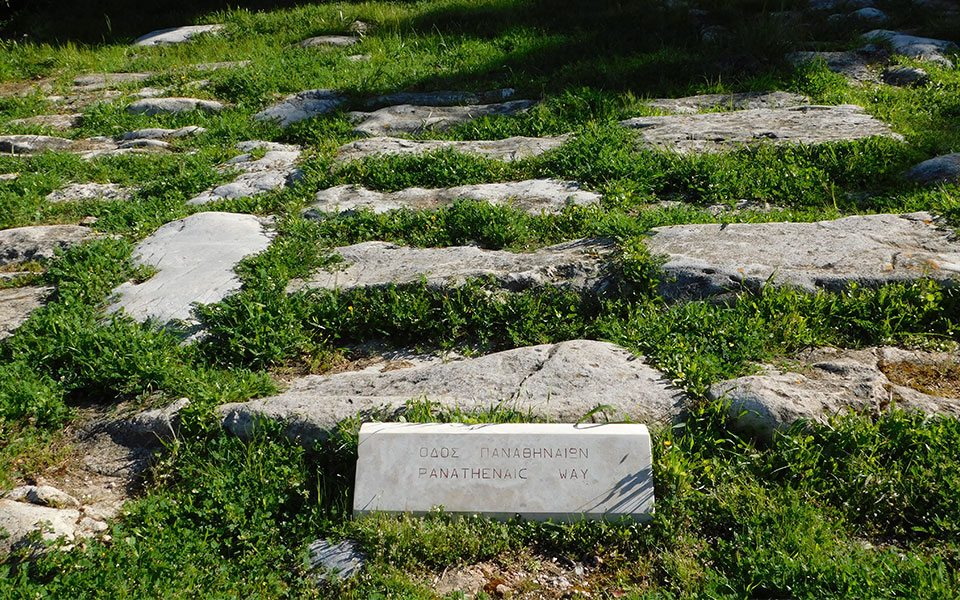
Τhe Panathenaic Way, which runs through the ancient Agora.
© Shutterstock
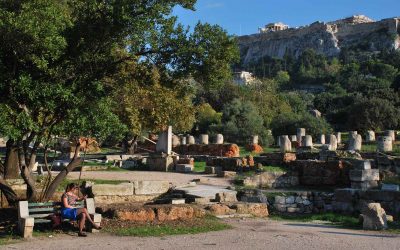
It was a path many of us discovered by chance. Just beyond the open-air cinema Cine Thission – before Apostolou Pavlou Street became a pedestrian zone – a wide dirt trail emerged at the edge of the archaeological site. The fence simply ended, and you were free to follow this quiet, almost secret walkway at any hour. On your left: the Temple of Hephaestus and the Ancient Agora. On your right: the Sacred Rock of the Acropolis, crowned with its iconic monuments.
It was a favorite route for late-night wanderers and romantics, but also something more profound: walking it meant literally stepping through layers of history, sharing a space once filled with the footsteps of ancient Athenians.
Eventually, one of your more history-savvy friends would mention it: this wasn’t just any footpath. It was the Panathenaic Way – Athens’ most storied thoroughfare. Starting at the Dipylon Gate in the Kerameikos district, it cut through the heart of the Agora and climbed to the Acropolis, ending near the Parthenon. This was the route of the Panathenaic procession, the city’s grandest festival in honor of the goddess Athena.
But the Panathenaic Way was more than ceremonial. It formed the central axis of ancient Athens, a route around which political, social, and religious life revolved. A procession route, a civic spine – and now, a rediscovered invitation to walk in the footsteps of the ancients.
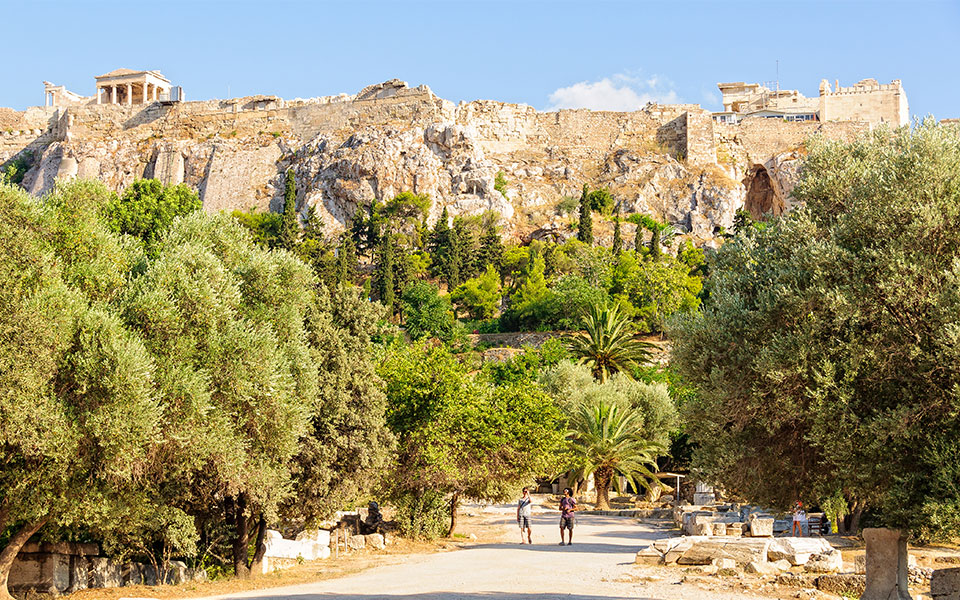
The Panathenaic Way, stretching from the Gate of Athens to the Acropolis, was the most important route through the Agora.
© Shutterstock
These memories came rushing back with the news of a major restoration effort aimed at revitalizing the archaeological sites of the Ancient Agora and Kerameikos. Spearheaded by the Hellenic Ministry of Culture through the Ephorate of Antiquities of the City of Athens, the project is expected to be completed by year’s end.
During a recent site visit, Minister of Culture Lina Mendoni affirmed the project’s positive momentum and outlined its key priorities: restoring the ancient pathways, adding fully accessible routes for people with disabilities, and creating spaces for rest and contemplation.
In her remarks, Minister Mendoni placed special emphasis on the Panathenaic Way: “With the restoration of the Panathenaic Way and its reestablishment as a key element of the visitor experience, the site is once again revealed as a public, political space of immense historical importance. Its connection to the Acropolis gains deeper meaning. The Panathenaic Way will take on a central role in the visitor’s route, helping people better understand the spatial structure, the urban composition of the site, and its relationship with neighboring monuments.”
© Shutterstock
Equally important changes are underway at the archaeological site of Kerameikos, where a new entrance on Asomaton Street will improve access and strengthen its connection with the surrounding city.
But the project goes even further. In the Ancient Agora, new ramps and redesigned pathways will guide visitors to major landmarks like the Temple of Hephaestus, while modern walkways that currently interrupt the site’s historical continuity are being removed.
We eagerly await the completion of this project – a transformation that promises to enrich the Athenian experience for both visitors and locals, making history more accessible, walkable, and alive than ever before.
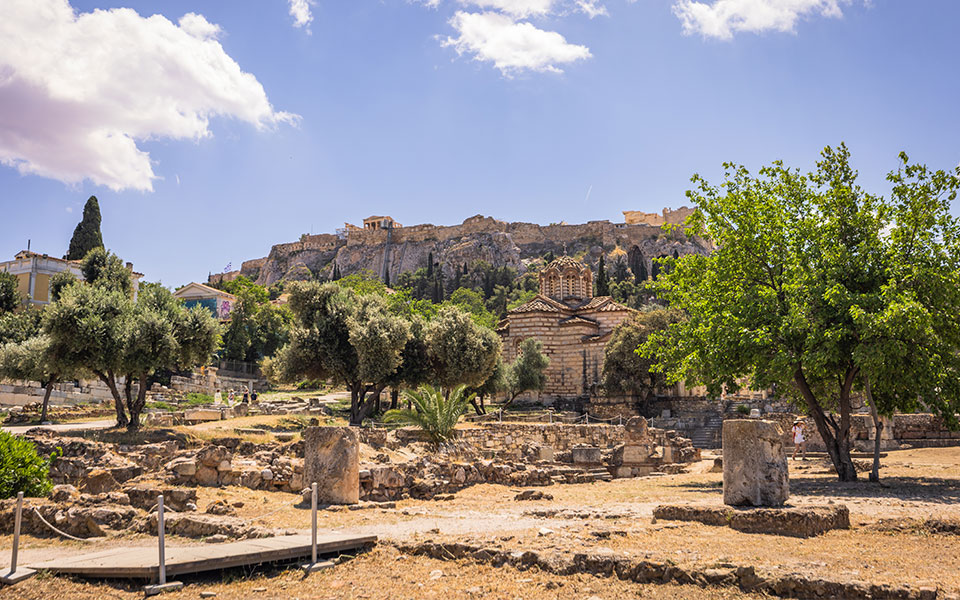
The Ancient Greek Agora
© Shutterstock
Starting at the Dipylon Gate — the grandest and most heavily fortified entrance to ancient Athens – the Panathenaic Way (or simply the “Dromos,” as locals called it) carved a lively path through the heart of the city. From the Kerameikos cemetery, it wove through the bustling Agora and climbed steadily toward the Acropolis, ending at the Propylaea, the monumental gateway to the sacred rock.
This route, stretching more than a kilometer, led Athenians past many of their most important civic landmarks. There was the Stoa Poikile (Painted Stoa), a gathering place for both political discussion and philosophical reflection. Nearby stood the Altar of the Twelve Gods, often seen as the symbolic center of the city. The Stoa Basileios (Royal Stoa) housed magistrates, while the Bouleuterion was the seat of the Council of 500, which steered the city’s daily governance. Just beyond, the Temple of Hephaestus – one of the best-preserved temples from the ancient world – watched over the Agora.
This alignment of buildings and open spaces was no accident. The Panathenaic Way physically and symbolically connected Athens’ political, religious, and communal life. To walk the Dromos was to move through the very structure of Athenian identity, a shared space where ideas of democracy, memory, and civic pride played out in real time.
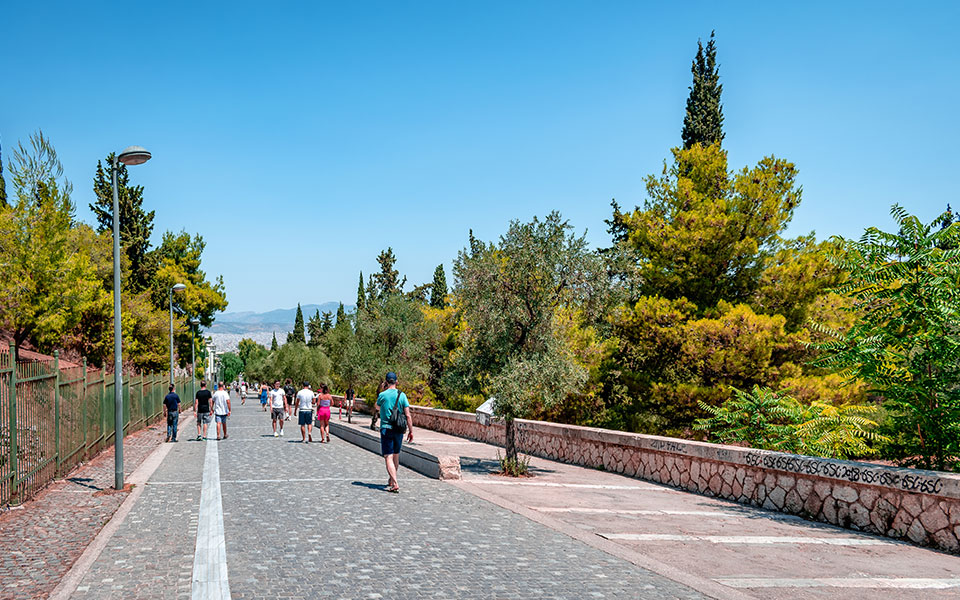
The Apostolou Pavlou Street
© Shutterstock
More than a road, the Panathenaic Way was the ceremonial heart of the Panathenaic Festival, Athens’ most important religious and civic celebration. First established in 566 BC under the rule of Pisistratus (c. 600–527 BC), and flourishing during the Golden Age of Pericles, the festival honored Athena Polias, the city’s patron goddess. Over time, it grew into a grand affair, complete with athletic games, musical contests, and chariot races that rivaled those at Olympia.
The highlight was the Grand Procession, held every four years during the Greater Panathenaia. Beginning at the Dipylon Gate, the procession wound its way through the city to the Acropolis, where a newly woven “peplos” (a sacred robe) was presented to the ancient cult statue of Athena in the Erechtheion. This ritual journey passed through the city’s funerary, civic, and sacred spaces, transforming the Dromos into a living thread that wove together the different facets of Athenian life.
Walking the Way wasn’t just a practical or ceremonial act; it was a walk through history. Monuments, altars, and statues lined the route, offering a sculpted narrative of Athenian memory and civic ideals. Herms – sacred stone markers with the head of Hermes and an erect phallus – were placed at intervals to protect travelers and sanctify the path.
Prominent among the many statues were those of Harmodius and Aristogeiton, the famed tyrant-slayers who assassinated Hipparchus — brother of the tyrant Hippias — in 514 BC. Though rooted in a real event, their act was later elevated into a powerful symbol of democratic resistance. Their bronze statues, prominently displayed in the Agora and visible from the Panathenaic Way, served as a daily reminder of the city’s enduring struggle against tyranny and the valorization of civic freedom.
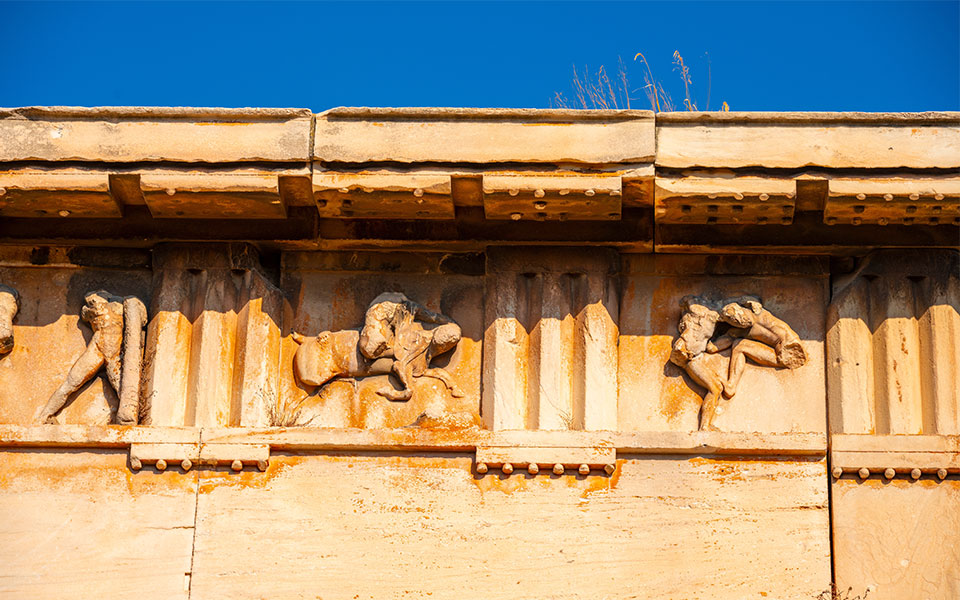
Detail from the iconic Temple of Hephaestus
© Shutterstock
The Panathenaic Way was designed not just for passage, but also for performance. In places it stretched 10 to 12 meters wide – unusually broad for an ancient street – allowing crowds to gather for public displays and festive spectacles. During the Panathenaic Festival, the Dromos became a stage for chariot races, athletic contests, and pyrrhic dances performed by Athenian youths, all celebrating “arete” – the ideal of excellence – and civic virtue.
Even under Roman rule, the Way retained its prominence. Emperors like Hadrian, a great admirer of Greek culture, added their own touches: triumphal arches, ornamental fountains, and architectural flourishes. The Arch of Hadrian, completed in 132 AD, marked the symbolic boundary between the “old Athens of Theseus” and the “new Athens of Hadrian,” reinforcing the city’s continued prestige as a beacon of classical learning and imperial culture.
In recent decades, archaeologists from the American School of Classical Studies at Athens have uncovered significant sections of the Panathenaic Way, particularly in the Agora. Their work has traced the street’s evolution from a packed-earth path in the Archaic era to a fully paved Roman road and revealed its close integration with Athens’ most important civic and religious structures.
Today, a major restoration initiative led by the Greek Ministry of Culture and supported by the EU Recovery Fund is helping to reimagine the ancient route for the modern visitor. With improved accessibility, ADA-compliant paths, rest areas, and interpretive signage, visitors will soon be able to experience the Panathenaic Way not just as an archaeological site, but as a vibrant historical journey.
For today’s travelers, walking the Dromos offers more than just a view of ancient ruins – it’s an opportunity to retrace the footsteps of Pericles, Plato, and countless ordinary Athenians along a living corridor where history, democracy, and civic identity still echo beneath your feet.
A hidden gem in Pangrati where...

From temples and festivals to front...

Not all surprises are pleasant, but...

Abra Ovata is itself a rare...