The Flavors of Greek Autumn
As summer draws slowly to a...

Messene
© Shutterstock
If summer in Greece is all about bronzed beaches and bustling tavernas, autumn is when the country’s soul exhales. The heat subsides, the crowds disperse, and the ancient sites – those weathered sentinels of past glories – suddenly feel a lot more accessible. For the curious traveler with a taste for history and Indiana Jones-style adventure, this is the golden season.
And while Athens’ iconic Acropolis is an essential stop, Greece has so much more to offer beyond the capital. Scattered across mountainsides, valleys, and sunlit islands are ruins that often fly under the radar yet reward the patient traveler tenfold.
From mainland strongholds to island sanctuaries, here are seven of Greece’s greatest archaeological experiences to savor this fall.
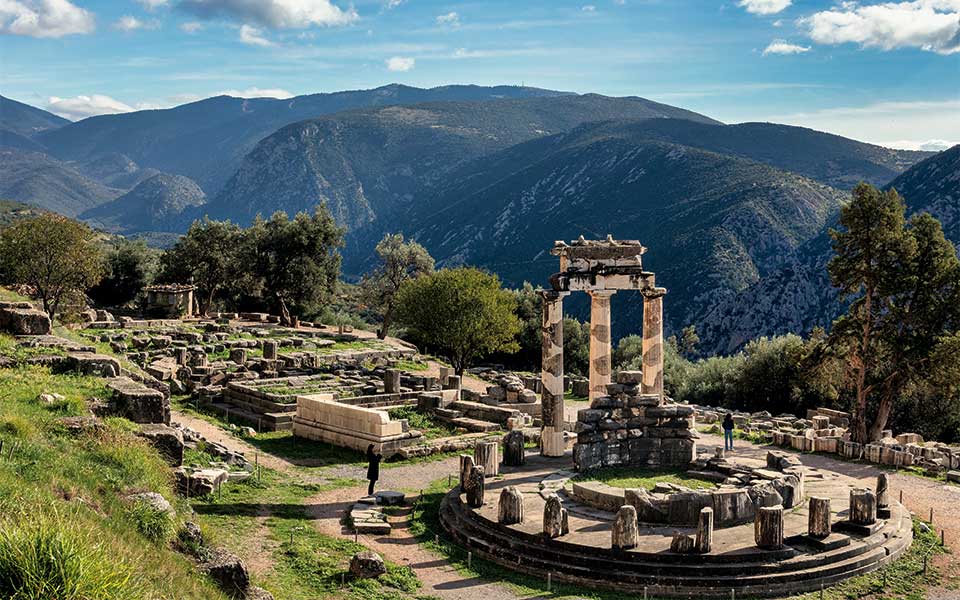
The Tholos (380 BC), at the Temple of Athena Pronaea, is a masterpiece of the Classical period and perhaps the best-known monument at the archaeological site of Delphi.
© Perikles Merakos
Perched high on the slopes of Mount Parnassus, three hours north of Athens, the UNESCO World Heritage Site of Delphi was once thought to be the very center of the ancient world – the omphalos, or “navel of the earth.” Originally a sanctuary of Mother Earth, it later became sacred to Apollo, whose priestess, the Pythia, spoke in riddling prophecies that guided kings and generals. To walk here is to follow in the footsteps of those who shaped the ancient Greek world.
Today, visitors can explore the remnants of Apollo’s great temple, the elegant Treasury of the Athenians – built to commemorate the Battle of Marathon (490 BC) – and a remarkably well-preserved theater. Climb higher still and you’ll find the ancient stadium, a breathtaking vantage point where athletes once competed in the Pythian Games. Yet Delphi’s true magic lies in its spectacular setting: terraces of marble ruins unfolding against the soaring Parnassian cliffs and the silvery olive groves of the valley below.
In autumn, with the crowds gone and the air crisp and clear, Delphi regains its eerie mystique. Stroll the Sacred Way, linger at the temple, and don’t miss the superb on-site museum, home to the famous “Charioteer of Delphi” (c. 470 BC), one of the finest bronzes ever cast in ancient Greece.
Opening hours: Daily 08:00-20:00 (April-October); 08:30-15:30 (November-March)
Tickets: €20 (site + museum)
Tel.: (+30) 22650.832.13
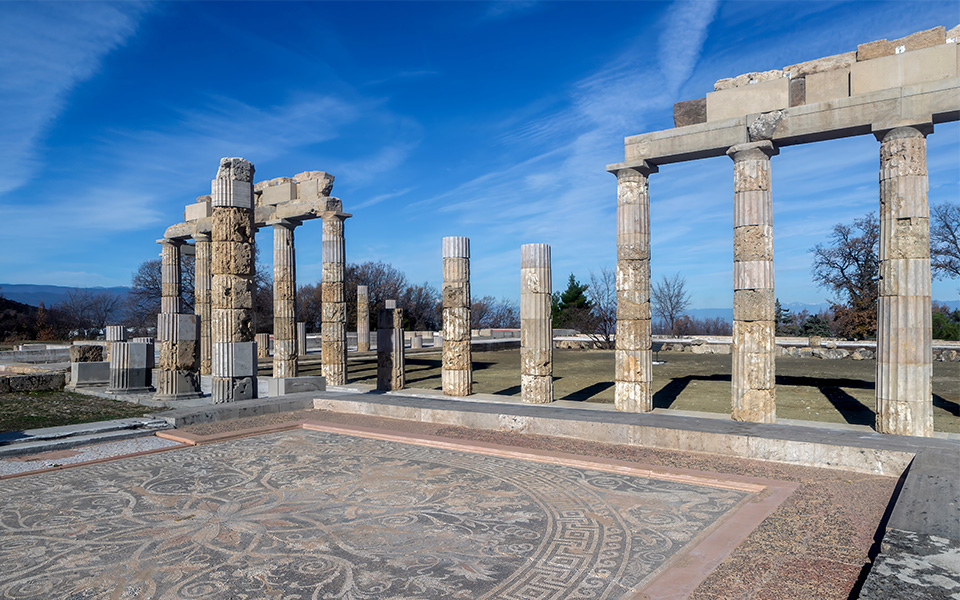
Vergina
© Shutterstock
In the foothills of the Pierian Mountains, an hour’s drive south of Thessaloniki, lie the ruins of Aigai, the first capital of ancient Macedonia. Today the site is better known as Vergina, and it’s here that one of archaeology’s greatest discoveries was made: the intact tomb of Philip II (359–336 BC), father of Alexander the Great. Unearthed in 1977 by Manolis Andronikos, the royal burial chamber, with its dazzling wall paintings and hoard of gold, transformed our understanding of Macedonian art and power.
The on-site Museum of the Royal Tombs is arguably the most atmospheric in Greece. Built underground to envelop the royal tombs, it allows visitors to step quietly into a dimly lit world of marble chambers, painted facades, and priceless grave goods. Among them are golden wreaths, weaponry, and intricate jewelry, objects buried to accompany kings into the afterlife.
A short drive away, the new Polycentric Museum of Aigai showcases further finds, from delicate pottery to ornate ceremonial armor. Together, the two museums and sprawling archaeological park paint a vivid picture of Macedonia’s rise, when Aigai was a glittering royal capital.
For travelers, Vergina makes a perfect autumn day trip from Thessaloniki – itself a city rich in Byzantine, Ottoman, and southern Balkan charm.
Opening hours: April-October Mon, Wed-Sun 08:00-20:00; Tue 12:00-20:00. November-March Mon, Wed-Sun 09:00-17:00; Tue closed
Tickets: €17 (special package: site + both museums)
Tel.: (+30) 23310.925.80
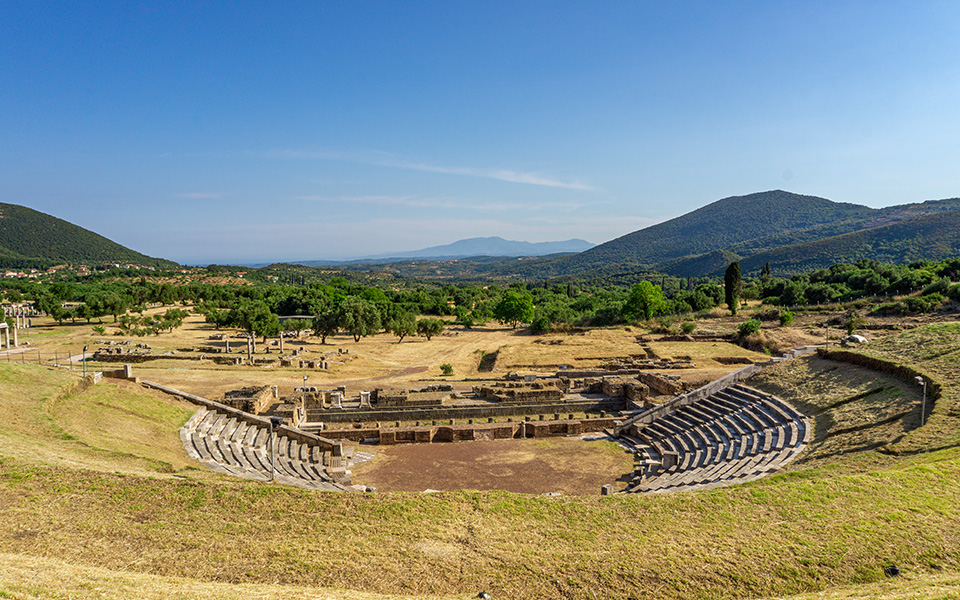
Messene
© Shutterstock
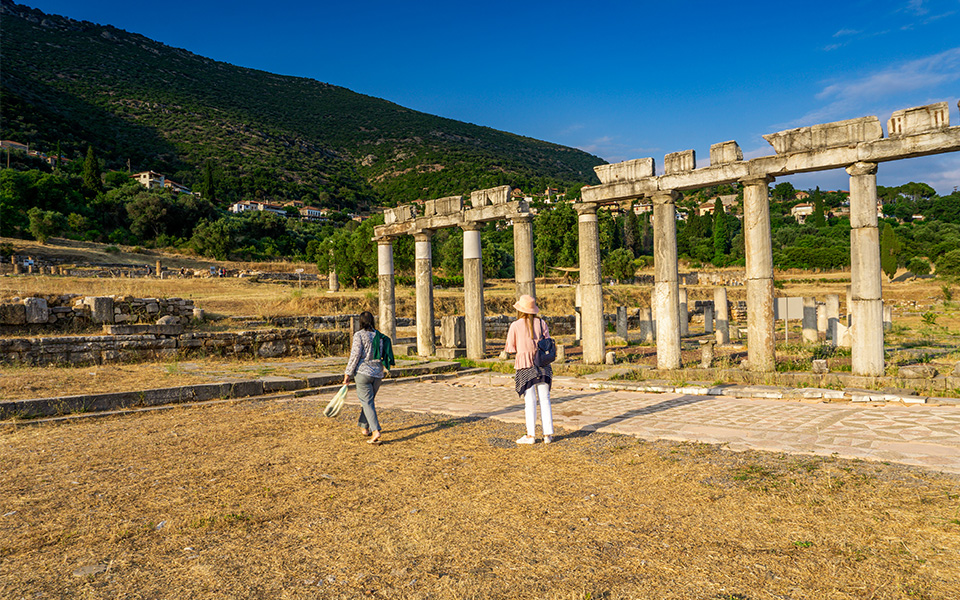
Tucked in the fertile plains of the southwestern Peloponnese, Messene is one of Greece’s most rewarding archaeological parks – vast, beautifully preserved, and still unfolding under the trowel. Founded in 369 BC in the wake of Sparta’s defeat at the Battle of Leuctra, the city was built as both a statement of freedom and a bulwark against Spartan resurgence. For centuries, the Messenians had been Sparta’s “helots” (state-owned serfs), until Epaminondas of Thebes helped them reclaim their independence. Their new city became a monument to liberty, culture, and civic pride.
Visitors today are greeted by the colossal Arcadian Gate and stretches of defensive walls that once ran for 9 km around the city. Inside lie the remains of a bustling metropolis: a vast agora, sanctuaries, ornate public fountains, stadium and gymnasium, and a well-preserved theater. The highlight is the Asclepieion, a temple-and-stoa complex that served as Messene’s civic heart, where politics, religion, and daily life intertwined.
Ongoing excavations, led since the 1980s by Petros Themelis, have transformed Messene into an expansive archaeological park, its gleaming white limestone monuments rising from lush green lawns. In autumn, with cooler weather and golden light, the site’s grandeur is matched only by its serenity – a perfect day trip from Kalamata or ancient Olympia.
Opening hours: Daily 08:00-20:00 (April-October); 08:30-15:30 (November-March)
Tickets: €10 (site + museum)
Tel.: (+30) 27240.512.01
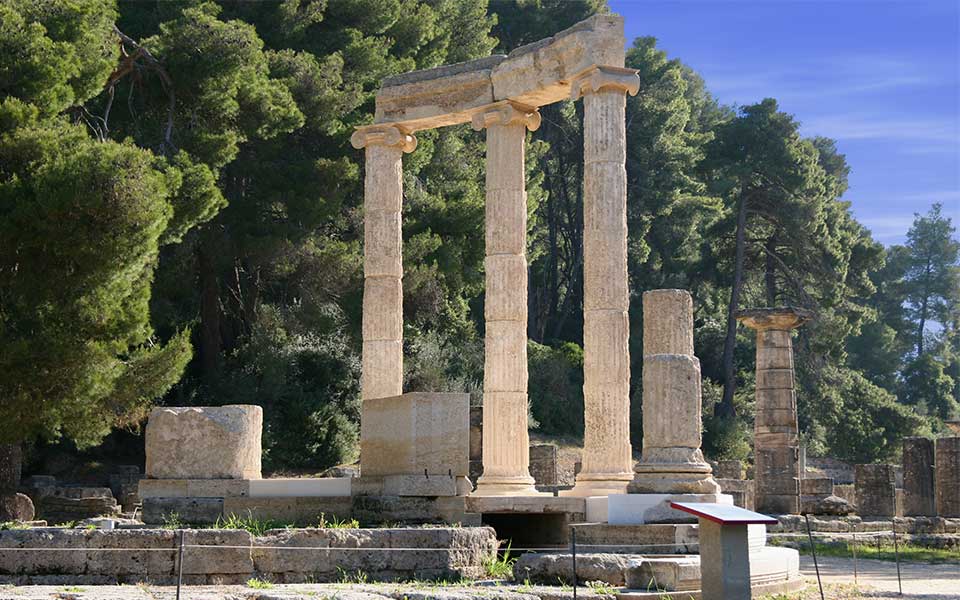
Olympia
© Shutterstock
In a fertile valley of the western Peloponnese, where the Alpheios and Kladeos rivers meet, lies Olympia, one of Greek antiquity’s most sacred sanctuaries. Established in the 8th century BC, it became the birthplace of the Olympic Games, held every four years in honor of Zeus. These contests were as much religious festival as athletic spectacle, drawing competitors and spectators from across the Greek world.
At the heart of the sanctuary was the Altis, a sacred grove ringed with temples and treasuries. Here stood the colossal Temple of Zeus, once home to Pheidias’ chryselephantine statue of the god – one of the Seven Wonders of the Ancient World. Nearby, the Temple of Hera remains a jewel of early Doric design. Visitors can also trace the outlines of the palaestra and gymnasium, where athletes trained, and pass through the vaulted tunnel into the stadium where 45,000 spectators once gathered to cheer.
Olympia’s significance transcended sport: it was a meeting ground for all Greeks, where the Olympic Truce briefly stilled wars and enshrined ideals of unity and peace. Today, alongside the evocative ruins, the on-site Archaeological Museum of Olympia showcases masterpieces such as Praxiteles’ Hermes with the Infant Dionysus and the dramatic pediments of the Temple of Zeus.
Opening hours: Open year-round. Free entry every 1st and 3rd Sunday, November-March
Tickets: €20 (includes site + three on-site museums)
Tel.: (+30) 26240.225.17
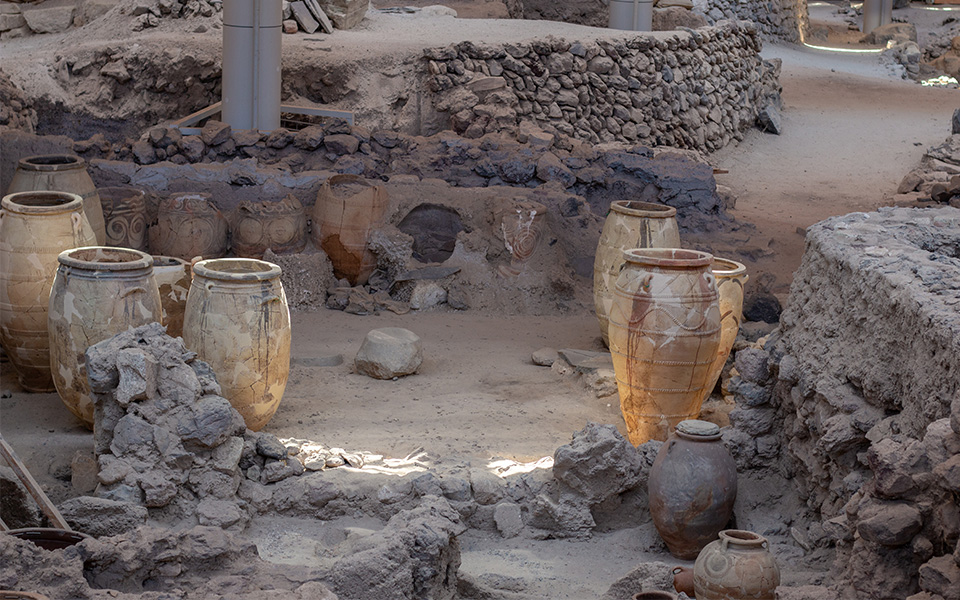
Akrotiri, Santorini
© Shutterstock
Santorini’s fame may rest on its caldera sunsets and iconic Cycladic architecture, but the island’s greatest treasure lies hidden beneath a modern roof at its southern tip: Akrotiri, the “Pompeii of the Aegean.” Settled as early as the 4th millennium BC, this bustling Bronze Age town flourished until the catastrophic volcanic eruption of c. 1600 BC – the most powerful in the world of the past 10,000 years. Entire streets, multistory houses, workshops, and storerooms were entombed in ash, preserving a vivid snapshot of prehistoric life.
Walking the raised walkways today, visitors glimpse an astonishingly advanced society: paved streets, an urban drainage system, elegant homes with light-filled upper floors, and walls once adorned with exquisite frescoes of boxers, blue monkeys, and fishermen. Finds from the site, displayed in the Museum of Prehistoric Thera in Fira, include pottery, tools, and the celebrated wall paintings that reveal both artistry and everyday life.
Though the archaeological site is covered, autumn is the perfect time to visit: the island is quieter, the museum less crowded, and you can wander the shaded ruins at leisure before exploring Santorini’s gentler fall landscapes.
Opening hours: Daily 08:00-20:00 (April-October); 08:30-15:30 (November-March). Closed Tuesdays
Tickets: €20 (site + museum)
Tel.: (+30) 22860.254.05
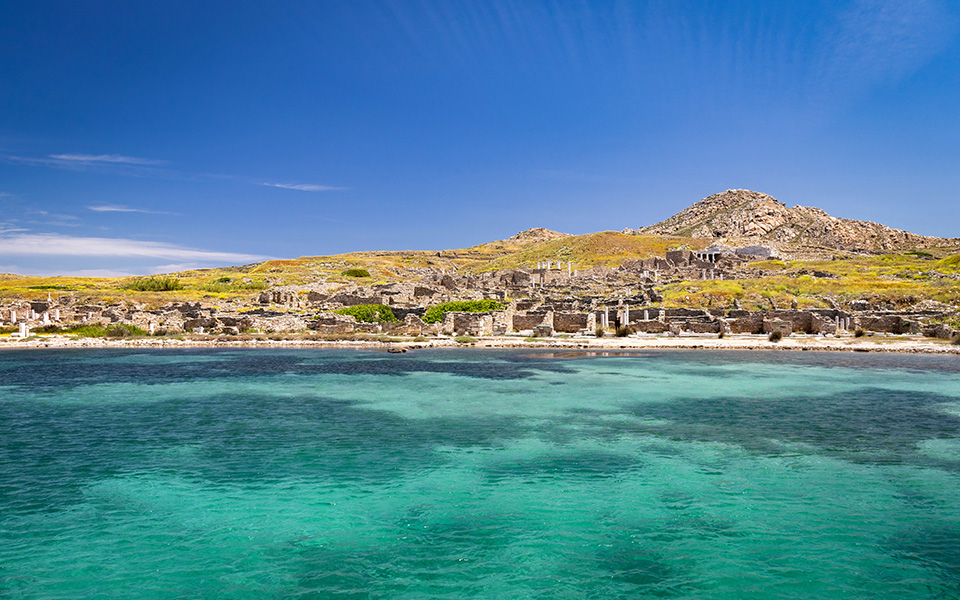
Delos
© Shutterstock
Uninhabited and reachable only by boat from nearby Mykonos, the sacred island of Delos feels like a place apart. In Greek mythology, this barren speck of land was where Leto gave birth to Apollo and Artemis after Poseidon anchored the floating rock to the seabed. By the Hellenistic era, it had grown into a cosmopolitan hub: declared a free port in 166 BC, Delos drew merchants, bankers, and settlers from across the Mediterranean. At its height, this tiny island of just five kilometers by one was home to some 30,000 people – a dazzlingly diverse community whose temples, houses, and mosaics still litter the landscape.
Walking among the remains today, you pass the Terrace of the Lions, the Sanctuary of Apollo, a theater that once seated 5,000, and the elegant mansions of wealthy traders. The sense of abandonment is profound – a ghost city suspended in brilliant Cycladic light.
Autumn is definitely the time to go: ferries run only until the end of November, and the island then closes for winter. With fewer crowds and cooler air, Delos regains its strange, mystical aura.
Boats: From Mykonos Old Port (20 min). €20 return
Opening hours: April-October 08:00-20:00; November 08:00-16:00. Closed December-March
Tickets: €20 (site + museum)
Tel.: (+30) 22890.222.59
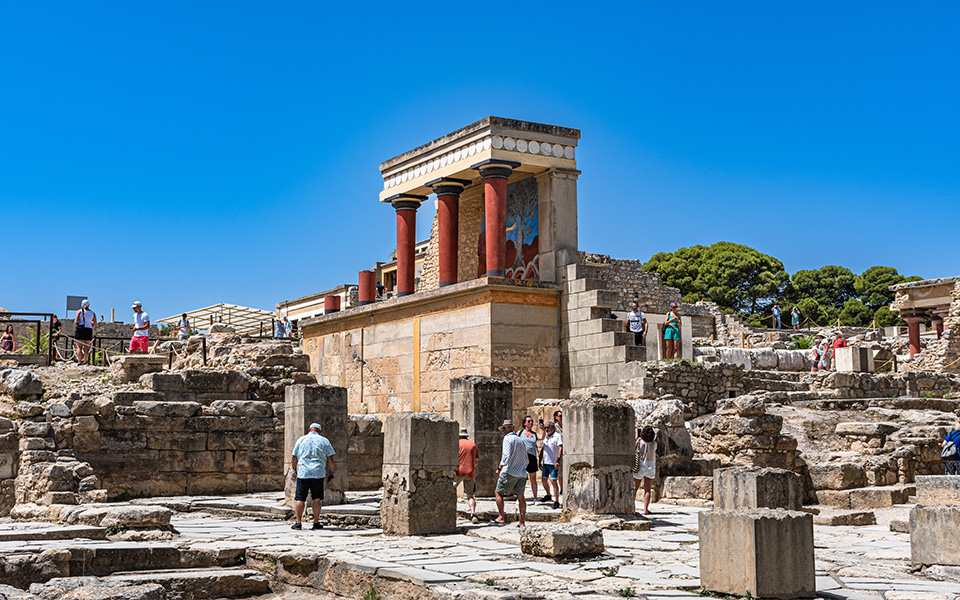
Knossos
© Shutterstock
Just south of Heraklion lies the Palace of Knossos, the second most visited site in Greece and the beating heart of Europe’s earliest civilization. From around 2000 to 1400 BC, this sprawling complex was the ceremonial and political center of the Minoans, a Bronze Age society whose sophistication still astonishes the modern visitor: multi-story buildings with grand staircases, advanced plumbing systems, storerooms packed with giant pithoi (storage jars), and walls alive with colorful frescoes of bull-leapers, processions, and vivid natural scenes.
Excavated and partially reconstructed in the early 20th century by pioneering British archaeologist Sir Arthur Evans, Knossos is steeped in Greek mythology. This was the seat of the fabled King Minos, whose architect Daedalus (father of Icarus) built the labyrinth to contain the fearsome Minotaur, later slain by Theseus with the help of Ariadne’s thread. Walking the Central Court and exploring the maze of winding passages and restored rooms today, you sense how myth and architecture intertwined in Evans’ mind.
For me, Knossos was the spark: visiting as a child with my family, I first glimpsed the world of archaeology among these painted walls and ancient corridors. The site still casts that same spell, especially in autumn, when Crete remains warm but the crowds have thinned. Pair your visit with the superb Heraklion Archaeological Museum, where many of Knossos’ finest treasures are displayed.
Location: 5km south of Heraklion
Opening hours: April–October 08:00–20:00; November–March 08:30–17:00 (last entry 16:45)
Tickets: €20 (site only)
Tel.: (+30) 2810.2319.40
As summer draws slowly to a...
From Mycenaean citadels to ancient stadiums,...
With fewer tourists, sunlit harbors, and...

Ten must-do experiences in Athens, from...