Three Traditional “Kafeneia” You Should Visit in Pilio
Whether you’re in northern, central or...

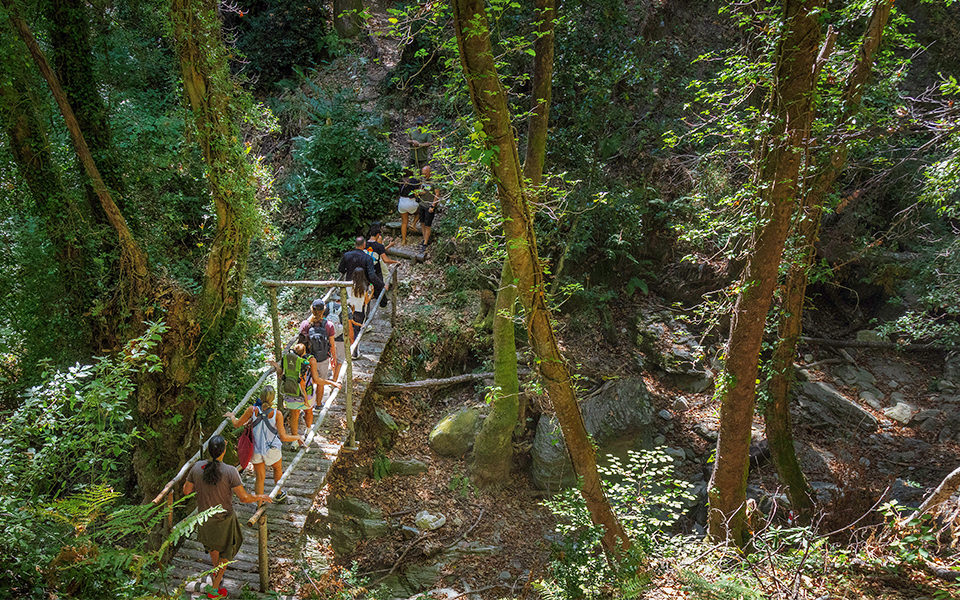
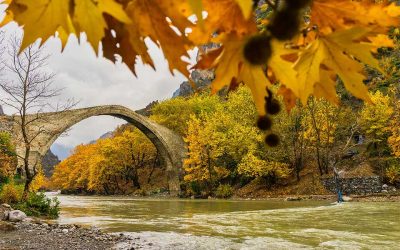
Crossing the wooden bridge built voluntarily by the Tsagarada Tourism and Development Association in cooperation with local bodies.
© Perikles Merakos
On the kalderimi, or cobblestone path, linking two of Tsagarada’s neighborhoods – Aghia Paraskevi and Aghioi Taxiarches – near the Kartalis fountain, reclamation work is underway. The retaining wall that once held back the soil collapsed during Storm Daniel in September 2023, leaving the spot clogged with mud and difficult to cross. Some volunteers clear the pathway, others trim back wild vines that block the view, and still more carry stones to rebuild the fallen wall. Among these local volunteers are the village president, Leon Ioannou, the deputy mayor of Mouresi, Nikos Kampouris, and members of the Tsagarada Tourism and Development Association.
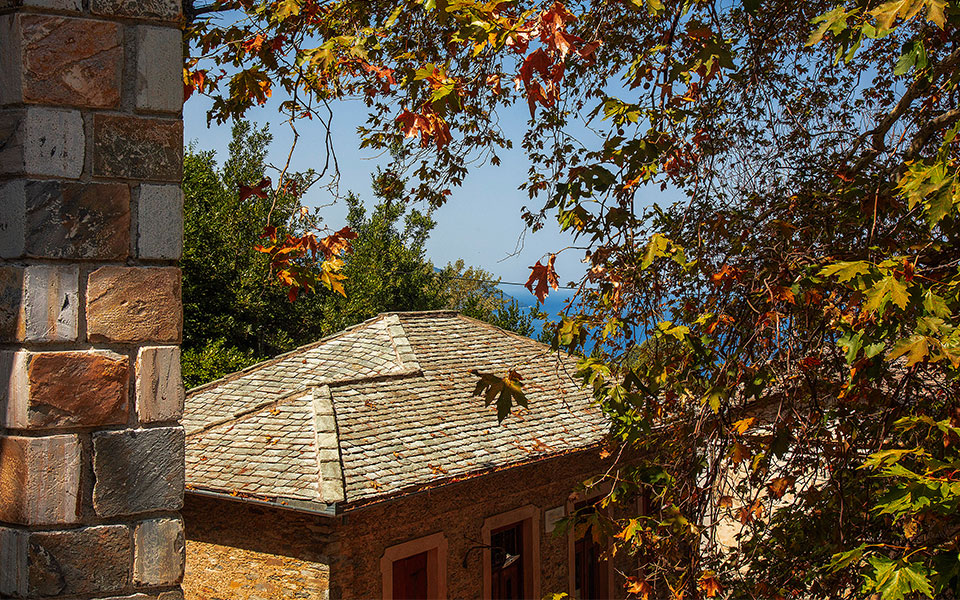
In Tsagarada, Pilio’s traditional stone-roofed architecture prevails.
© Perikles Merakos
As we talk, they tell us of the immense destruction that Daniel left behind. Thousands of tons of debris cut off communication between the villages of Pilio. The list of damages is long: to roads – repairs in the municipality of Zagora-Mouresi alone are estimated at €108 million; to water supply systems; to footpaths; to residential property; and to farmland. While many compensation claims are still pending, the local community has, in a rare show of collective effort for Greece, spent the past two years not only trying to bring the trails back to their original condition but also, where possible, upgrading them. At the forefront of this initiative is the Tsagarada Tourism and Development Association, founded in 2012, which today counts 37 active members.
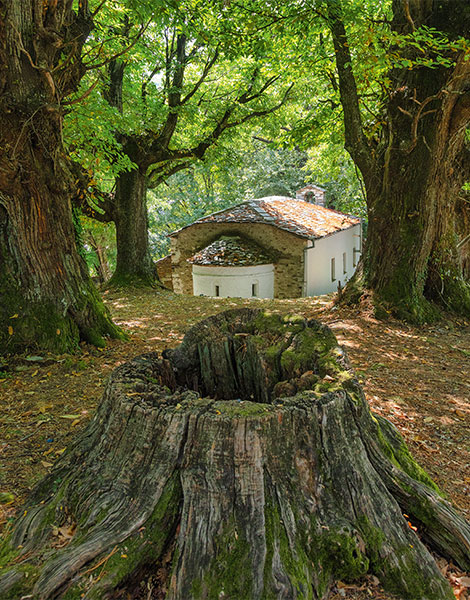
The Church of Aghios Stefanos in Tsagarada’s district of the same name.
© Perikles Merakos
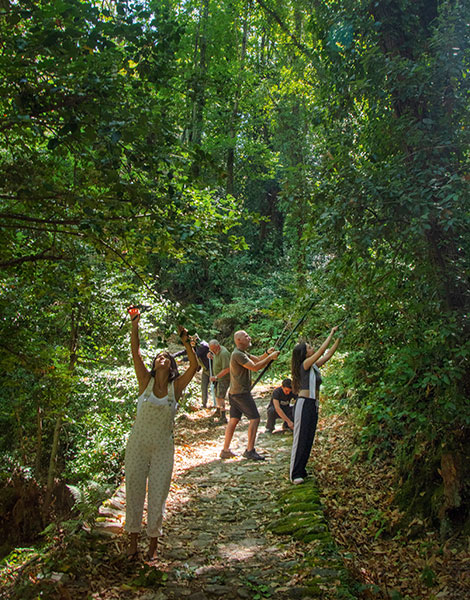
Members of the Tsagarada Tourism and Development Association, together with volunteers, clearing a trail.
© Perikles Merakos
“The first clean-up began in Aghia Paraskevi Square, which had been completely covered in mud. The historic fountains had run dry, and the bridge had been destroyed,” says Christos Martzos, president of the Association. We meet him, along with members of the local council, on the veranda of the Lost Unicorn Hotel, which he runs in Tsagarada. Once the country home of famed local benefactor Nikolaos Stakos, the building dates back to 1890.
“Using the existing network of trails as our foundation, we developed a holistic plan for their revival. Every path we restore, or every new one we open, must be something we can maintain in the long term. We’re even considering launching a trail adoption scheme,” says Nikolaos Melis, the Association’s vice president, noting that most of the equipment and materials they use are funded from their own resources.
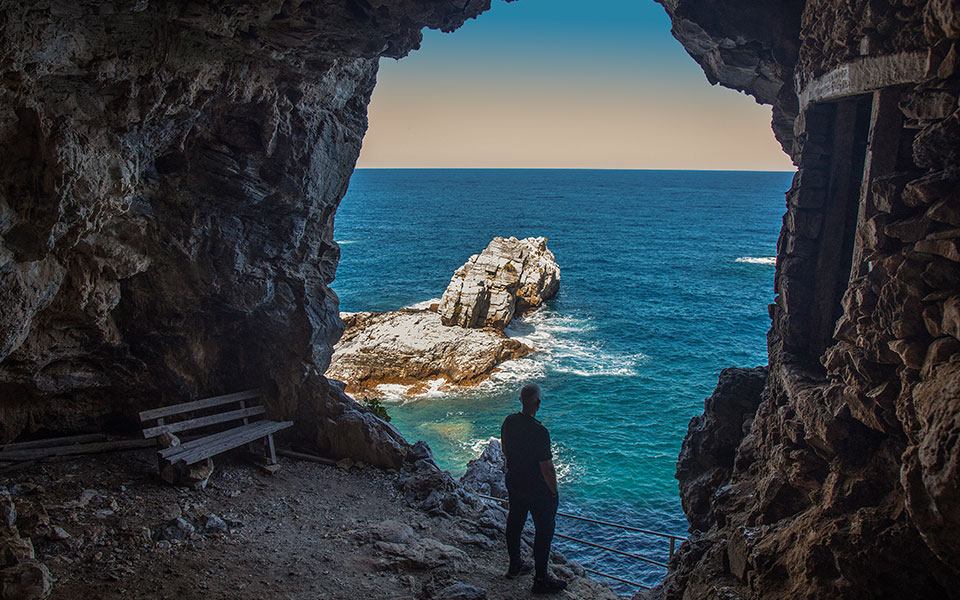
View from the “Hidden School” cave, near Fakistra Beach.
© Perikles Merakos
The trails of Pilio are more than scenic routes for hikers and nature lovers from Greece and neighboring countries; over the past two years, visitors from as far away as North America have started appearing. The paths also serve as vital arteries that link the mountain villages with the coast, leading down to beaches such as Damouchari, Mylopotamos and Fakistra.
Tsagarada is one of the most spread-out villages in Greece, its original seven settlements now merged into four districts. There is no single main square in the traditional sense; instead, each hamlet has its own centrally located plane tree. The most famous of them all is the thousand-year-old plane tree in Aghia Paraskevi Square, whose age and girth are truly amazing.
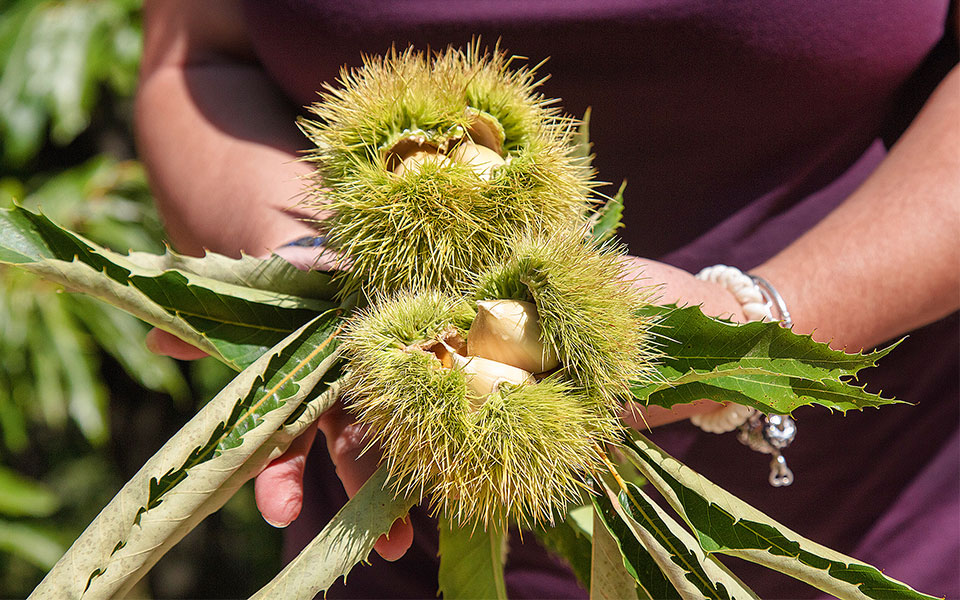
Chestnuts in the village of Xorychti, renowned for their production.
© Perikles Merakos
During our four-day trek in the area, the Association guides us to already restored sections of different kalderimia. On one of them, we pass through the gorge that leads to much-photographed Fakistra. Here, deep in a chestnut forest, the cement bridge that once connected the two sides of the mountain had been washed away. “The lay of the land didn’t allow us to rebuild on the same spot. With the help of engineers, we created a detour, carved a new route, and constructed a wooden bridge using fallen trunks,” says Martzos. Crossing the nearly five-meter bridge under a canopy of wild vegetation, I felt like I had stepped into an Indiana Jones film.
On another route, we descend to the “Hidden School” and the rock-hewn Chapel of Panaghia Megalomata, following the trail from Fakistra toward Damouchari. Here, village volunteers have nearly finished restoring the stone steps and reinforcing the ropes that protect hikers from slipping into the sea.
“Every day I would set out on foot from Aghia Paraskevi Square to reach my school, the Nanopouleio. Many times, when it snowed, I would dry my socks on the school radiator. Back then, the primary school had only two classrooms; today it has six, since children now come from nearby villages, too,” says 28-year-old Vasiliki Tzebetzi, who accompanies the group on our walk. Her words confirm that Tsagarada’s paths have long served as lifelines.
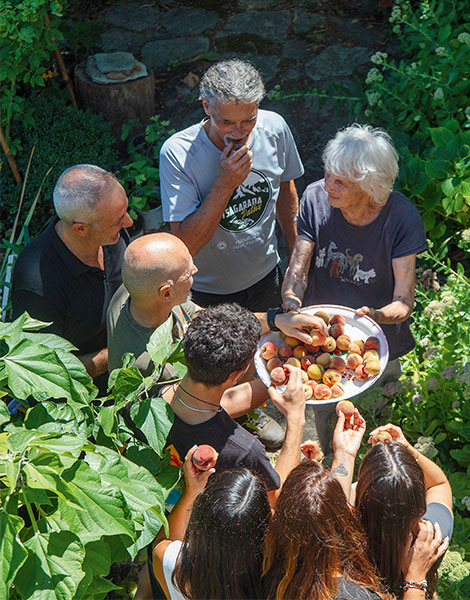
A treat of fruits from a Pilio garden.
© Perikles Merakos
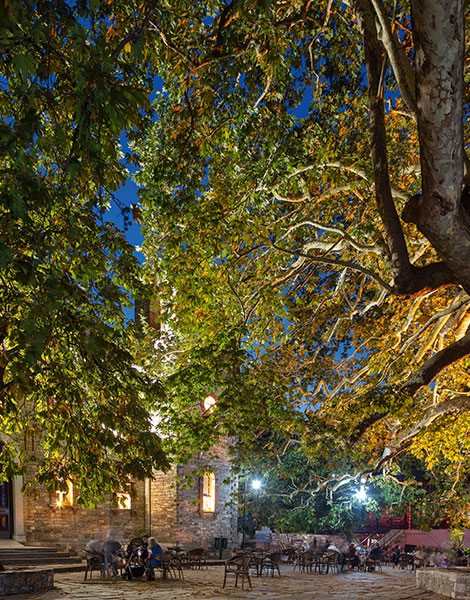
The square of Aghia Paraskevi in Tsagarada.
© Perikles Merakos
This is also underscored by the wealth of buildings that line them, a legacy of local benefactors. Below the Nanopouleio School, built in 1909 thanks to a donation from Nikolaos Nanopoulos, stands the two-story stone Achillopouleios Commercial School, endowed by brothers Sofoklis and Evangelos Achillopoulos. This structure, recently restored, is now used mainly for occasional exhibitions but is still searching for a more active community role. Here, by sheer chance, we encounter educator-historian Giorgos Syros, along with colleagues Elpida and Dimitra Dalouka, running the educational project Pelioritic Mythistory under the auspices of the Municipality of Zagora-Mouresi. They share with children the mythical identity of Pilio in a playful and engaging way. It’s heartening to see eight-year-olds taking such an interest in their place of birth, but disappointing to consider that this rich heritage remains so underutilized – the only references to mythology here on the “Mountain of the Centaurs” are the names of cafés and guesthouses.
Nonetheless, Tsagarada, with its mesmerizing natural landscape, continues to attract newcomers who choose to make it their permanent home. Maria Konstantinidou, who moved here from Thessaloniki, opened the seasonal wine bar Anapodo Platanos in 2017, breathing life back into the abandoned square of Aghia Kyriaki. Since then, every summer the square comes alive with patrons clinking glasses, sampling wines from across Greece and enjoying carefully curated music. Similarly, ceramicist Evangelia Marinou from the town of Sapes in Rhodope, together with her husband, a visual artist, settled here in 1989, later founding Erottera, an art workshop that has since become a local landmark. “You feel as if you’ll be absorbed into the environment – that’s how magical this place is. Walking in the forest, you think you might turn into a tree,” she says, offering us a Thracian treat of sugar-coated roasted chickpeas.
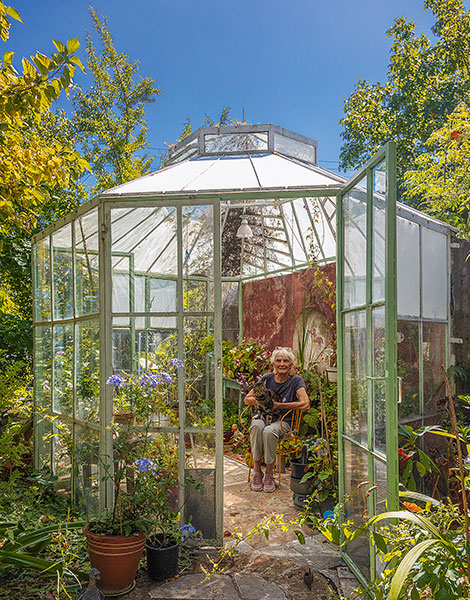
Doris Schlepper in her garden with rare plants and trees from around the world.
© Perikles Merakos
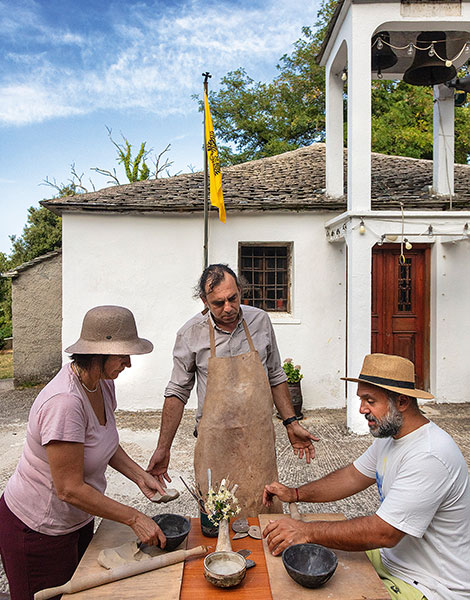
Ceramics lesson by Pelion Experiences
© Perikles Merakos
Heading north, after a hearty meal at Aleka’s – the family-run restaurant of local Eleni Stergiopoulou, who insists on traditional cooking – we reach Mouresi. In the village square, in front of the timeless Church of Aghia Triada, preparations are underway for a wedding feast. “Winters are tough; we spend our time on support work. We paint hives, fix frames, and make sure our bees don’t freeze,” says 25-year-old Apostolos Vontzos, a second-generation beekeeper who, once a year, delivers orders by truck to Athens and Thessaloniki. Indeed, winter life in Pilio is harsh; from January onward, the region quite literally shuts down for three months.
Still, there are the “heroes,” such as Vasilis Kasidis in Kissos, a 20-minute drive from Mouresi. In the village square, beside the 17th-century Church of Aghia Marina, his café-bar Scholarchio has been a refuge since 1994, serving drinks under lime and chestnut trees, and staying open even on winter weekends. Over the years, the venue has hosted live performances by such beloved Greek musicians as Thanasis Papakonstantinou and Socratis Malamas. A bar like this could help breathe life into nearby Xorychti, the chestnut-producing village that is steadily losing its population. Here, time “stops” at the end of October, after the Chestnut Festival – this year taking place on the weekend of October 25-26.
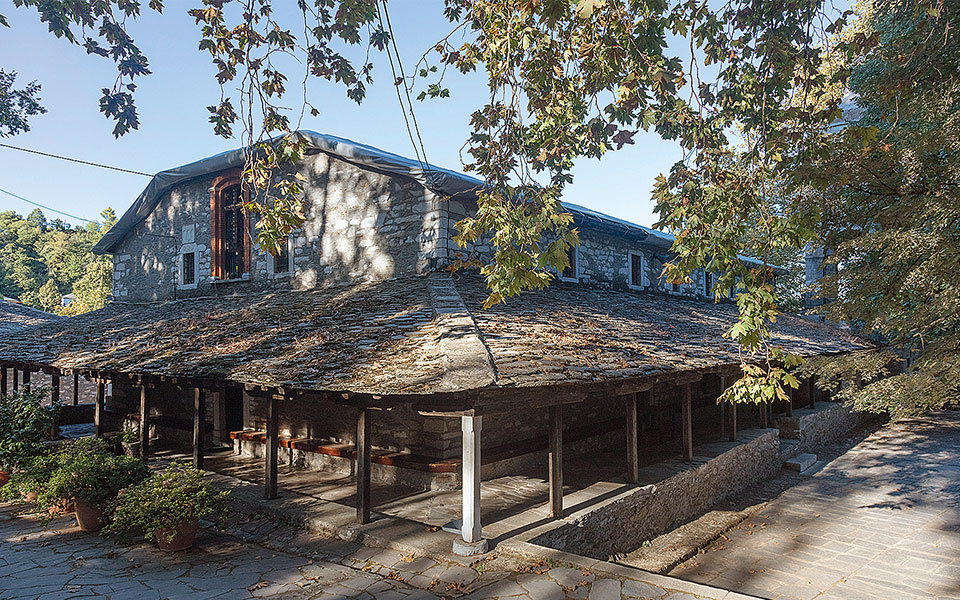
The Church of Aghia Marina in Kissos.
© Perikles Merakos
“At the festival we showcase our products, host seminars for producers, and keep traditions alive,” says Katerina Karastamati, president of the Cultural Association and a chestnut grower whose family has been cultivating the crop for over a century. In the forest we explored, we came across chestnut trees that were 150 years old.
In the same village, just before our departure, we also enjoyed a pottery class in the courtyard of the stone-roofed Church of the Dormition of the Virgin. It was one of the many experiences offered by Pelion Experiences, the venture of Angeliki Vogdanou and Christos Giannakopoulos. With our hands in clay and the evening breeze turning soft and balmy, we talked about Pilio and its future development. “It doesn’t make sense to ask why someone should visit our land. In Pilio, you’re already immersed in what you came for. It’s not about seeing something – it’s about living it,” Giannakopoulos says.
And indeed, Pilio is a vast open-air museum of nature, with stone paths, centuries-old plane trees and fast-running streams. If you’re lucky, you might even catch a glimpse of the maïstres – the fairies of local lore.
Maistra (Tsagarada, Tel. (+30) 24260.493.82) A charming guesthouse with four double rooms, one suite, and a family apartment. All accommodations feature fireplaces, and from the garden you can glimpse the Northern Sporades islands and Mt Athos.
Lost Unicorn (Tsagarada, Tel. (+30) 24260.499.30) A fairytale-like ten-room property where the décor and the atmosphere evoke the English countryside. A truly unique place to stay.
Aleka’s House(Tsagarada, Tel. (+30) 24260.493.80) A boutique property with ten traditional rooms, excellent mattresses, and quality amenities. It also has a café that hosts exhibitions and a restaurant serving local dishes.
Itamos (Tsagarada, Tel. (+30) 24260.489.69) A beautiful stone-paved courtyard with mountain and sea views. The menu features Greek recipes with creative touches, such as zucchini carpaccio. Tasty grilled meats and excellent stews are served here, too.
Aleka’s House (Tsagarada, Tel. (+30) 24260.493.80) With a family history dating back to 1956, this restaurant offers warm hospitality and delicious food served on handcrafted ceramic plates. The menu ranges from home-style classics such as meatballs to local specialties, including spetzofai, or sausage and peppers, along with a wide variety of meze.
Scholarchio (Kissos, Tel. (+30) 697.307.0857) Since 1994, Vasilis Kasidis has been serving well-made classic drinks in the square of Aghia Marina. Expect a great mix of music, from Greek entechno to rock.
Apalou Bistro (Tsagarada, Tel. (+30) 24260.497.27) A cozy all-day spot for coffee, drinks and food. It’s famous for its fresh desserts, especially the millefeuille and galaktoboureko.
Eroterra (Tsagarada, Tel. (+30) 24260.494.90) Artist and writer Dimitris Maninis and ceramicist Evangelia Marinou set up their lovely workshop in the neighborhood of Aghioi Taxiarches in 1994. Here you’ll find everything from paintings to decorative pieces and tableware, such as serving platters for a grand feast.
Vontzos Beekeeping (Mouresi, Tel. (+30) 697.445.6807) The Vontzos family has been producing honey since 2003. Their chestnut honey is particularly delectable; because chestnut trees flower at the same time as linden, the result is a lighter-colored honey with a sweeter taste.
The Church of Aghia Marina (Kissos) The landmark of the village, this 17th-century three-aisled basilica impresses with its architecture and sheer size. Inside, four domes are decorated by painter Ioannis Pagonis, while the centuries-old iconostasis is covered in gold leaf.
The Church of the Archangels (Tsagarada) Located in the heart of the Aghioi Taxiarches quarter, this church was built in 1746 and features a superb carved wooden iconostasis.
The Thousand-Year-Old Plane Tree (Tsagarada) A true symbol of Pilio and one of the oldest trees in Europe, believed to be over a thousand years old. With a circumference of 15 meters, it dominates the square of Aghia Paraskevi.
The “Hidden School” (Fakistra Beach) Along the rocky coastline between Damouchari and Fakistra are two small caves. In the 16th century, the larger one (adorned with an icon of Panaghia Megalomata) served as the hermitage and makeshift “classroom” of a monk. The second cave was later transformed into a chapel dedicated to the Virgin Mary. The trail begins at the Fakistra parking area and takes about 15 minutes to walk.
Green Mountain Activity Area (Tsagarada, Tel. (+30) 693.895.9499) A specially designed outdoor space in Tsagarada’s chestnut forest, hosting a wide range of activities such as archery, paintball and themed games, including treasure hunts. Children as young as four are welcome. The site is managed by Hike Away (hikeaway.gr), which also organizes hikes, including one around the “small loop” of Tsagarada.
Pelion Experiences (Tel. (+30) 697.432.5528) They offer a variety of hands-on experiences, from cooking and pottery classes to olive oil tastings. Activities take place in selected venues, outdoor spaces or even suitable locations suggested by participants.
Anapodo Platanos (Tsagarada, Tel. (+30) 697.194.2152) During the winter months, when her wine bar on Aghia Kyriaki Square is closed, Maria Konstantinidou hosts private dinners. She does the cooking herself, and pairs the food with selections from her bar’s extensive wine list.
Serpentin Garden (Tsagarada, Tel. (+30) 24260.490.60) German-born Doris Schlepper has created a spectacular three-acre garden featuring plants from around the world, including an African baobab. Visits are available by appointment only.
Whether you’re in northern, central or...

Greece Is presents "Peloponnese Trails," a...
Discover five mountain destinations where crisp...
When the summer crowds depart, Greece’s...