The Secrets of Amalias Avenue
Discoveries along Amalias Avenue, from the...

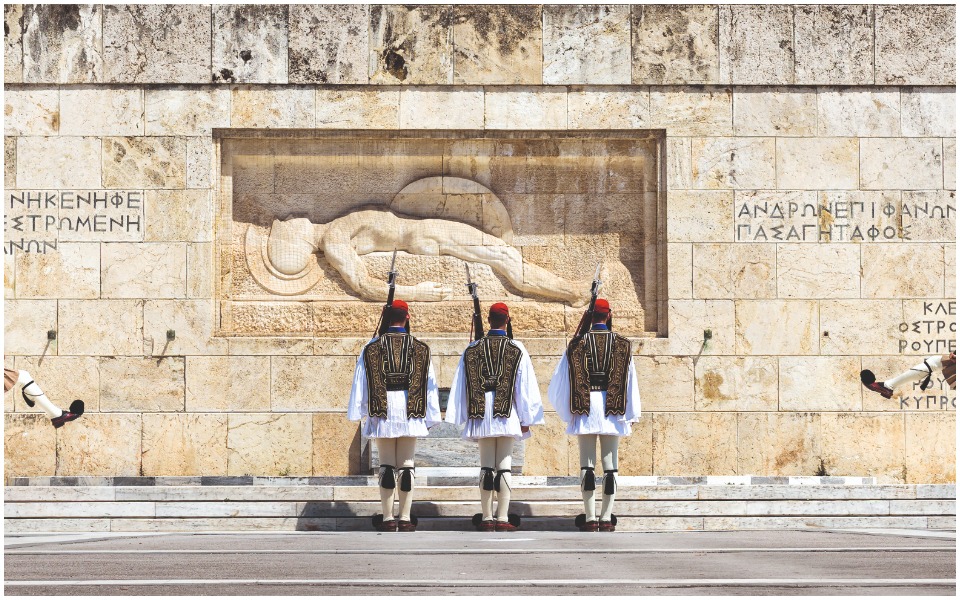
Evzones, the Presidential Guard, at the Tomb of the Unknown Soldier in Athens.
© Shutterstock
They stand there in silent vigil – the tall, slender figures of the Evzones, Greece’s elite Presidential Guards, in their pleated white fustanellas (kilts) and red tsarouhia (clogs), motionless like statues before the marble wall. Their polished rifles glint in the autumn sun. The crowd freezes in respectful pause: tourists, locals, schoolchildren. But beneath that stone lies no name, no date – only the unknown warrior, the countless nameless fallen whose blood has bound the soil of Greece to its memory.
Today, October 28, Greece commemorates its “Ohi” – the refusal, the stand, the sacrifice – in the struggle against the rising tide of fascism in Europe. It is fitting, then, that on this day, the nation and the monument converge in this place: Syntagma Square, before the Hellenic Parliament, at the Tomb of the Unknown Soldier.
This is no mere monument to be admired. It is the heart of collective identity – the silent altar where memory, duty, sacrifice, and pride meet, along with the tensions and disagreements of a living democracy, with all its complexities and contradictions.
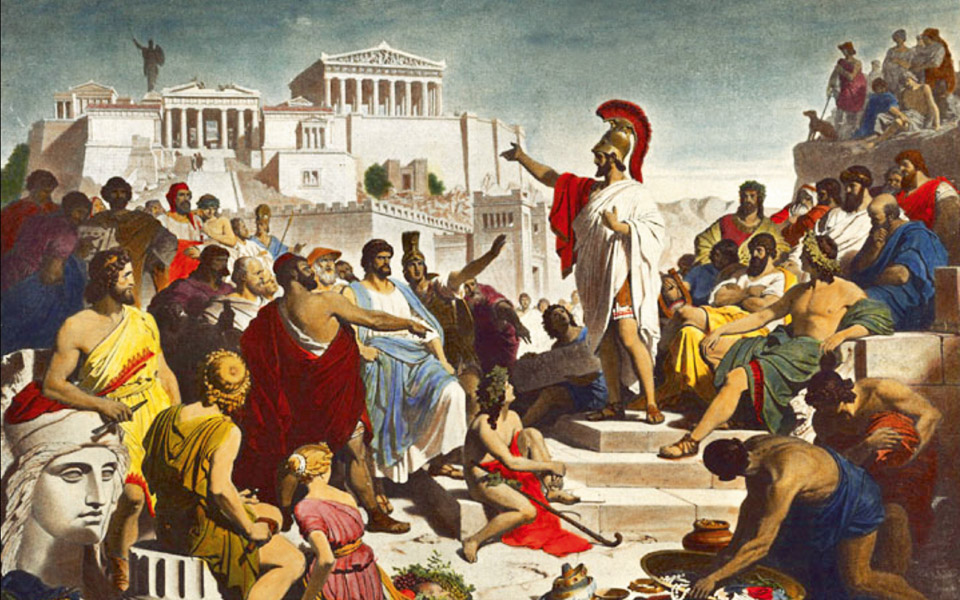
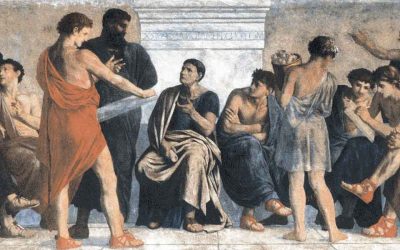
Nineteenth-century painting by Philipp Foltz depicting the Athenian politician Pericles delivering his famous funeral oration in front of the Assembly.
The idea of honoring the war-dead by giving them symbolic burial is not a modern phenomenon at all – it is ancient Greek in origin. In classical Athens, the Kerameikos cemetery reserved a sacred space for the city’s fallen, and the epitaphios logos – the funeral oration – celebrated not the deeds of individuals, but the collective valor of those who died defending the “polis,” the city-state.
In Book 2 of Thucydides’ History of the Peloponnesian War, written in the late fifth century BC, Pericles delivered his famous oration over the first dead of the war. He spoke not of a single fallen hero but of “our dead,” binding the living and the departed in a shared civic duty. Theirs was a sacrifice made, as he said, putting aside their own wants and desires for the collective good of the city and its people; to live and die for freedom was the highest honor.
Thucydides records that the Athenians prepared “an empty bier decked for the missing, that is, for those whose bodies could not be recovered” (History of the Peloponnesian War 2.34.3).
That act – parading an empty bier for the unreturned dead – may well be the first Tomb of the Unknown Soldier. It marked not a person, but an ideal: the communal remembrance of all who gave their lives so that others might live free. In that lineage of duty and democracy, from the Kerameikos to Syntagma, Greece’s modern monument stands as both descendant and heir – a tomb built not only of marble, but of memory itself.
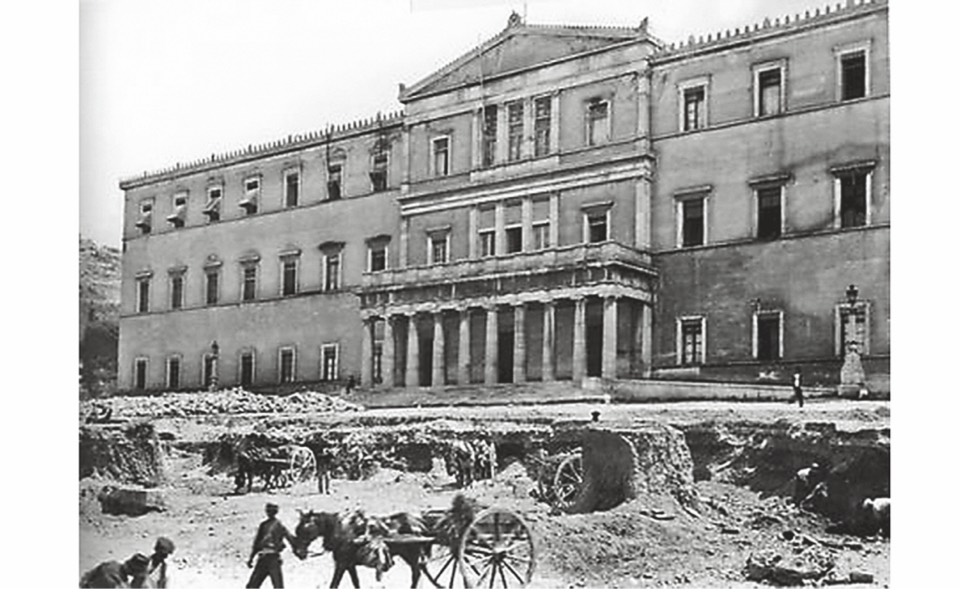
Prime Minister Eleftherios Venizelos personally assumed responsibility in 1929 for the construction of the monument designed by architect Emmanouil Lazaridis.
© Shutterstock
After the First World War, many of the combatant nations erected tombs to the unknown soldier; in London, an unidentified member of the British Imperial armed forces who died on the Western Front was given a state funeral and laid to rest in Westminster Abbey. At the same time in Paris, an unknown French soldier was interred beneath the Arc de Triomphe. Both sites became sacred spaces – collective graves for the millions who had fallen in one of history’s deadliest conflicts.
In Greece, momentum for a similar monument gathered pace in the aftermath of the 1922 Asia Minor Catastrophe and the bloodshed of World War I. Yet fierce debate broke out over its location. Should it stand in “Palace Square” (today’s Syntagma Square), a public and civic setting, or in a quieter place among Athens’ ancient landmarks – the Pedion tou Areos park, the Panathenaic Stadium, the hills of Ardittos and Philopappou, or the ancient cemetery of the Kerameikos? Some even proposed the Sacred Rock of the Acropolis. Architect Antonis Sochos, a professor at the National Technical University of Athens, argued passionately for that site, believing it ideal because it was “quiet and commands respect.”
The debate was settled in 1929, when Prime Minister Eleftherios Venizelos, following the decision to convert the old royal palace into the House of Parliament, personally took charge of the monument’s creation. The Tomb of the Unknown Soldier would stand before Parliament itself – a deliberate act linking the sacrifice of the dead to the life of the democratic state.
Designed by Emmanouil Lazaridis, with sculptural work by Fokion Rok, the monument was inaugurated in 1932. Its symbolism is explicit: the fallen warrior carved in low relief is not a modern soldier but an ancient hoplite, helmet askew, body reclined – a timeless emblem of courage, sacrifice, and continuity between ancient and modern Greece.
As Ariadni Vozani, architect and professor at the National Technical University of Athens, notes, “With influences from Art Deco, references to Doric simplicity, and pursuing a modern form of Classicism, the piece, which was quite pioneering for its time, stands well among its European peers.”

For nearly a century, the Tomb of the Unknown Soldier has served as hallowed ground – a place of mourning and collective memory at the heart of Greek democracy.
© Shutterstock
For nearly a century, the Tomb of the Unknown Soldier has stood at the heart of Athens – a solemn monument dedicated to all those who gave their lives for Greece. Set before the Hellenic Parliament in Syntagma Square, it serves as both a place of mourning and a timeless symbol of national unity.
Every hour, the changing of the Evzones guards draws locals and visitors alike, a quiet ritual that connects the present to the sacrifices of the past. The marble relief of the fallen warrior, inspired by ancient ideals of heroism, reminds passersby that freedom and democracy are not abstract values, but human endeavors rooted in courage and loss.
Over the decades, the monument has witnessed moments of celebration, remembrance, and at times, tension – reflecting the living pulse of Greek public life. Its location in the country’s central civic space has made it a silent observer of history: parades, commemorations, and gatherings that mirror the nation’s evolving identity.
Today, the Tomb remains more than a monument. It is a space where memory, respect, and democracy meet – a reminder that collective remembrance is itself an act of continuity, binding generations through shared ideals and the quiet dignity of remembrance.
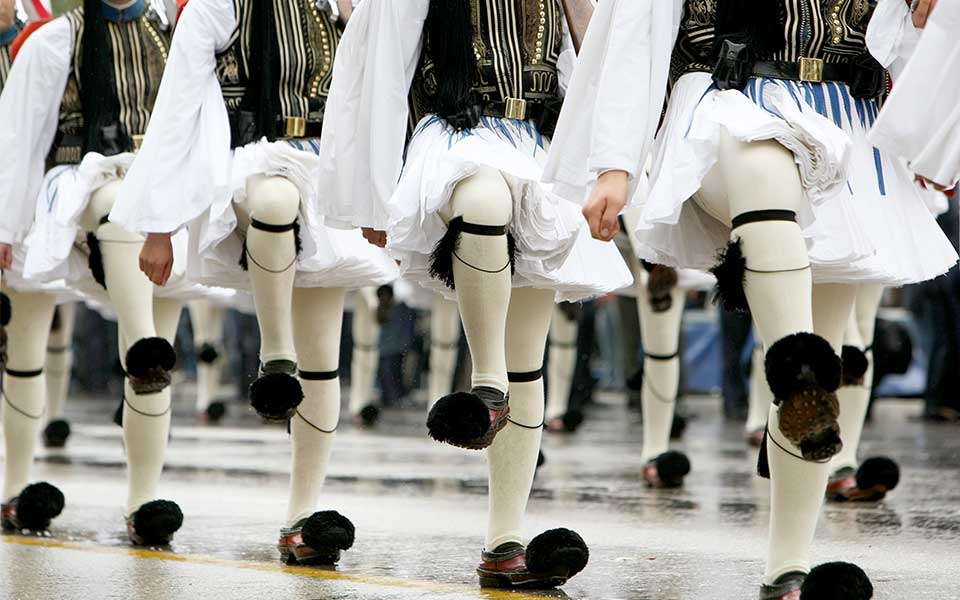
Ohi Day is celebrated with military and student parades.
© Shutterstock
Surmounted by the eternal flame, the Tomb is flanked by Greek flags, wreaths, and ritual guard changes. On Ohi Day, wreaths are laid with solemn procession; foreign dignitaries pay homage; children recite “Μάνα, μη κλαις” (Mother, do not weep). It is a site of symbolic communion – between past and present, between citizen and soldier.
Ohi Day – 28 October – commemorates that defiant “No” in 1940, when Greece refused fascist Italy’s demands. Above all, it is a day of sacrifice honored. Every wreath laid, every Evzone’s measured step, every silent bow before the Tomb resonates with that moment of choice and courage.
In the clean lines of white marble, the flicker of flame, the beat of drums and rifles, one feels the weight of uncounted losses. Yet it is not a weight of bitterness, but of resolve. The nameless soldier beneath the stone wall reminds us that the freedom we walk in today was shaped by blood and resistance to tyranny; freedom is never free.
In the silence of the Tomb, the unknown soldier speaks – not in words, but in presence: “We gave all.” From Thermopylae to the Epirus front, from the hills and mountains of Crete to the skies above Attica, generations of Greeks and their allies made the same offering. The monument does not ask merely that we remember; it demands that we live in the spirit of that sacrifice.
Discoveries along Amalias Avenue, from the...
From historic landmarks to edgy street...

A major restoration project is bringing...

A forgotten world comes to life...