Explore the Peloponnese on 11 Spectacular Hiking Trails
A new network of 11 hiking...

© Shutterstock
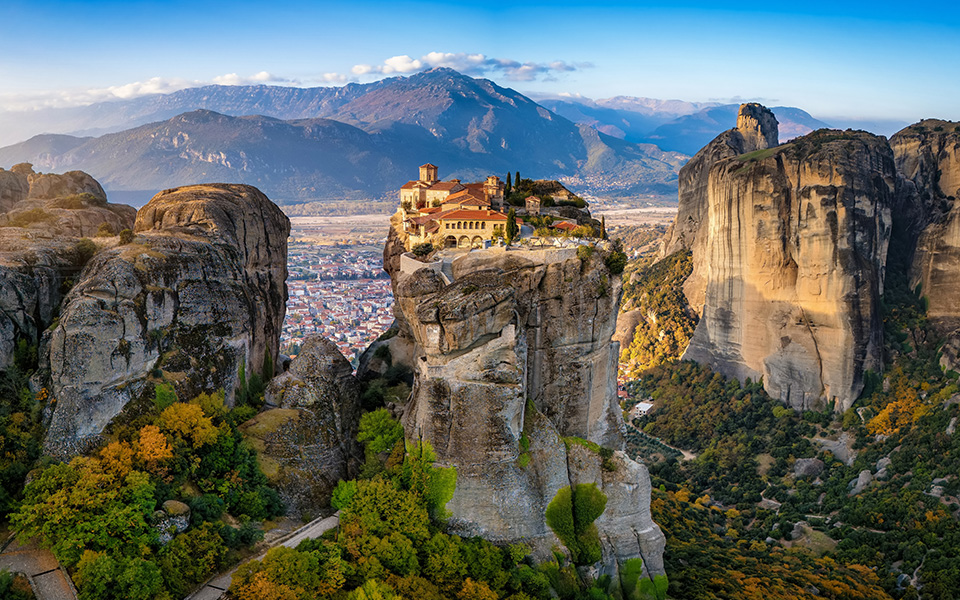
Located beside the Pineios river, with mountainous National Park of Tzoumerka rising to the west, Lake Plastira to the south, and the rich fields of Thessaly spreading east, Kalambaka and its adjoining village Kastraki are an easy drive from many places in mainland Greece, making this an ideal weekend destination or addition to an itinerary.
It’s quite a site from afar, the dramatic stone pillars of Meteora rising sharply from the plains.
The town center is notably flat, all the better to set off those jaw-dropping smooth, sheer rock formations, averaging over 300 meters in height, at the very edge of Kalambaka. The geology alone would have earned Kalambaka a spot on anyone’s travel wish list. Add to that six UNESCO world heritage recognized monasteries dating from the 13th century, all with active monastic communities, and you have one of Greece’s most extraordinary destinations, an unparalleled union of spiritual and geological wonder.
Kalambaka is a year-round destination, offering shaded hikes in the heat of summer and – if you’re lucky – magical vistas in winter snow. Fall with its colors aglow is ideal, and Easter in Meteora is extraordinary.
© The Natural History Museum of Meteora and Mushroom Museum
Housed in a fine building that was once the primary school of Kastraki, the Museum of Geological Formations of Meteora makes an interesting first stop. The museum traces the area’s geological development beginning some 30 million years in the past. An introductory film and interactive displays provide insights into general geological science, while a dedicated section explores Meteora’s unique rock formations in depth. (Central Square, Kastraki; 9:00-15:00 daily; admission free)
Now is a particularly good time to visit the Meteora area. After years of work, the Theopetra Cave has reopened at last, offering a fascinating look into the history of humankind itself. Located near fresh water, with a strategic vantage point, and surrounded by fertile land, Theopetra cave was ideally suited for habitation – and indeed, it was occupied for over a hundred millennia.
Paleoanthropologist Dr. Ekaterini (Nina) Kyparissi-Apostolika and her team have located evidence of habitation stretching back 130,000 years, an expanse of time so humblingly vast it makes the Peloponnesian wars seem like recent history.
The cave was inhabited from the Paleolithic era through the Mesolithic and Neolithic eras, with findings of great interest for understanding the transition from Mesolithic to Neolithic ways of life. Theopetra continued to be used sporadically throughout time. In fact, until 1987, when the excavations began, shepherds were sheltering their flocks here. The cave has a very large opening, allowing in natural light, and there are built walkways to visit the cave safely. In the adjacent Documentation and Education Center, a short film acquaints visitors with the history of the cave and the findings, which include stone tools and even footprints of the earliest inhabitants. Various findings are on display, from early tools of stone through beautiful Neolithic necklaces of beads or pendants. (8km southwest of Kalambaka; 8:00-15:30pm Wed-Mon; admission €5)
© The Natural History Museum of Meteora and Mushroom Museum
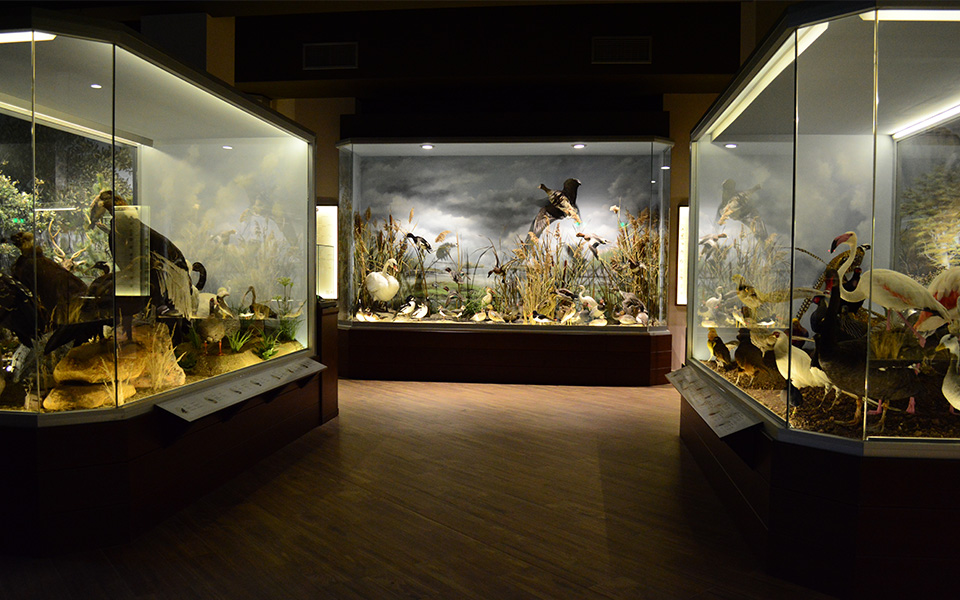
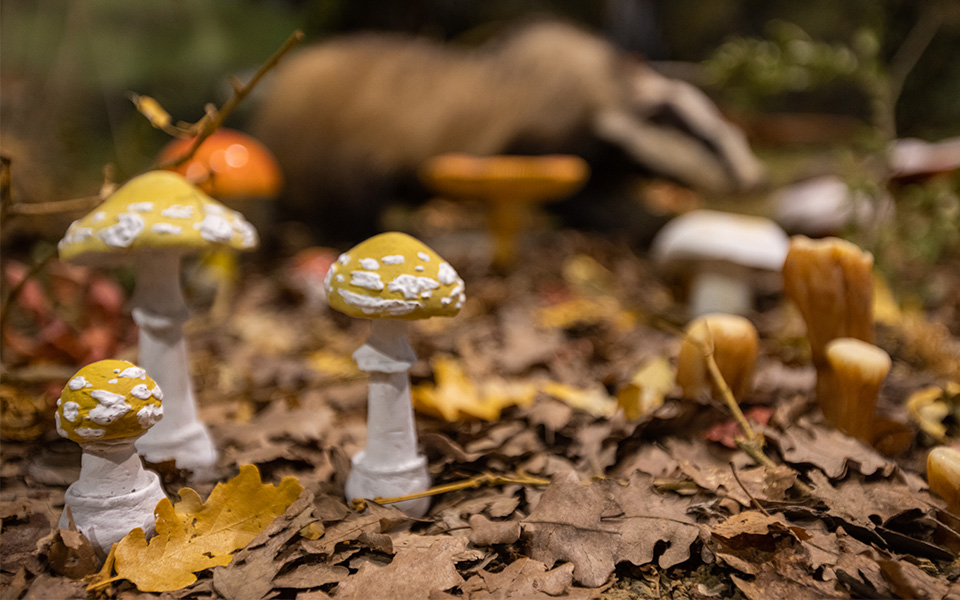
Astonishing displays of close to 350 species of mammals and birds fill the ground floor of this award-winning museum. The upper floor is devoted entirely to mushrooms, some 250 species of them. The tremendous variety of sculpted mushrooms is arranged in settings reflecting their natural ecosystems.
The museum is run by an active and dynamic team. They organize the biennial Panhellenic Truffle Festival, a major event celebrating truffles and a great variety of mushrooms, with celebrity chefs and dedicated teams cooking a host of fantastic dishes. They also bring the museum’s activities out into nature, notably with the guided truffle hunts that they organize in cooperation with Truffle Hunters Greece. Participants, led by truffle-hunting dogs and their trainers, search for fresh truffles before enjoying a forest lunch prepared with the day’s finds. The team has recently introduced a horseback truffle hunt, allowing visitors to combine gentle riding with truffle foraging. And there’s yet another new activity: a “Night at the Museum,” an immersive experience featuring video, lighting and sound. A tasting featuring mushrooms and truffles follows. The museum also has a very fun shop with lots of well-priced dried and preserved mushrooms of all varieties, plus truffles and related products. (Pindou 46; Mon-Fri 9:00-17:00, Sat & Sun 10:00-17:00; admission 7€, children, students, and seniors 5€; meteoramuseum.gr).
© Amber Charmei
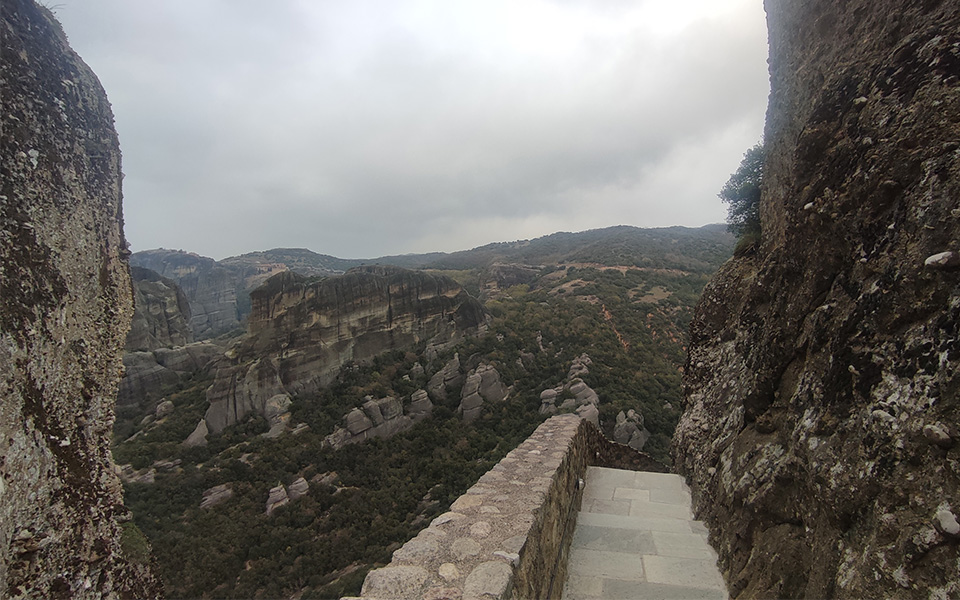
Whether drawn by spiritual devotion or cultural curiosity, reaching the Meteora monasteries on foot through wooded paths offers a meditative journey, echoing the experience of visitors from centuries past.
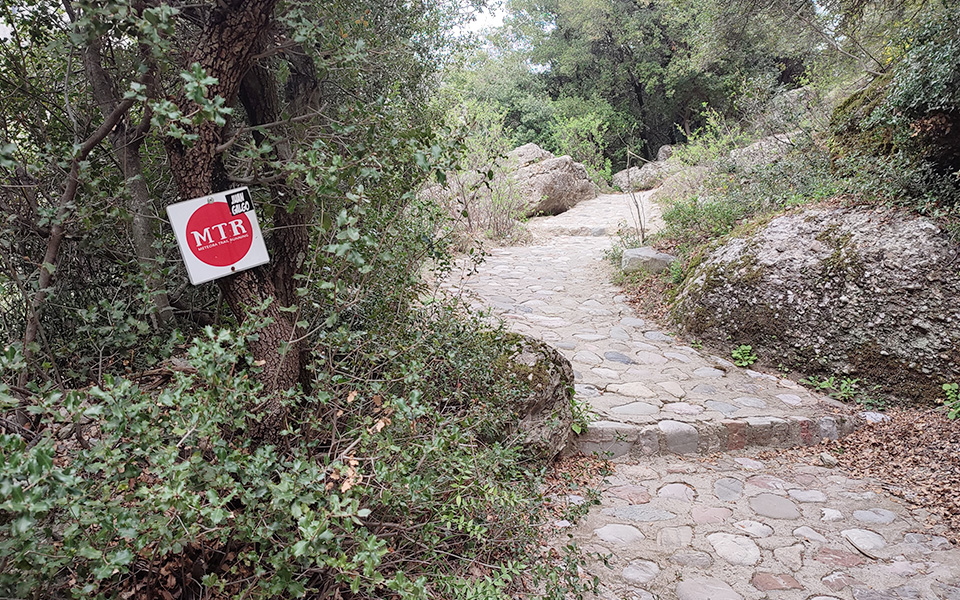
The dizzying geology offers plenty of opportunities for adventure (for more trails, see meteoratrails.com), but one of the simplest trails to reach two of the monasteries starts from the end of Kleisouras Street, at the edge of town. A trail through the woods with just a couple of steep sections leads you to Aghia Triada monastery, taking about 45 minutes at a relaxed pace. Hiking shoes make the most comfortable choice on this uneven stone path. Save a little strength for the last part of the ascent: the many steps carved into the side of the monastery’s stone pillar. The views are thrilling (those with vertigo take note). Adjacent to Aghia Triada is Aghiou Stefanou Convent. Be sure to check the monasteries’ opening hours in advance, in order to plan which you visit first. (For all monastery hours, see the Meteora Thrones website)
If you’re dressed more for hiking than for prayer, note that the monasteries provide skirts for female visitors. Note also that modest dress requirements also apply to men – this means no exposed knees or shoulders – and men cannot wear the skirts provided.
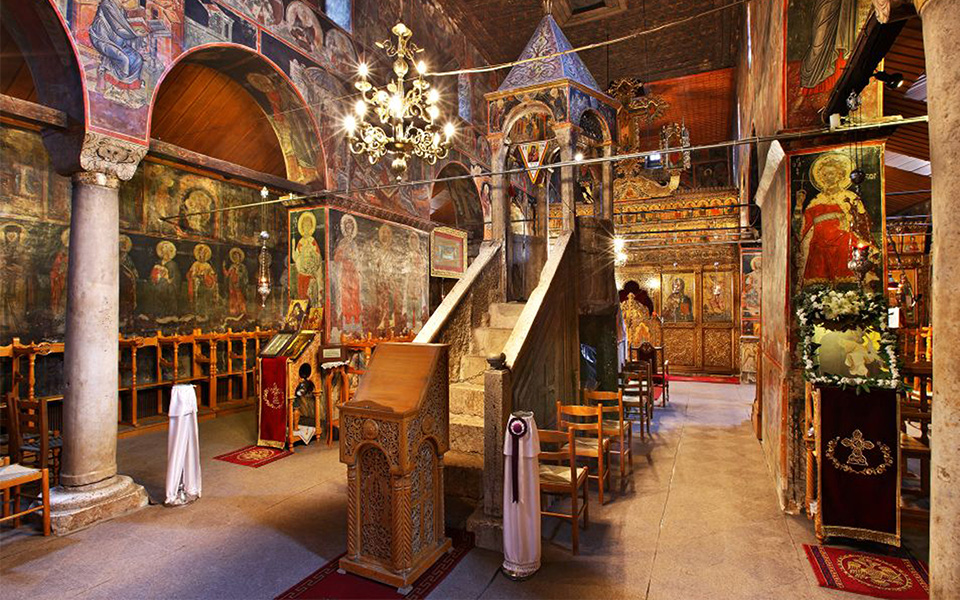
The challenging terrain is part of the monasteries’ historical allure. Hermits and monks were drawn not just to the majesty of the rocks but to the remoteness and difficulty of access. With such unique geology in play, the well-paved road leading to all the monasteries will only get you so far. For the mobility impaired, the most accessible of the monasteries is Aghiou Stefanou; you can drive almost to the door. Inside, there will be a few stairs.
To make the best use of your time, a tour of the monasteries is an excellent bet. Meteora Thrones, whose website is a good source of information about everything of interest in the area, offers several choices of group tours and private excursions by coach. The decisive advantage is having a well-informed and experienced guide offering a thorough introduction, filling you in on everything you might wish to know about each monastery before you arrive in order to make the most of your visit. You then get to experience the monastery in contemplative solitude. Afterwards, back in the coach, your guide can answer any questions you may have about what you have seen. The team also knows how to showcase the area’s natural beauty, with sunset tours, morning tours, and hiking tours that stop at the most dramatic viewpoints. (Meteora Thones, 29 Trikalon, Tel. (+30) 24320.784.55; meteora.com)
© Amber Charmei
Meteora’s towering rock formations and dramatic landscapes create a playground for outdoor enthusiasts, with hiking, trail running, e-biking, and rock climbing all on offer.
With close to 100 km of trails around Meteora, there are choices for hikers of all levels. A local initiative, Meteora Trails, has mapped out over a dozen trails, providing details on length, elevation gain, maximum incline, and water availability (note: water is often scarce, so bring plenty). Some trails can be combined for as ambitious a hike as you wish, and plenty are suitable for trail-running also. The maps are available free of charge on meteoratrails.com. Because the terrain can be challenging and remote, hikers should always exercise caution, regardless of the season.
If you prefer a guided tour, Meteora Thrones offers a hiking experience that includes a hotel pick-up, one monastery visit and stops at great viewpoints.
Well-paved roads accessing the peaks, forest trails, challenging inclines, and jaw-dropping vistas make for unbeatable biking of any kind. This is particularly good mountain biking territory. If you’re fairly new to this, a guided e-mountain bike tour with Meteora e-bikes would be just the thing. They offer both easy and advanced tours, ranging from 1 to 3 hours. Experienced riders can also rent trekking bikes, e-bikes, conventional mountain bikes, and e-mountain bikes. All come with helmets, reflective vests, rain ponchos, and locks. There is also extra gear available, like child seats, trailers, or co-pilot bikes to attach for younger riders. (Meteora e-bike, Ioanninon 3; Tel. (+30) 24324.006.42 / Tel. (+30) 694.259.7919; meteoraebike.com)
© Olga Charami
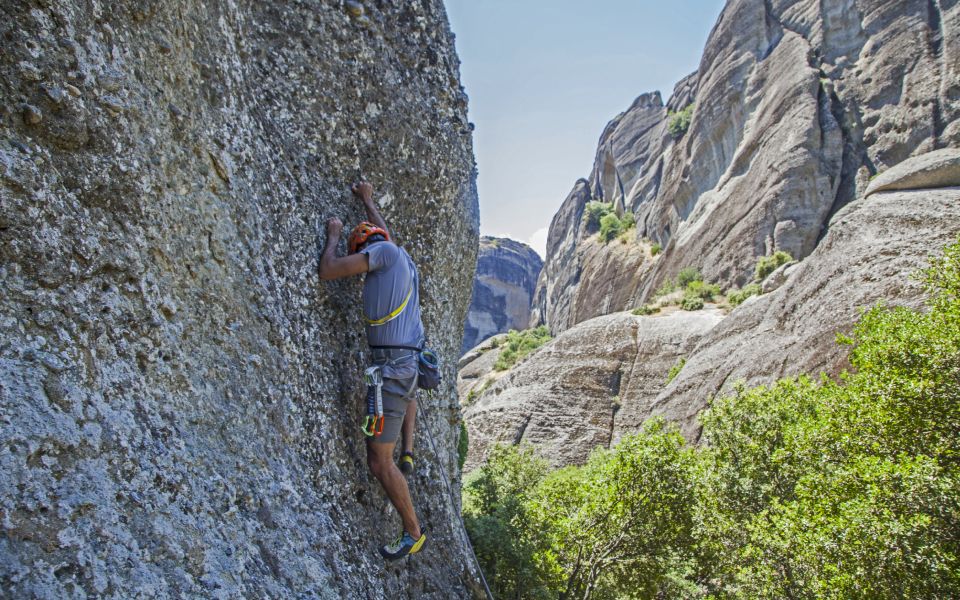
The first glimpse of Meteora for many was when James Bond scaled the rock to the Monastery of Aghia Triada in the film For Your Eyes Only. Today, experienced climbers from all over the world come to Meteora for its many fantastic climbing routes. There are well over 200 routes in the immediate area, many for traditional climbing (where the rock is left in its natural state and climbers place temporary protection themselves). The “Pillar of Dreams” at Holy Spirit (Aghio Pnevma) is a challenging traditional climb of over 250 meters, while numerous other routes cater to varying levels of experience. To find all climbing routes, plus notes and remarks from other climbers, see the website The Crag.
Sport climbing routes – pre-bolted for convenience – abound, as well as routes that combine both bolted and unbolted sections. There are also bouldering areas, for rock climbing on lower formations, without the use of ropes and harnesses (helmets are a must always).
With so many routes, there’s something for every level of skill. Moreover, there are several companies offering guided rock climbing experiences, complete with gear. Trekking Hellas offers experiences for beginner and intermediate climbers.
Where to eat
Kalambaka has a thriving dining scene catering to Meteora visitors. Locals often recommend two restaurants in particular. Restaurant Meteora (2 Trikalon, Apr-Oct), in the center of town, is particularly cozy and traditional. The baked eggplant with cheese is a great favorite. For later dining, Taksimi (Dimoula Square, off Trikalon; Tel. (+30) 24320.762.46; Wed-Sun noon-midnight) is a fine choice for meze, tsipouro, and a good range of main courses. For dessert, stop at family-owned patisserie Rombos for their halva sapouné, a sweet, buttery specialty of the fertile plains of Thessaly.
Where to stay
Kalambaka and nearby Kastraki offer a wide range of accommodations, from modest hotels to more luxurious options, as well as private rooms and apartments. With a bit of planning – or even some last-minute luck – it’s easy to find a comfortable base. Overall, the area provides excellent value for visitors seeking both convenience and charm.
A new network of 11 hiking...
A compact archaeological guide to the...
A brave history and uniquely beautiful...

Just two hours from Athens, Mt...