Five Mountain Escapes for a Magical November
Discover five mountain destinations where crisp...

© Shutterstock
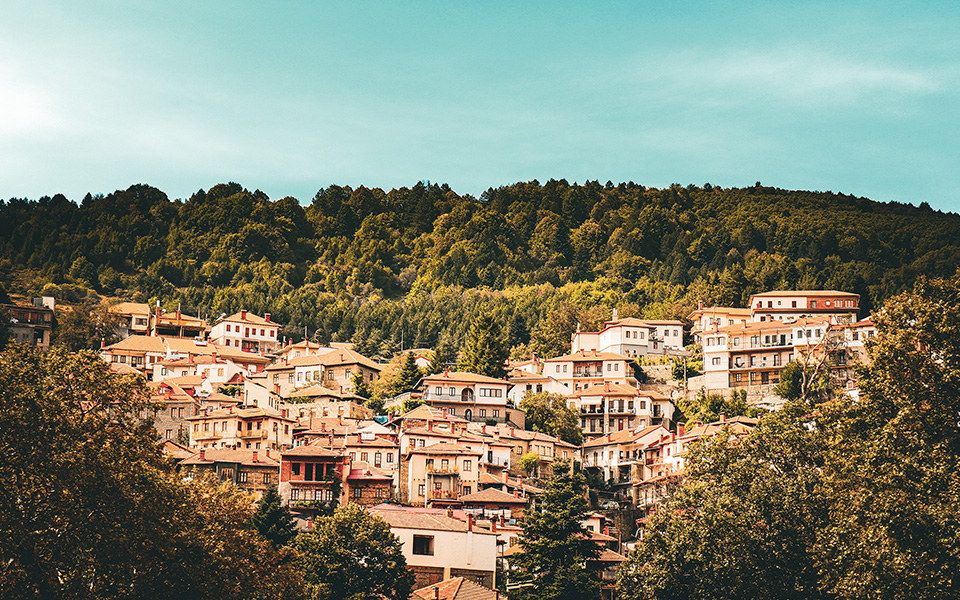
Metsovo is a fascinating mix of the sophisticated and the rustic, an embodiment of cultured elegance combined with a genuine expression of Greekness and a devotion to history and heritage. It’s a town of hard winters and excellent wines, age-old craft traditions and superb 20th-century art, historic mansions and modern political identity. Some of Greece’s most important benefactors and visionaries have come from this town: George Averoff, Evangelos Averoff, and Nikolaos Stounaras. Another major benefactor was Baron Michael Tossizza (Tositsas), an unusual man with a moving story: though born abroad and unable to speak Greek, he was deeply attached to his ancestral roots in Metsovo and gave generously to its development.
© Amber Charmei
Metsovo is located on a mountain slope at an elevation of 1160m and surrounded by forests. Lake Aoos is half an hour to the north. Bordered by the Tzoumerka National Park to the south and the Pindus National Park to the north, it is a joy to reach from almost anywhere. The town is easily accessible: less than an hour from Ioannina, and a scenic drive from Thessaloniki along the E90, with its tunnels and dramatic mountain vistas. If you arrive by KTEL bus, note that the stop is just off the main road, a ten-minute ride from the town.
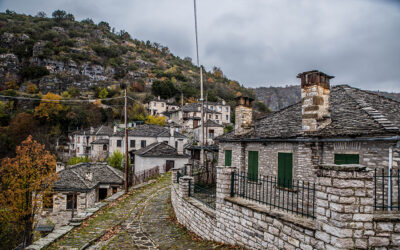
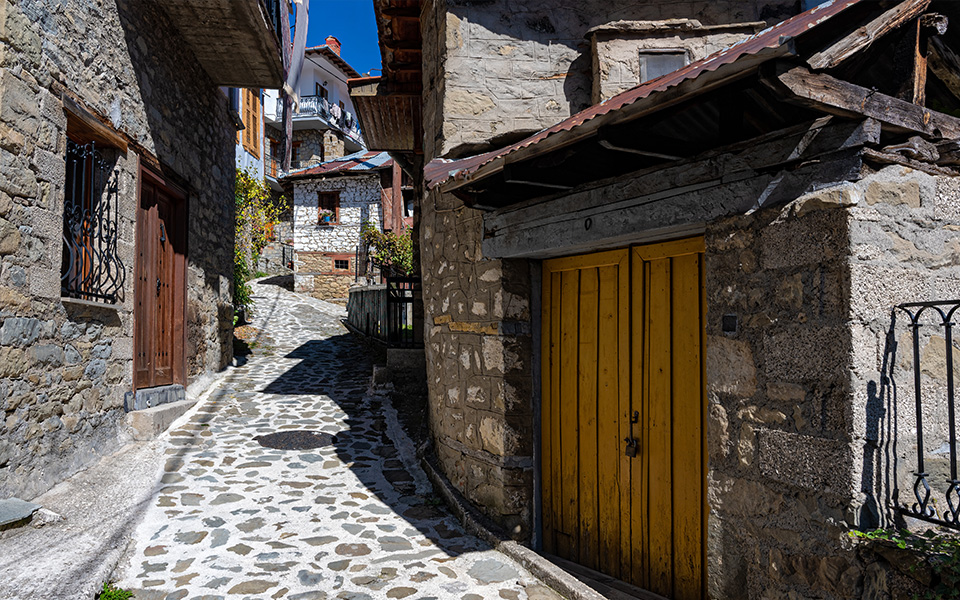
The town itself is an enchanting place of stone paved walkways and paths, and relatively few roads are intended for cars. Metsovo’s vernacular architectural traditions are preserved with pride; beautiful stone mansions with slate roofs and fine carved doors blend harmoniously with the mountain landscape. The central square is lined with shops selling traditional ceramic wares, hand-carved wooden items, and food – cheeses especially. Beside a grand plane tree are the town hall and the Church of Aghia Pareskevi, the patron saint of the town.
© Shutterstock
Of the many excellent Folk Art museums in Greece, Metsovo’s is unusual in that the house itself and the family who lived here were central to the story of Metsovo and the story of Greece itself. This is the Tossizza Mansion (27 Tositsa; Tel. (+30) 26560.410.84), built originally in 1661 by the great benefactor family. Their final descendant, Baron Michael Tossizza, was born far from Metsovo and lived in Lausanne when Evangelos Averoff first reached out to him, seeking support for their shared ancestral village. Their years-long correspondence evolved into a lasting friendship and a transformative partnership. Baron Tossizza devoted much of his fortune to a foundation benefiting Metsovo. His name endures today not only through the foundation but also through Averoff himself, who appended “Tossizza” to his own surname. Evangelos Averoff devoted himself to the Baron Michael Tossizza Foundation and its activities: schools were built, monasteries and traditional buildings were restored, and the carpentry and cheese-making factories were established, both of which remain pillars of Metsovo’s identity.
Additionally, through the work of the foundation, the grand manor house became a museum. Its rooms are furnished much as they once were, displaying artifacts and heirlooms in their natural setting, creating a vivid and intimate portrait of life in a prosperous manor. Among the highlights are a collection of icons from the 15th to the early 20th century and a floor devoted to Evangelos Averoff-Tossizza, with photographs and personal artifacts.

© Shutterstock
Metsovo’s reputation for exquisite woodcarving stretches back centuries. Fine carving was always a part of local tradition, it flourished during the Ottoman era (1430-1912), when the town enjoyed a rare degree of autonomy. In recognition of their role as Derbentzides – guardians of the Deveni mountain pass – the people of Metsovo were granted special privileges, including relief from heavy taxation and the freedom to practice their faith.
According to local legend, this favor was thanks to Kyrgos Flokas, a shepherd who once sheltered the Grand Vizier himself. This autonomy allowed Metsovo’s artisans to channel their skill into sacred art. The carvers of Metsovo flourished, creating baldachins, Bishop’s thrones, and above all icon screens: the iconostasis (icon screen) represented the apex of their craft.
The skill was handed down through the generations and their reputation spread; teams of carvers traveled from Metsovo to make iconostases in other towns and cities. Today, the craft endures – thanks in part to the carpentry factory founded by the Tossizza Foundation – and examples of superb woodcarving can be found all over Metsovo.
© Shutterstock
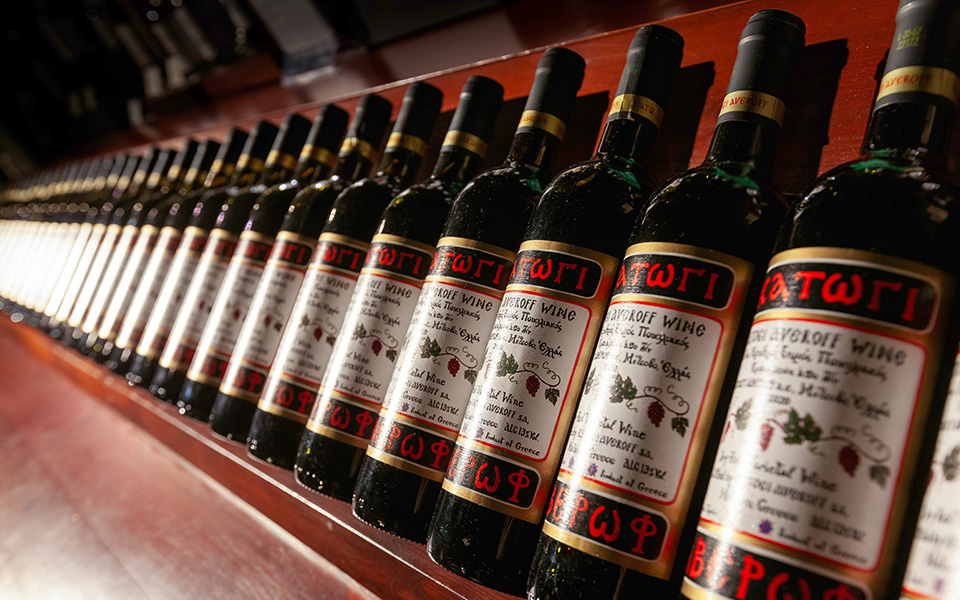
As the foundation was reviving the fortunes of Metsovo, Evangelos Averoff began another project tied closely to the identity of Metsovo: the rescue and replanting, in 1958-1959, of a famous vineyard. Its name is Yiniets (“vineyard” in the Vlach dialect) and, at an elevation of 950-1050 meters, it’s one of Greece’s highest altitude vineyards. The slopes of Mt. Pindus are a challenging place to grow wine, due to the extreme weather and the populations of bears and wild boars. But in this as in everything else, the people of this uncompromising region remain undaunted. The harvest is carried out entirely by hand. In recognition of this initiative and of the importance of a winemaking tradition to the local heritage, the vineyard and wine traditions of Metsovo – Katogi Averoff have been inscribed in the National Inventory of Intangible Cultural Heritage of Greece.
The vineyards are planted with the local grape varieties Vlachiko, Vlachavona, Gudaba and Pyknoassa, as well as the international varieties Cabernet Sauvignon, Merlot, Cabernet Franc, Pinot Noir, Traminer, and Syrah. The most recognizable label in all Greece must be that of the Katogi Averoff Dry Red. Katogi is the Vlach word for cellar, as the first wines were made in the cellar of the Averoff home. Since its debut in 1963, this beautifully balanced, award-winning blend of Cabernet Sauvignon, Merlot, and Agioritiko is one of Greece’s first premium wines. Today, Katogi Averoff also produces a white and a rosé, as well as a series of single-varietal wines under the Inima (Vlach for “heart”) label, including Xinomavro, Negoska (red and rosé), Sauvignon Blanc, and a Chardonnay/Debina blend. A selection of fine distillates rounds out their production.
The winery, a striking building made of stone and wood in traditional Metsovo style, offers a variety of tasting experiences (book at least a day in advance), as well as private cellar dinners by prior arrangement. Katogi Averoff has also opened a fine small hotel overlooking the winery and surrounding landscape. (Katogi Averoff; at the top of Averoff St., on the northern edge of town; Tel. (+30) 26560.314.90; katogiaveroff.gr).
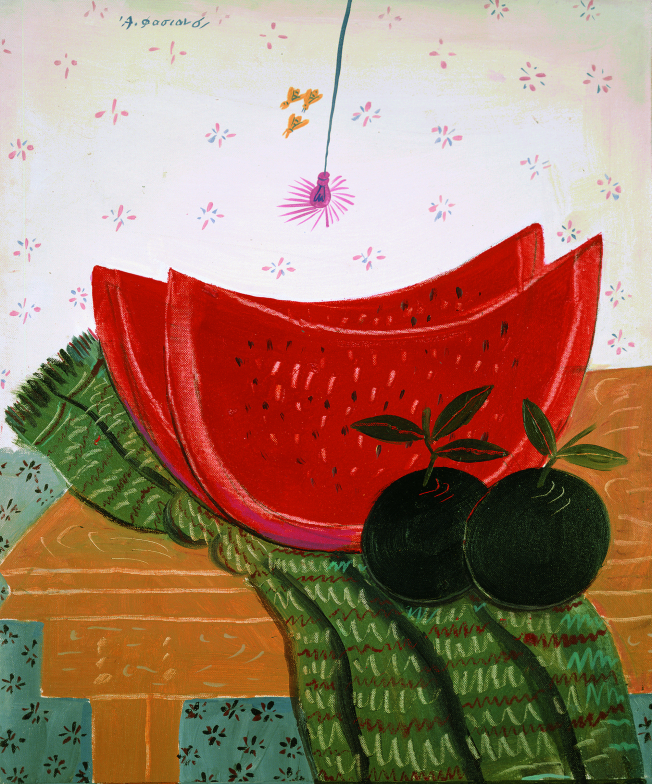
"A Warm Day" by Alekos Fassianos, 1996, oil on canvas.
© Averoff Museum
Evangelos Averoff’s devotion to Metsovo extended far beyond philanthropy and wine. A passionate collector, he assembled one of the most important private collections of modern Greek art with the express intention of one day gifting it to his foundation and to Metsovo itself. The Averoff Museum of Modern Greek Art was born from that vision. Its collection traces the full arc of 19th- and 20th-century Greek art, encompassing the Munich School painters, the realism and romanticism that followed, and the avant-garde movements that reshaped the country’s artistic landscape. On view are significant paintings, sculptures, works on paper, photographs, and new media by generations of Greece’s foremost artists.
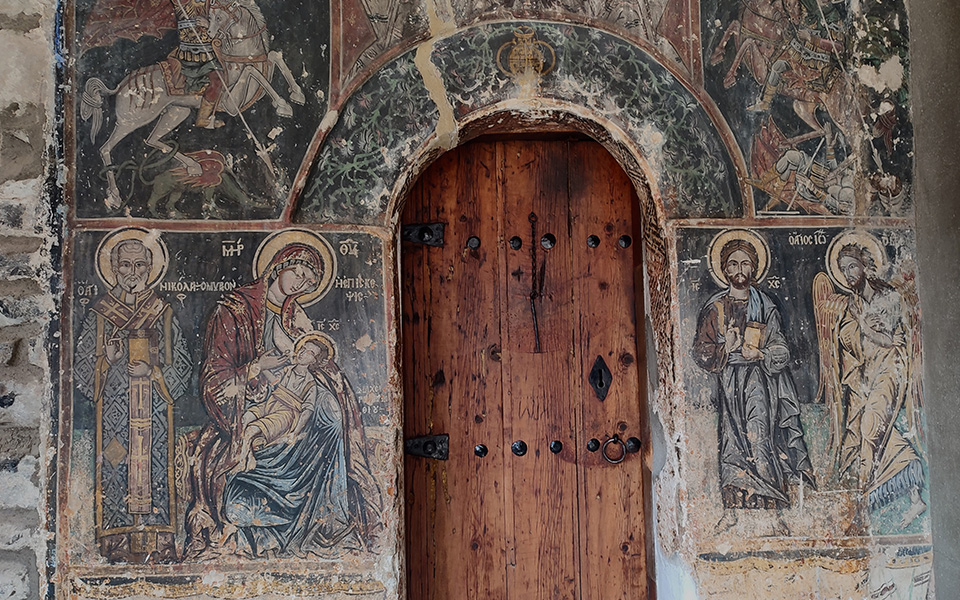
On a hillside just below town – a pretty 20-minute hike or a 10-minute drive away – is the Monastery of Aghios Nikolaos (5 km south of the edge of town via Politi St or by car from the Metsovou-Aniliou Road). This is the oldest of the monasteries near Metsovo, restored by the Baron Tossizza Foundation in 1960. The frescoes are magnificent and unusual. Particularly notable, on the outside wall, is a rare depiction of the Virgin Mary nursing the infant Jesus.
The Imperator Winery is right next to the monastery. “We are burdened with a history that we cannot do otherwise than to continue this tradition of producing genuine and quality wines,” say the monks of Aghios Nikolaos and Votsa Monasteries, whose long association with winemaking inspired the creation of Imperator (im-votsas.gr; Tel. (+30) 694.141.5981). Although the winery was formally founded in 2017, its roots reach deep into history: an enormous wooden wine barrel preserved at the monastery dates back to the late 18th century. The monks grow a mix of international grapes (Cabernet Sauvignon, Chardonnay, Gewürztraminer, Merlot) and local varieties (Vlachiko and Vlachavona). The last two shine on their own: their rosé and blanc de noir are made entirely from Vlachiko, and Vlachanova is used to make a complex, gently tannic white. Their Lacrima white has won several awards. Tastings take place beside the monastery, in a chic room with rustic log tables and large plate glass windows that frame the dramatic mountain scenery.
Hotel Kassaros (3 Tzoumagka; Tel. (+30) 26560.418.00) offers warmth and traditional craftsmanship. Its inviting reception lounge, centered around a large fireplace, is the perfect spot to unwind after a day outdoors. The comfortable, elegantly furnished rooms all enjoy splendid mountain views. Apokentro (1 Tzoumagka; Tel. (+30) 26560.418.01) serves homestyle dishes in a rustic log-cabin setting, with unpretentious service and genuine Epirus flavors. The trattoria-style Léle (1 Vasileou Zalousi; Tel. (+30) 26560.427.42), a relative newcomer, is popular for their great pizzas and pastas.
Before leaving Metsovo, don’t forget to stop by the shops in the central square to pick up some of the town’s famous cheeses, produced at the Tossizza Foundation’s cheese factory. Their signature smoked PDO Metsovone is prized all over Greece. You’ll also find the semi-hard Metsovella, the aged Parmesan-style Rezzana Tossizza, a graviera of sheeps’ and goats’ milk, the goats’ milk Metsovisio, and a gentle Metsovou of cows’ milk.
The Anilio Park and Ski Center (Anilio; Tel. (+30) 26512.005.20) is 25 minutes east of Metsovo. There are skis, boots, snowboards, helmets and masks available for rent, and they also offer ski and snowboarding lessons. The slopes are serviced with lifts and there’s a cozy classic chalet. In warmer seasons, Anilio is a popular destination for trekking and mountain biking.
Metsovo is fantastic in any season. Autumn is a blaze of color and winter in a snowfall (you may need snow chains) is like a fairy tale. Spring brings wildflowers and clear mountain air, and in summer Metsovo offers a cool, refreshing escape from the lowland heat.
Discover five mountain destinations where crisp...

Just a short distance from Athens,...
In Margarites, Crete’s historic pottery village,...
Discover how Swiss photographer Wolfgang Bernauer...