Olympou Street Puts Thessaloniki on the Cool Map
Ranked among the world’s coolest streets,…

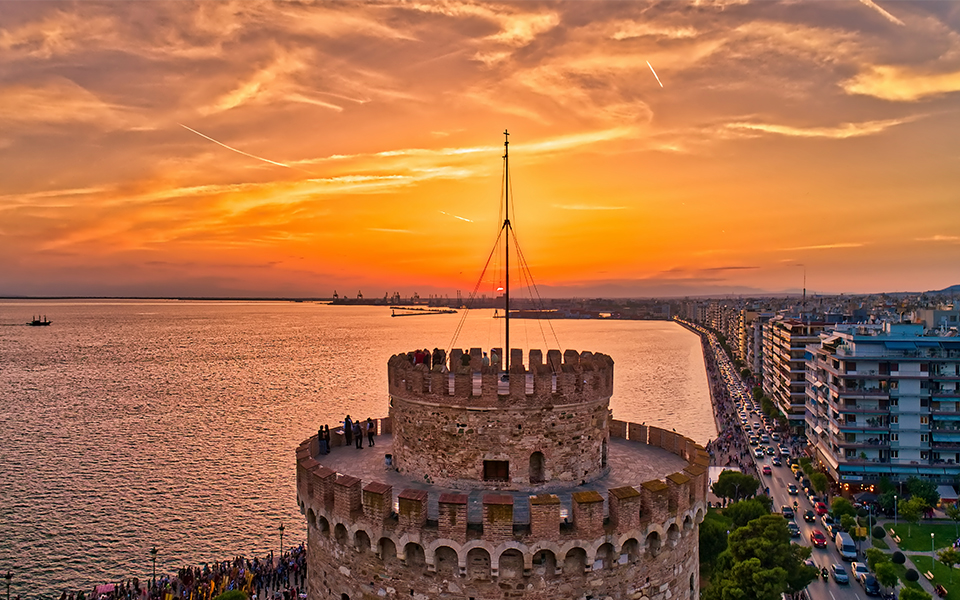
The White Tower on Thessaloniki’s waterfront boulevard, Nikis Street.
© Shutterstock
Thessaloniki’s most recognizable landmark, the White Tower, has been officially added to the European Film Academy’s “Treasures of European Film Culture” list. It is the first Greek monument to join this celebrated collection, affirming both the tower’s symbolic role as the emblem of the city and Thessaloniki’s long-standing relationship with cinema.
The “Treasures” initiative highlights locations and monuments across Europe that have shaped, inspired, or become part of the continent’s film heritage – places that linger in the shared imagination of moviegoers. Among its celebrated entries are Rome’s Trevi Fountain, immortalized by Italian director Frederico Fellini; the Potemkin Stairs in Odesa, etched into film history by Eisenstein; and Fårö, the Swedish island that served as Ingmar Bergman’s creative sanctuary. With the White Tower now among them, Thessaloniki stands shoulder-to-shoulder with some of Europe’s most storied cinematic landmarks.
The announcement was made during the 66th Thessaloniki International Film Festival, in a ceremony marked by pride and reflection. For a city shaped in part by its festival – one of the most important in Southeast Europe – the honor feels like a natural step, a recognition of Thessaloniki’s creative pull.
Mike Downey, Chair of the EFA Board, described the initiative as a way to connect Europe’s film heritage through physical places and safeguard them for future generations. “Culture – and especially cinema – is tied to places that are part of our collective memory,” he noted. “From Rome and London to Montmartre and Thessaloniki, every entry tells a story.” He added that the White Tower “reflects the richness and magic of European cinema.”
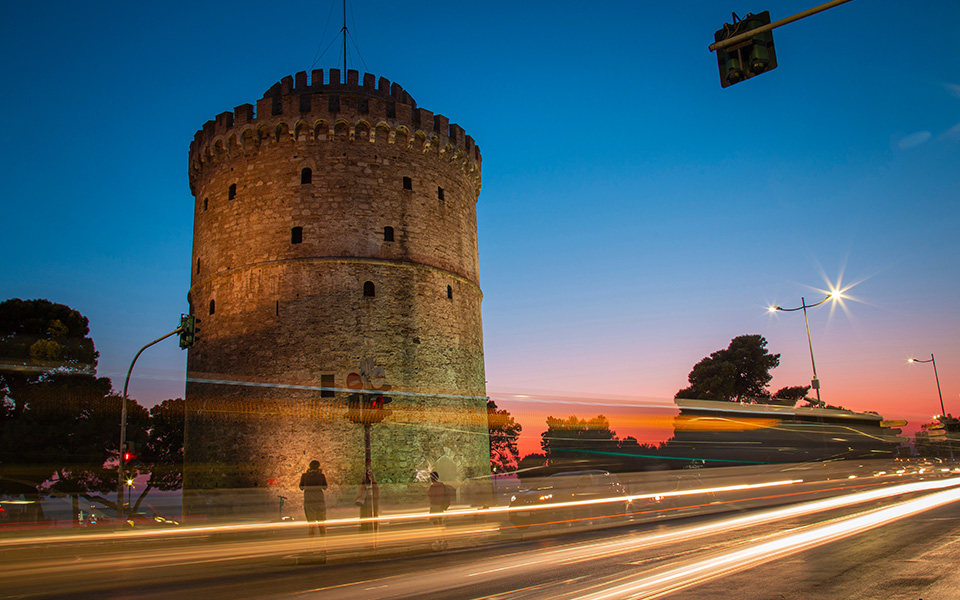
Nicknamed the “Tower of Blood,” the monument served as a notorious prison during the Ottoman era.
© Shutterstock
Although the White Tower has never featured prominently in a major international production, its silhouette on the Thermaic Gulf is instantly familiar to Greek audiences. It appears regularly in documentaries, newsreels, and feature films, often serving as a visual shorthand for the city itself.
Built in the late 15th century by the Ottomans to strengthen Thessaloniki’s coastal defenses, the round tower – 33.9m high and 21.7m in diameter – rises in two concentric cylinders of brick, stone, and mortar. Seven stories high, with 92 steps to the top and lit by 40 narrow windows, it formed a key part of the city’s fortifications, replacing an earlier Byzantine structure.
Its history is as layered as the city it anchors. The tower was once a prison and place of execution, earning the grim nickname “Tower of Blood.” Later, in an effort to rehabilitate its reputation, Sultan Abdul Hamid II ordered it painted white and renamed “Beyaz Kule” – the White Tower – an act of symbolic rehabilitation carried out by a convict, Nathan Guidili, in exchange for his freedom.
Since then, it has served many roles: a hiding place for antiquities during World War I, a base for military and meteorological units, and even headquarters for Thessaloniki’s Sea Scouts. During World War II, it was camouflaged with painted houses and trees to disguise it from enemy aircraft. Today, it houses an engaging museum on Thessaloniki’s history and stands as a symbol of the city’s resilience and constant reinvention.
The European Film Academy’s distinction is expected to draw further attention to Thessaloniki’s vibrant film culture and reinforce the city’s profile as a cultural crossroads – now officially home to one of Europe’s treasured cinematic landmarks.
Ranked among the world’s coolest streets,…
FT spotlights Thessaloniki’s rich history, vibrant…

Pick up a copy of our…

Pick up a copy of our…