Abra Ovata: A Lakefront Restaurant Redefining Greek Hospitality
Abra Ovata is itself a rare...

Taverna ton Filon
© Christina Georgiadou
Using goat sourced from Evia or Kimolos, chef Yiannis Mousios prepares one of the taverna’s signature dishes. He cooks it slowly, in the style of a classic Greek kokkinisto (a tomato-based braise), with plenty of garlic and onions, allspice, delicate cinnamon seeds (milder than cinnamon sticks), thyme, red wine and a stock made from the animal’s own bones. The result is incredibly tender meat, usually served with fresh, thick-cut pasta or, at other times, with tangy trachanas (a type of fermented cracked wheat) from Evia and grated dry myzithra cheese. When the weather turns cold, the dish changes form: instead of a tomato braise, the goat is simmered in a clear, restorative broth with vegetables – a true winter elixir.
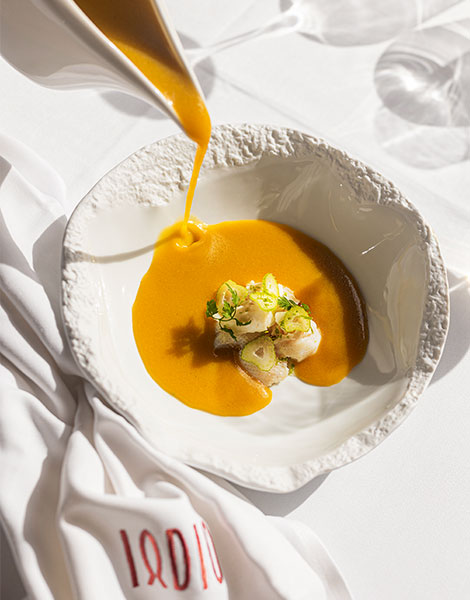
Iodio
© Christina Georgiadou
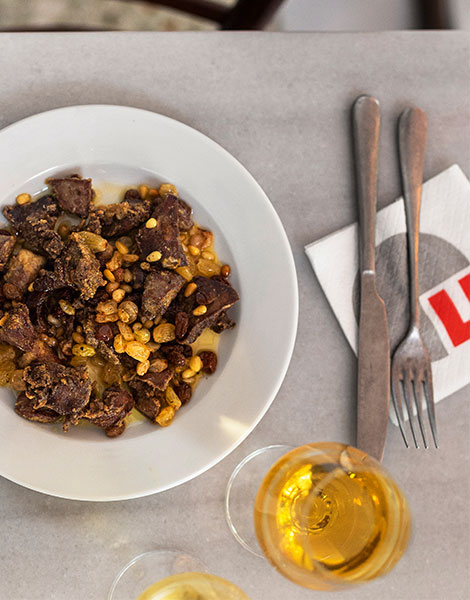
Plyta
© Christina Georgiadou
At Iodio, you’ll often spot the highly inventive Georgianna Hiliadaki in the dining area, presenting dishes and chatting with guests. This acclaimed chef is the star of her own flavorful show – one filled with memorable moments, from her playful pairing of bottarga with white chocolate to her take on cod seftalia (inspired by the Cypriot ground-meat parcels) and her sea bass youvarlakia (delicate fish dumplings simmered in broth). She also excels when it comes to the classics. A prime example is her rich, velvety fish soup: a deeply flavored stock made from sea bass heads and rockfish, blended with a lighter vegetable broth prepared separately. It’s served piping hot in a deep bowl, along with extra pieces of tender cooked fish.
At Plyta Square – a little off the usual culinary map – Periklis Koskinas and Marios Korovesis of Cookoovaya, together with Ioannis Loukakis and Spyros Pediaditakis of Akra, have created Plyta, a lively meze-style grill house where the menu changes twice a day and the tables rarely sit empty. Though most dishes rotate, one (thankfully) never leaves the lineup: the rooster liver savoro. This meze has clear Corfiot roots, but while on Corfu the term “savoro” is normally used for fish dishes, here it’s made with the livers and hearts of organically-raised roosters; the organs are dusted lightly with flour and fried in olive oil over a wood fire. Garlic, rosemary, pine nuts and black and golden raisins complete the dish’s sweet-savory aromatic profile. It’s the kind of plate you simply don’t skip.
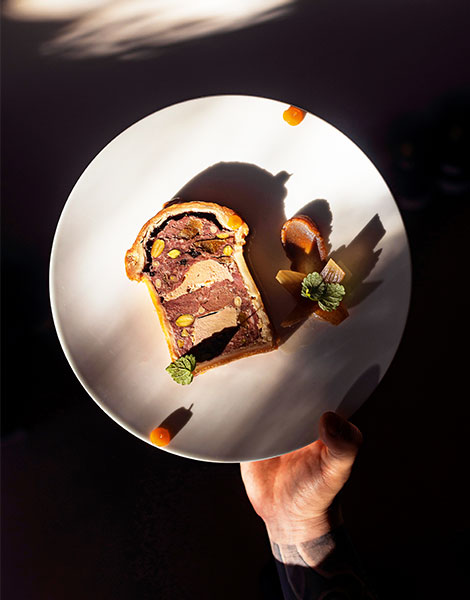
Jerar
© Christina Georgiadou
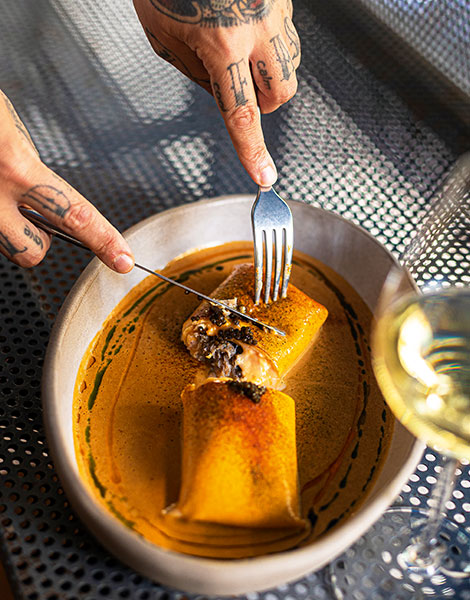
Ex Machina
© Christina Georgiadou
This French classic takes three full days to prepare at Jerar, the French-Greek bistro in Dafni. Beyond the time it demands, it’s also one of the most technically challenging dishes on the menu. Chef Haris Nikolouzos makes it with organic pork from Crete, foie gras, lardo di Colonnata (Italian cured pork fat), rabbit livers from the Alexandrakis farm in Crete, nuts (such as pistachios), pine nuts, dried fruits (apricots and raisins), and a shimmering jelly made from three wines: red Port, white Port and Sauternes. Everything is wrapped in a homemade puff pastry enriched with the classic quatre epices spice blend. To finish, the pate is served with a smoked date purée, a driedapricot purée and a handful of onion pickles marinated in dark beer – a beautifully balanced, richly layered plate.
As Bangkok is a bit far to go for Jay Fai’s legendary crab omelet, we’ve opted for a table at Ex Machina instead. Adam Kontovas draws inspiration from Asian cooking while relying on classic French techniques to create a feather-light custardy omelet filled with blue crab from Katerini. It’s surrounded by a deeply flavorful crab bisque enriched with soy and miso, giving the dish a rich umami backbone. For anyone who wants to take it up a notch, there’s the option to add a generous spoonful of caviar on top.
Topa
© Christina Georgiadou
Manari
© Christina Georgiadou
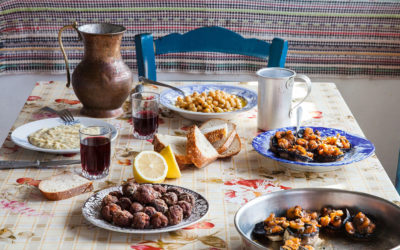
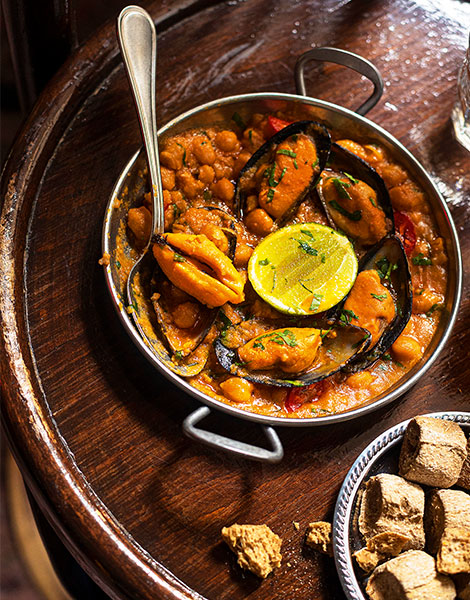
Spain and Greece meet at this lively kafeneio on Fokionos Negri, where guests raise glasses of vermouth, wine and tsikoudia while snacking on everything from Spanish tortilla to Cretan-style potatoes with staka butter. One of the most inspired small plates is the mix of chickpeas, sobrassada (the soft Spanish pork sausage scented with pimenton de la Vera) and mussels – a dish full of brightness, depth and spice. The Lemnos chickpeas are slow cooked in the oven for hours with Cretan Marouvas wine and sobrassada from Castile and Leon. The mussels are steamed in this smoky, paprika-rich sauce and then, just before serving, the kitchen adds plenty of fresh citron-lemon juice for a lift.
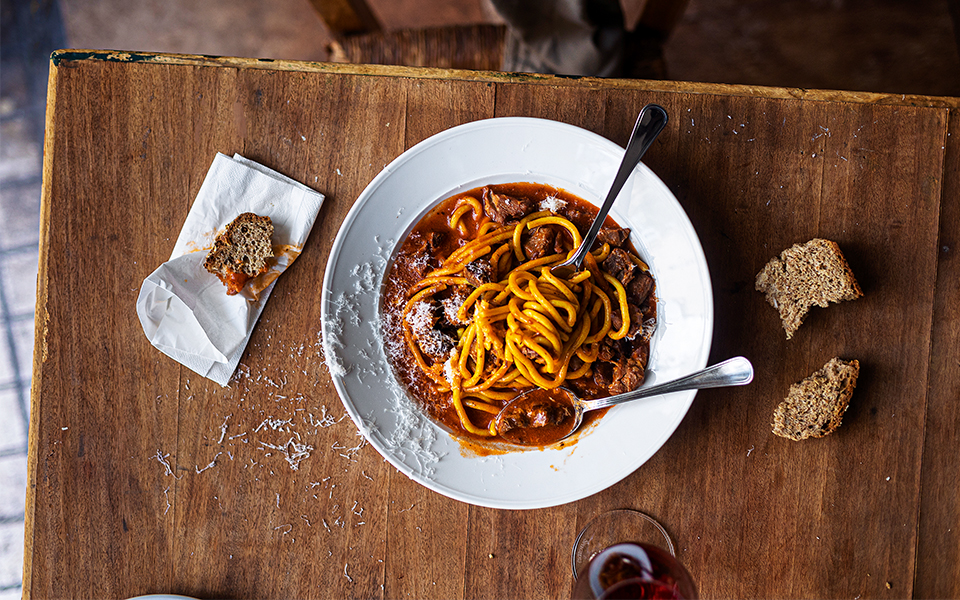
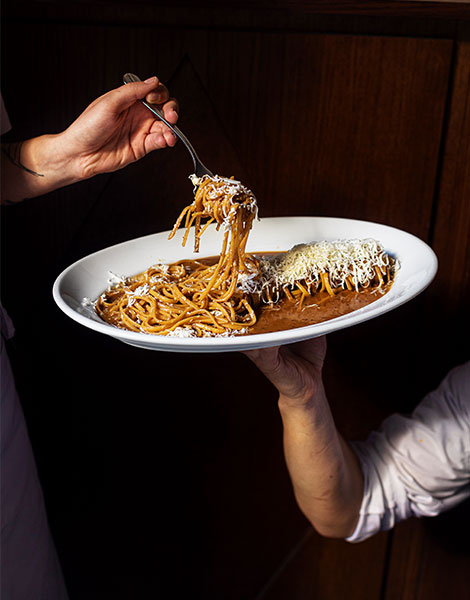
Waiter, I’ve dripped on myself – but it’s worth it! At Manari, the orphan pasta arrives in a glossy pool of concentrated meat juices; no matter how carefully you twirl it, you’ll get a few drops on your shirt. Consider it part of the experience. At Aris Vezené’s post-steakhouse concept, the menu features lamb chops, a standout mutton burger wrapped in caul fat, juicy thin-sliced liver and a range of bold, meat-forward dishes built around cuts carefully sourced from across Greece – sometimes through direct collaborations with shepherds. Even so, from Day One this pasta, cooked directly in meat broth, has been the quiet star. Stripped back and utterly comforting, it features pasta infused with the deep flavor of the broth and served simply with a little cheese and freshly cracked pepper, on a platter meant for two – or for one very hungry guest.
Pino
© Christina Georgiadou
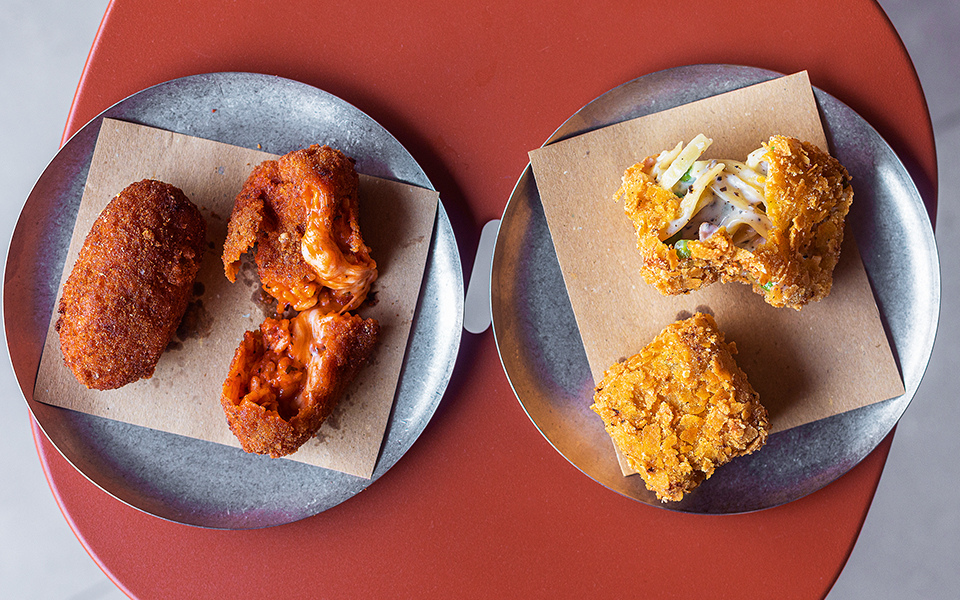
At Pino – chef Luca Piscazzi’s most personal home-style project – the inspiration comes straight from the kitchen of his Roman grandmother, Nonna Filomena. Before diving into the pastas and pizzas, don’t skip the fritti: the playful deep-fried appetizers with equally playful names. The suppli al telefono are Rome’s answer to Sicilian arancini – tomato-bright, filled with mozzarella and basil. Cut them open, pull them apart and spot the melted mozzarella stretching from one half to the other, and you’ll understand the “al telefono” nickname. Then there are the sanpietrini, named after the iconic cobblestones of Rome. These ultra-crispy breaded and fried cubes have a creamy interior of truffle-scented fettuccine with peas – indulgent, and so addictive that it’s impossible to eat just one.
Mirlo
© Christina Georgiadou
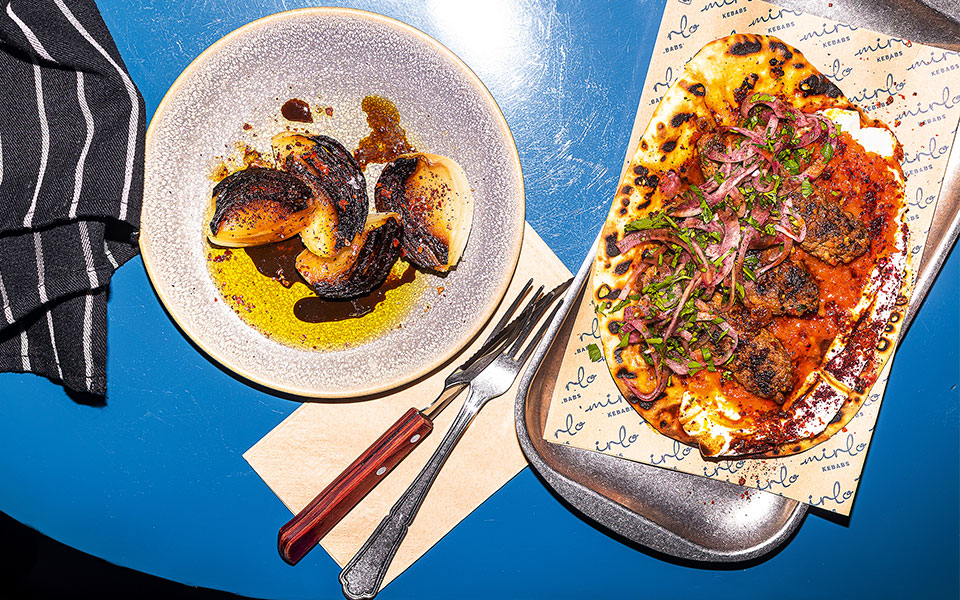
Handmade, paper-thin pita; kebab made from 100% mutton seasoned with Aleppo pepper, smoked Urfa pepper, and other warm spices; yogurt whisked with kefir; tomato sauce, herbs, and onions … Mirlo isn’t your typical kebab shop, and its yiaourtlu is rightly its best-selling dish. Pair it with the intensely charred onions served with olive oil and rodozino – a wonderfully tangy, molasses-like pomegranate reduction from Antioch. It’s a combination that lingers long after the last bite.
Cookoovaya
© Christina Georgiadou
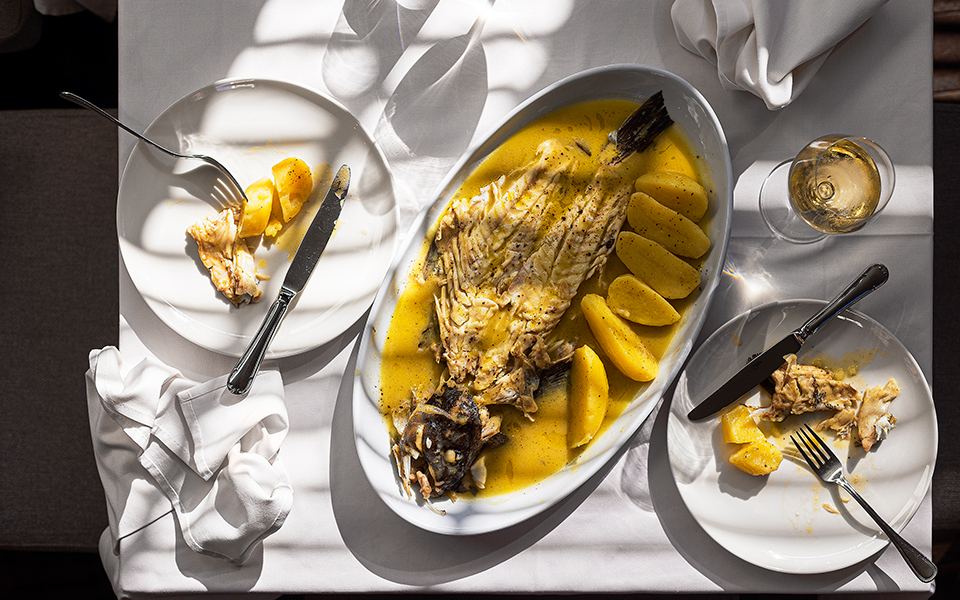
Minimal and elegant, Cookoovaya’s bianco is a masterfully executed version of the traditional fish dish found in Corfu and Lefkada. Salt, pepper, garlic, olive oil, potato, fish and a touch of lemon juice – that’s all it takes to create this small miracle, a dish defined by its glossy, intensely flavorful broth. It’s impossible not to wipe the platter clean. Credit goes to Periklis Koskinas, not only for cooking bianco so beautifully, but also for helping more people discover this ingenious regional recipe.
Abra Ovata is itself a rare...
Michiel Bakker, President of the Culinary...
Classic, timeless and unsurpassed. No dessert...

One of the most impressive canyons...