A Cultural Culinary Getaway in Messolonghi
A brave history and uniquely beautiful...

© Shutterstock
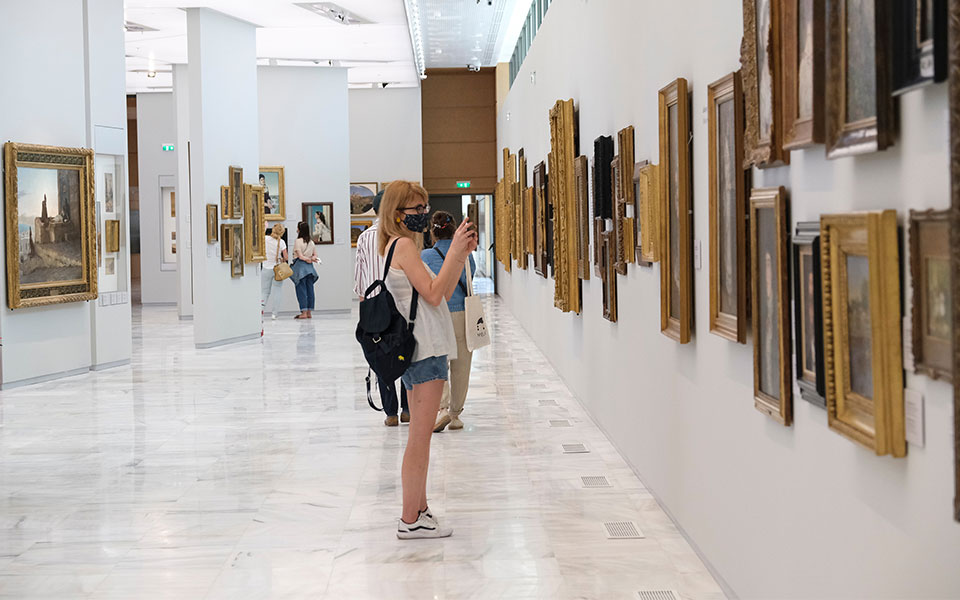
121 years after being first established, Greece’s National Gallery re-emerged in an ultra-modern form after eight years of renovation works, delighting visitors with extraordinary exhibitions of Greek art from the 1400s to today. With great excitement and a generous amount of time, I arrived to explore the newly-refurbished institution and its 20,000 artworks. The National Gallery – Alexandros Soutsos Museum today has an operational area of 20,760 meters squared in total, almost double the size of its previous renovation, which took place in 1976.
Apart from its permanent and temporary exhibition spaces on three floors, it now includes an auditorium, an educational venue, a museum shop, a café, and a courtyard area. The Stavros Niarchos Foundation, which co-funded the project (the entire renovation cost 60 million euros), aptly describes this transformation as a way to “give the art the space it needs to flourish.”
© Intime News
© Shutterstock
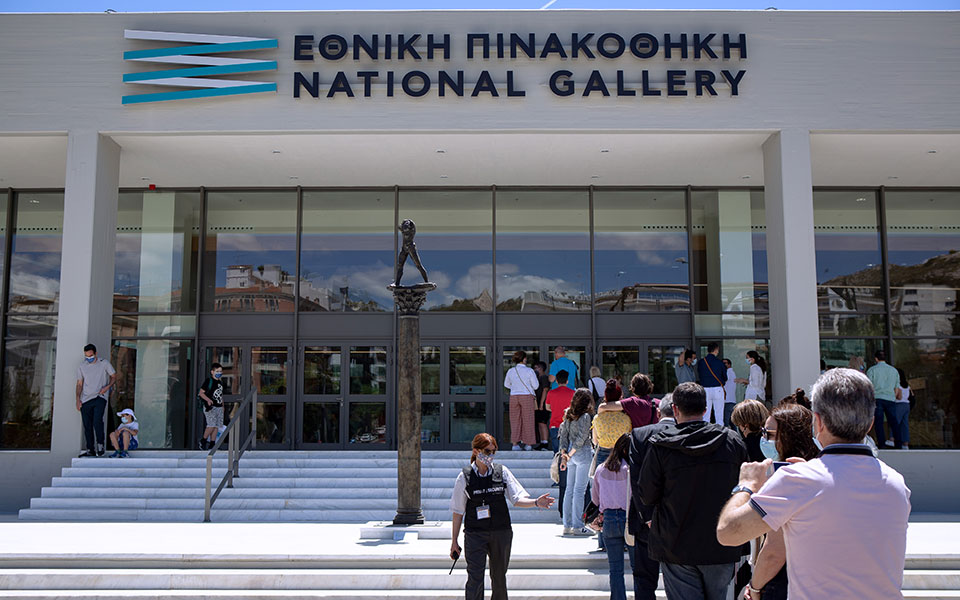
Located at a busy intersection, next to the Athens Hilton Hotel and across Kostas Varotsos The Runner,” an iconic glass sculpture, the new National Gallery is unmissable because of its vast proportions and the light-reflecting glass and metal it’s made of.
Approaching its main entrance, you are welcomed by a sculpture by Rodin (not an original) featuring a tall black column on which stands a man, directing the eye to the gallery’s height. Upon entering, the lavishly large, polished spaces, flooded with natural light coming through the floor-to-ceiling windows, generate an airy and pleasant feeling that is enhanced upon Panayiotis Tetsis’ wall-to-wall “Street Market” (1979–1982) scene, full of bold, bright colors and motion.
My exploration of the gallery’s permanent exhibitions of Greek art commences on the first floor, where I go to admire 19th-century paintings, starting with the dramatic, large-scale “Portrait of Clemence Serpieri” by Nikiforos Lytras. The paintings exhibited here are organized into collections such as “The School of the Ionian Islands,” “The Years of Othon’s Reign,” “The Bourgeois Class,” and “Around 1900.”

Swimmers, 2007, Maria Filopoulou, oil on canvas
© Niki Agrafioti
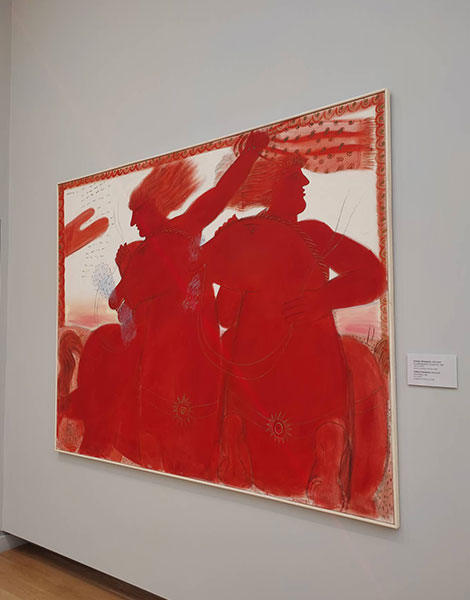
Fire Riders, 1982, Fassianos Alekos (1935-2002), oil on canvas
© Niki Agrafioti
There are works from the Munich School, seascapes and landscapes, art influenced by Orientalism (a branch of ethnography), moments of daily family life frozen in time, and many important portraits and scenes relating to prominent historical personalities and events.
As Greece last year, when the gallery re-opened, celebrated the bicentennial since the start of the Greek Revolution, the mezzanine floor of the gallery features a special dedication to the Heroes of the War of Independence in 1821, which includes 20 engravings by Zacharias Arvanitis.
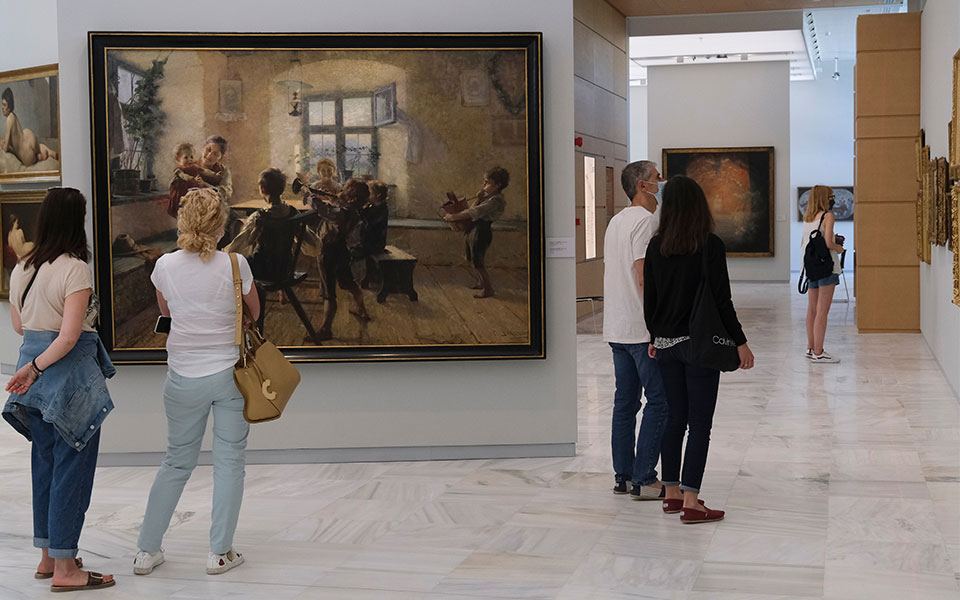
Priceless artworks such as elaborate masterpieces by Theodoros Vryzakis’ “Greece Expressing Gratitude (1858) and “The Exodus from Messolonghi” (1853), societal moments of relaxation such as the renown “On the Terrace” (1897) by Iakovos Rizos, the dreamily evocative and famous “The Kiss,” (1878) by Nikiforos Lytras, heart-warming family scenes like “Grandma’s Favorite” (1893), “First Steps” (1892) and “Children’s Concert” (1900) by Giorgos Iakovidis, and the stark and tragic “Vigil of the Dead Pasha of Tangiers” (1884) by Theodoros Rallis, together with hundreds of others, offer a profound and multi-dimensional view of Greece’s history, culture, daily life, political and philosophical thought, bloody wars and conflicts and the fluctuating collective spirit of that period.
© Niki Agrafioti
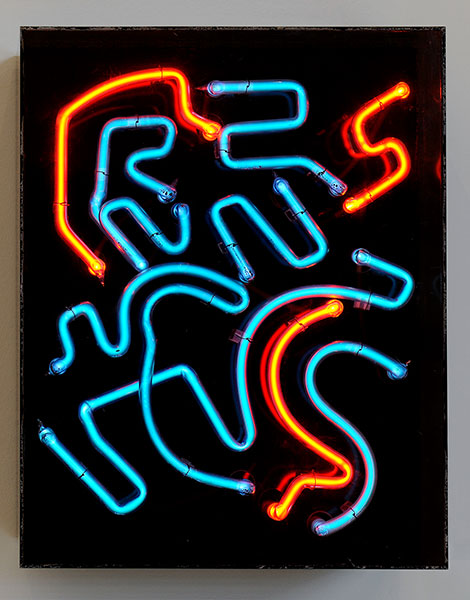
Neon box, 1980, Chryssa (Vardea) (Athens 1933 - Athens 2013), Neon and plexiglas
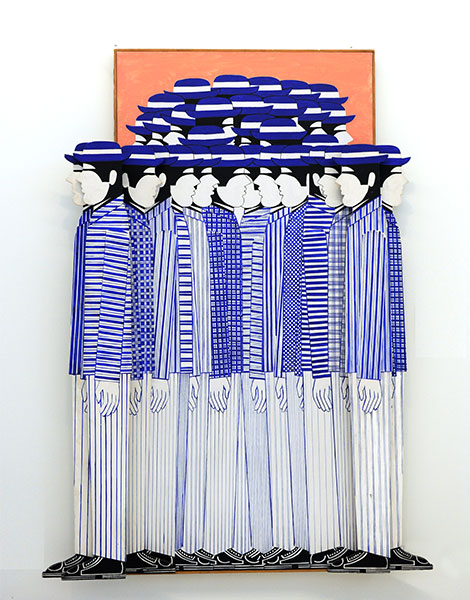
Composition, 1975, Gaitis Yannis (Athens 1923 - Athens 1984), oil and inlaid wood
Apart from art created during the 19th century, the permanent exhibition’s priceless collection also includes important religious paintings such as Domenicos Theotokopoulos’ (El Greco) “The Entombment of Christ” (ca. 1568-1570) and Andreas Pavias’ “The Crucifixtion” (second half of the 15th century).
Before heading up the long and wide wooden bridge leading to the second floor, I go downstairs to the gallery’s café in the courtyard for a cup of coffee and a sandwich. Looking at the photos I’ve snapped, being stimulated by so many beautiful works, reading a little about what I am about to discover next, for how Greece’s art shifted into a completely new view of modern philosophy and expression within less than half a century.
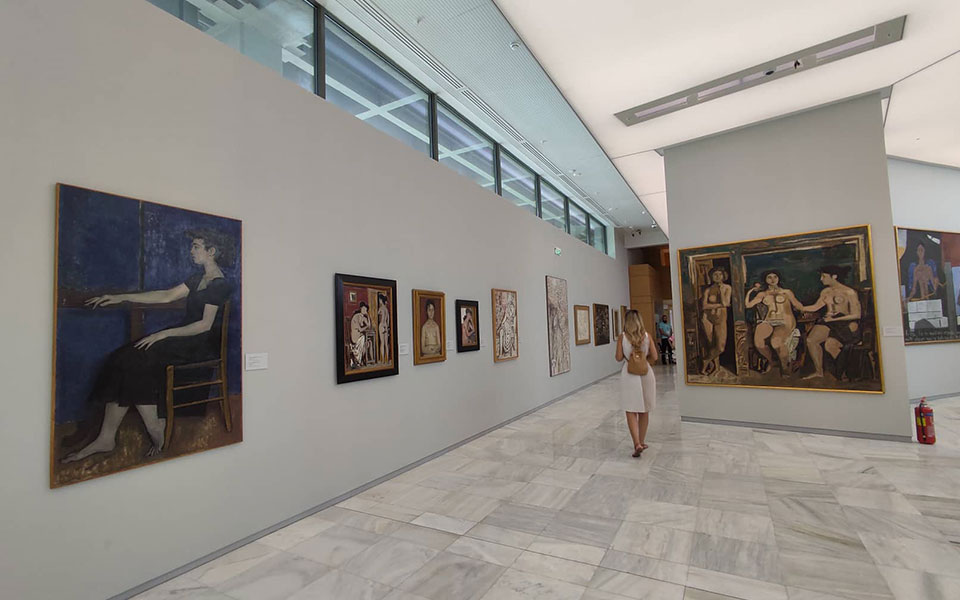
The museum’s second floor introduces visitors to 20th-century modernism, with the selected artworks depicting the growth of the abstract art movement. Nikolaos Lytras’ works, such as “Straw Hat” (1925) and “Seascape” (1925), offer an immediate contrast from the works of the previous century, with bold color and light contrasts, and simple lines. The deep blue outfit of a reclining man in “In the Chamber” (1937) by Diamantis Diamantopoulos, the black silhouetted profile of a man regarding an abstract collection of objects in “Essence of a Shadow” (1938) by Nikos Hatzikyriakos-Ghika and “Mementos of the Dead Fiancee” (1934) by Yiannis Tsarouchis are just some of the works depicting a brazenly new social and creative direction in the modernist period.
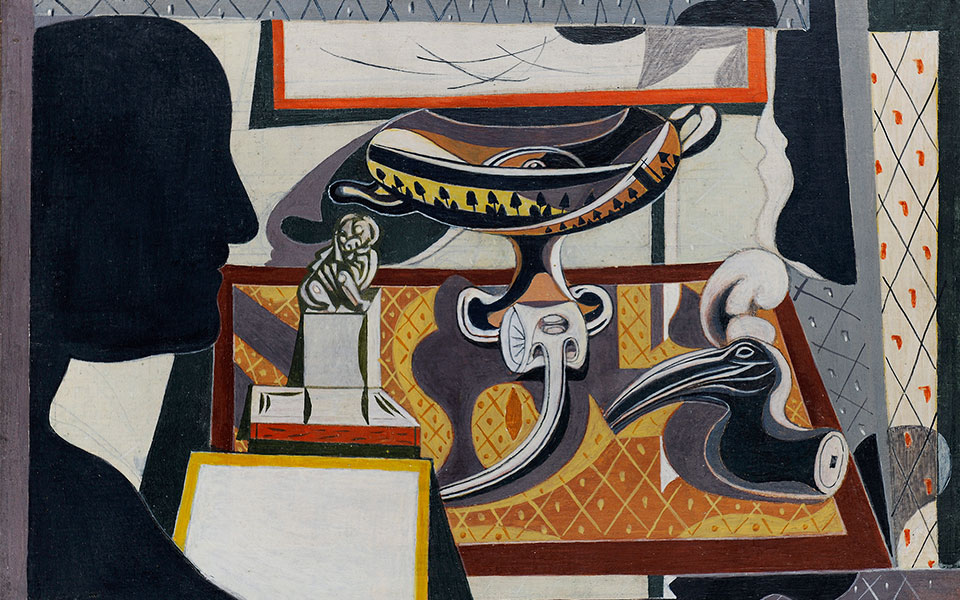
Essence and Shadow, 1938 , Lytras Nikos (Athens 1883 - Athens 1927), casein colors on wood panel
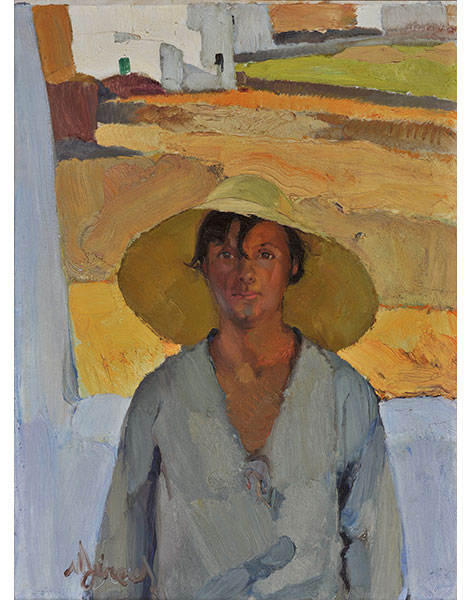
The Staw Hat, 1925, Lytras Nikos (Athens 1883 - Athens 1927), oil on canvas
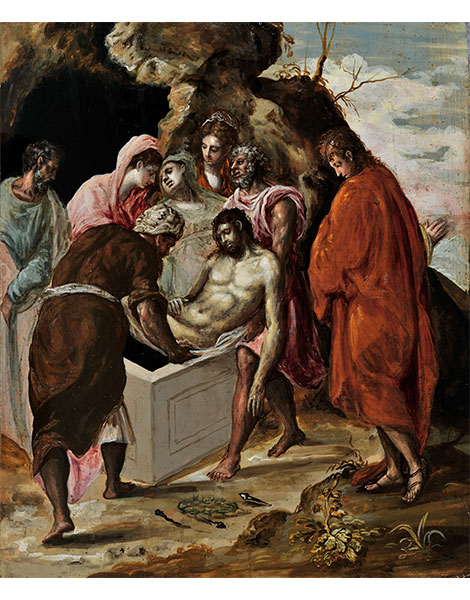
The Entombment of Christ, 1568-1570, Theotokopoulos Domenicos (Chandax (Herakleio), Crete 1541 - Toledo, Spain 1614), oil and tempera on panel
Next, I visit the third and final floor, the Stavros Niarchos Wing, again by heading up the long bridge-like corridor, observing the traffic below and Lycabettus hill rising up in the distance through the all-glass walls.
A vibrant combination of paintings, sculptures, and installations await me on a visual journey through the 20th century and up to the early 21st. Here, an intense blend of works like Michael Tombros’ avant-garde “The Elf” (1955), Yiannis Gaitis’ famed Pop Art “Composition” (1975) of stylized bowler hat-wearing figures in white and blue, Chryssa’s electrical nod to technological innovation, “Neon Box” (1980), Nikos Paralis’ social commentary “Installation with 12 Matches, a Signpost, and a Container” (1973) and Dimitris Kontos’ religious reinterpretation “Feet from the Devotional Series” are just a few notable works presenting the multifaceted evolution of expression by modern Greek artists.
Five hours into my visit, replete from such an overwhelmingly rich demonstration of artworks with all their textures, stories, messages, teachings, and in some cases, triggers, I decided to call it a day. I am already planning to return to see more; the temporary Konstantinos Parthenis’ retrospective titled “Painting an Ideal Greece” and the opening of the Coumantaros Art Gallery’s collection titled “Modern Greek Art 19th-20th Century,” which will become part of the permanent collection as of October 27.
50 Vasileos Konstantinou
Opening hours: Mon, Wed-Sun 10.00 – 18.00. Admission until 17.00, Tue: closed
General admission: 10€
Tel. (+30) 214.408.6201
Educational tours & more: Visit here to learn about the gallery’s series of educational tours, games, and workshops for kids, which need to be planned in advance.
For guided tours, email: [email protected]
A brave history and uniquely beautiful...

A monument of memory and music,...
A summer mix of cultural events...
From Alexandria to Hania and on...