What began as a small citizen initiative has grown into one of Greece’s most influential marine protection movements.
The Greek seabed is under severe pressure. Hundreds of tons of waste, much of it plastic, have accumulated, threatening marine life and, ultimately, human health as pollution enters the food chain. While awareness of the problem is widespread, meaningful action remains limited. In 2017, Giorgos Sarelakkos, a professional with significant experience in European legislation and policy, founded Aegean Rebreath as a small group of engaged citizens concerned about the state of the country’s seas. What began as a grassroots initiative has since evolved into a large-scale environmental movement.
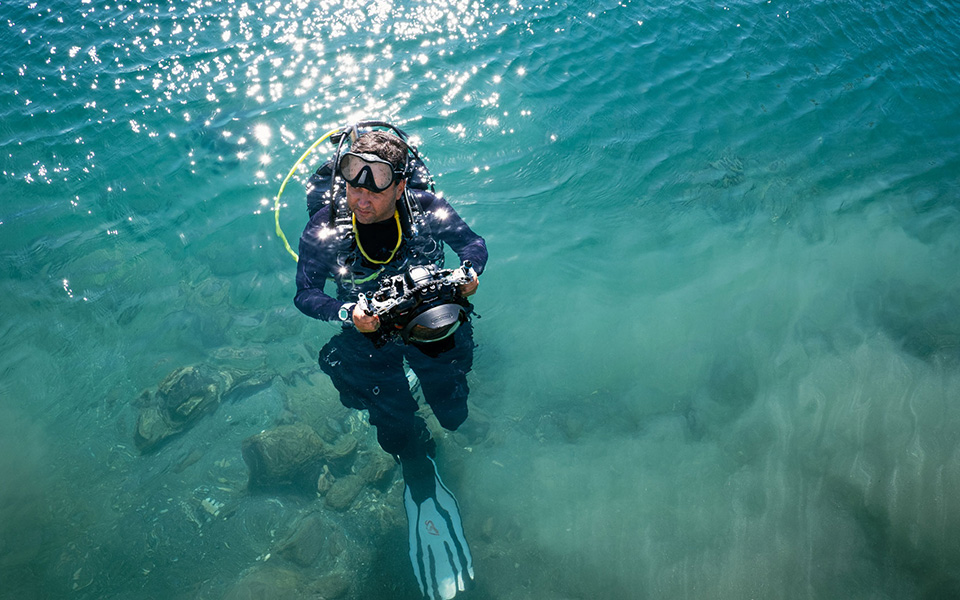
The group’s early focus was on underwater and coastal cleanups, aiming to help the seabed “breathe” again. It quickly attracted volunteers and institutional support, expanding both its reach and its impact. These are people from all social, educational, and economic backgrounds who dedicate their weekends to traveling to Greek islands and coastal towns, cleaning seabeds and reefs. They have spent the past eight years offering their time, effort, heart, energy, and perseverance toward a single goal: to highlight the urgent need to de-pollute our seabeds and protect the biodiversity of our seas.
Aegean Rebreath’s work now extends beyond cleanup dives by certified divers. It extends to innovative and far-reaching interventions and programs, such as the installation of Marine Litter Collection Stations across Greece. The scale of both the problem and the response is reflected in the data: by October this year, across 115 operations, the team had removed more than 130,000 plastic items, 4,100 tires and 33 tons of abandoned fishing nets.
One of the core pillars of Aegean Rebreath’s work is raising awareness within local communities and fostering a shift in environmental culture, through ongoing outreach led by the team’s expert scientists. This approach is known as “Environmental Democracy”: encouraging citizens, particularly young people, to actively participate in environmental protection and decision-making.
A key milestone came in 2023 with the creation of the Network of Blue Municipalities, a pioneering initiative in Greece and across Europe. The network brings together 24 island and coastal municipalities, along with two Port Authorities, all of which have installed Marine Litter Collection Stations. It now operates as a formal legal entity.
The initiative has enabled an uncommon level of cooperation between local authorities, civil society and central government, highlighting the importance of marine protection for both environmental and economic sustainability. Its impact has drawn international attention, with European municipalities expressing interest in joining. The project was also ranked first – following a public vote – among 472 entries in the “Challenge of Democracy in Europe” competition by Advocate Europe.
Against this backdrop, Aegean Rebreath’s recognition with this year’s Sustainability Award by Gastronomos magazine underscores the connection between environmental protection and food systems. Accepting the award, Executive Director Giorgos Sarelakkos, joined by Maria Fountou, Head of Communications for the Network of Blue Municipalities, emphasized the urgency of collective action: “Our seas are being plundered, and the field of gastronomy must also contribute to this effort” he noted, urging chefs, as key shapers of Greek gastronomy, to adopt more sustainable practices. “Without our natural resources, there will be no gastronomy.”