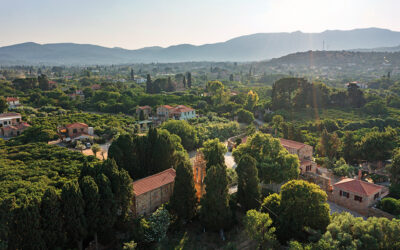
Kampos: The Secret Life of Chios’s Citrus Estates
As its historic estates fade and...

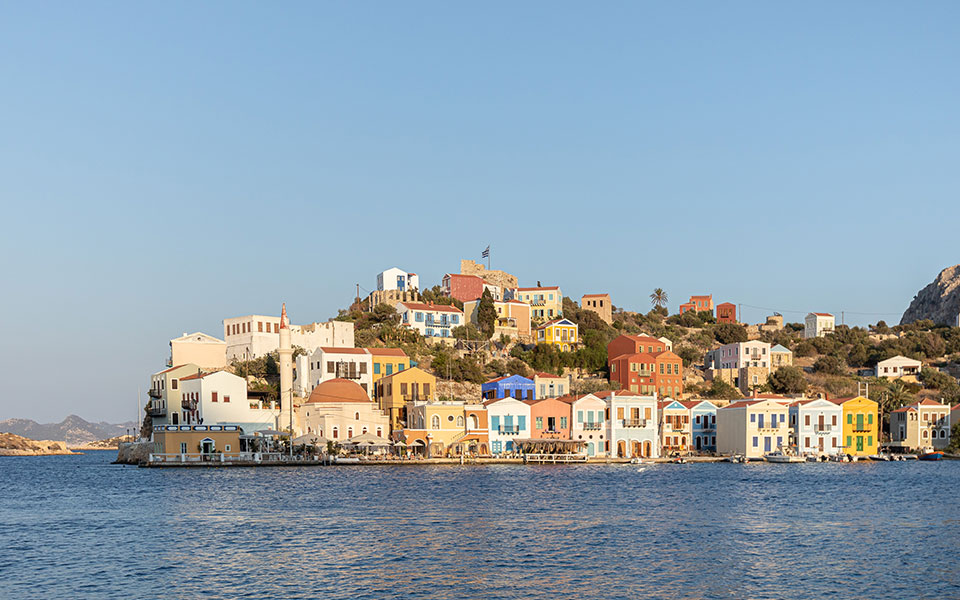
A small Olympic Airways propeller plane touches down on a narrow runway. The airport is tiny; just a few smiling faces and a single road leading to the waterfront promenade the locals call Kordoni. Shaped like a horseshoe, the harbor road curves gently, flanked by the neoclassical houses with tiled roofs that we once admired only on postcards. We’ve arrived on Kastellorizo, Greece’s easternmost island, for the 10th edition of the Beyond Borders International Documentary Festival.
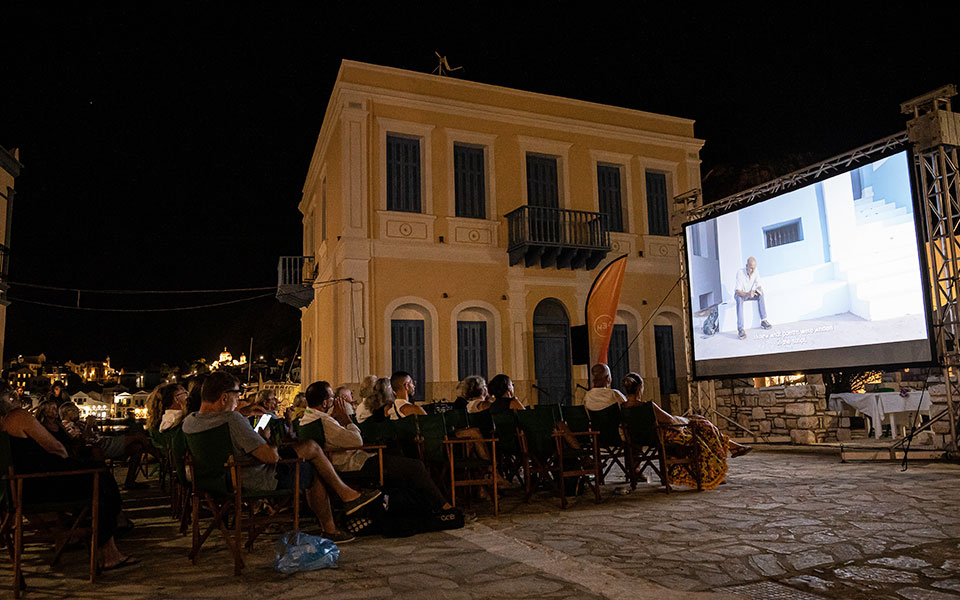
Screening at Poseidonos Square, one of the two locations where cinema screens were set up.
Cinephiles, filmmakers, and professionals gather in this remote corner of Greece, joining locals and visitors to watch films and exchange ideas. This year, the festival, organized by the Hellenic History Foundation, will feature 42 films that will be screened in the island’s open-air cinemas at Heroon and Poseidonos Squares, 18 of them competing in the main competition section.
At the opening ceremony, Alexis Papahelas, executive editor of Kathimerini (the festival’s honored media partner), addressed the crowd. Archival footage reminded us just how far the festival has come from its early editions to one of the world’s top three documentary festivals, alongside Venice and Locarno, according to FIPRESCI, the International Federation of Film Critics.
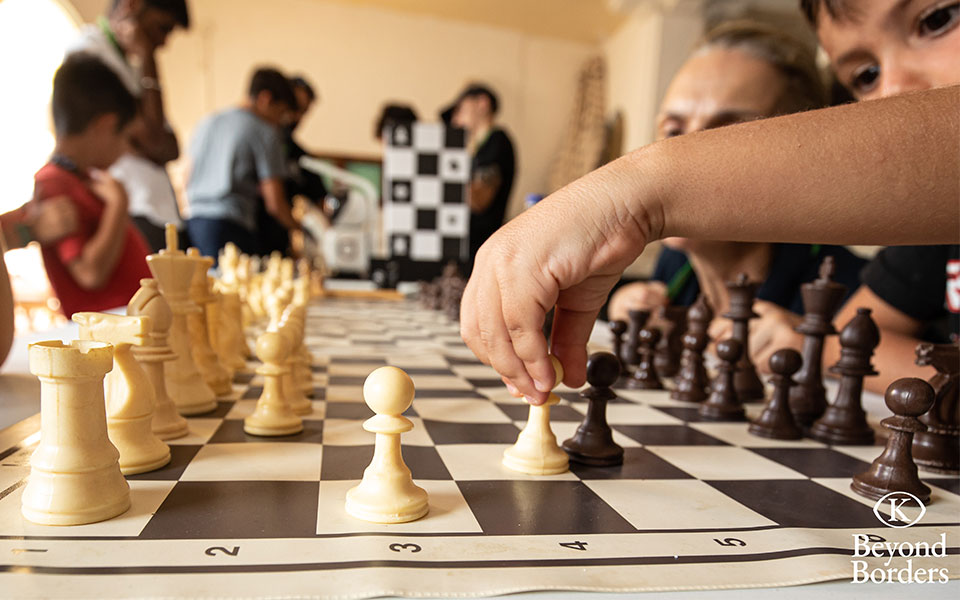
The Rhodes Chess Club “Ippotis” organizes chess lessons.
Festival president Irini Sarioglou shared her determination to expand this vision, turning the eyes of all Greece toward Kastellorizo. However, the greatest challenge remains convincing the locals to truly embrace the festival, rather than seeing it as a passing spectacle. Some progress is visible – locals occasionally approach us to ask what we’ve seen – but the connection remains tentative.
In the mornings, younger visitors join in the festival’s parallel activities: chess lessons organized by the Rhodes Chess Club “Ippotis,” with the support of two SenseRobot chess units, as well as educational screenings curated by the Chania Film Festival. Meanwhile, older attendees gather at Poseidonos Square for the presentation of Athina Tarsouli’s book Kastellorizo, introduced by Mrs Sarioglou and author-journalist Pavlos Methenitis.
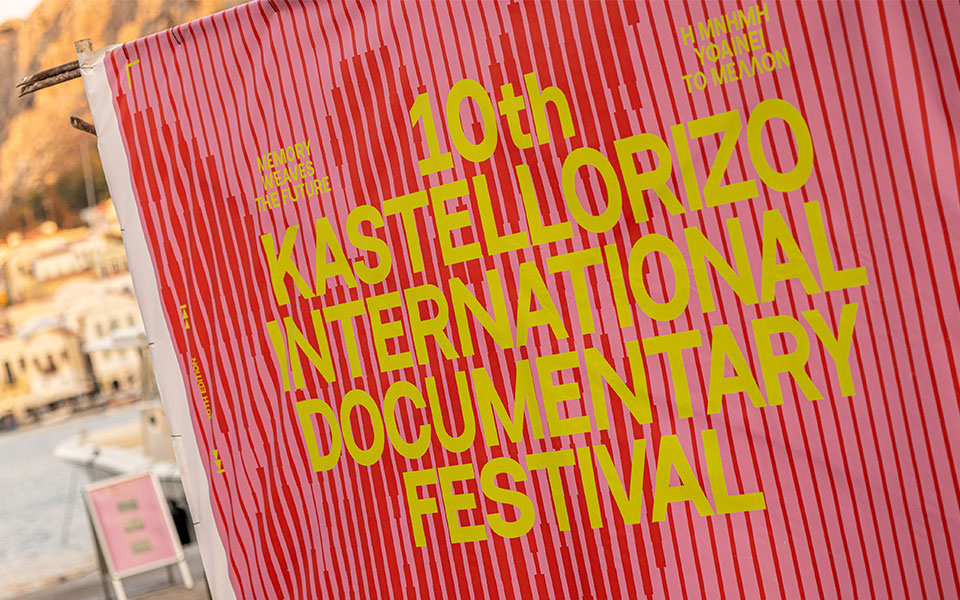
“The Future Weaves Memory” is the slogan of this year’s anniversary edition of Beyond Borders.
In a nearby house, an elderly woman sits on the doorstep with her door wide open. Inside, photographs of sailors and ships dominate the walls; remnants of another era, when Kastellorizo was a thriving maritime power and shipowners still lived on the island. She listens quietly to the presentation, nodding at familiar stories of loss, resilience, invasion and migration.
When it ends, she softly says, “I know all this. But I like to hear it again. It reminds me of something distant that no longer exists.” Before I can ask her name, she slips back inside and closes the door behind her.
Later that evening, Kastellorizo: An Island in the Heart of the World, a documentary by Ivan Boutel, is screened in the same square. Local voices reflect on the challenges of daily life, migration, and identity. Residents in the audience recognize the faces onscreen; we visitors absorb the subtleties of island life, one frame at a time.
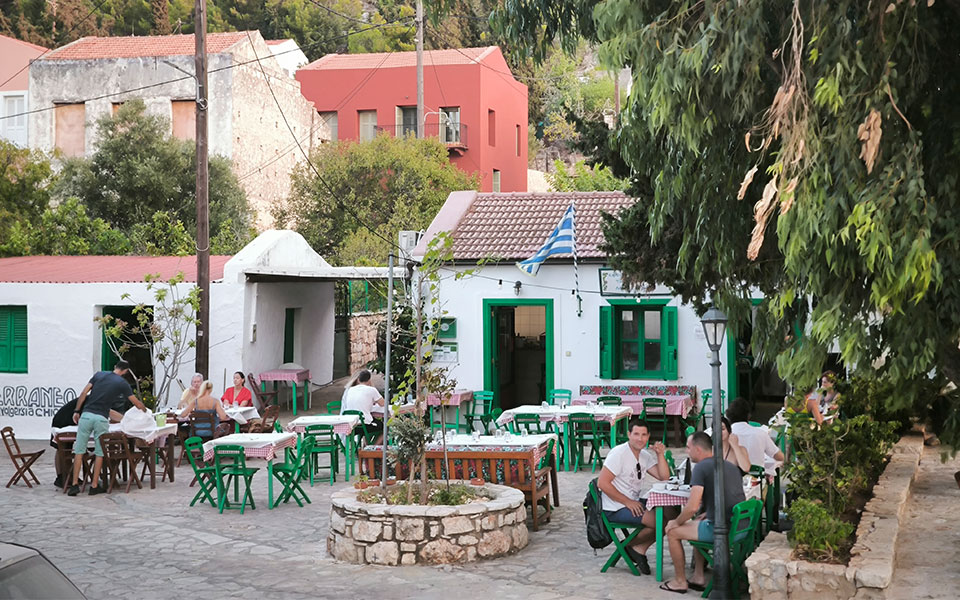
For home-style dishes, visit Ta Platania tavern, next to the church of Aghios Constantinos.
Under Kastellorizo’s starlit sky, we silently watch Danae Elon’s documentary Rule of Stone. The Canadian- Israeli filmmaker explores the invisible violence of Jerusalem’s architecture, revealing its role in the systematic displacement of Palestinians from the outskirts of Jerusalem and the West Bank. At the end, Palestinian student Wael Abound engages the filmmaker in a thoughtful exchange. Elon reminds us that before the Nakba, Jerusalem was a city where multiple communities coexisted peacefully.
Across the Kordoni, in Heroon Square, we are transported to the studio of Chinese artist Shen, based in Australia. In Welcome to Babel, James Bradley follows the journey of this emblematic artist as he creates a painting that pays tribute to the history of communism in the 20th century, including both its bright and dark moments, many of which historians and politicians often pretend never happened.
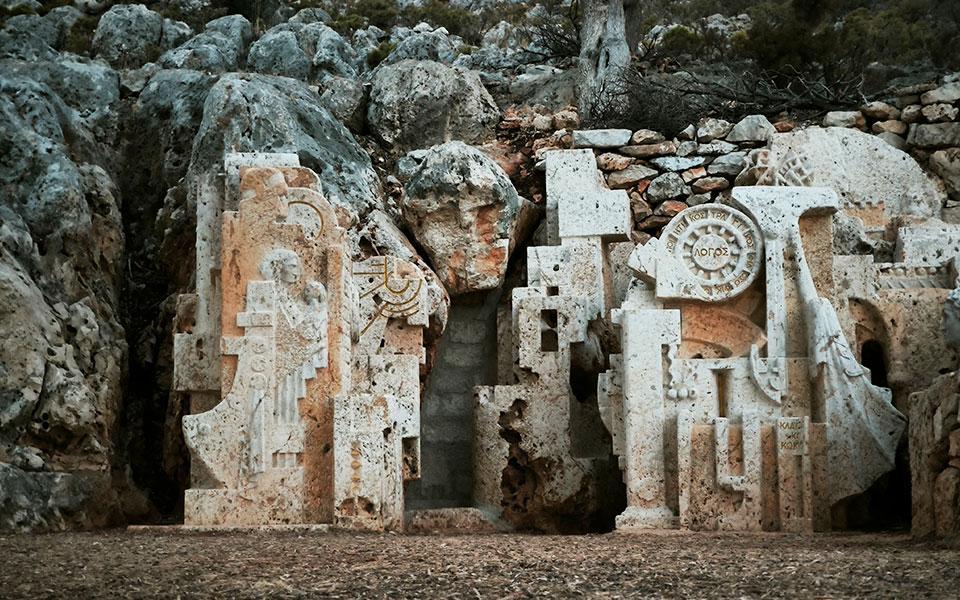
Sculptures by artist Alexandros Zygouris can be found in the small grove past the “Megisti” hotel.
With each screening, we are transported, even as the sound of waves breaking on the harbor reaches our ears. While the setting for these screenings is truly unique, what makes the event truly special is the sense of connection that forms among us. The island is small, and soon, strangers become familiar faces. We cross paths in cafés and tavernas, trade impressions after each film, share stories of our own, and gently urge curious locals to join us.
Perhaps it’s the intimacy of Kastellorizo or its isolation that makes everything feel more vivid. What I carry home isn’t just a list of documentaries or ferry timetables; it’s the feeling that this small island, perched on the edge of the Aegean, is the perfect place to broaden one’s horizons.
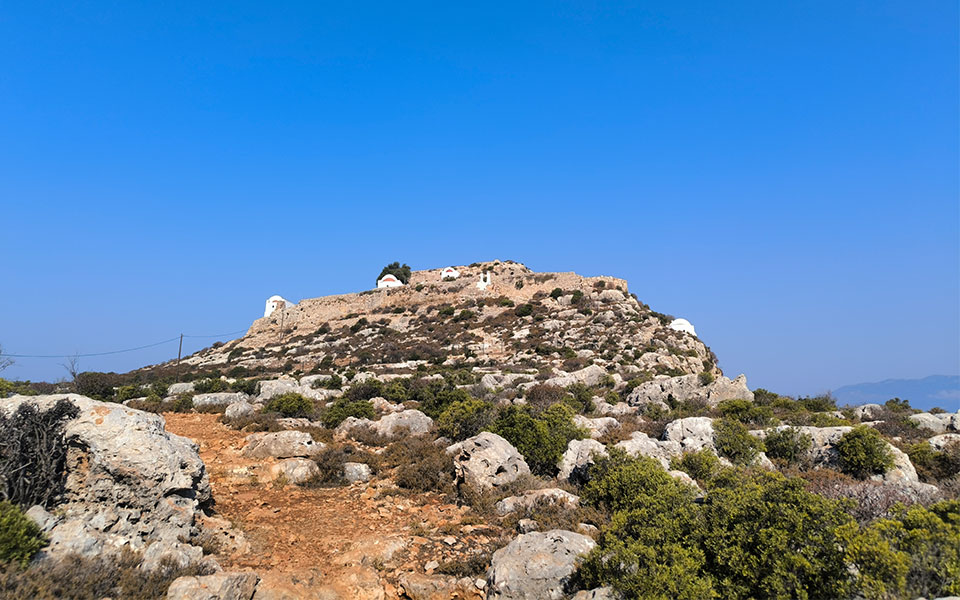
Hiking to Paleokastro, at the top of which stand three 19th-century churches.
Reach Kastellorizo by ferry from Piraeus (via Blue Star Patmos) or by air via Olympic Air/AEGEAN flights from Athens, with a layover in Rhodes. From Rhodes, you can also catch a ferry or catamaran (daily, except Thursdays and Saturdays).
To discover the island’s rich history, from classical to Ottoman times, visit the Archaeological Museum, housed in the medieval Castle of Aghios Nicholaos. The museum’s top-floor gallery features traditional Kastellorizian costumes, embroidery, and folk art, including a recreated household kitchen.
Hiking enthusiasts will love the climb to Paleokastro. Built in the 3rd century BC on Vigla Hill, it is the island’s oldest monument. The castle was used both in antiquity and during the Italian occupation, when bunkers were added inside its walls. Within the site are the churches of Panagia tou Kastrou, with its 1858 pebble courtyard, Aghios Stefanos, and Aghios Nicholaos. The ascent takes about 45 minutes.
Swim right off the Kordoni or visit Mandraki harbor. For a unique experience, hire a sea taxi (€15/person) to Aghios Georgios islet or explore the dazzling Blue Cave, best visited early in the morning as rough seas later in the day make access difficult.
Dining options on the island are limited, but worthwhile. Don’t miss the home-style dishes at Ta Platania tavern, near the church of Aghios Constantinos, or the seafood at Alexandra, right on the harbor. Popular cafés include Stratos, Aquarium, and Meltemi, while new addition Mourayo serves focaccia and handmade sweets.
As its historic estates fade and...

When Herodou Attikou, a crossroads in...
Experience Spetses in its most enchanting...

More and more Europeans retire to...