The Famous Onion Pie of Mykonos
Francesca Chanioti, a home cook from...

© Shutterstock

Chef: Nena Ismirnoglou

Preparation & Cooking time: 3 hours

Serves: Approximately 70 small pieces
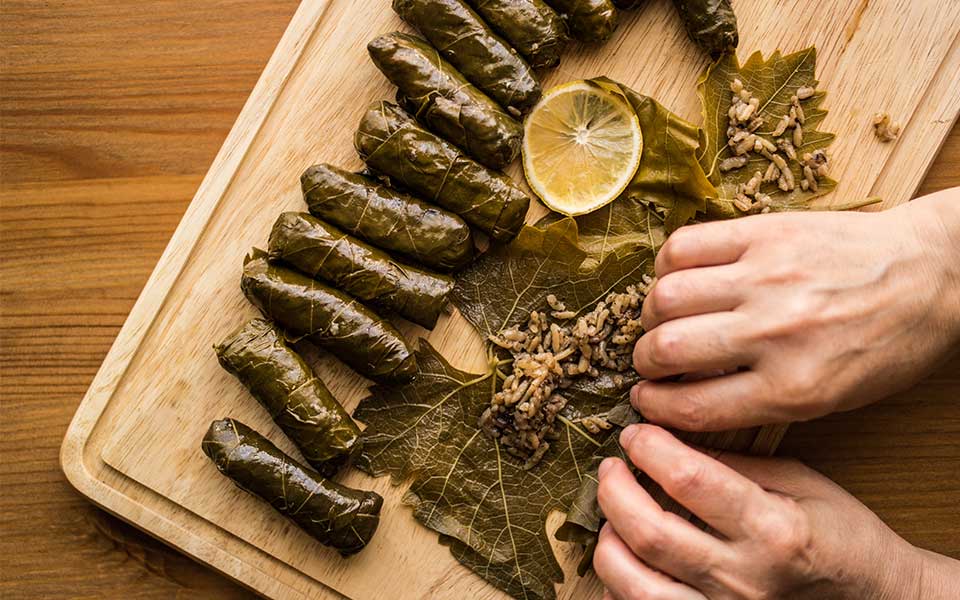
In Turkish, “dolma” means “stuffing” and “yalanci” means “fake”; these stuffed vine leaves are called this because they don’t contain meat.
If you’re using fresh vine leaves, boil the leaves in a deep pot with plenty of water for approximately 3 minutes so that they become soft and flexible. If you’re using vine leaves from a jar, boil the leaves for 30 seconds to 1 minute in order to get rid of the taste of brine.
Remove the vine leaves from the pot with a slotted spoon and place in a colander to drain.
Put all the filling ingredients in a deep bowl and mix well with a spoon.
Sort out the leaves, setting 15-20 of the largest and/or hardest leaves aside.
One by one, lay the remaining leaves on a flat surface and place 1-2 teaspoons of filling in the center (the amount of filling will depend on the size of the leaf).
Fold the tip and two ends of the leaf into an envelope and then roll the leaf shut. Because rice swells and increases in size when it is cooked, make sure you don’t roll the leaves too tightly.
Continue with Steps 5 and 6 until all the leaves and filling are finished. If there’s any filling left over, you can cook it in a small pot with a little water; it makes a delicious rice dish that you can enjoy at any time, even while you’re waiting for the dolmadakia to cook!
Cover the bottom of a large shallow pot with two layers of the leaves that you set aside in Step 4 – this should not require all the leaves you put aside.
Arrange the uncooked dolmadakia neatly in the pot, one next to the other, building up layers until you have placed them all in. Pour the olive oil, lemon juice and 500ml of hot water over the dolmadakia.
Add the salt and pepper and cover the dolmadakia with the last remaining vine leaves that you set aside in Step 4. (Covering them with vine leaves lets them keep their color and not blacken).
Cover the dolmadakia with a heavy plate. This will hold the dolmadakia in place as they are being cooked. Press down on the plate softly so you drain the dolmadakia of their juices. These juices, together with the other liquids that you have added, should partly cover the plate. If necessary, add a little more hot water.
Place the pot on a burner set at a high temperature and, once you see that the juices have begun to boil, drop the temperature to a minimum. Cover the pot and cook the dolmadakia slowly at that low temperature for approximately 90 minutes, until the vine leaves soften and the rice is completely cooked and becomes glutinous.
Once the dolmadakia are ready, take the pot off the stove and remove the plate, but continue to keep the dolmadakia covered with the top layer of vine leaves until they cool.
Remove the top layer of leaves and transfer the dolmadakia to a platter. Serve with either yoghurt or fresh mizithra cheese, mixed with a little paprika and olive oil.
For the filling
In Greek cuisine, vine leaves are customarily used to make dolmadakia. Classic dolmadakia gialantzi go well with wines such as retsina, Savvatiano and Roditi; dolmadakia made with meat and avgolemono (a sauce made with egg yolk and lemon juice mixed with broth) go well with a barrel-aged Assyrtiko or a Chardonnay. Moschofilero, Semillon or a dry Muscat wine are other options that complement the dish’s acidic, vegetative flavor.
This recipe was previously posted in Greek at gastronomos.gr.
Francesca Chanioti, a home cook from...

The historic Peloponnesian castle town of...
Cabbage rolls with egg-lemon sauce are...

On Mykonos, this simple yet vibrant...