Easter in Leonidio: A Tapestry of Light, Culture...
In Leonidio, Easter comes alive with...

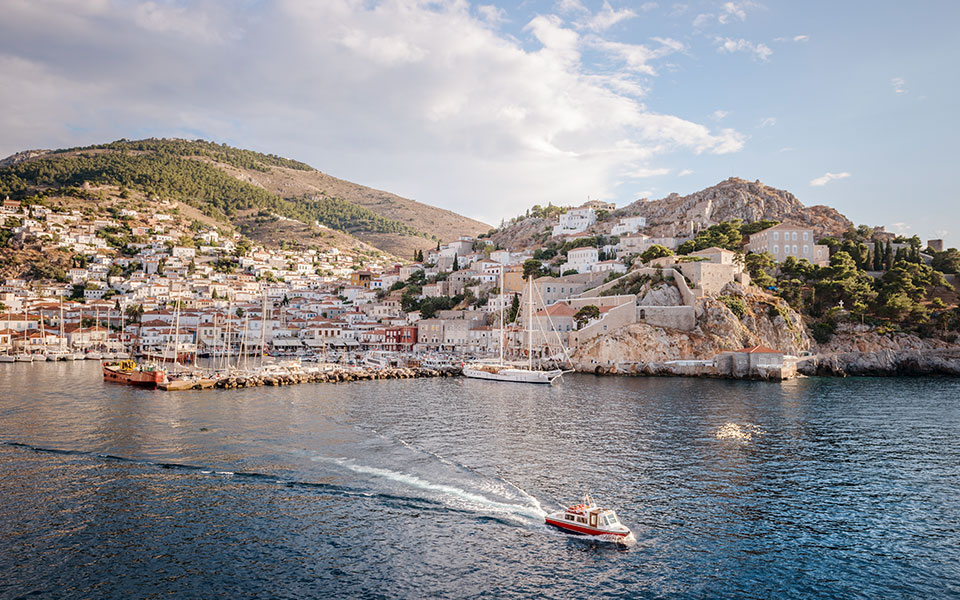
The urban settlement of Hydra, amphitheatrically built behind the harbor.
© Dagmar Schwelle/Laif
Easter on Hydra is special. The decorated Epitaphios (wooden bier representing the funerary bier of Christ) of the parish of Aghios Ioannis Prodromos features as the main protagonist. Each year, by candlelight, four men carry it into the sea at the small port of Kamini, as onlookers gaze in awe. The docked boats, and often the ducks that happen to be swimming nearby, complete the setting for the beloved local ceremony, which is inextricably linked to the safe return of sailors.
The next day, on the evening of the Anastasi (Resurrection), leave the crowded town behind and head inland to the Monastery of Profitis Ilias, for a truly reverential Easter experience.
On Easter Sunday, finally, there is the burning of Judas. For this unique event in the port, men dressed as fireship captains shoot at the effigy of Christ’s fallen disciple until it bursts into flames.
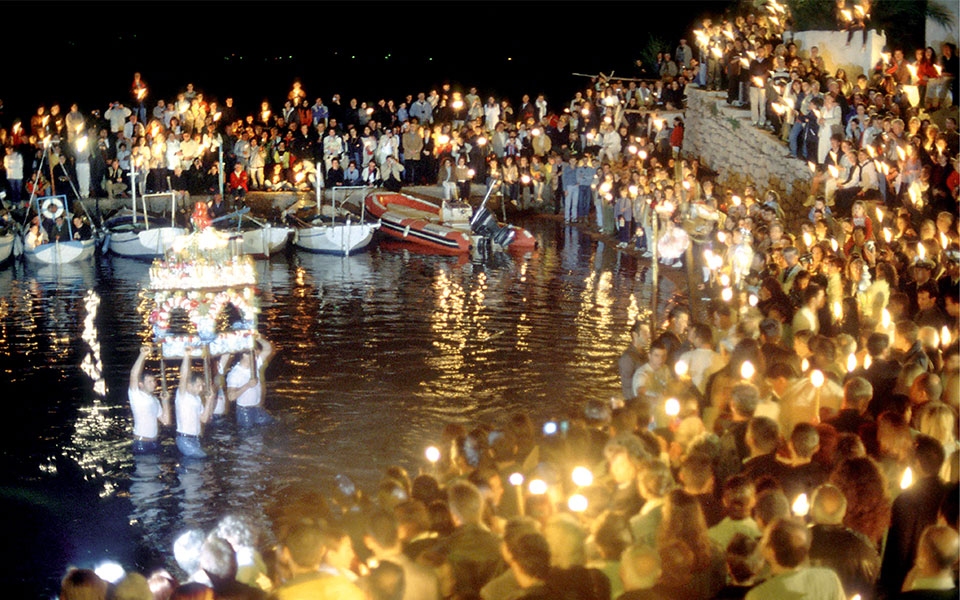
The immersion of the Epitaphios in the sea at Kamini is a beloved tradition.
© Velissarios Voutsas
A veteran of Greek tourism for more than 70 years, the island of Hydra is a unique place, where so many different people coexist harmoniously. It will come as no surprise to see an old local twirling his enormous moustache while engaged in conversation with Pink Floyd’s David Gilmour, one of the many foreign artists who have fallen deeply in love with this island in the Argosaronic Gulf. Walk around the harbor and the surrounding narrow streets, among the imposing mansions that showcase the island’s past economic prosperity.
Stop and take in the monument to Andreas Miaoulis, the statue of Captain Antonis Economou, the mansion of Pavlos Koudouriotis, and the flag of Hydra, designed during the Greek Revolution featuring a cross, anchor and snake, which you will see raised on many vessels, as well as Sofia Loren’s windmill, Leonard Cohen Street, and Jeff Koons’ sun (an art installation by the DESTE Foundation).
While Hydra’s love and promotion of its decisive contribution to the Greek Revolution is evident everywhere, there is also considerable evidence of its international, cosmopolitan character.
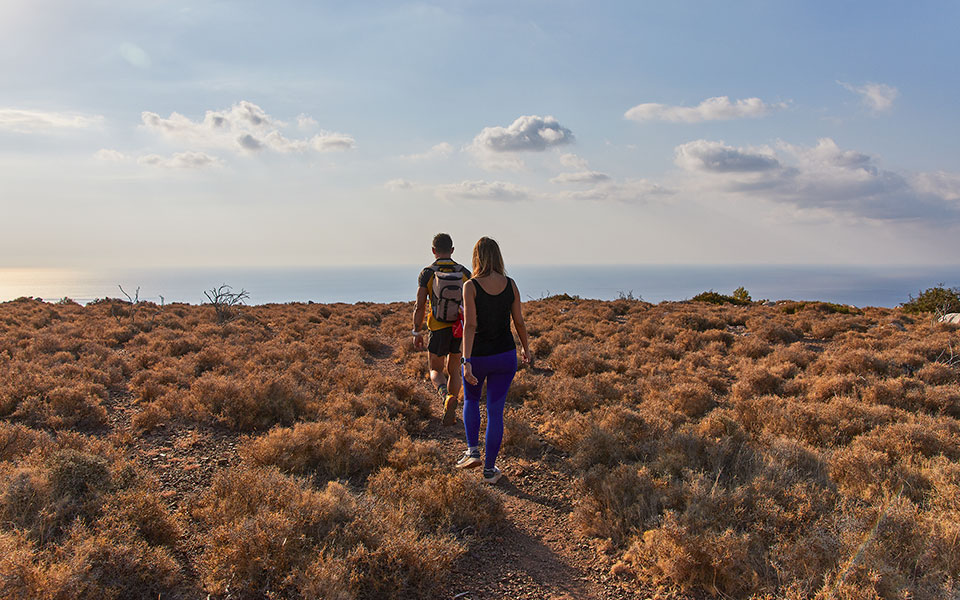
Hiking in Hydra’s countryside, a landscape with smooth inclines.
© Dimitris Vlaikos
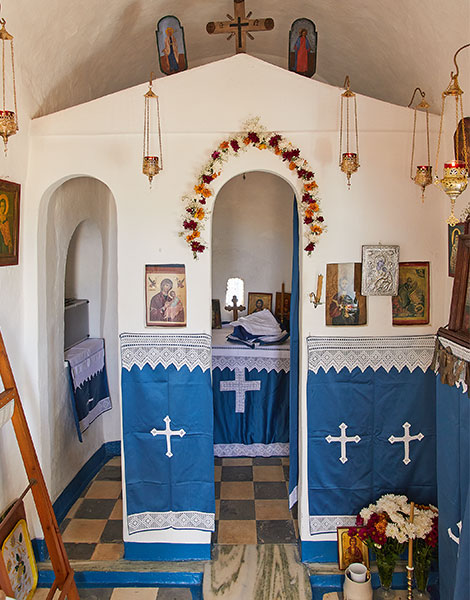
Venture inland to visit the Church of Aghios Mamas.
© Dimitris Vlaikos
© Dimitris Vlaikos
Should you be interested in an organized walking tour for an in-depth encounter with the island’s history, reach out to Hydra Walking Tours (Tel. (+30) 6976.901.736). In addition to its urban aspect, you should explore the island’s countryside. Hydra boasts a series of footpaths, ideal for hiking, such as the one that begins in Plakes Vlyhou and terminates inland at the Church of Aghios Mamas, with views over Mount Eros. The route features smooth inclines and should take about 1.5 hours (2.8km, 330m change of elevation, not signposted). For more information or guidance on your hikes along Hydra’s trails, contact Discover Hydra (Tel. (+30) 6972.084.550).
In the late spring, when the weather is good, you should arrange a boat ride with Hydra by Boat (Tel. (+30) 6987.030.113). You can traverse the crossing between Hydra and Dokou (where one of the most ancient shipwrecks in the world was discovered), or head to Dio Aderfia (two brothers), Tagari and Disaki, the two small islands in the northwest.
Four Seasons Hydra (Plakes Vlyhou, Tel. (+30) 22980.536.98, double room with breakfast from €255). A unique spot between the mountain and the sea, in front of Plakes Beach. The central building is a stone mansion with an aura of old Hydra, which was renovated in the early 21st century. It features rooms, suites and a villa, as well as the famous Tasia’s taverna, which opens for the season in April.
Hydrea (Tel. (+30) 22980.529.20, double room with breakfast from €450). An award-winning boutique hotel in the port of Hydra, with dedicated return visitors. Housed in a mansion dating from 1803, the hotel was renovated in 2010. Its suites are all different – some boast modern decor, while others have a more retro feel with chessboard flooring.
Hydroussa (Votsi Square, Tel. (+30) 22980.524.00, double room with breakfast from €171). Housed in the former Xenia hotel, which in turn was housed in a former traditional island mansion. It features 40 lovely rooms with traditional decor, sculpted wooden furnishings, multicolored rugs and seascapes on the walls.
Orloff (Rafalia 9, Tel. (+30) 22980.525.64, double rooms with breakfast from €163). Closely linked with the history of Hydra, it was built in 1796 by the Russian nobleman Alexei Grigoryevich Orlov, sent to Greece by Catherine the Great. Since 1986 it has been operating as a hotel, while over the years it has been renovated with great care and respect with regard to the original structure. It features six rooms, two suites, and many common spaces. Breakfast (yogurt with honey, homemade lemonade, freshly baked cake, etc.) is served on the balcony and in the lemon tree garden.
Hydra Icons (Tel. (+30) 22984.000.10, double room without breakfast from €55). Very close to the port, this modern offering is ideal for a younger crowd. The decor is simple, the atmosphere warm and welcoming.
In Leonidio, Easter comes alive with...
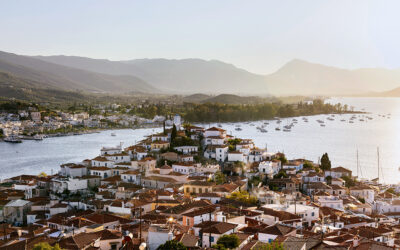
A weekend on the Saronic Gulf’s...
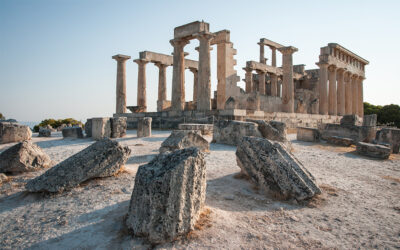
A compact archaeological guide to the...
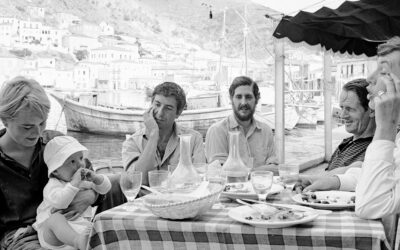
On the Greek island of Hydra,...