In the Footsteps of St. Paul: A Pilgrimage...
Trace St. Paul the Apostle’s journey...

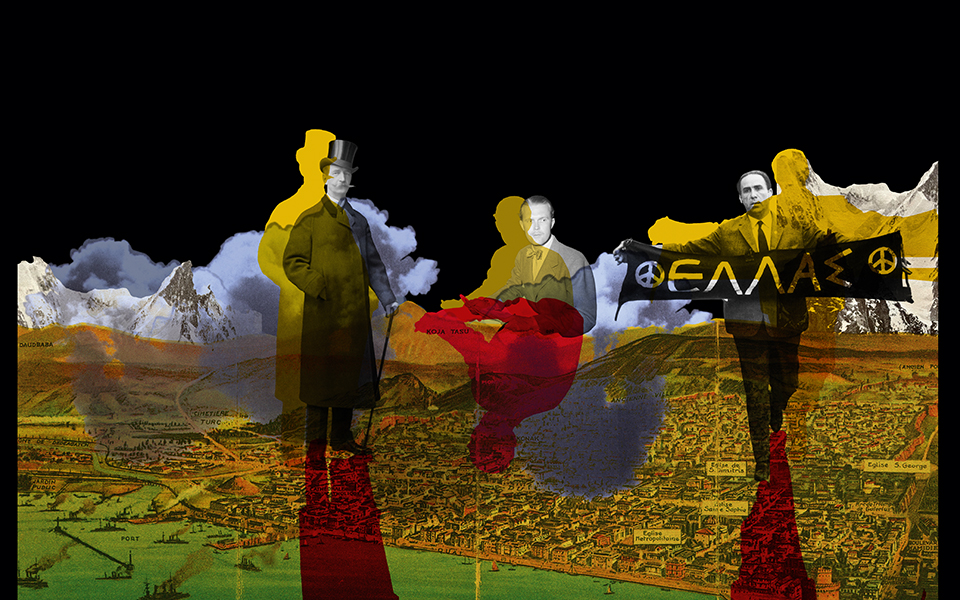
The ghosts of King George I, George Polk and Grigoris Lambrakis still cast a shadow over the city.
© Illustration: Dimitris Tsoumplekas
Thessaloniki is famous for iconic landmarks such as the Rotunda, the Church of Aghios Dimitrios, and its sweeping seafront. It is equally beloved for its rich gastronomy, a blend of cultures and flavors that mirrors its long, layered history. Yet, beneath this luminous image lies another story – one written in blood. From the bullet that ended the life of King George I and the iron bar that struck down Grigoris Lambrakis to a certain bound body found floating in the Thermaic Gulf, Thessaloniki has often served as the stage for acts of political violence. These assassinations became turning points in the nation’s history, casting long shadows and creating legends – some still unresolved. We trace their echoes through the heart of a city that remembers more than it reveals.
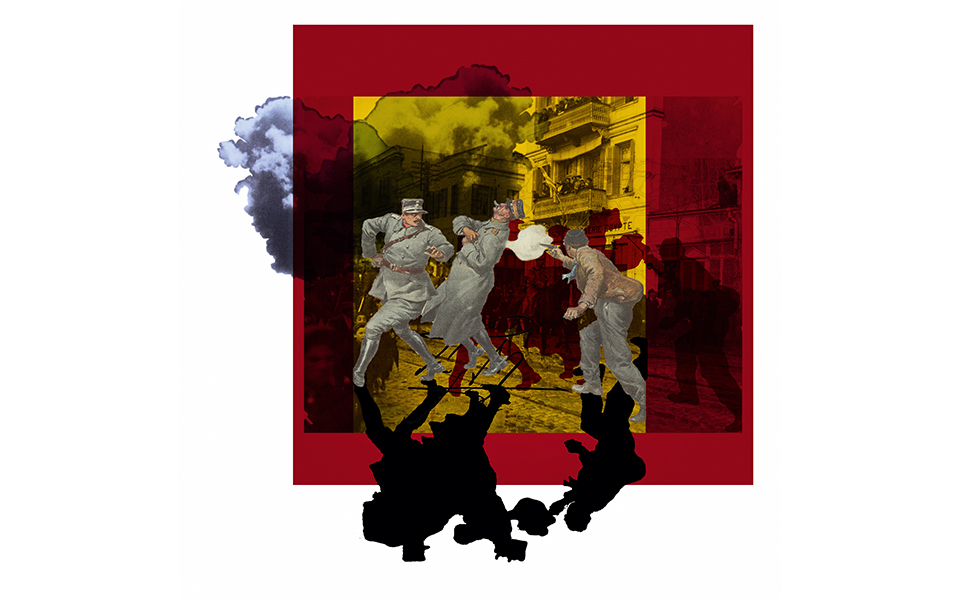
© Illustration: Dimitris Tsoumplekas
On October 26, 1912, the feast day of Thessaloniki’s patron saint, Aghios Dimitrios, the Greek army marched triumphantly into the city. After nearly five centuries of Ottoman rule, Thessaloniki was finally part of the Greek state. A few days later, King George I arrived and took up residence, his presence a clear signal to the Great Powers – and to rival Balkan states – that the city was now irrevocably Greek.
Born in Denmark and a member of the House of Glücksburg, George had reigned since 1863 and was known as a prudent, steady monarch. Married to the Russian princess Olga, he had guided Greece through turbulent times. His stay in Thessaloniki was a momentous event: crowds gathered daily outside his villa in the Exoches district, hoping to catch a glimpse of the monarch.
Thessaloniki in 1912 was a very different place – a true mosaic of cultures and communities. The majority were Sephardic Jews, alongside Turkish Muslims, Greek Orthodox, and smaller groups of Slavs and Armenians.
On March 5 (18), 1913, after a formal visit to a German warship, the King set out on foot back to his residence. Security was strikingly lax for a city still unsettled by war. His only companion was his loyal aide-de-camp, Major Fragoudis, reportedly hard of hearing and leaning toward the King to catch his words rather than scanning their surroundings.
As they walked, they passed a man who looked like a beggar sitting on the curb. As the pair continued on, the stranger stood, drew a pistol from his coat, and shot the King in the back. Pandemonium followed. George collapsed instantly, and the gunman was seized moments later. To everyone’s shock, he was not a foreign agent but a Greek: Alexandros Schinas.
News of the assassination spread quickly, plunging the country into mourning and alarming diplomats across Europe. Schinas refused to speak to anyone except Queen Olga, the King’s widow, and died soon after – officially by leaping from a police-station window, though many believed he was thrown. His motives remain obscure.
The assassination of King George I marked the end of an era and the beginning of years of upheaval. Within months, Greece would be drawn into the First World War, and the path toward the Asia Minor Campaign and the national disaster that followed had already begun.
© Illustration: Dimitris Tsoumplekas
The 1940s were a decade of devastation for Greece. After repelling an Italian invasion in October 1940, the country fell under Nazi occupation from April 1941 until October 1944. And while the world celebrated the end of the Second World War, Greece descended into a bloody civil conflict between the National Army and the Democratic Army, the latter organized by the Greek Communist Party (KKE).
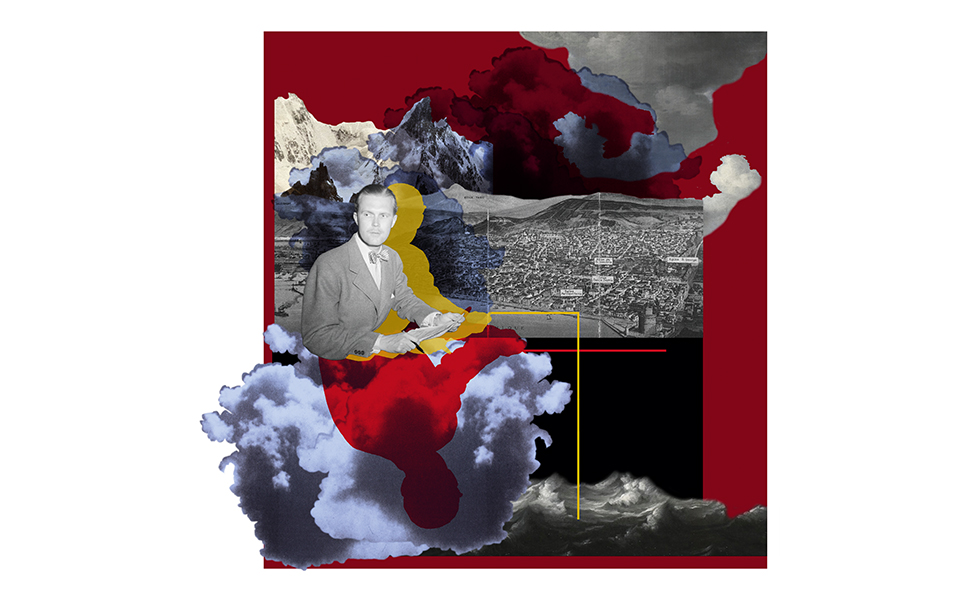
The Greek Civil War quickly drew international attention, widely viewed as the first battlefield of the emerging Cold War. Among the foreign correspondents who arrived in Greece was George Polk, a reporter for CBS News in New York. Born in Fort Worth, Texas, in 1913, Polk came from a once-wealthy family that lost its fortune after the 1929 crash, preventing him from completing the higher education he desired. Restless and adventurous, he traveled across the United States and beyond – to Alaska, the Philippines, China and Europe – before serving in the Pacific during World War II, where he was wounded in combat.
Journalism, however, remained his true passion. After the war, he was hired as a CBS correspondent in the Middle East and stationed in Cairo. In 1947, he was sent to Athens to cover the Greek Civil War. There, he met and married Rhea Kokkoni, a young Greek woman who became his second wife. Ambitious and daring, Polk devised an audacious plan: to locate the underground network that could lead him to the northern mountains of Greece, where Markos Vafiadis, commander of the Democratic Army, was hiding. Securing an interview with him, Polk believed, would be a career-defining scoop. Leaving Rhea in Athens, he traveled to Thessaloniki, the closest city to the rebel front.
Two days after his arrival, Polk vanished. A week later, on May 16, 1948, a fisherman discovered a body floating in the waters of the Thermaic Gulf. It was George Polk, bound hand and foot, with a gunshot wound to the back of the head. The shock was immediate and profound. At a time when the United States was providing massive aid to the Greek government under the Marshall Plan, the brutal murder of a respected American journalist caused outrage on both sides of the Atlantic.
Greek authorities, unable to identify the real perpetrators, soon yielded to pressure for results. Months later, in a move widely condemned as a cover-up, they produced a scapegoat: Grigoris Staktopoulos, a local journalist, who was convicted after a show trial.
The Polk case remains unsolved to this day. Yet George Polk’s name endures: each year, Long Island University honors his legacy by awarding the George Polk Awards, celebrating courage and integrity in journalism, the very values for which he gave his life.
© Illustration: Dimitris Tsoumplekas
The years following Greece’s devastating civil war were marked by deep political, social, and economic turmoil. The wounds of national division between “patriots” and “communists” had not yet healed, and the fragile postwar democracy was riddled with tension. The Communist Party of Greece (KKE) had been outlawed, and the United Democratic Left (EDA) served as the principal political expression of the Greek left between 1951 and 1967.
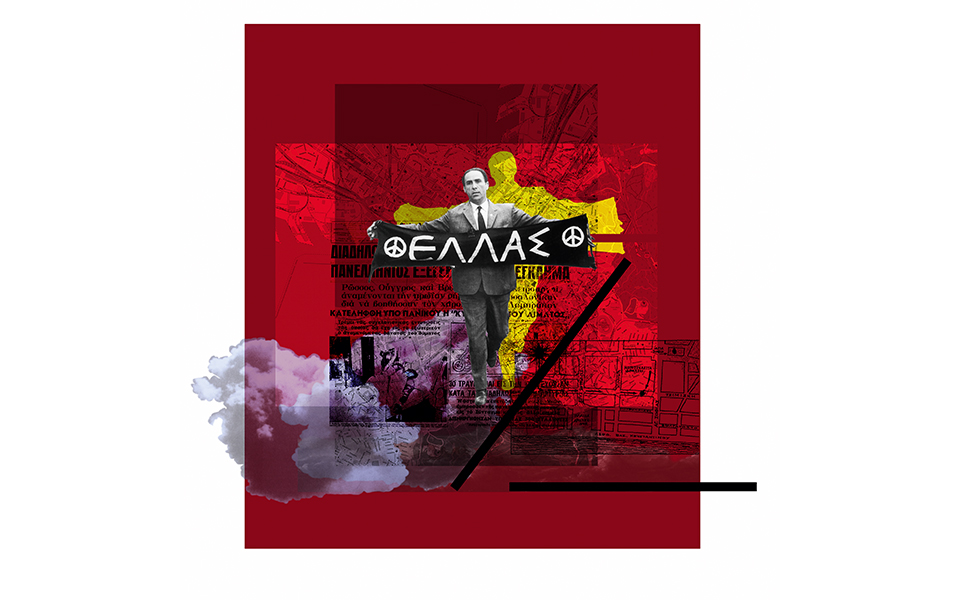
Grigoris Lambrakis was born in 1912 in a small village near ancient Tegea, in the Peloponnese. One of several children in a poor farming family, he showed exceptional talent in both athletics and academics from a young age. A record-breaking long jumper, he held the Greek national record for 23 years and competed in the 1936 Berlin Olympics. True to his independent spirit, Lambrakis sought out and posed for a photograph with Jesse Owens, the Black athlete whose victories infuriated Hitler and defied Nazi ideology.
After earning his medical degree, Lambrakis specialized in obstetrics and gynecology. He was known as a “people’s doctor,” devoting certain days each week to treating impoverished patients free of charge. In 1961, he was elected to parliament with the EDA during elections marred by violence and fraud. As a deputy, Lambrakis became an outspoken peace activist and humanitarian. A member of the Greek Committee for International Detente and Peace and inspired by the ideas of Bertrand Russell, he participated in anti-nuclear demonstrations in London and organized the first Marathon Peace March, which he completed alone after police banned it.
On the evening of May 22, 1963, Lambrakis was in Thessaloniki to speak at a public meeting organized by the Friends of Peace. The atmosphere was tense: right-wing paramilitary groups had infiltrated the crowd, intent on disrupting the event. After his speech, Lambrakis stepped outside to protest to the police, who had done nothing to protect the gathering. At that moment, a small three-wheeled vehicle approached. One man drove while another stood on the back. As the tricycle passed, the man on the platform struck Lambrakis on the head with an iron bar. The MP collapsed in the street, gravely injured.
A bystander, Manolis Hatziapostolou, chased down the attackers and managed to apprehend them. Lambrakis died four days later at AHEPA Hospital, becoming a martyr of the peace movement. His assassination inspired writer Vassilis Vassilikos to write the novel Z, later adapted into an award-winning film by Costa-Gavras.
The true masterminds behind Grigoris Lambrakis’s murder remain unknown to this day, yet his name endures as a symbol of moral courage and the struggle for peace and democracy in Greece.
Trace St. Paul the Apostle’s journey...

Major infrastructure projects, a significant urban...
This short walk takes in eleven...

From postmodern bougatsa to wood-fired pizza...