Stories Told by the Stones of Crete
A forgotten world comes to life...

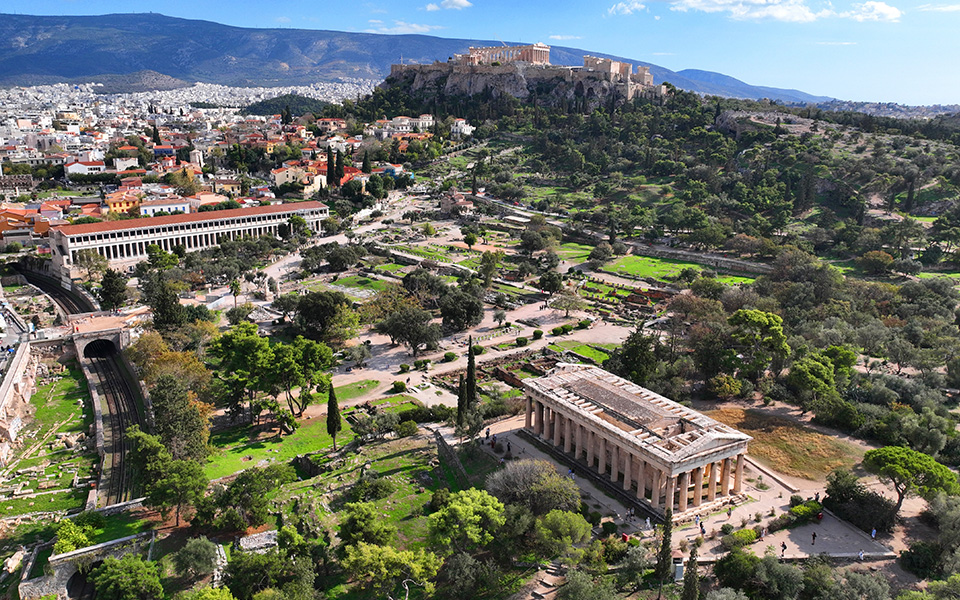
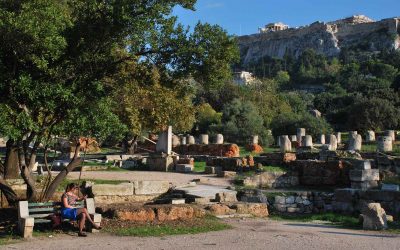
The Roman Agora in Athens.
© Shutterstock
On a warm afternoon at Delphi, most visitors focus on the Temple of Apollo, the sweeping views across the Pleistos Valley, or the thought that this sanctuary was once considered the very center – or “navel” – of the ancient world. Few pause to look closely at the stones underfoot, the low scrub between terraces, or the shaded cracks in ancient walls. Yet it is precisely here, amid the ruins, that a quieter story has been unfolding – one that links Greece’s deep past to its ecological future.
According to a major new research initiative, recently reported by the BBC, many of Greece’s most iconic archaeological sites have become inadvertent sanctuaries for wildlife. Shielded for generations from intensive farming, construction, and urban expansion, these landscapes now harbor a remarkable concentration of plant and animal species – some rare, some endangered, and some found almost nowhere else.
Researchers increasingly describe these places as “accidental arks”: protected not for nature, but for antiquity, and quietly preserving both.
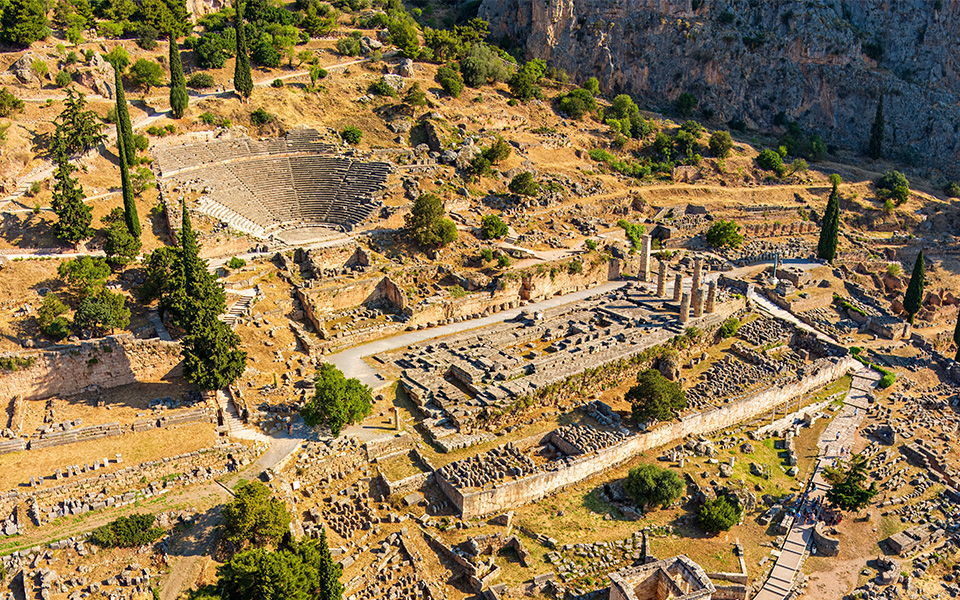
At the UNESCO World Heritage Site of Delphi, researchers identified what may be a previously unknown species of snail, highlighting the site’s hidden biodiversity.
© Shutterstock
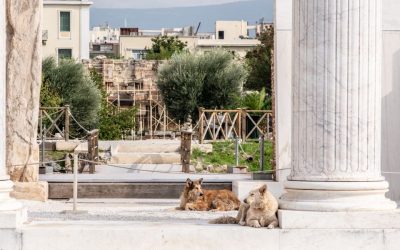
Archaeological sites are often imagined as static remnants of history – stone, marble, and carefully managed ruins. In reality, they are living landscapes. In Greece, many have remained relatively unchanged since the 19th century, when systematic efforts to protect antiquities began.
“These sites were designed to protect antiquities, of course, not biodiversity,” says Panayiotis Pafilis, professor of animal diversity at the National and Kapodistrian University of Athens, who led the study across 20 Greek cultural heritage sites. “But for almost two centuries, they have been well protected. They’re more or less stable environments.”
That kind of stability is increasingly rare. Human activity has severely altered an estimated 75 percent of the world’s land surface, according to a 2025 UN report, while vertebrate populations have declined dramatically over the past half-century. In Greece, more than one in five species is now considered under threat, notes Panagiota Maragou, conservation director for WWF Greece, with habitat fragmentation and climate change among the main pressures.
“Most of them, if not all of them, are linked to human activities,” Maragou says.
Against this backdrop, archaeological sites stand out – not as untouched wilderness, but as islands of continuity in a rapidly changing landscape.
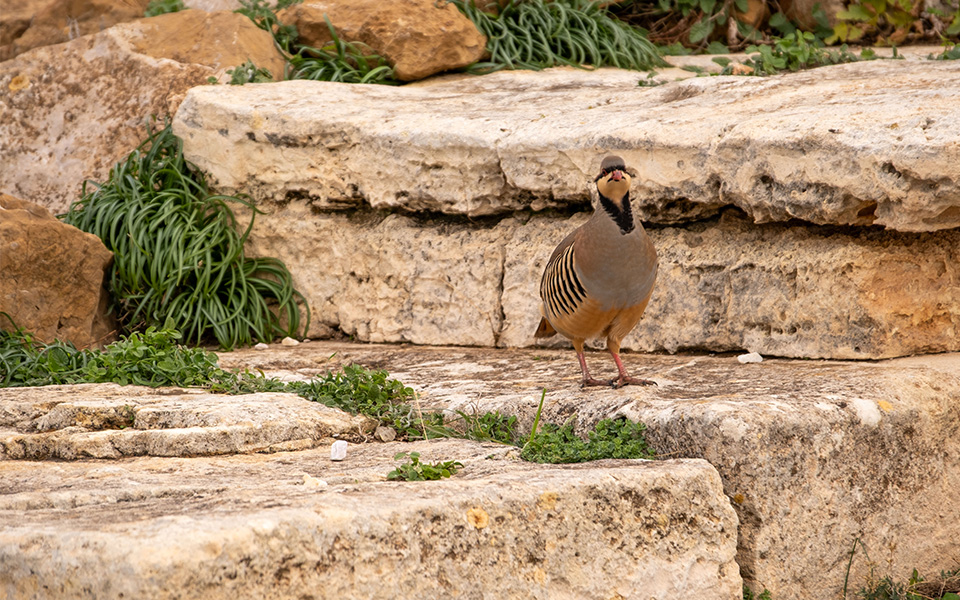
A chukar partridge (Alectoris chukar) walks among the ancient stone ruins of the Temple of Poseidon at Sounion, where natural vegetation continues to thrive alongside classical monuments.
© Shutterstock
To understand just how important these sites have become for wildlife, the Greek government launched the Biodiversity in Archaeological Sites project in 2022. Over two years, 49 specialists – from botanists and entomologists to herpetologists and ornithologists – surveyed 20 archaeological sites spanning thousands of years of Greek history.
The results were striking. Across these sites, researchers recorded 4,403 species, representing around 11 percent of Greece’s known biodiversity, concentrated in just 0.08 percent of the country’s total territory.
“That means that even these small areas,” Pafilis explains, “work in real life as biodiversity refuge centers.”
Fieldwork required careful negotiation between science and heritage. Biologists accustomed to turning rocks or digging small traps had to adapt their methods. “You can’t go into the Acropolis with your pickaxe and start digging,” Pafilis notes wryly. Even so, the findings suggest that many animals are not just present but thriving – often in greater densities than in surrounding areas.
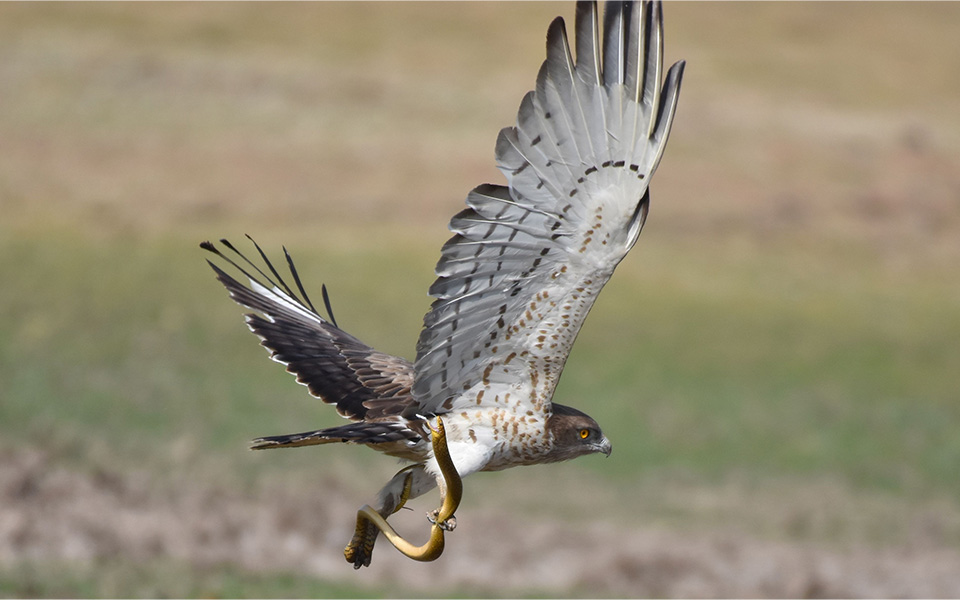
The short-toed snake eagle, named for its snake-rich diet. Closely associated with Zeus in ancient mythology, these raptors have been recorded thriving in the landscape around Delphi.
© Shutterstock
For visitors, some of the most compelling discoveries are tied to places they already recognize.
At Delphi, researchers identified what they believe may be a previously unknown species of snail – barely two millimeters long and possibly found nowhere else on Earth. The site is also home to the short-toed snake eagle, a bird that seems at home in a landscape steeped in myth, long associated with Zeus himself.
At Epidaurus, famed for its theater and its sanctuary of Asklepios, researchers documented the presence of Aesculapian snakes – non-venomous serpents historically linked with healing. The snake entwined around a staff, now a universal symbol of medicine, was not merely an artistic invention: it still lives among the ruins of the god’s sanctuary.
In Dodona, in northwestern Greece, the ancient oracle where Zeus was said to speak through the rustling leaves of a sacred oak, botanists recorded numerous centuries-old oak trees. Their presence suggests remarkable continuity, with oak woodland persisting here since antiquity.
At Mystras, the atmospheric Byzantine city in the Peloponnese, researchers found six of the seven lizard species endemic to the region – more than in the surrounding landscape. The abandoned streets and terraces of the medieval city now form a refuge for reptiles that struggle to survive elsewhere.
Even in Athens, careful botanical work overturned a long-held myth about a flowering plant thought to grow only around the Acropolis. Rather than a unique species, it turned out to be a variation of a common shrub – a timely reminder that both archaeology and ecology depend on close observation.
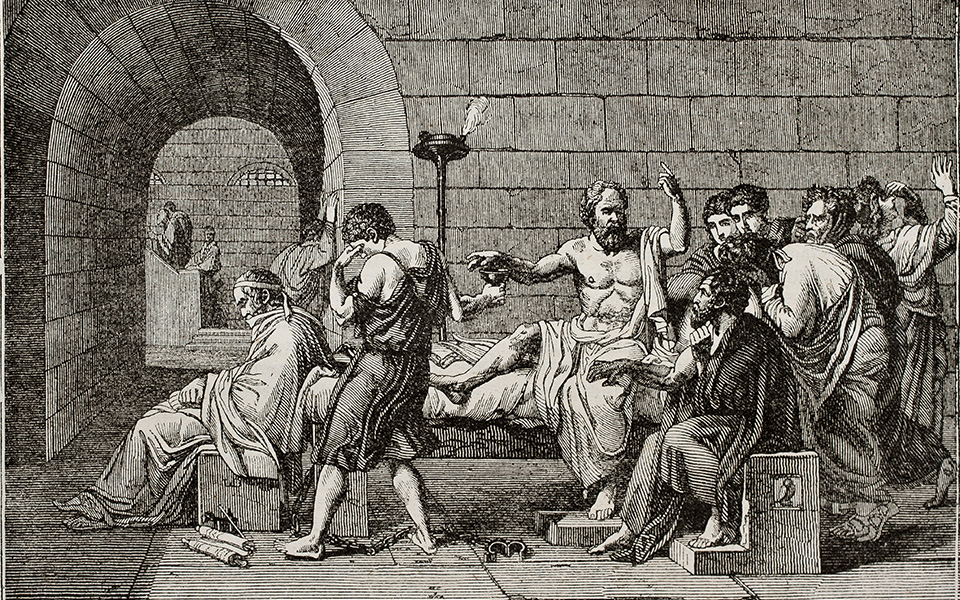
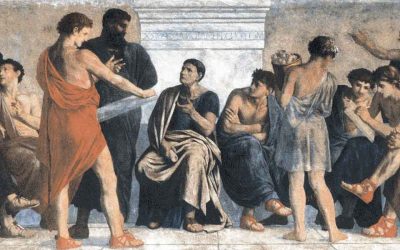
The Death of Socrates, a 19th-century illustration after a work by Jacques-Louis David, published in Magasin Pittoresque (Paris, 1840).
© Shutterstock
One of the most evocative aspects of the research is how often wildlife at these sites echoes ancient stories.
Poison hemlock, the plant used to execute the philosopher Socrates in 399 BC, still grows around several archaeological areas. Oaks stand where Homeric heroes once listened for divine voices. At Delphi, where Zeus released two eagles to find the center of the world, eagles still circle overhead.
“We are the evolution of people that lived in this area some centuries ago,” says botanist Theophanis Constantinidis, another lead researcher on the project. “The same happens with plants and animals. There is a continuity.”
That sense of continuity transforms ruins from relics into living places – landscapes where cultural memory and natural history overlap.
Similar patterns are now being identified beyond Greece. In Italy, recent research across dozens of archaeological sites has documented thousands of plant species, including hundreds considered at risk, flourishing amid ancient ruins. In Peru, biologists have found that pre-Hispanic ceremonial complexes in cities such as Lima provide some of the last remaining habitat for critically endangered reptiles, protected indirectly by their archaeological status.
Together, these studies suggest that cultural heritage sites worldwide may be playing an unintentional but increasingly vital role in safeguarding biodiversity.
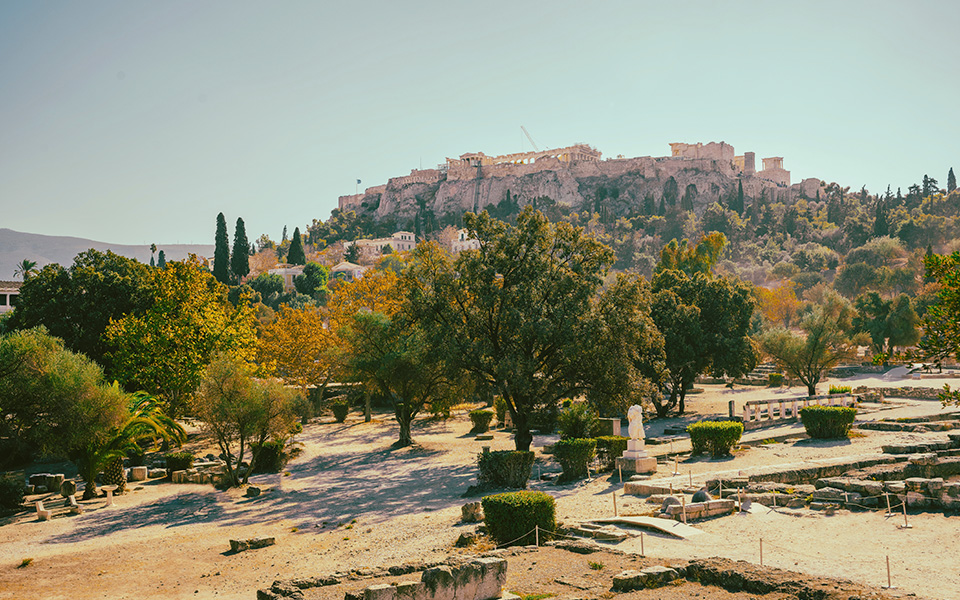
The Roman Agora in Athens. Botanical research has recently debunked a long-held myth that a flowering plant found near the Acropolis was unique to the site, revealing it to be a variation of a common shrub.
© Shutterstock
The research is already shaping how Greece manages its most famous sites. In the near future, several major archaeological attractions will introduce signage highlighting not only historical significance, but ecological value as well. A second phase of the project will expand surveys to 36 additional sites and bring archaeologists into closer dialogue with biologists, examining how nature appears in ancient art and texts.
The challenge, researchers note, is balance. Heavy tourism can place pressure on fragile ecosystems, even within protected areas. But the findings also point to an opportunity: by integrating biodiversity into site management, archaeological landscapes can contribute meaningfully to broader conservation goals.
“Archaeological sites are being transformed into arks for the rescue and protection of biodiversity,” says Culture Minister Lina Mendoni.
For curious visitors, this adds a new dimension to familiar journeys. To walk through Epidaurus, Delphi, or Dodona is not only to encounter the past, but to witness resilience – of stones, stories, and species alike. Greece’s ruins, it seems, are not just windows onto ancient civilization. They are quietly safeguarding life itself.
A forgotten world comes to life...

Discover the best of Mount Olympus...

A springtime haven of wildlife, scenic...
Hiking lesser-known paths where history, nature...