Patmos: The Island We Love to Return to
Charming architecture, unique beaches, rich history,...

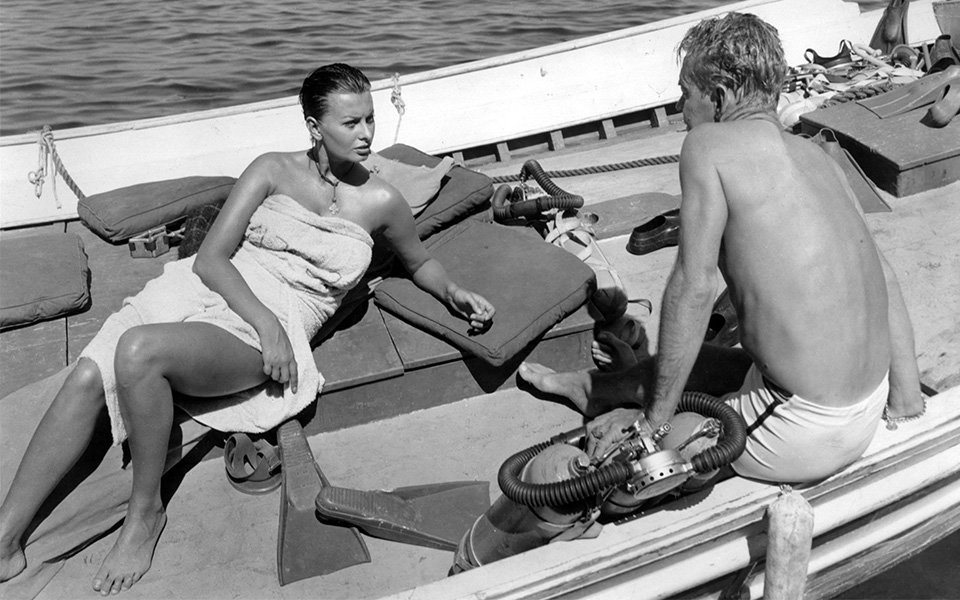
It was late September 1956 when an unprecedented piece of news disrupted the quiet rhythm of life on Hydra. Word spread quickly through the island’s narrow stone streets: an American film was coming.
“An American movie is going to be filmed on our island! The shops and tavernas will be packed; Hydra will become known to the whole world,” recalls 87-year-old Giannis Gavalas, a lifelong resident of the island. He remembers the events vividly, “as if it were yesterday,” his voice evoking the town criers who once relayed news from street to street.
Daily life in postwar Hydra was difficult. With limited employment opportunities, many residents had relocated to the port of Piraeus, while others spent long periods at sea working in the demanding sponge-diving trade. Tourists were rare, and economic hardship shaped everyday life. The island’s present-day cosmopolitan image offers little indication of those conditions, but older residents remember them clearly.
The arrival of 20th Century Fox’s Boy on a Dolphin marked a turning point. The film altered Hydra’s trajectory, introducing the island to an international audience and laying the foundations for its future identity as a cultural and tourist destination.
“Sophia Loren brought luck to the island, and we brought luck to her,” Gavalas says with a smile. A retired merchant navy captain, musician, and poet, he frequently reflects on those formative years. Over coffee at a local café, he recently shared his memories of the autumn of 1956 with Amanda Palmer, an Australian film producer who has lived on Hydra since 2023.
Palmer is the creator of ArtCinema, a cultural initiative that brings together artists and patrons in Hydra, drawing on the island’s long association with creative exchange.
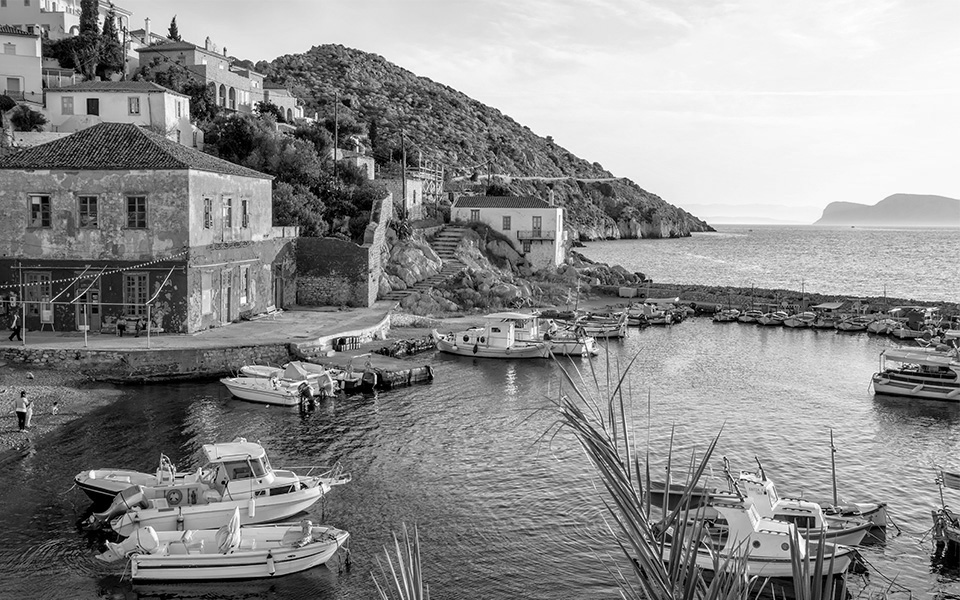
Hydra
© Shutterstock
“During that morning coffee with Giannis Gavalas, I realized something striking,” notes Amanda Palmer. “While Sophia Loren had spoken to the international press countless times about her impressions of Hydra, the locals who experienced the filming firsthand – some of whom even worked as extras – had never had the opportunity to record their own memories.”
Wasting no time, Palmer reached out to her friend, director Antonis Sotiropoulos, to propose a documentary chronicling Sophia Loren’s time on the island. The film would weave together the personal accounts of those present during the movie’s production with insights from historians and local experts, offering a measured look at how this major foreign production reshaped the island’s social and economic landscape.
“This was the first time Hollywood had ever chosen Greece as a filming location, and it also marked the English-language debut of the then 22-year-old Italian actress,” Palmer points out.
Developed by Sotiropoulos and Georgia Andreou, and drawing on the recollections of Hydriots – enhanced through the selective use of artificial intelligence – the project took shape as a short documentary exploring the island’s cinematic turning point.
Hydra & Sophia: Echoes of a Dolphin premiered on the island in October as part of the ArtCinema Hydra initiative and is now expected to begin screening at international film festivals.
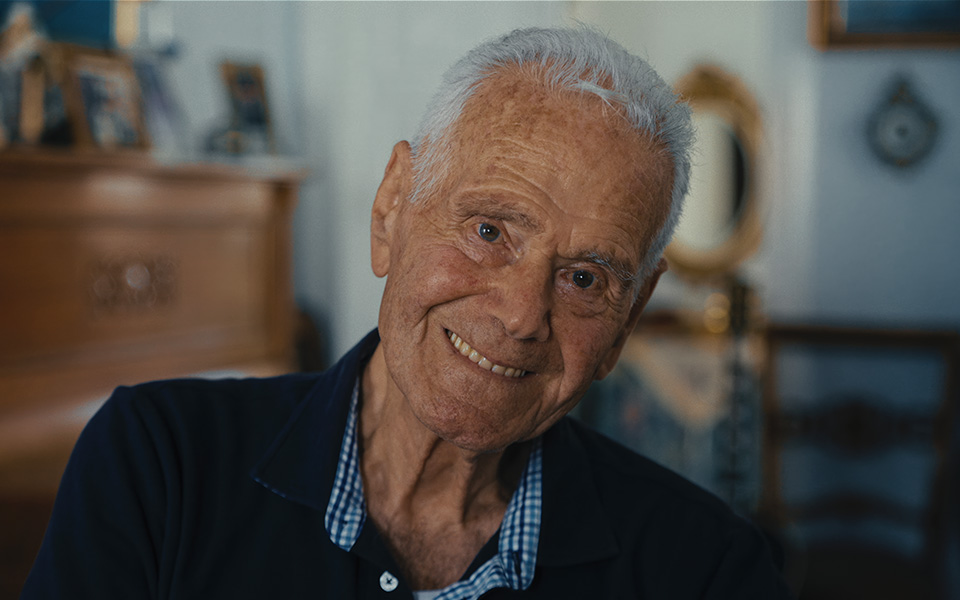
Mr. Giannis Gavalas.
Boy on a Dolphin was initially slated to be filmed on Mykonos, which was already attracting international attention. However, the island’s relentless meltemi winds proved too challenging for the production. It was cinematographer Vassilis Maros, a devoted admirer of Hydra, who proposed the Saronic island as an alternative filming location.
The moment finally arrived, and the youth of Hydra waited with bated breath for the production crew to appear. “About a dozen of us had skipped school and had lined up at the pier,” recalls Gavalas. “None of us had actually seen a photo of Loren before. We’d heard rumors of her beauty, of course, but until then, we could only imagine.”
At the time, ferries could not dock directly at Hydra’s port, and the cast and crew arrived by small boats. “We were whispering, ‘Is that her? Or maybe her?’” Gavalas says, speaking from the same harbor nearly seven decades later. “When we finally realized which one she was, we were disappointed,” he adds with a laugh. “She looked exhausted from the trip and perhaps overwhelmed by the reception.”
Loren’s arrival in Athens had been equally dramatic. She was greeted at the airport by 20th Century Fox president Spyros Skouras, along with film industry dignitaries and large crowds of fans. Contemporary press reports described the scene vividly, noting that the crowd “surged forward the moment Loren stepped off the plane, forming a tight circle around the artist in a desperate attempt to catch a glimpse of her.”
The police had to intervene to help the young star escape the crush. Loren herself later publicly admitted she had been terrified by the experience, noting that she had never encountered such an intense reaction from fans.
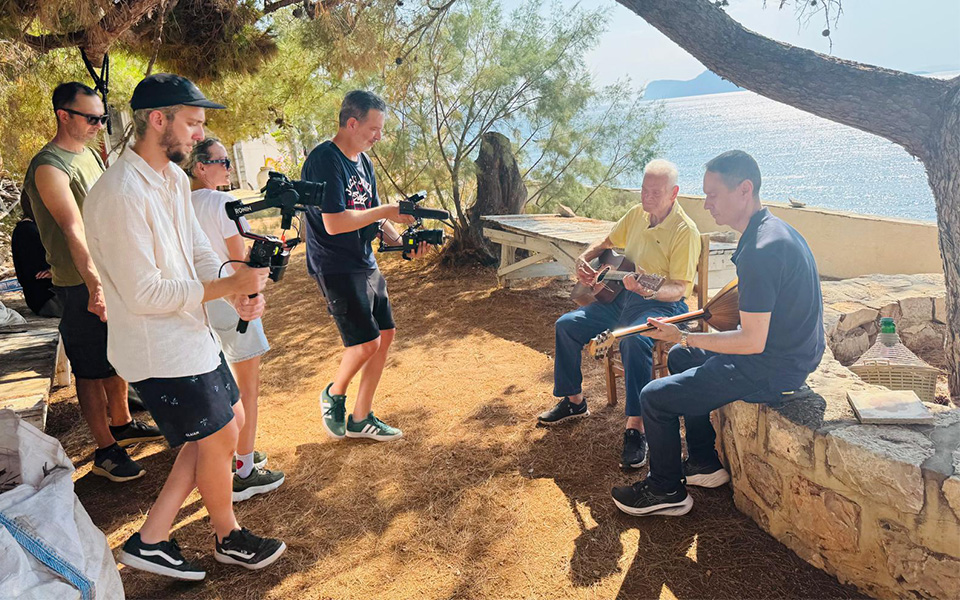
Behind the scenes of the documentary.
On Hydra, first impressions soon gave way to fascination. As Sophia Loren moved through the island – walking its narrow alleys, climbing toward the windmills, and balancing confidently on fishing boats – she became a constant point of attention. For many residents, following the film crew across the island quickly turned into a daily ritual.
“We were used to seeing women dressed modestly from head to toe, so Loren’s necklines and commanding presence quite literally stirred us up,” recalls Gavalas. He also remembers Loren’s body double, Scilla, who closely resembled the actress and performed the underwater stunt scenes. Over time, Loren grew more at ease with the locals, greeting them warmly and often posing for photographs; what Gavalas describes as an early version of the “selfie.” “She would make it clear if she was in the mood for photos that day,” he says.
Near the end of filming, Gavalas finally gathered the courage to ask for a picture with her. “I was with a friend who owned a camera, which was a rare luxury at the time. His father was a sea captain and had given it to him,” he recalls. That day, Loren was on a break and not particularly inclined to be photographed, but she agreed. The photograph, however, was never taken. Despite his friend’s assurances, the amateur photographer failed to capture the moment. “It’s a regret I still carry,” Gavalas says. “In the years that followed, it seemed like everyone else on the island had a photo with her – except me.”
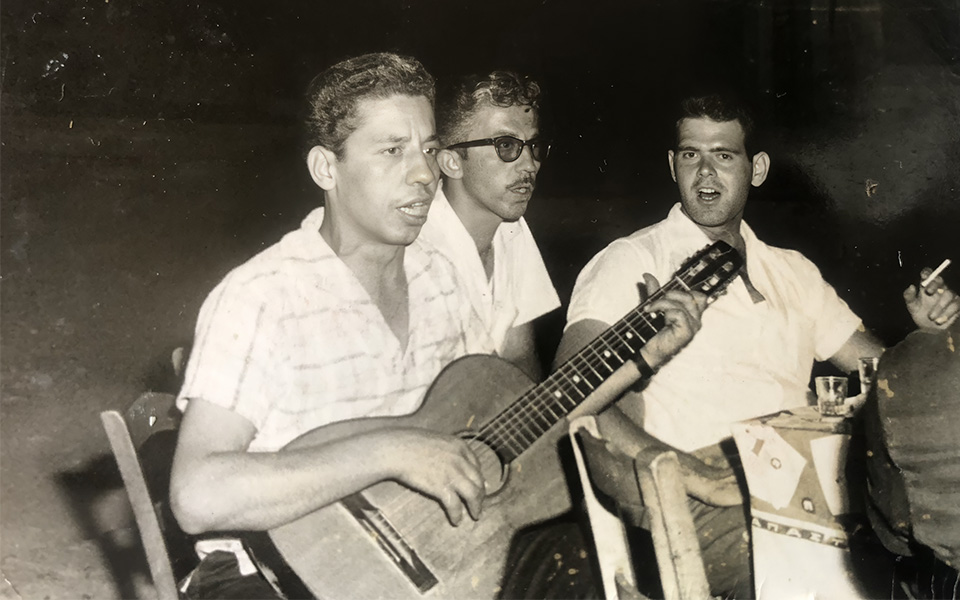
Mr. Gavalas smoking, in a photograph from that period.
The film’s cast and crew stayed at the Hydrousa hotel and several smaller guesthouses across the island. They ate daily at Hydra’s modest tavernas, including the legendary Xeri Elia (Dry Olive Tree), which would later become a favorite of Leonard Cohen. Stefanos Douskos, now 88, remembers serving actor Alan Ladd, who became a regular. “He would call me over to keep his glass full. He ate and drank at our place every single day,” Douskos recalls on camera.
Children followed the crew around the island in exchange for candy, and adults were hired as extras, laborers and boat captains, earning what was considered a generous daily wage at the time. “It mattered to have money in your pocket every day back then,” Giannis Gavalas recalls. “People were so happy that, when the filming ended, they treated everyone in the village.” “Those fifty-drachma notes meant a lot to us,” Douskos adds. The production also marked many locals’ first real exposure to English, at a time when French was still the primary foreign language taught in Greek schools.
Behind the glamour, the shoot was demanding for the film’s young star. “I’ve seen Loren cry,” says Gavalas. “I was standing in an alley while the director kept asking her to repeat a scene. She wanted to give her best, but at one point she broke.”
Amanda Palmer points to another revealing moment involving the song Ti einai afto pou to lene agapi (“What Is This Thing They Call Love”). Loren first heard it sung by Tony Maroudas at a taverna in Piraeus. “Through her own inspiration and persistence, she decided to learn and sing it in Greek,” Palmer says, even though dubbing would have been far easier.
“The passion and dedication shown by the 22-year-old Sophia was remarkable,” she adds. “I was told that young girls in Hydra would sneak out after curfew just to sit outside the house where she was taking singing lessons. Despite doubts from those around her, she insisted on mastering the song.” According to Palmer, that performance remains one of the film’s absolute highlights.
“Sophia Loren was ahead of her time. As an Italian, she wanted to truly honor the image of the Greek and Mediterranean woman, respecting the language and culture while portraying a character with immense willpower.”
Palmer plans to share the documentary with the family of the now 91-year-old Loren during an upcoming trip to Los Angeles. She describes the project as an expression of gratitude to the actress for placing Hydra on the international map and helping shape its enduring reputation as an artistic sanctuary.
The American production team remained on Hydra through the winter, departing in early 1957. Their departure left the island with a lingering sense of loss, as if waking from a vivid dream. That feeling soon gave way to change. As Boy on a Dolphin reached cinemas around the world, Hydra began to attract its first wave of film-inspired visitors. “By 1959 and 1960, foreign travelers were already asking us for rooms,” Giannis Gavalas recalls.
Nearly seven decades later, he still hopes for a return visit from the star who helped shape the island’s future. In a poem dedicated to Sophia Loren, he reflects on the moment she first arrived in Hydra’s harbor in 1956, describing it as an event the people have not forgotten.
“Like the nightingale at dusk, we wait for you on stony Hydra, to sing together that mystery of love: ‘What is this thing they call love?’ Clothe yourself in the strength of your soul, Sophia, and with your eternal courage, accept our call.”
Charming architecture, unique beaches, rich history,...
Just an hour from Athens, Kea...
Igor Borisov turned Kimolos into his...
From fishermen’s chants to moonlit serenades,...