Thessaloniki, Seen Through Its Keepers of Culture
Cultural leaders reflect on Thessaloniki’s layers...

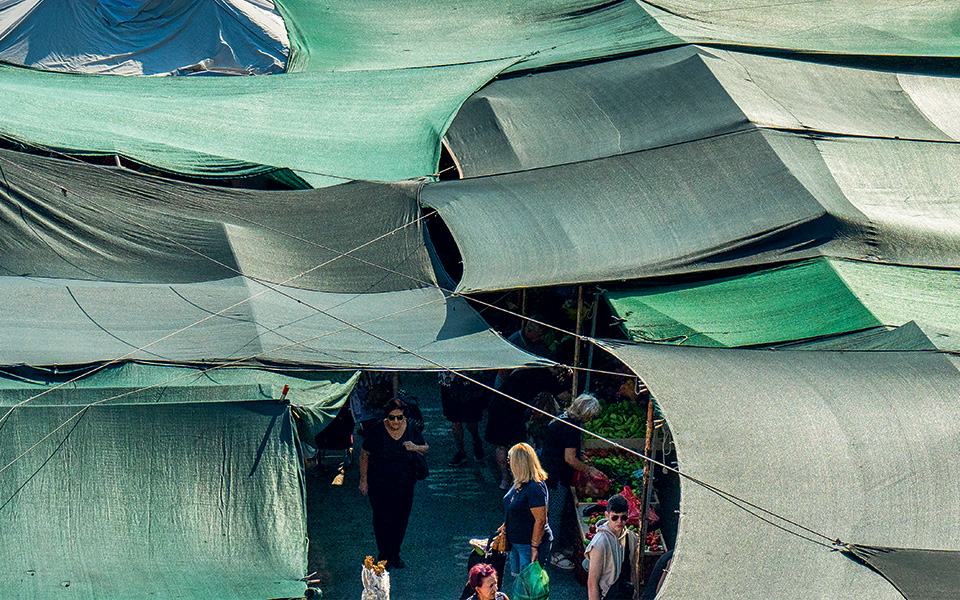
In Emporiou Square, the historic bazaar has served for nearly two centuries as a meeting point for Xanthi’s religious and linguistic communities.
© Perikles Merakos
Stalls of fruit and vegetables fill one side of the square, while linens, household goods, clothing and accessories line the other. Each week brings new bargains: cosmetics, tools, socks for fifty cents, sheet sets with pillowcases for five euros, rugs for twenty-five. “Giveaway prices!” “Only a few pieces left!” “Try first, then buy!” The tone shifts at stands selling (more expensive) artisanal and organic goods: acacia oil, geranium liqueur, local red potatoes, bread made from einkorn flour.
What truly sets the Xanthi bazaar apart, however, isn’t the variety or the prices; it’s the people. The market is the city in miniature, a crossroads of cultures and communities. Greek “oriste” (“here you are”) slips effortlessly into “buyurun,” and back again. Many vendors speak two or three languages, switching mid-sentence depending on who steps up to the stall.
© Perikles Merakos

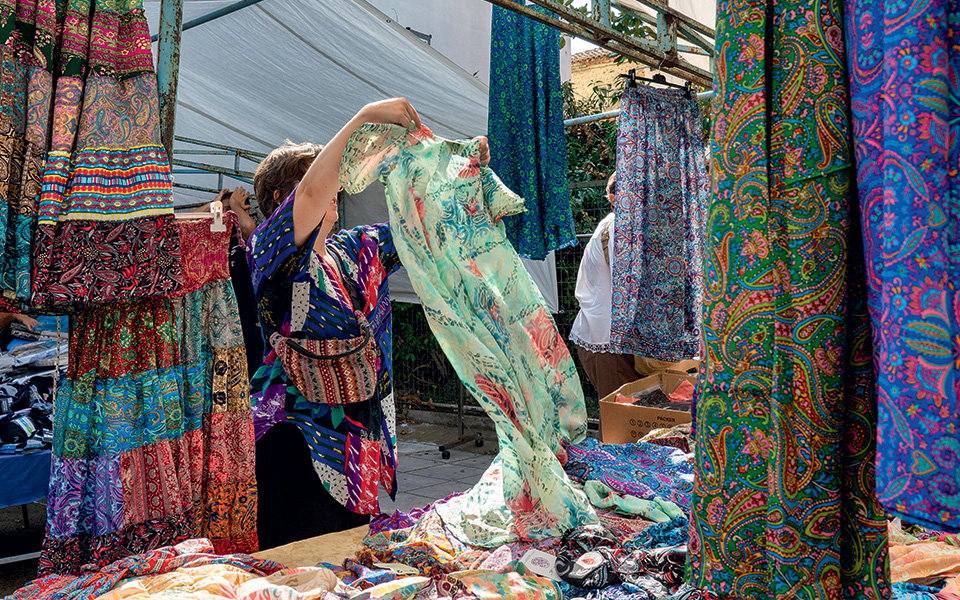
Bargains are renewed every Saturday: clothes, linens, suitcases and rugs, all at giveaway prices.
© Perikles Merakos

© Perikles Merakos
“The Pontic Greeks mostly trade in fabrics and knock-off clothes – but good quality ones,” says Despina, a mother of four who stops by the bazaar every Saturday to decide what she’ll cook. “The Roma from Kimmeria have the cheapest clothes. Pomaks are usually producers. Turkish-speaking Muslims tend to be greengrocers. Greeks often sell specialty products.”
One of them is Andreas, who has sold mushrooms at the bazaar for twenty-five years. Depending on the weather, he brings five or six varieties, some cultivated using substrate imported from Hungary, others foraged wild. “When it rained more, I used to collect many kinds,” he says. “I even went to exhibitions in Athens. Now, with fuel and toll prices, it’s hardly worth it.”
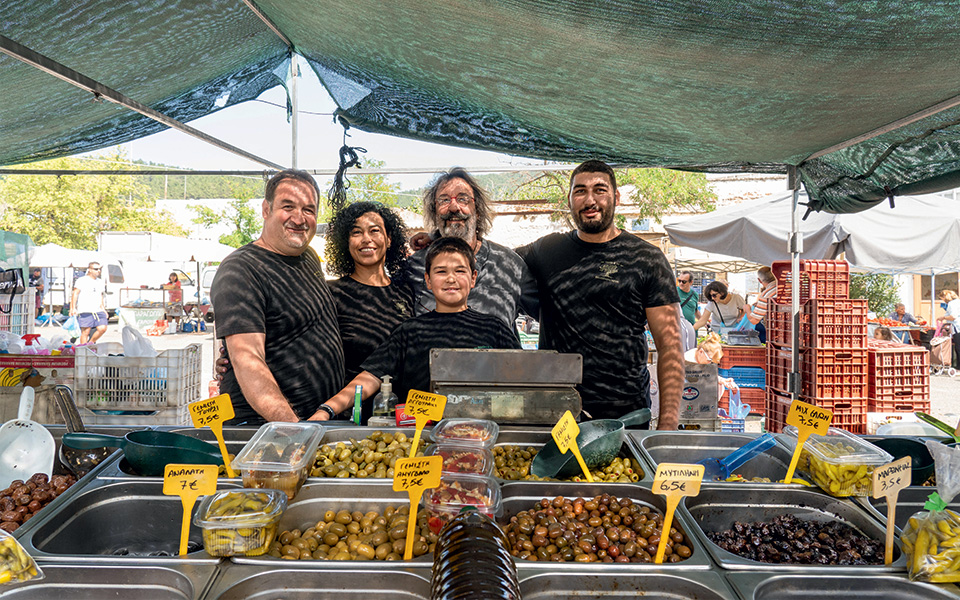
Morning for bargains, noon for cheap vegetables. “Try first, then buy!”
© Perikles Merakos
Across from him, Irini – or Sirin to Turkish speakers – jokes about flying by helicopter to Switzerland to deposit “all the money she makes.” For forty years she has woken at four every morning to set up her vegetable stall: For forty years, she’s been waking at 4 a.m. to set up her vegetable stand: Saturdays in the city, Sundays in Porto Lagos, Tuesdays in Evalo, Thursdays in Selero, Fridays in Kimmeria.
The same goes for Mr. Christos, who knows all the masalia (stories) of Emporiou Square. He began selling seeds at the age of seven and, now well into his eighties, still works alongside his children and grandchildren, selling olives and pickles. More skeptical is Varouzan – Giorgos to Greek customers – an Armenian vendor selling quail eggs from a small table. “People go to supermarkets now,” he says. “In two or three years, the bazaar won’t exist.”
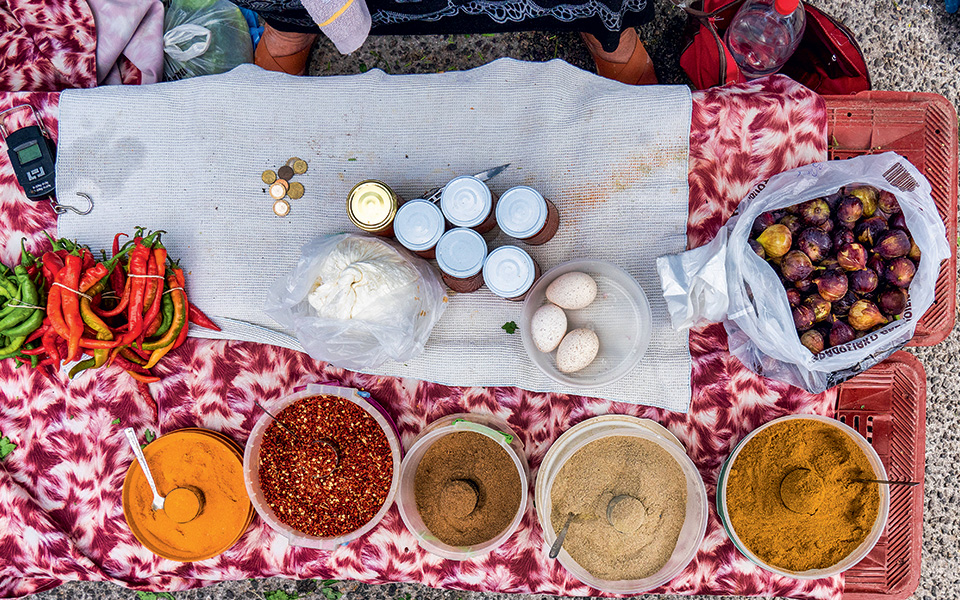
From spice blends such as the eastern sumac to pickles, liqueurs and trahanas, the region’s culinary tradition comes alive at the stalls.
© Perikles Merakos
The bazaar, however, has endured even harsher times. Although Ottoman-era archives were destroyed during the Bulgarian occupation, accounts such as that of the Ottoman traveler Evliya Çelebi mention Xanthi’s street markets as early as the 17th century. Research shows that during Ottoman times, the bazaar took place every Sunday in what is now Democracy Square. Because Christians could not attend due to church services, they petitioned for a change. A firman issued in 1839 granted the request, a move that ultimately allowed the market to grow larger and more renowned.
Today, the Xanthi bazaar draws visitors from across the region, as well as from neighboring countries such as Bulgaria and Turkey. For some it is a sightseeing stop; for others a cultural experience. For many locals it is an essential part of their Saturday. “Xanthi residents can’t do without their bazaar,” says Despina. “Even if they don’t need to buy anything, they’ll come just for the walk.”
Cultural leaders reflect on Thessaloniki’s layers...

The recognition of Salamina’s kopaneli lace...

On the opening of the “Anogeia...

This unvarnished industrial powerhouse by the...