Reuniting the Parthenon Sculptures: A New Chapter in...
Renewed negotiations, shifting public opinion and...

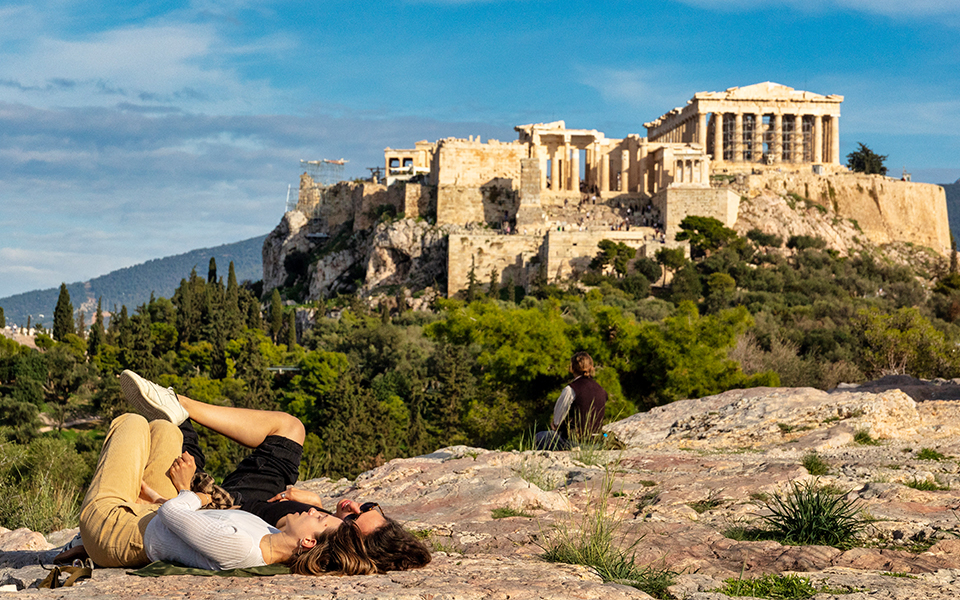
A view of the Acropolis from the Hill
of the Nymphs.
© Perikles Merakos
During the distant 1990s, when I was in middle school and living with my mother, my father moved to a place I’d never heard of. I’d been born and raised near the center of Athens, yet the neighborhood of Koukaki – a ten-minute drive away – was entirely unknown to me. None of my schoolmates recognized the name either. “It’s practically an extension of Plaka; they’re contiguous,” my father said, knowing how fond I was of his former neighborhood. My mother had at least heard of Koukaki, which confirmed its existence. But even she was unsure of its exact location. “It’s somewhere by Filopappou Hill, but on the wrong side of it,” she said. “There’s nothing interesting there.”
Filopappou was a territory both familiar and much loved. The wooded hill, crowned with a Roman funerary monument, is situated right opposite the Acropolis and serves as the perfect vantage point for the city’s most prominent landmark. My parents had taken me to countless picnics there as a child. We would wander along the pathways designed by the celebrated architect Dimitris Pikionis in the 1950s, paved with flagstones and marble slabs – works of art in their own right. Eventually, we’d reach a lookout point higher up the hill and settle on one of Pikionis’ stone benches to take in the view of the Acropolis in the foreground and Lycabettus, the city’s other iconic hill, right behind it.
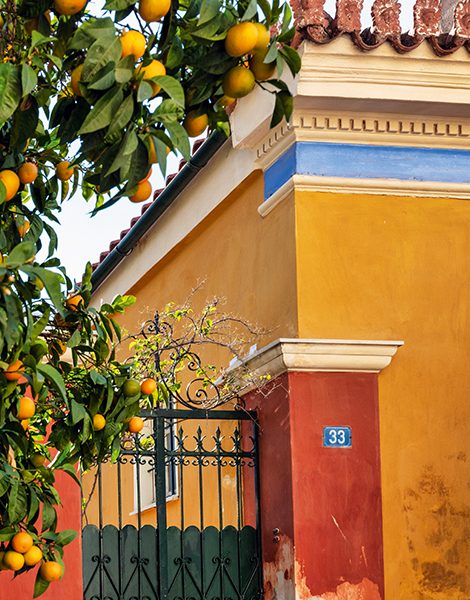
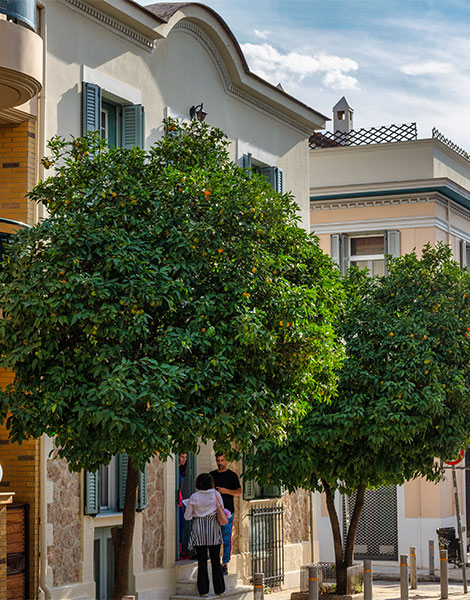
Neoclassical and interwar buildings can be found on Filopappou and Tsami Karatasou streets.
© Perikles Merakos
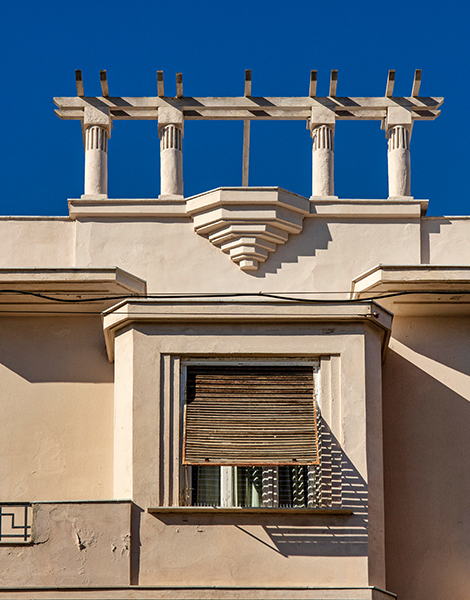
Neoclassical and interwar buildings can be found on Filopappou and Tsami Karatasou streets.
© Perikles Merakos
In those days, my friends and I preferred the views from the Pnyx, the adjacent hill where the assembly of citizens met in the 5th century BC. We’d lounge on the rocks by the “Speakers’ Platform” and watch the Parthenon turn golden in the setting sun, waiting for the monuments to be illuminated as night fell. That, for us, was the city’s defining vista. We never ventured to the “back side” of Filopappou or the densely built neighborhoods on those slopes, dismissing them as “a sea of concrete.”
A few weeks after he settled in, my father took me on a tour of Koukaki. As we turned off Syngrou Avenue, disappointment hit me immediately; we entered an urban jungle of densely built apartment blocks. He drove uphill until we reached Tsami Karatasou, where his new apartment was. I stared in happy disbelief. There were only a handful of apartment buildings and little traffic, pedestrian or vehicular. Two-story houses, many in the neoclassical style of old Athens, lined both sides of the street and continued up the steep lanes that scaled this side of Filopappou. An oasis of peace, delightfully parochial, the area did indeed seem like an extension of Plaka, but without the noise and crowds. I immediately fell for Tsami Karatasou and its surroundings, albeit never imagining that, decades later, I would end up living on the very same street.
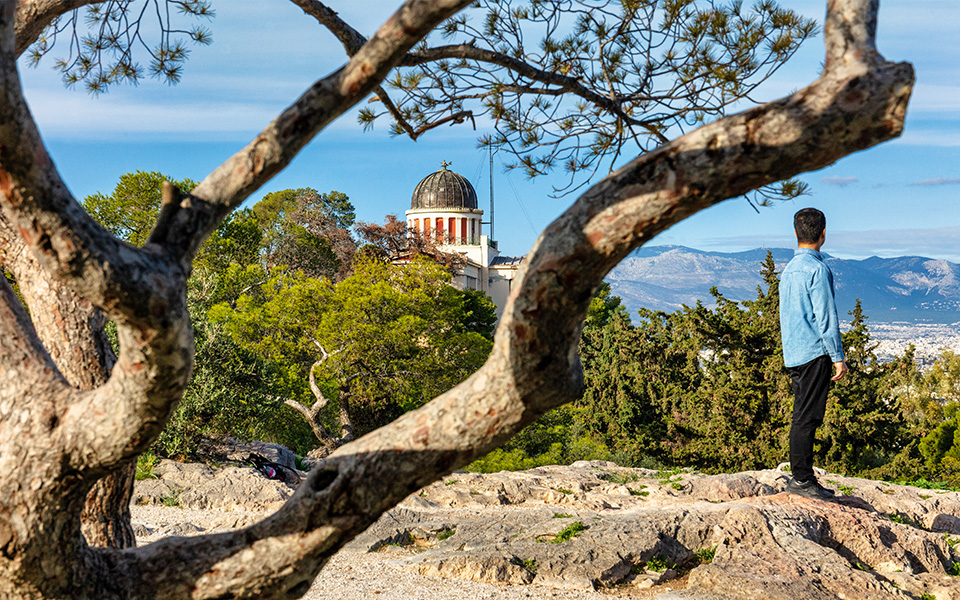
A glimpse of the National Observatory of Athens, a skyline landmark.
© Perikles Merakos
During that first visit, I found out how everything changes as one moves up the back slopes of Filopappou. The lower part of Koukaki, built on flatter ground, was full of busy streets, shops, brash apartment buildings, traffic and noise. Higher up, the area was purely residential, far quieter and resolutely middle-class. Many of the houses from the early 20th century had survived; the neighborhood was reminiscent of the Athens of 1950s films. The closer one came to the wooded upper slopes of Filopappou or the Acropolis area, the more elegant the streets became. I usually refer to this area as “Upper Koukaki,” but many of its residents call it “Filopappou.”
In the 1990s, “Lower Koukaki” carried a distinct sense of the past. Its streets were filled with small businesses and shops that had long disappeared from most parts of the city. Grocers sold homemade pastries and sometimes put a couple of tables on the pavement for meze and ouzo. Workers and shop owners flocked to old-style tavernas for lunch, seeking homecooked-style dishes. Hole-in-the-wall enterprises sold everything from pajamas and paint to old-fashioned hats only worn by grandparents. There were ironmongers, tailors and carpenters; one could buy a wedding dress, a rug or a fridge, all within a few blocks.
Fascinated by these contrasting microcosms – the elegance uphill and the exuberant bustle below – I decided to move to Koukaki when I started university. I rented a tiny flat in “Lower Koukaki,” in one of those dull apartment blocks built in the 1960s and 1970s to house the wave of newcomers who’d arrived from the countryside seeking work in factories, government ministries or small shops. When I moved in, that generation and their children still made up most of the neighborhood. People greeted one another on the streets, and shopkeepers knew their customers by name. A handful of immigrants from Eastern Europe and some students from other Greek cities had begun to arrive, but I still felt like an outsider in this close-knit, inward-looking community.
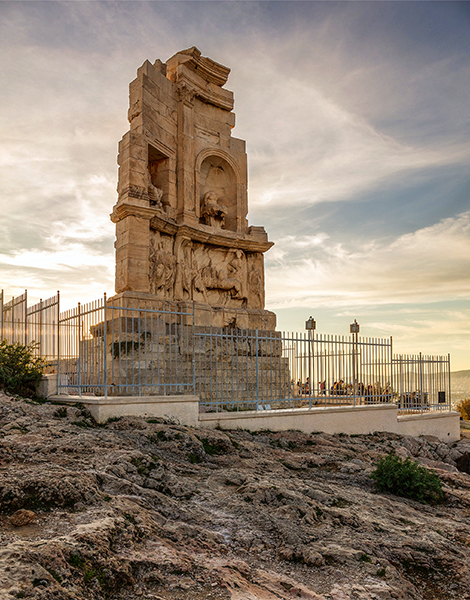
The Filopappou Monument crowns the Hill of the Muses.
© Perikles Merakos
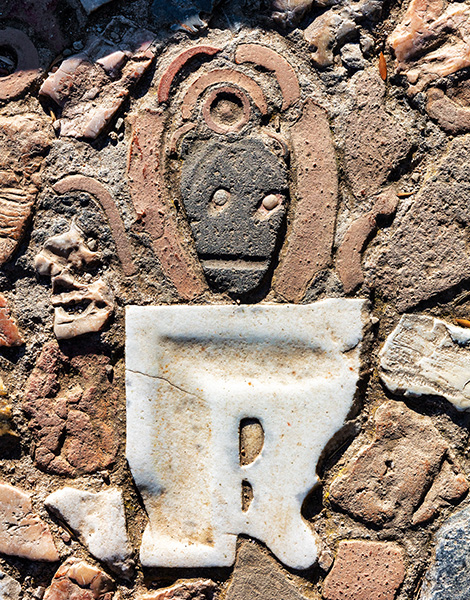
A detail from the pathways of Filopappou Hill, designed by Dimitris Pikionis.
© Perikles Merakos
I shopped, dined and slept in the lower zone of Koukaki, but took to the streets uphill for my daily strolls. For months, I was captivated by Tsami Karatasou, “the most beautiful street in Athens,” according to some of my friends. Eventually I wandered farther, to Filopappou Street, its natural continuation, which I found even more enchanting: uninterrupted rows of graceful houses and not a single tall building in sight. This street leads to Petralona, the second Athenian neighborhood I “discovered” during my university years. It is officially divided into Upper (“Ano”) and Lower (“Kato”) Petralona, according to their position on the hillside of Filopappou. Ano Petralona was, back then, much trendier than Koukaki. University students flocked from all over Athens to the tavernas and ouzo bars on Troon Street, the area’s main street, giving the neighborhood an alternative, unconventional air.
Despite being located only a few hundred meters from the Acropolis and two kilometers from Syntagma Square, Koukaki was, at the time, forgotten by the rest of the city. It had no landmarks – no monuments, no museums, no squares or parks, no famous restaurants or cafés. Change came in the late 1990s, when two of the area’s main streets, Drakou and Olympiou, were pedestrianized. Cafés, bars and restaurants started popping up at an unprecedented pace, and a young crowd suddenly “discovered” the district. When the Athens metro opened in 2000, with two stations (Akropoli and Syngrou-Fix) serving the area, Koukaki’s transformation picked up pace. As the city prepared for the 2004 Olympic Games, a sweeping wave of urban renewal reshaped downtown Athens, with Koukaki at its forefront.
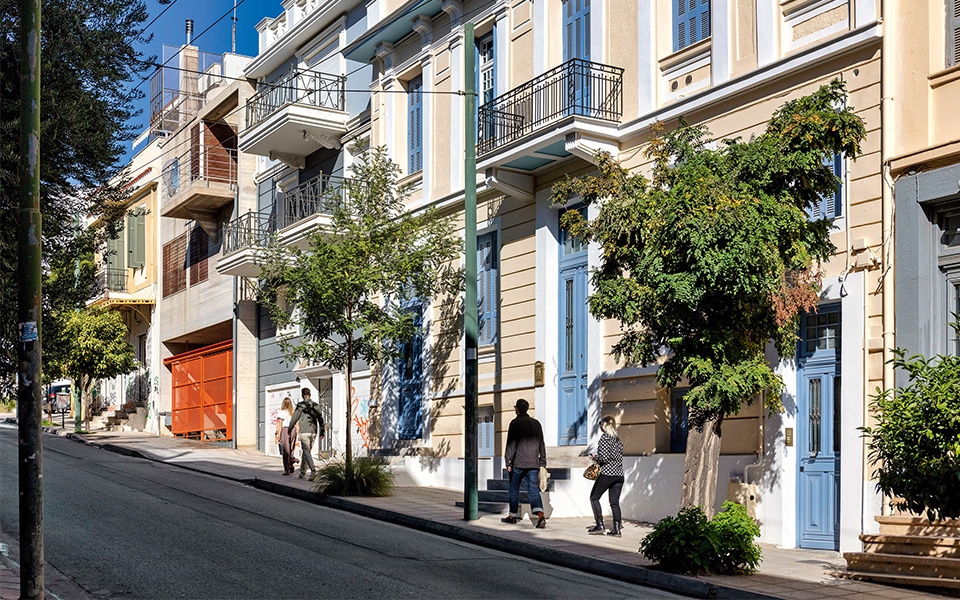
Gennaiou Kolokotroni Street links the neighborhoods of Koukaki and Ano Petralona.
© Perikles Merakos
In 2001, I left for graduate studies abroad and later settled in Istanbul, where I stayed for over a decade. During my absence, Athens was reinventing itself. In 2003, streets around the Acropolis were closed to traffic, creating a vast promenade embraced by locals and visitors alike. Among these pedestrianized streets was the elegant Dionysiou Areopagitou, which separated Koukaki from the Acropolis and Plaka. In 2009, the impressive new Acropolis Museum opened on Dionysiou Areopagitou, and Koukaki was flooded with restaurants, hotels, tourist shops and short-term rentals. The opening of the Onassis Cultural Center (also known as the Onassis Stegi) on Syngrou Avenue in 2010 gave the neighborhood another cultural landmark within walking distance.
The financial crisis brought everything to an abrupt halt. Within a few years, most of the small businesses that had given Koukaki its retro charm had closed; empty shopfronts and rusting shutters made for a depressing sight. The only industry that boomed was tourism. Many residents, unable to make ends meet, converted their apartments into short-term rentals and moved away. In 2014, at the height of the crisis, I moved back to Athens and bought an apartment on my beloved Tsami Karatasou. A year later, the press proclaimed Koukaki “the hippest neighborhood in Europe.” At first I was amused, but worry soon set in; the price of everything – real estate, groceries, daily life – began to soar.
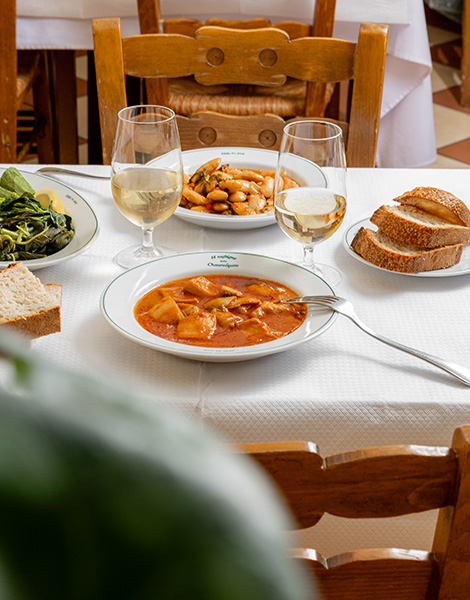
Oikonomou Taverna
© Perikles Merakos
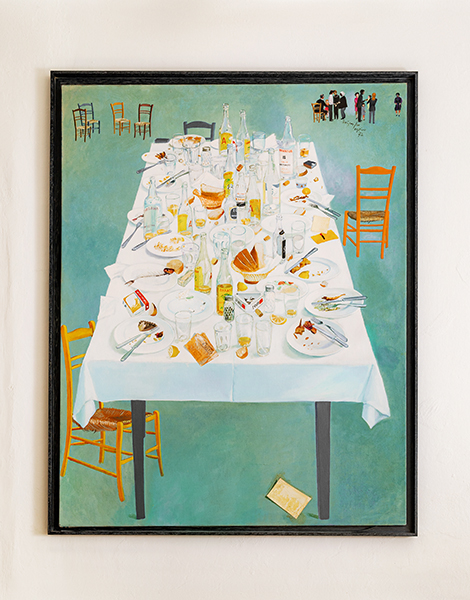
Spyros Vassiliou (1903-1985) “In the Afternoon,” 1972, acrylic and collage on canvas; this work graces a wall in Oikonomou Taverna.
© Perikles Merakos
Today, Koukaki bears little resemblance to the introverted neighborhood I once knew. A magnet for visitors, local and foreign, it now hums with a cosmopolitan energy and caters to the most diverse interests. The Acropolis Museum is, of course, a must-visit for anyone interested in antiquities, but the area has also become known for centers of contemporary art and culture. Housed in a former brewery on Syngrou Avenue, the National Museum of Contemporary Art opened its doors in 2020, attracting art lovers from Athens and beyond. The performances, film screenings and events at the Onassis Cultural Center keep the area busy well into the evening. With excellent restaurants, atmospheric cafés and bars, and some of the most beautiful walks in Athens, Koukaki offers myriad options to visitors and locals alike.
As a freelancer, I’ve always searched for cafés where I could sit and work in an inspiring setting; having several options just a few steps from home is a luxury. I often start my day with breakfast (or Sunday brunch) at Salute on Tsami Karatasou, where a Kurdish cook prepares Turkish dishes with great care. Nerantzia, a café-bar on Zan Moreas Street, is another favorite: quiet by day, lively by night, and packed with the young and the stylish who come for drinks and people-watching. Hippy Hippo on Anastasiou Zinni is perfect for brunch, but my favorite lunch spot is Little Tree Books and Coffee, a sanctuary for avid readers and coffee lovers. I often meet friends who are at work there as well, all of us eager to finish up so that we can instead linger over freshly baked pies.
The neighborhood’s popularity means dinner reservations are essential, even on weekdays. When I want to treat myself, I gather friends at Seawolf for inventive ceviche and other seafood dishes. Two of my favorite eateries don’t take reservations, which means waiting, often for half an hour or more. One is Tuk Tuk, a tiny space serving the best Thai food in Athens; it became so popular that the kitchen stopped deliveries because it couldn’t keep up. The other is Lolos, the finest of the old tavernas still in operation. Both are worth the wait. Django, on bustling Veikou, and Dolce Far Niente, on Tsami Karatasou, have become destinations for gelato devotees who drive clear across the city for their homemade, preservative-free flavors. On winter nights, my partner and I slip into minuscule Lotte on Tsami Karatasou; its cozy, retro interior makes it one of the most atmospheric bars in Athens. For larger gatherings, we head to Bel Rey, the neighborhood’s most famous meeting place, on Falirou Street.
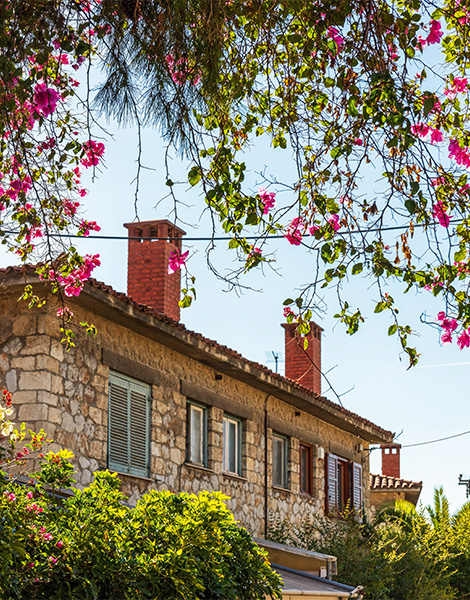
One of the many stone houses built as social housing in the 1950s in Petralona; today, they impart a village feeling to the area.
© Perikles Merakos
Troon Street is Koukaki’s main street, giving the neighborhood an alternative, unconventional air.
© Perikles Merakos
A walk along the pedestrianized ring around the Acropolis is essential for every visitor. I prefer the stretch between Areopagitou and Apostolou Pavlou after dinner, when the streets are nearly empty and the Acropolis glows in quietude above. During the day, when I want serenity and fresh air, I wander the slopes of Filopappou and the Pnyx, and I often return later to watch the sunset paint the Parthenon gold. My own “grand tour,” down Tsami Karatasou and Filopappou, is a near-daily ritual. Setting off before sunset, I soon reach Ano Petralona, a neighborhood that, unlike Koukaki, has changed little. Passing through Merkouri Square – now popular with students and young professionals – I continue to Troon Street, where locals still vastly outnumber visitors. The beloved Oikonomou Taverna, with its simple, traditional dishes such as rabbit stew, has served locals for decades. Park Bench, delightfully untraditional, offers an eclectic mix of flavors inspired by global cuisines. Set on Pramantos Street, at the neighborhood’s edge, it faces a leafy square.
My favorite corners in Ano Petralona are virtually unknown even to architects and dedicated Athenian flâneurs. One is Agrafon Street, whose one-story homes and back gardens make it the perfect location for a movie set in 1960s Athens. On the border with Thisseio lies an even more surprising sight: a cluster of 170 honey-colored stone houses with tiled roofs, iron balconies, and lush courtyards that resemble a mountain village. Built by the charitable foundation of Queen Frederica, they housed refugees from Asia Minor who had spent decades in tin shacks in a nearby settlement that was then demolished as the project for new housing neared completion.
Much has changed in Koukaki, yet much has remained the same. The contrast between the frenzy of the lower zone and the peace and quiet of the upper one still endures: I often hear birds chirping in the stillness of the night, although I’m also regularly woken by the metallic cries of pickup trucks selling flowers or collecting scrap. The quintessential Koukaki experience is the Friday laiki, or farmers’ market, on Zacharitsa Street. It’s a weekly ritual that allows longtime residents to meet, exchange news, and keep the fabric of community intact. I now count myself among them. I wasn’t born here, but I chose this neighborhood – twice. Koukaki has shaped my life, and I cannot imagine living anywhere else.
Renewed negotiations, shifting public opinion and...
Here are some of our favorite...
Tourists share the highs and lows...
Recycling is an age-old tradition in...