Sikinos’ Farewell Divers: The Daring Island Tradition That...
A decades-old ritual, Sikinos’ ferry dives...

© James Burke/The LIFE Picture Collection/Shutterstock
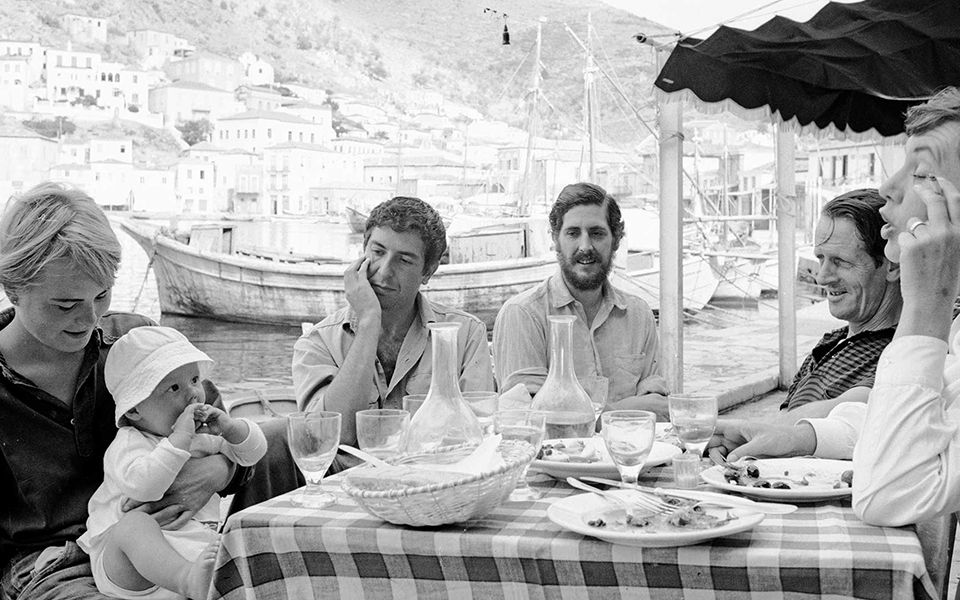
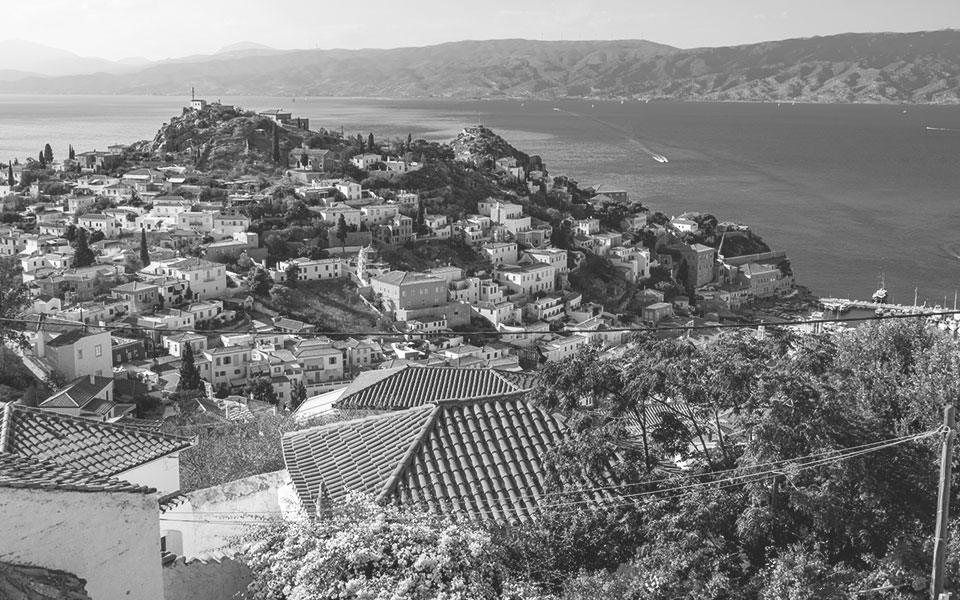
When Leonard Cohen first set foot on the island of Hydra in April of 1960, he was simply looking for a sunny place away from the rain and damp of London. He had been living in England for less than a year after being given a $3,000 arts grant from the Canada Council which allowed him to leave his native Montreal and expand his horizons abroad. A chance visit to a branch of the Bank of Greece in London saw him engage in a brief conversation with a teller whom he noticed was sporting a glorious golden suntan. Within a matter of days after the teller told him that he had just returned from a trip to Greece, Cohen boarded a flight to Athens. He then took a five-hour ferry ride to Hydra, an island that had earned a reputation as a Bohemian haven for a colony of expat artists.
This marked the beginning of Leonard Cohen’s Greek odyssey. Hydra would serve as his home for next seven years, and it was during this time that he met the one true love of his life – a Norwegian woman named Marianne Ihlen – and began his slow transition from poet and novelist to singer-songwriter.
At first, Cohen lived in the home of a pair of Australian writers, George Johnston and his wife Charmian Clift, who would become his friends and mentors on Hydra. In September, Leonard bought a ramshackle hillside house on Hydra for $1500 after receiving an inheritance from his grandmother.
The house, like most of the homes on the island at the time, had no running water or electricity. To light the house at night, Cohen would use candles and kerosene lamps. For water, he would have to carry bottles from a well in the center of town, buy it from locals whose mules would haul large containers up the hill, or draw from the house’s cistern whatever rainwater had fallen during the winter months.
This modest life was idyllic for Cohen. He found something “mythical and beautifully primitive” about life on Hydra, and spent his mornings enjoying breakfasts that often turned into lunches with the Johnstons and friends at the Roloi Café. His evenings consisted of drinking, singing and playing his guitar alongside friends in the courtyard of the family-run taverna Douskous and later at the Katsikas bar/grocery store on the waterfront.
© Shutterstock
Apart from the easy-going atmosphere of Hydra, the numerous young women who backpacked there from Sweden and Germany, and the dream of living the life of a writer in paradise, the event that truly shaped Cohen’s life on the island was his love affair with Marianne Ihlen.
He had first spotted her walking with her then-husband and baby son while sitting with the Johnstons at Roloi’s. Within a few months, however, Marianne’s Norwegian writer-husband had left for New York with an American heiress. This gave Leonard the chance to introduce himself to her, thus beginning the love story that inspired many of his songs, consciously or not, including “Hey, That’s No Way to Say Goodbye,” and, most famously, “So Long, Marianne.”
His house on Hydra also provided grist for another hit single, “Bird on a Wire,” which followed the installation of electrical and telephone wires and posts that obstructed his view of the town. He resented “these horizontal violations of my perfect window” that left him “angry and disappointed.” However, while sitting at his desk typing on the Olivetti typewriter he had brought with him from London, Cohen would often stare at the birds perched on the wires, an act that led to the iconic song.
Leonard and Marianne would spend seven years together, separated only by his occasional trips to Montreal and a few joint visits to Norway. Leonard would dote on her son, Axel, who often sat and watched him type for hours on end. Marianne was his faithful lover and muse; every morning, she would place a fresh “gardenia on my desk perfuming the whole room … and bring me a little sandwich at noon. Sweetness, sweetness everywhere.” What’s more, she may well have saved his life when he collapsed after finishing work on his book “Beautiful Losers” in 1965. This was a period that saw him take LSD and amphetamines to maintain a furious writing pace even while working under the hot sun for hours at a time.
Unable to earn a decent living as a novelist, Cohen pivoted to singing and songwriting. In 1967, he rented a room at New York City’s Chelsea Hotel, a hangout for artists and musicians, including Janis Joplin. There he composed the song “Suzanne” (a tribute to his platonic relationship with a Montreal dancer), which his friend, singer Judy Collins, turned into a hit.
This marked the beginning of the end of his full-time Hydra residency and his love affair with Marianne. Though she would eventually follow him to New York, Leonard had committed to a new life as a musician, and there was no space for Marianne or Axel. In 1985, he wrote a poem that was a confession about how much his time on Hydra had meant to him and how he had abandoned the one true love of his life in pursuit of fame and fortune.
Days of Kindness
© Shutterstock
At this point, I would like to interject that my own connection to Leonard Cohen is what brought me to Greece. I spent several months on Hydra researching a feature film about Leonard and his life on Hydra. I’m still trying to pull together the funding for the film.
There are a few parallels between us. We both grew up in Montreal, although we were born 30 years apart. He was raised in Westmount, an affluent English-speaking enclave in Montreal; the Cohens lived on Belmont Avenue. I attended St. George’s School on Westmount Boulevard, a ten-minute walk away. Later, by pure coincidence, we shared the same neighborhood while I was living on St. Dominique Street in the late 2000s, a few blocks away from Cohen’s small, unassuming house across from the Parc du Portugal off St. Lawrence Boulevard.
During this time, I became acquainted with Cohen and I interviewed him twice, first in Los Angeles where he owned a small house, and then for the second and last time in Montreal. For reasons of length, much of my original interview material was never published. So it is here, for the first time, that I am able to publish Cohen’s deepest thoughts about his life on Hydra and his time with Marianne Ihlen. In the end, his Greek odyssey is inseparable from his journey with Marianne. I’m still hoping the film gods will smile on me and I can finally make my film, “See You Down the Road,” a title taken from Cohen’s last letter to Marianne Ihlen. In the meantime, here’s my tribute to Leonard.
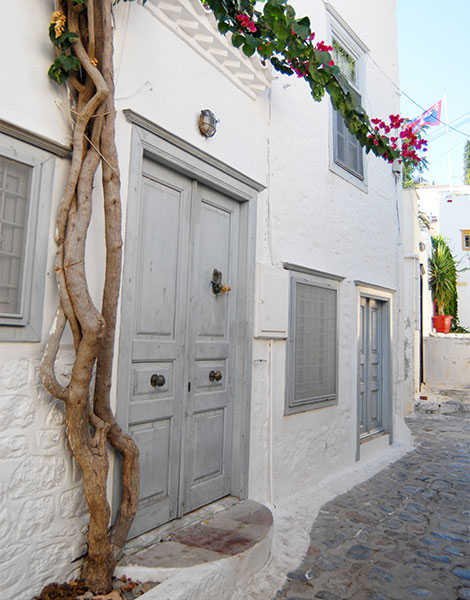
His house on Hydra.
© Martyn Goodacre/ Getty Images/ Ideal Image
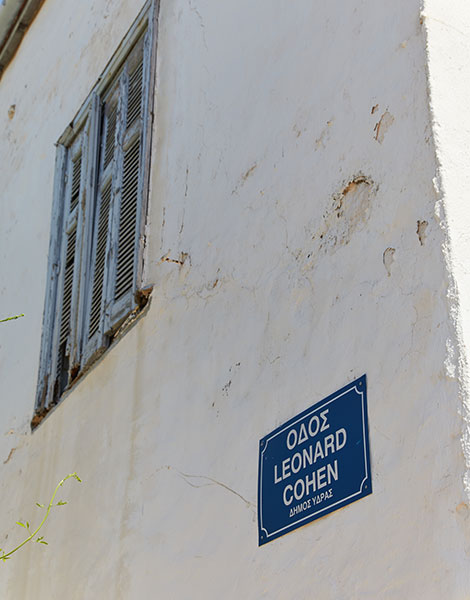
Leonard Cohen Street in Hydra.
© Dimitris Vlaikos
Q: What was it about Hydra that you loved so much?
COHEN: It gave me a deep feeling of tranquility and comfort that I’d never felt before and have maybe never felt since. I liked the simplicity of the life there, I liked the life I shared with Marianne, and I enjoyed the feeling of being part of this writer’s colony. I’ve never been able to recapture that sensation or those impressions again no matter how many times I’ve tried. It was a unique time.
Q: Did your house also give you a feeling of security and sanctuary?
COHEN: Buying the house was one of the best decisions I ever made in my life, because it became my home. It was the place where I was able to write and think, and not be distracted by the outside world. It had enough space for Marianne and Axel and me, even though Axel often spent hours just sitting or lying on the floor next to me while I was typing. Those memories, even though I’ve forgotten so much of that time, are still present with me.
Q: What were your emotions or impressions of Hydra when you first set foot on the island?
COHEN: It was as pleasant as I had hoped. After months of rain and cold in London, I was so glad to be in the sun and warmth. I was struck by the architecture and the beauty of the waterfront, the houses, and how friendly and generous the people were towards me. It was very welcoming and I couldn’t have asked for anything better. It was a free and happy time.
In the first few days I met people from all over Europe and America and I remember having so many wonderful conversations in these small restaurants, and even in the backroom of a grocery store [Katsikas, later known as the Roloi Café] where I was able to practice singing and playing the guitar when everybody, including me, was very drunk. That’s one of my most vivid memories of those early days.
Q: Was it odd not to see any cars or traffic of any kind?
COHEN: It was an interesting experience to rely on mules to get you up the hill and use them as a delivery service. What you notice about Hydra is how much quieter it is without cars, although it’s become much busier and more crowded since I first lived there. But I still enjoy going back there as often as I can manage and I still have some friends who live on the island.
Q: You went to Hydra also wanting to find a place where you could devote yourself to writing. Did you feel immediately comfortable there?
COHEN: I could not have imagined how quickly I would be made to feel part of this community of foreigners, many of whom were writers and artists. An Australian couple, the Johnstons, would hold court every day by the port and they took me in when I had no place to stay.
They introduced me to many of their friends on Hydra and I quickly fell into this rhythm of writing during the day and partying and drinking at night. I didn’t have any real expectations of what my life would be like on the island, but as a young writer this was an ideal setting and it was very stimulating on every level.
Q: Did the local Greek residents on Hydra make you feel welcome, too?
COHEN: The locals seemed to enjoy having so many foreigners around. I would be offered bottles of wine when I couldn’t afford to pay for it and, for some reason, I was accepted by the people who ran the tavernas and cafés. This is probably what made Hydra so attractive for people who came from all over Europe; you were made to feel at home from the beginning. I think the locals were curious about us, and we provided them with amusement.
Q: Was this one of the great journeys of your life?
COHEN: It happened so quickly, being embraced by the island and the people, and embracing the spirit of being there, but this was exactly the kind of life I was looking for, even though I never had any clear idea of what that would be.
Although I don’t remember that much of those days, I still have the impression of the many discussions I had with the Johnstons, with Marianne, and with the people we would meet at these long tables with food and wine and cigarette packs spread out across them. I’ve never really experienced that same feeling again, or so many other things about that time.
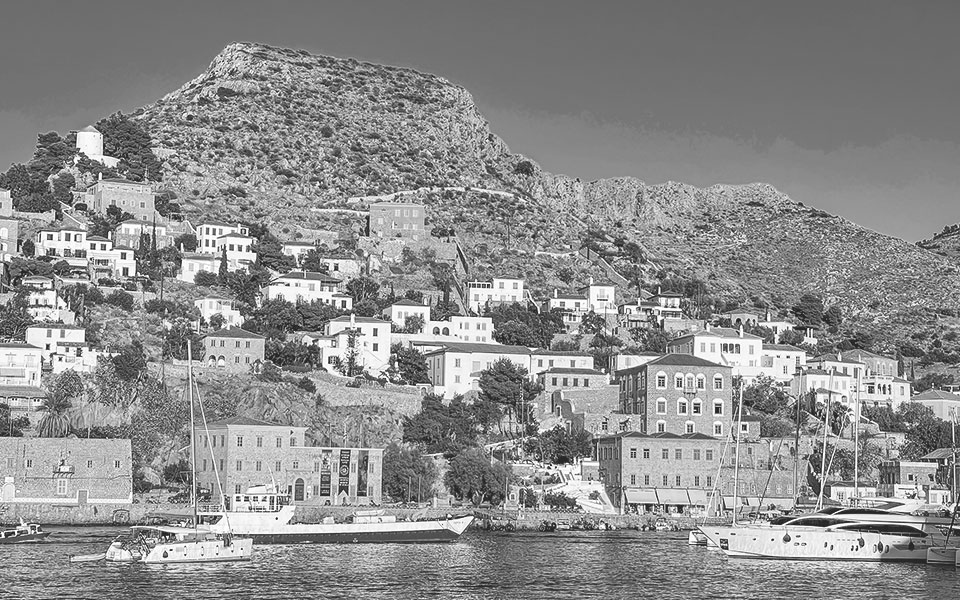
© Shutterstock
Q: You’ve described your time with Marianne Ihlen on Hydra as one of the most gratifying chapters in your life. What did she mean to you?
COHEN: We shared a level of courtesy and kindness that was part of the bond between us. She cared about me and she cared for me in ways that are difficult to explain, and which I often didn’t deserve. Marianne was also very beautiful in a classic Nordic sense that drew me and everyone else to her, even though she never saw herself as particularly attractive and never tried to use that to her advantage in any way.
Q: Is it true that the first time you saw her walking along the waterfront in Hydra you told George Johnston, “One day I’m going to be with that woman…”?
COHEN: I don’t remember anymore exactly what I said or thought, but I had this naive expectation that there was something about her that I wanted to be able to get to know. When the opportunity came to meet her, though, I didn’t hesitate.
Q: How would you describe your daily life with Marianne?
COHEN: I would spend the mornings writing while she would often take Axel for a walk or read downstairs. When we had more money, which was not often, we would go for lunch by the port or go drinking at night. She also helped us get through those months where money was very tight and she even paid a large bill at Katsikas’ that we had run up with some money she received from Norway.
Q: Was there also something romantic about your lifestyle with Marianne and not having much money and living very simply?
COHEN: I always enjoyed these long walks we would take with Axel on the beach; we’d listen to the waves, sit together and look out into the sea.
This was also a chaotic time and that’s why my memory of those days is such a blur … Many social changes were taking place, and Hydra was caught up in that period of ferment and sexual revolution, thanks to all the foreigners who were visiting or would stay there for extended periods. That’s one of the great qualities that Marianne brought to my life, it was her selflessness at times and how she gave me this great gift of her support and spirit.
We had a natural way of being together, although I admit that she was far more generous to me than I was to her. But, for the most part, we were enjoying our life and we didn’t spend much time talking [about] or analyzing it. That kind of experience has a beauty to it, even if it’s difficult to hang on to that over time.
Q: Marianne is often described as your muse, as a source of inspiration to you?
COHEN: It’s too simplistic a description … Marianne and I both shared something special and, even though we may have gone our separate ways, what we had together will always remain with us and it always has. That love and those feelings are indestructible.
Q: You’ve said in other interviews how you’ve tried to recreate the feeling you had on Hydra and with Marianne, but never managed to find that again.
COHEN: So much of our lives are beyond our control. We may like to think we have some control and that we make our choices freely, but I believe that that’s an illusion. Our choices are pre-determined for us and we’re limited to that, so it’s difficult to pick a path we would like to follow and let it take us to where we want to go.
With Marianne, although I orchestrated our meeting, everything else that happened between us followed its own logic, and I didn’t think too much or too deeply about that process, even though that would have made things much easier.
Even the moment when we stopped seeing each other didn’t happen at once. I found myself pursuing a new life, and I didn’t find time or a place for her and Axel. It wasn’t a conscious choice, it was lack of attention on my part. You say that you won’t let it happen next time, but then you learn that there is no next time.
Harold von Kursk is a journalist and filmmaker currently working on two film projects to be shot in Greece: “See You Down the Road,” a biopic of Leonard Cohen that focuses on his life on Hydra, his subsequent move to New York, and the beginning of his career as a singer/songwriter; and “Disappearance,” a psychological thriller about a cult author who mysteriously vanishes after his latest novel becomes an international best-seller and is then tracked down to a remote Greek island by an American journalist.
A decades-old ritual, Sikinos’ ferry dives...
As its historic estates fade and...

Patmos Aktis, Resort & Spa combines...
Discover Greece’s islands in September with...