Crete Gets New Winter Flights from Paris
Transavia will operate up to four…


© Shutterstock
Crete has long been celebrated for its beaches, mountains, and archaeological sites. According to a new Condé Nast Traveler feature, it also ranks among the healthiest places on Earth.
In an article titled “On Crete, Food Is Medicine”, the luxury travel magazine argues that the island’s enduring appeal lies not in wellness retreats or luxury spas, but in a centuries-old way of life where fresh, seasonal food, strong community bonds, and time-honored farming traditions combine to promote health and longevity. As travel writer Shannon McMahon observes, Crete’s cuisine represents “an ancient form of wellness.”
The feature also comes as Crete celebrates its designation as the European Region of Gastronomy 2026.
Here are the five reasons Condé Nast Traveler says Crete deserves a place on your travel wish list.
Crete has long been associated with the archetypal Mediterranean diet and the principles of “Blue Zone” living, with its emphasis on fresh, seasonal ingredients and simple home cooking. The traditional Cretan table is built around “farm-fresh vegetables, olive oil, and fish,” alongside whole grains, wild mountain herbs, raw local honey, dairy products, and unfiltered natural wine – enjoyed “in moderation, and with food and good company.”
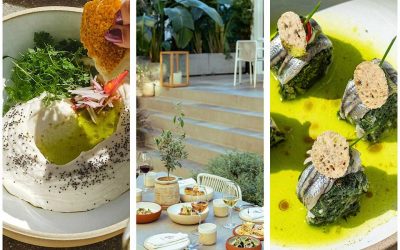
High-phenolic extra virgin olive oil (“liquid gold”), sun-ripened tomatoes, legumes, wild greens, aromatic herbs, and freshly caught seafood are prepared with remarkable simplicity fresh seafood form the foundation of a cuisine long associated with health and longevity.
Beneath the island’s celebrated cuisine lies a quieter revolution in agriculture. Sustainable farming on Crete is not a modern concept but a continuation of older, intuitive practices shaped by necessity and deep ecological knowledge.
At farms such as those supplying the acclaimed Peskesi restaurant near Heraklion, biodynamic methods are used to restore balance to the land: composting organic matter, preserving heirloom seed varieties, and working with natural growing cycles rather than against them. Fields are cultivated in ways that allow biodiversity to return, strengthening both the resilience of the ecosystem and the quality of the produce itself.
Some growers still follow lunar planting cycles – a practice said to influence the moisture and vitality of crops through gravitational pull, helping plants make the most of scarce water in Crete’s hot, dry climate. “This type of sustainability is increasingly important to Greece,” the feature observes, as the country navigates the pressures of overtourism and environmental change.
Restaurants such as Peskesi, Apiri Greek Eatery, and Calea at Acro Suites carry this ethos forward, transforming local ingredients into contemporary expressions of tradition rather than elaborate fine dining. Vegetables often arrive from nearby fields just hours after harvest, cheeses are made locally, and olive oil is traced back to specific family groves.
The emphasis is firmly on provenance. The most memorable meals, the article suggests, are those that allow diners to taste not just ingredients, but the landscape itself.
Beyond its cuisine, the feature highlights philoxenia – the Greek tradition of welcoming strangers as friends. Meals become extended social rituals, unfolding slowly over conversation and shared plates. In villages across the island, “panigiria” (communal feasts) bring entire communities together in celebration, accompanied by the sounds of the lyra and laouto, where food, music, and dance are inseparable expressions of belonging – whether you’re a local or just passing through.
“In Crete, food is never just sustenance; it is an act of communion,” says Martha Papadomichelaki, tourism development manager for the Municipality of Rethymno. She describes how music, dancing, and communal feasting recreate the atmosphere of a traditional Cretan panigiri, where sharing food is indistinguishable from sharing life.
Together, these traditions are what make Crete, according to Condé Nast Traveler, one of the world’s most rewarding destinations for travelers seeking both great food and a healthier way of life.
Transavia will operate up to four…

New data shows travelers from the…

Experience the very best of Greek…