Which Athens Neighborhood Is the World’s Third Coolest…
Neos Kosmos takes third place in…

What was everyday life like in ancient Athens? Where did people live, what did they eat, how did they worship, and what kinds of work filled their days?
This weekend, the Acropolis Museum is inviting visitors to look beyond the monumental world of temples and statues and meet some of the ordinary people who once lived in the shadow of the Acropolis.
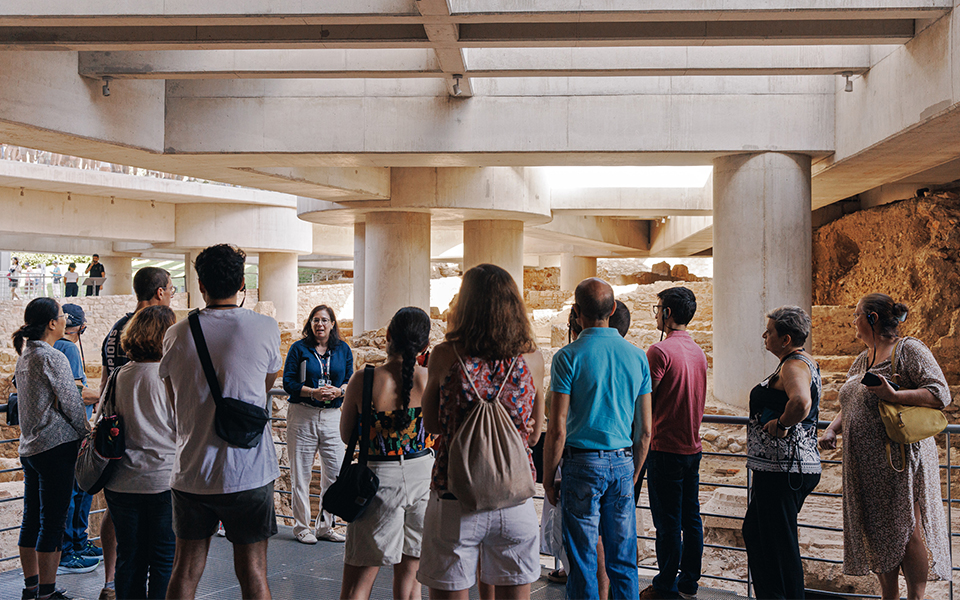
As part of the European Heritage Days, taking place across Greece from September 25 to 27, the museum is presenting “Stories of the Daily Life in a Neighborhood of Ancient Athens,” a 90-minute archaeological tour exploring the remains of a neighborhood preserved beneath the museum itself.
The story stretches back some 4,500 years. Beneath the modern building lies an archaeological excavation containing the remains of houses, streets and workshops – known as the “Makriyiannis plot” – together with more than 1,150 objects selected from the thousands unearthed at the site. Together, they offer glimpses into the lives of the men, women, and children who lived, worked and worshipped here over the centuries.
Rather than focusing solely on the grand monuments of ancient Athens, the program promises a more intimate portrait: how residents equipped their homes, met their daily needs, practiced their religion, and went about their occupations. Museum archaeologists will lead visitors through this surprisingly familiar world, where the traces of ancient domestic life can still be read among the ruins.
There is also a neat connection between the ancient neighborhood and this year’s European Heritage Days theme, “Heritage at Risk: Revive, Resist, Reimagine.” When the new Acropolis Museum was constructed, the archaeological remains were incorporated into the building, creating what the museum describes as a “museum beneath the museum.” The modern structure thus protects and preserves an ancient neighborhood while allowing visitors to see it in a completely new context — connecting the stories of the gods associated with the Acropolis with those of the people who lived on its slopes.
The program will be offered in English on Friday, September 25 at 1 pm, and in Greek on Saturday, September 26 at 1 pm. Places are limited to 20 participants and must be reserved in advance through the museum’s online booking system. Participants should then obtain a general admission ticket by presenting their reservation code at the ticket counters at least 20 minutes before the program begins.
There is another reason to visit the museum that weekend: on Sunday, September 27, from 5 to 8 pm, admission to its exhibition areas will be free.
The Acropolis Museum is only one stop on a much bigger heritage itinerary. First established in 1984, European Heritage Days are a pan-European annual celebration of history, culture and heritage, bringing together museums, archaeological sites, historic buildings and other cultural venues across the continent. This year’s theme, “Heritage at Risk: Revive, Resist, Reimagine,” puts the spotlight on the challenges facing cultural heritage today – and on the creative ways communities can respond.
Across Greece, cultural institutions and local communities are marking the occasion with events designed to create these kinds of living connections with the past. On Saturday and Sunday, admission to state museums and archaeological sites managed by the Ministry of Culture will be free for all visitors.
So, if you’re looking for something a little different to do this weekend, the official European Heritage Days website offers an interactive map and searchable listings of events across Greece. From major archaeological sites to smaller museums and historic places, it’s an invitation to step off the familiar tourist trail and discover a different side of the country’s heritage.
For more information, click here.
Neos Kosmos takes third place in…

New discoveries near the Olympieion reveal…