American Tourists: Choosing Greece in the Fall as…
Extended flight schedules and rising demand…

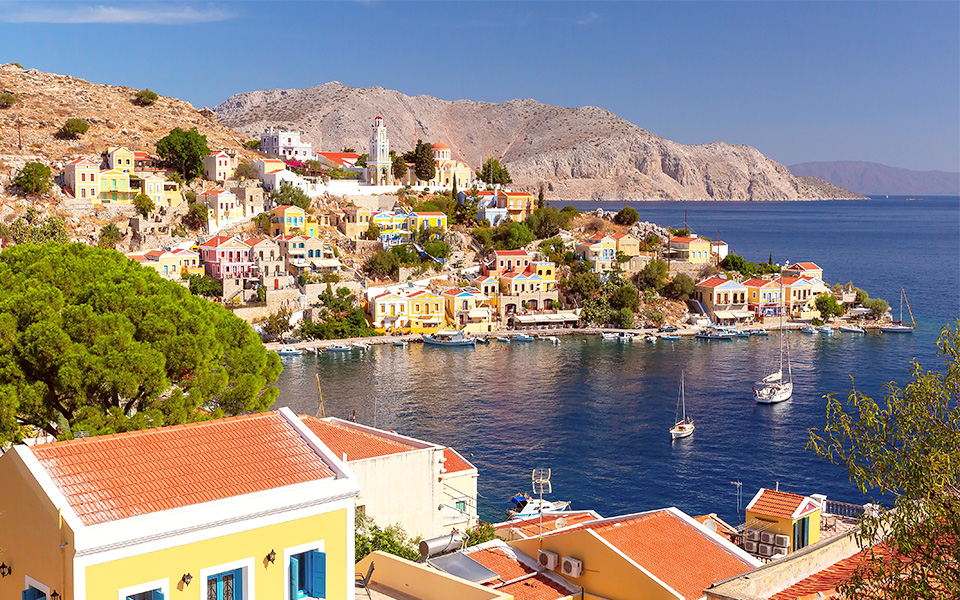
Symi
© Shutterstock
As tourism numbers continue to rise worldwide, an increasing number of destinations – both in Greece and beyond – are taking steps to manage daily visitor flows that strain infrastructure and threaten the long-term sustainability of their tourism offering.
The picturesque island of Symi, in the Dodecanese, has become the latest destination to propose measures for limiting the pressures caused by day-trippers. With a population of just over 2,500 and public services already stretched, the island receives an estimated 300,000 day visitors each year, many arriving by boat from nearby Rhodes or Turkey and departing without staying overnight. These short-term visits, though contributing to the local economy in some ways, offer little direct revenue to municipal authorities while significantly burdening local infrastructure.
Symi’s municipal council has formally requested permission from the Ministry of Interior to impose a €3 “visitor fee” per day-tripper, a measure inspired in part by Venice, which now charges a tourist tax to all visitors who do not book accommodation within the city.
“Our goal is not to discourage visitors,” notes Symi mayor Eleftherios Papakalodoukas, “but to relieve residents and public services from the overwhelming costs of servicing hundreds of thousands of non-paying visitors annually. Residents who pay municipal taxes are being underserved because all of our garbage trucks and municipal workers are focused on clearing the harbor area for day tourists.”
According to municipal officials, the proposed fee would apply to all visitors arriving by ferry or excursion boat who do not spend the night on the island. The fee would be incorporated into ferry tickets or group travel packages and collected either by tour operators or ferry companies. Revenues would be allocated directly to the municipality and used for waste management, recycling, preservation of cultural heritage sites, and general infrastructure maintenance.
The move reflects a broader shift towards more sustainable tourism management in Greece. In Mykonos and Santorini, which routinely receive 10,000 or more cruise passengers per day, congestion has reached unsustainable levels. In response, Greece has introduced a new cruise passenger fee, which came into effect on July 21, 2025.
The new cruise passenger disembarkation fee, introduced via joint ministerial decision in early July, aims to ease pressure on port cities during peak tourism months and redirect funds toward improving infrastructure and services.
The fee is seasonal and varies by destination:
From June 1 to September 30, the charge is €20 per passenger for disembarkations at Mykonos and Santorini and €5 for all other ports.
During shoulder seasons (April–May and October), the fee drops to €12 for Mykonos and Santorini and €3 elsewhere.
In winter months (November to March), the charge falls to €4 and €1, respectively.
This tax applies to passengers on cruise ships operated for leisure travel, with payment obligations falling to cruise operators, shipping agents, or local representatives. Fees must be reported through a digital platform developed by the Ministry of Shipping and paid electronically each quarter.
In cases of non-compliance or underreporting, the Ministry may issue fines or prohibit passenger disembarkation on future calls. The aim is to promote off-season travel, reduce crowding during summer months, and encourage cruise operators to contribute more directly to the communities they visit.
Greek municipalities, particularly in heavily visited islands, are grappling with the dual challenge of preserving their cultural and environmental assets while still welcoming the economic benefits of tourism. As climate-related levies and sustainable tourism taxes become more commonplace across Europe – from the Balearic Islands to Venice – Greece’s recent measures mark a step toward a more balanced and community-oriented model.
For destinations like Symi, which do not benefit from overnight taxes, the new “Visitor Fee” model could offer a blueprint for protecting local character and ensuring that the burden of mass tourism does not fall solely on residents.
“Those who add pressure to a place,” the Symi municipality notes, “should also contribute to its upkeep.” The message is clear: sustainable tourism is not just a concept; it’s a responsibility shared by all.
With information from moneyreview.gr
Extended flight schedules and rising demand…
Travelers can enjoy quieter Greek destinations…