Syros and Naxos Shine as Authentic Travel Picks…
Syros and Naxos stand out among…

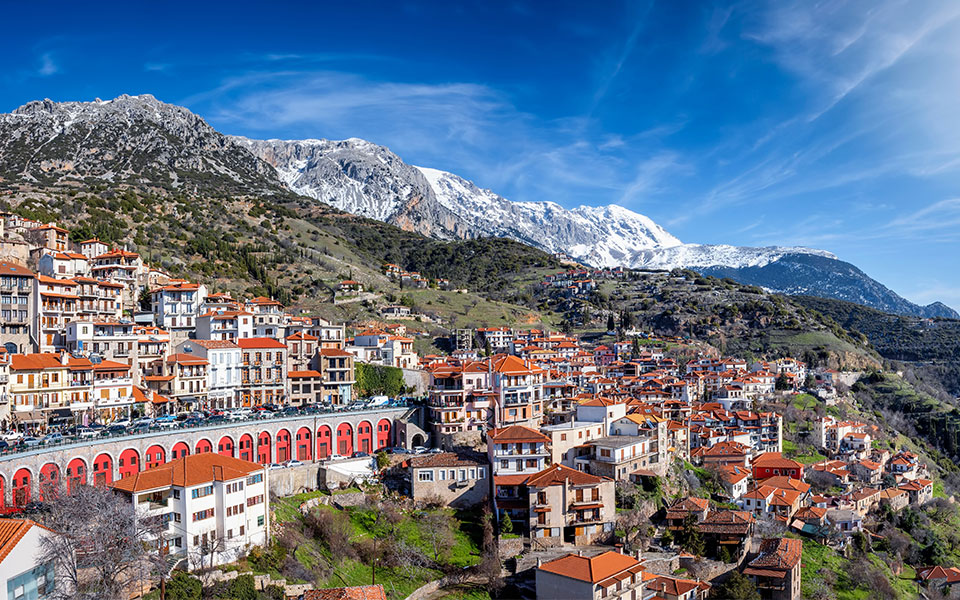
Arachova near Delphi and the ski resort of Parnassos has long been popular as a winter destination for domestic tourists.
© Shutterstock
If you’re planning a Greek getaway this winter – whether for a snowy mountain retreat or a peaceful island escape – there’s one small but meaningful cost to keep in mind when budgeting your trip. From January 1, 2025, Greece’s updated Climate Crisis Resilience Fee applies per night to almost all tourist accommodation, from hotels and villas to rooms and short-term rentals.
The fee replaces the “stayover tax” introduced in 2016 and directs funds toward combating climate-driven disasters – wildfires, floods, coastal erosion – while also supporting local infrastructure upgrades and emergency services.
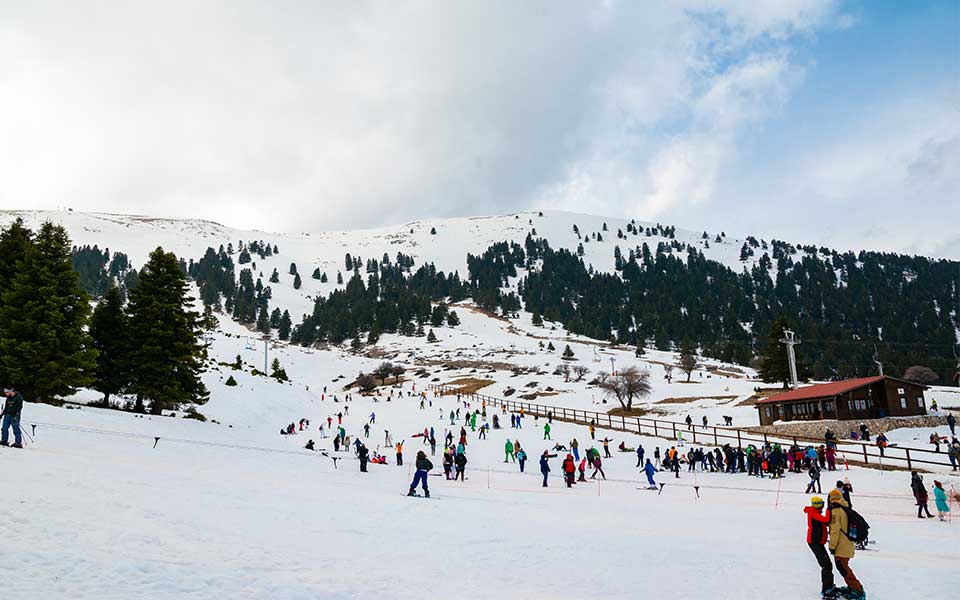
The Kalavryta Ski Center in the northern Peloponnese, perched at 2,340 meters, blends natural beauty, history, and winter sports just 2.5 hours from Athens.
© Shutterstock
Between November and March, Greece’s traditional low season, the nightly charge is modest but universal. A 3-star hotel now adds 1.50 euros per night, a large villa around 4 euros, and even a small apartment-for-rent typically includes a 50 cents surcharge.
For most winter travelers, this is barely noticeable. Over a week-long stay, the added cost might range from just a few euros to around 20–30 euros, depending on your accommodation. The impact becomes more obvious if you’re planning a multi-stop itinerary or staying in higher-end properties.
By contrast, the increase is far steeper in Greece’s main tourism season (April-October), which is precisely the point, supporters note. That same 3-star hotel charging 1.50 euros in December will ask for 5 euros per night in July, while a large holiday home (80 square meters and above) will rise from 4 euros to 15 euros. In other words, the low-season rate keeps winter getaways affordable while still contributing to Greece’s climate-resilience efforts.
According to the government, all proceeds go to a dedicated emergency fund for climate response – strengthening coastal defenses, supporting renewable-energy infrastructure in tourism areas, and improving transport networks on islands and in remote regions. “We aim to collect 400 million euros annually, almost double the amount we got last year,” a senior finance ministry official told Reuters in December 2024.
With climate issues increasingly top of mind, many travelers appreciate the transparency of a small fee directed toward sustainable improvements. For them, it feels less like a hidden charge and more like a direct contribution to the landscapes and communities they came to enjoy.
A complete breakdown of the Climate Resilience Fee for November to March shows that winter surcharges remain low across all categories of accommodation, with the exact amount depending on the type and size of property.
For hotels, the fee scales gently with the star rating. Budget-friendly 1-2-star establishments carry the lowest charge at 50 cents per room per night, while mid-range 3-star hotels apply a 1.50 euros fee. The rate rises to 3 euros for 4-star properties and tops out at 4 euros for 5-star hotels – still a modest addition for travelers choosing higher-end stays.
Rooms-for-rent and standard apartments follow a similarly affordable pattern, carrying a flat winter surcharge of 50 cents per night, making them one of the most economical options for low-season visitors. Short-term rentals introduce a slightly higher fee of 2 euros per night, though this increases to 4 euros when the property is a detached house larger than 80 square meters.
For self-catering accommodation, the distinction is based on size and type. Furnished tourist villas apply a consistent winter rate of 4 euros per night, reflecting their generally larger footprint and amenities. Smaller furnished holiday homes under 80 square meters carry a 2 euros surcharge, while those above this threshold align with villas at 4 euros per night.
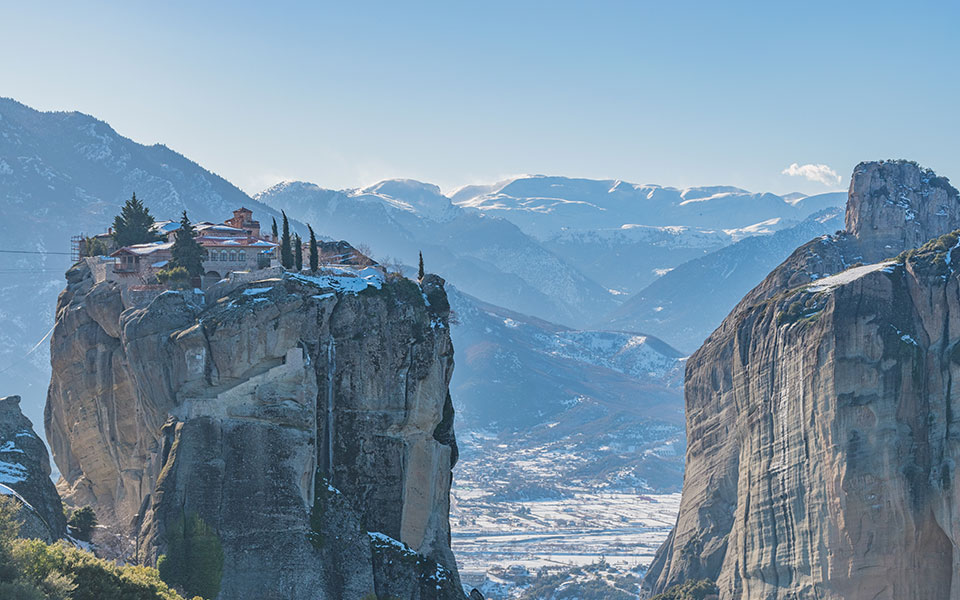
Meteora in Thessaly, a UNESCO World Heritage site, is spectacular in winter.
© Shutterstock
For winter travelers drawn by quieter destinations and budget-friendly prices, the new surcharge has little impact. Some critics of short-term rentals even argue that the fee gently encourages a shift toward family-run guesthouses or small hotels, where the charge is usually lower – and where spending tends to stay within the local economy.
Hoteliers, after initial pushback, seem more accepting – if still cautious. As Ioannis Hatzis, president of the Hellenic Hoteliers Foundation, noted in January 2024: “Instead of abolishing the bailout law which foresaw the need for a stayover tax, the fee has now been increased by 100 to 200 percent.” Even so, comments on the Greek Travel Pages (GTP) platform suggest a broader recognition that the fee helps ensure tourism “gives back” rather than depleting local infrastructure.
Among eco-minded visitors, the concept resonates strongly. Travelers on TripAdvisor and Reddit report summer charges of 10–15 euros per night for villas and upscale rentals – and many say they support a small fee if it funds wildfire prevention. While anecdotal, these reactions reflect a growing belief that travel should contribute to environmental stewardship.
Greece’s main ski resorts (Kalavryta, Parnassos, Vasilitsa, and Kaimaktsalan) are unlikely to feel much impact. They rely on weekenders rather than long-stay visitors, and the extra cost is minimal: a family staying in a 3-star lodge near Parnassos will pay 1.50 euros per room per night – less than half the price of a hot chocolate at the resort.
Despite the new surcharge, winter travel in Greece remains exceptional value – especially if you choose accommodations thoughtfully. A modest hotel may end up costing the same as a pricier rental once the fee is added, with the added benefit of supporting a local business.
Smaller resorts, mountain villages, and lesser-known islands tend to “feel” the fee less while offering more in terms of warmth, authenticity, and hospitality.
Whatever you book, ask for a receipt when you check out. By law, the fee must be declared, and a proper printed receipt protects you from hidden or inflated charges.
Ultimately, with winter rates generally under 4–5 euros per night, the Climate Crisis Resilience Fee is unlikely to deter travelers. Instead, it offers an opportunity: a reminder that thoughtful tourism can help protect Greece’s fragile landscapes and vibrant communities.
So, if you travel off-season, stay a little longer, choose smaller accommodations, and pay your dues with a smile, you’re not just visiting Greece – you’re helping sustain it.
Syros and Naxos stand out among…
International media spotlight the Peloponnese as…
From iconic favorites to under-the-radar escapes,…
Extended flight schedules and rising demand…