Hope Rises for Parthenon Deal
The British Museum hints at a…

© Shutterstock
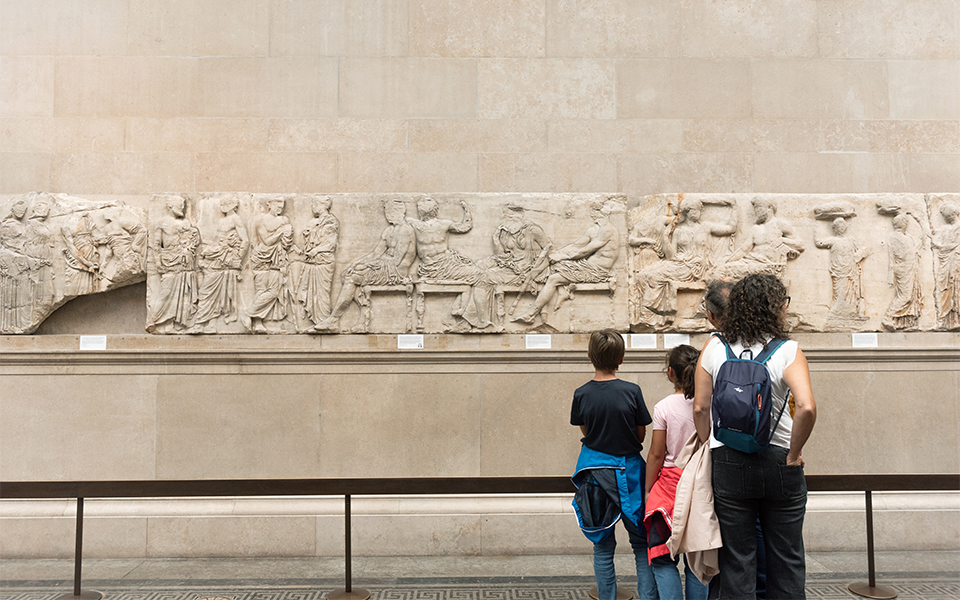
Public opinion in Britain is shifting decisively in favor of returning the Parthenon Sculptures to Greece, according to a new survey commissioned by the Parthenon Project. Conducted in late August by JL Partners, the poll found that 56% of respondents would vote for the marbles to be sent back, compared with just 22% who want them to remain in London.
The results mark a steady rise in support: last year, 53% backed their return. What’s striking is that the sentiment now cuts across political lines. Even among traditionally cautious voters – Conservatives and supporters of the Reform party – about half said the sculptures should leave the British Museum and be reunited with their counterparts in Athens.
Speaking to The Times of London earlier this week, Lord Vaizey of Didcot, a Conservative peer and co-chair of the Parthenon Project said that “support for the return of the Parthenon sculptures isn’t confined to one part of society – it cuts across age, region, and political affiliation.” He added: “Our institutions should feel emboldened by this research and lead with the same clarity and moral purpose as the British people.”
The survey comes as the British Museum prepares for a £1 billion renovation that will include closing the Duveen Gallery, where the marbles are displayed. Three-quarters of those polled said they would support sending the sculptures to Greece during the refurbishment.
In the same Times article, Baroness Debbonaire, a Labour peer and fellow co-chair of the campaign, said the findings offered trustees “an opportunity to make history by embracing a win-win solution that reflects the views of the majority of the British public.” She added that returning the sculptures could form “the basis of a positive, forward-looking cultural partnership between Britain and Greece.”
The Parthenon Sculptures were removed by Lord Elgin in the early 1800s, when Greece was under Ottoman rule, and sold to the British government in 1816. Today, the British Museum is bound by the 1983 National Heritage Act, which prevents it from deaccessioning objects in its collection.
This has led to creative proposals for a “loan” arrangement, floated by George Osborne, the museum’s chairman. He has suggested a partnership that would allow the marbles to be displayed in the Acropolis Museum in Athens in exchange for reciprocal loans of Greek antiquities. However, Athens insists on ownership, not temporary deals, arguing that the sculptures were taken illegally.
The poll also revealed a broader appetite for restitution: nearly a third of respondents said British museums should return all looted or controversial artefacts to their countries of origin, with only 11% believing everything should remain in the UK.
Despite pushback from some politicians – including a letter this year signed by former Prime Minister Liz Truss, warning the British Museum against “covert negotiation” – campaigners believe momentum is now unstoppable.
For the majority, the issue is not about Greece versus Britain, but about cultural justice and shared heritage. As the monuments of the Acropolis gleam under the Athenian sun, and the purpose-built Acropolis Museum stands ready, pressure is mounting on the British Museum to answer a question that Britons themselves increasingly seem ready to resolve.
Source: thetimes.com / kathimerini.gr
The British Museum hints at a…

The removal marks a rare moment…
Join archaeologists on a journey through…

Experience a magical August full moon…