Syros and Naxos Shine as Authentic Travel Picks…
Syros and Naxos stand out among…

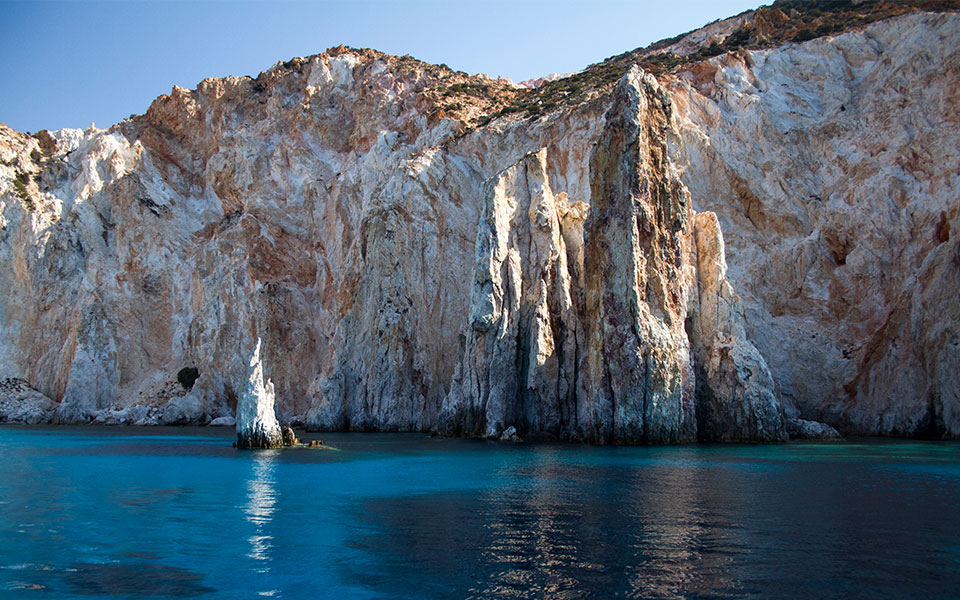
Polyaigos is now under stricter protection, with work limited to maintaining existing buildings.
© Shutterstock
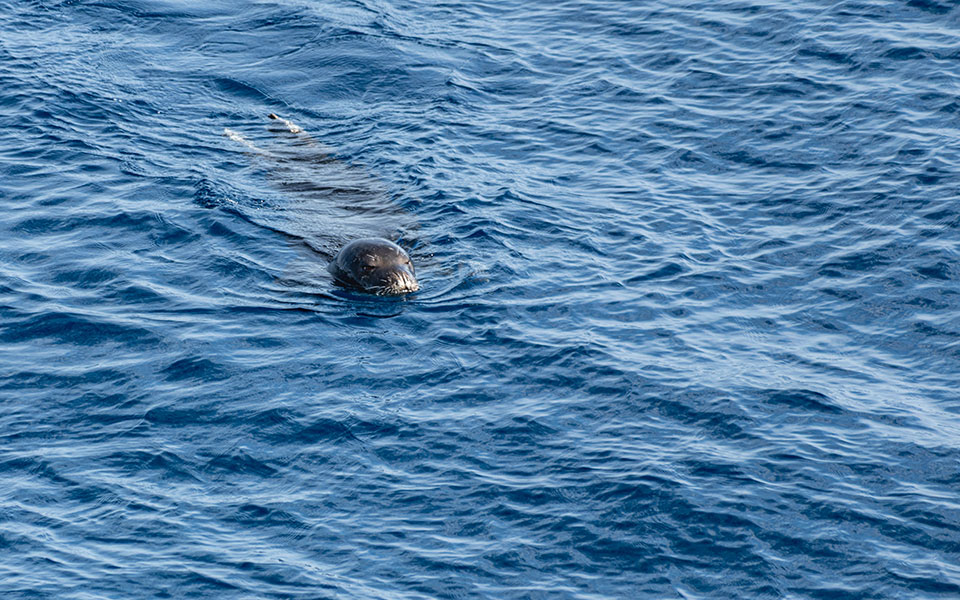
The tiny island of Polyaigos, a glittering jewel east of Kimolos and just a stone’s throw from Milos, has long been a paradox. It is both barren and beautiful, uninhabited yet brimming with life. Known since antiquity as the “island of many goats” (its name literally means just that), Polyaigos is today home mainly to herds of goats and a dwindling population of endangered Mediterranean monk seals (Monachus monachus). But beneath its stark, sunbaked slopes lies a human story that stretches back millennia – and now, that story is receiving new recognition.
This week, Greece’s Central Archaeological Council (KAS) unanimously declared Polyaigos an official archaeological site, granting it stronger protection status. At the same meeting, it also designated the island’s Sykia Bay as an underwater archaeological site, owing to the presence of a Late Classical shipwreck lying just offshore.
These dual designations mean that the island’s protection framework is reinforced: only maintenance work on existing buildings is permitted, and no new development can take place.
© Shutterstock
Though uninhabited today, Polyaigos once supported a vibrant human presence. Archaeological surveys by the Ephorate of Antiquities of the Cyclades (within the framework of the “Cycladic Islets Research” program), carried out in collaboration with the Norwegian Institute, show that the island was alive with activity towards the end of the Bronze Age. Pottery, stone tools, and architectural remains from the Late Cycladic period (roughly 1600–1000 BC) have been found at sites such as Vromolimni and Xaplovouni.
The most impressive discovery comes from the site of Benardou, near Pano Mersini on the western side of the island, where the remains of a large prehistoric settlement were uncovered. Built across a hillside, it includes structures of varying size and complexity – walls, terraces, multi-roomed buildings – that hint at an organized island community. With the major prehistoric center of Phylakopi just across the strait on Milos, archaeologists believe Polyaigos may yet shed light on the wider network of settlement and trade in the Bronze Age Aegean.
The new protection also extends beneath the sea. At Sykia Bay on the island’s southeastern coast, archaeologists have identified the remains of a shipwreck dating to the late Classical period (4th century BC). Finds of this kind are rare, and they help illuminate the maritime networks that bound the Cyclades and the wider Aegean world together at the height of ancient Greek civilization. Declaring the bay an underwater archaeological site ensures that the wreck will be protected against looting or damage.
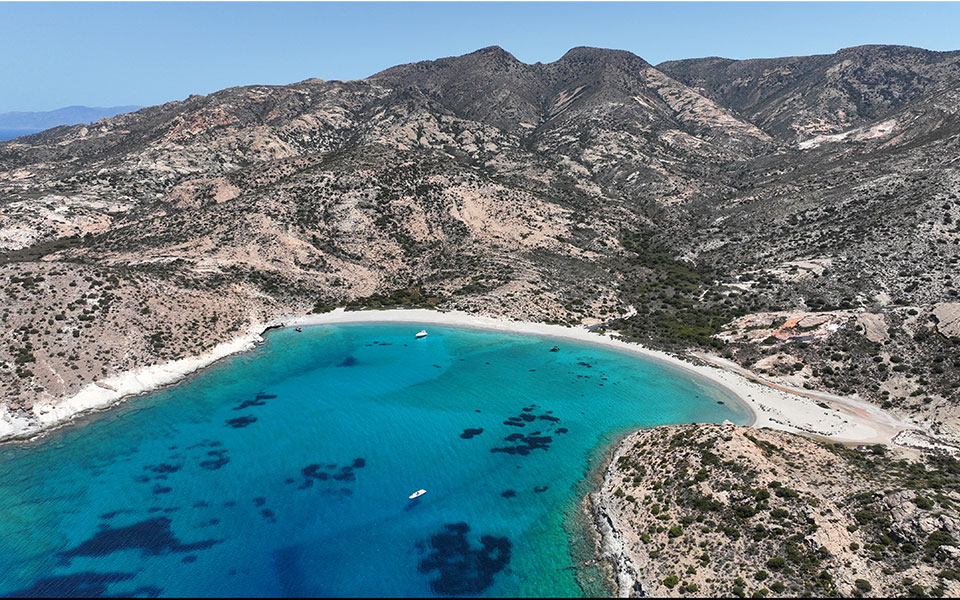
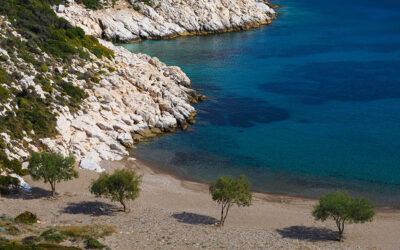
Polyaigos itself is only 6km long, with rugged hills that rise to over 300m, sheer cliffs, and some of the most dazzling waters in the Aegean. Its beaches – particularly on the southern coast – are celebrated among day-trippers for their turquoise shallows and dazzling white rocks. Sea caves carved into its shoreline shelter monk seals, one of the rarest marine mammals in the world. Much of the island is already designated as a landscape of outstanding beauty and included in the EU’s Natura 2000 ecological network.
The island’s ownership, however, is unusual. Most of its 17,374 “stremmata” (about 1,737 hectares, equivalent to roughly 17.5 square kilometers) belong to the Ioannis Stavros Logothetis Bequest of the Greek Orthodox Church, while the rest is held by private owners. Local herders still bring goats to graze here, keeping alive the ancient name that Ptolemy, Pliny the Elder, and other authors once recorded in their geographical works.
© Shutterstock
So why now? Why has Polyaigos suddenly been thrust into the spotlight of Greece’s cultural authorities? The answer lies in mounting concern about possible development. The Hellenic Society for the Environment and Cultural Heritage (ELLET) recently sounded the alarm, suggesting that construction activity might be planned in a coastal tract of land owned by Konsolina S.A. Speaking to Kathimerini, the company’s president, Gerasimos Livier Pantazatos – who is also CEO of Aria Hotels – responded that the only works underway concern restoration of an existing house, “solely for use as a private residence and in no way for tourist exploitation.”
Nevertheless, the case highlights the delicate balance facing Greece’s uninhabited islands. Increasingly, they are coveted for luxury tourism and private retreats, just as their fragile ecosystems and archaeological wealth demand stricter protection. KAS is even considering declaring Polyaigos an undeveloped “Zone A,” which would forbid all building activity outright.
For now, the island’s story is one of protection rather than exploitation. With its prehistoric ruins, Classical shipwreck, monk seal caves, and blindingly blue bays, Polyaigos remains what it has been for millennia: a quiet, unspoiled sanctuary in the heart of the Cyclades. Whether it will stay that way is a question only the future can answer.
Source: kathimerini.gr
Syros and Naxos stand out among…
New ferry booking data shows how…
Guardian readers rank the little-known Fourni…
Celebrated for its golden beaches, charming…