Five Historic Athenian Souvlaki Joints
Souvlaki joints started appearing in earnest...


© Perikles Merakos
At the eastern edge of Athens, Kaisariani is one of those neighborhoods that still reflect the city’s layered soul – a mix of history, resilience and everyday life. A refugee settlement founded by Asia Minor Greeks in the 1920s, the district remains a community with a strong sense of identity and pride.
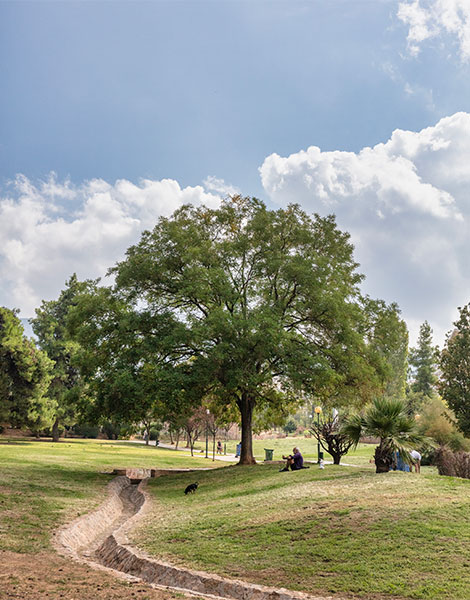
A verdant haven, a historical landmark, a farmers’ market and free outdoor movies: the urban green lung that is Kaisariani Park offers all this to both locals and curious visitors who venture a little off the beaten path.
The people of Kaisariani, whether native-born or not, have a special affection for their neighborhood. Whenever they talk about it, they smile in a way that makes you want to understand why. Is this pride rooted in nostalgia, or in something deeper – a living sense of memory and belonging? One late-summer Friday, we set out to find the answer. We visited the park and its surroundings at midday, just before the stalls of the organic market were set up, and stayed until well after nightfall, catching a film at the nearby open-air cinema Aiolia before dining at a popular local spot.

© Perikles Merakos
Entering the park from the southern gate on Iroon Skopeftiriou Street, you may find your gaze drawn to the tall pines that shade the paths. The midday stillness is broken only by the sound of cicadas. The calm of the place quickly wins you over, even as you take in the abundant and sometimes even defiant graffiti scrawled across nearly every concrete surface.
Further up the paved path, metal panels conceal Harama – whose name means “daybreak” – the legendary music venue that once hosted icons of Greek popular song such as Vassilis Tsitsanis and Sotiria Bellou, both towering figures of the rebetiko and laïko tradition. The municipality of Kaisariani plans to transform the park into a cultural hub, with Charama at its heart. For now, though, the building stands abandoned, suspended between official ambition and the concerns of local residents.
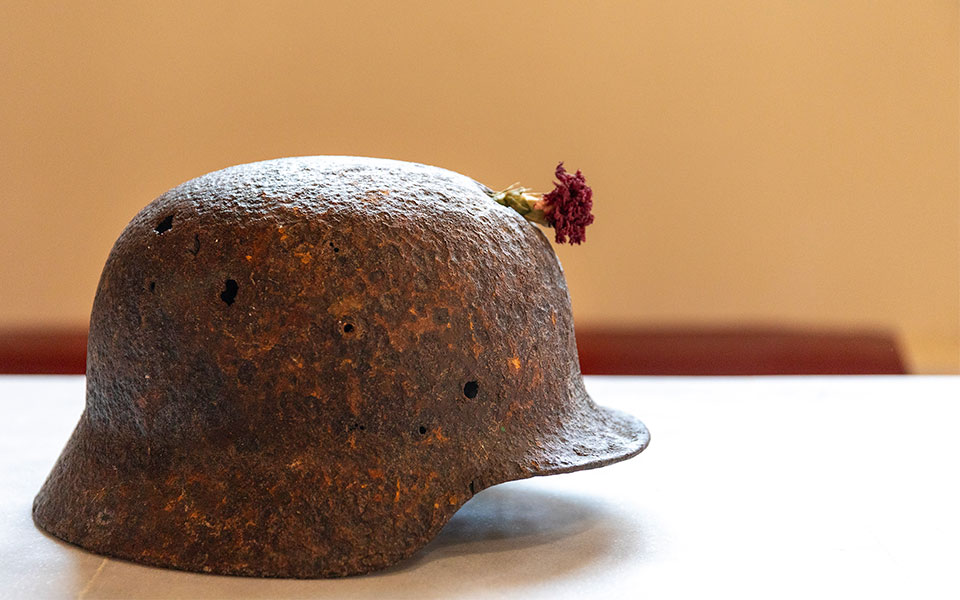
The helmet of a Greek soldier killed by the Germans.
© Perikles Merakos
© Perikles Merakos
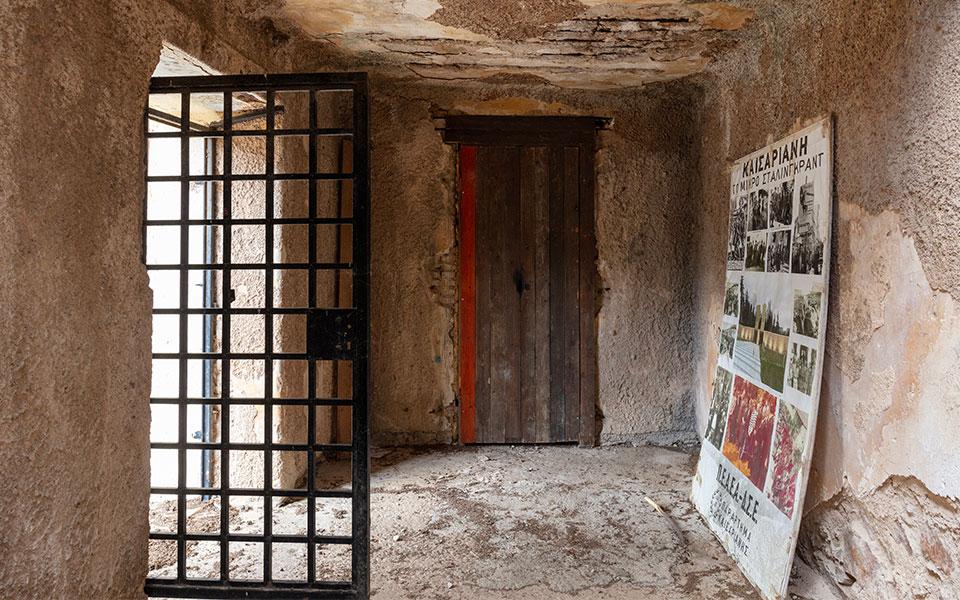
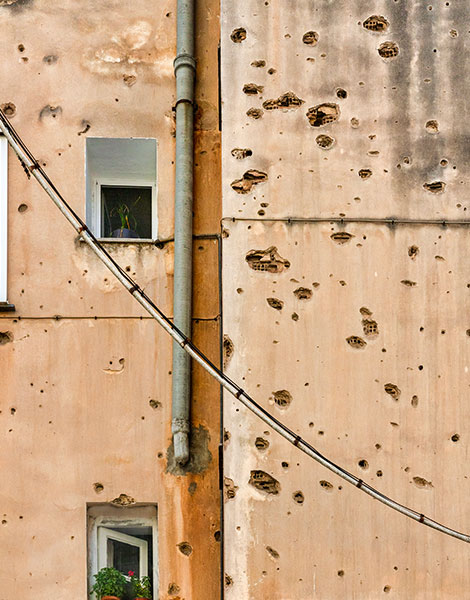
On the opposite side of the path stands the Museum of National Resistance, dedicated to the left-wing EAM movement that fought against the Nazi occupation during WWII. Inside, the story of the wartime raids that devastated the eastern districts of Athens and the bloody events of December 1944 unfold again through personal testimonies, newspaper clippings and everyday objects – including furniture from the home of Iro Konstantopoulou, the 17-year-old heroine of the Greek Resistance who was executed by the Nazis on September 5, 1944.
After our visit, Thanasis Koskinas, musician and curator of the museum, led us to the Altar of Freedom (Thysiastirio tis Lefterias) memorial, on the site where, on May 1, 1944, 200 Greek resistance fighters – most of them communist political prisoners – were executed by German occupation forces in retaliation for the killing of the German General Franz Kretsch in Laconia by ELAS partisans.
The gate to the site is locked. In recent years, acts of vandalism have forced the municipality to restrict access. “For the older residents of Kaisariani, the Altar of Freedom is something sacred,” Koskinas says quietly. “For the younger ones … I’m not so sure. Maybe they don’t know, maybe they question the older generations – I can’t really tell.”
© Perikles Merakos
© Perikles Merakos
By two in the afternoon, the stalls of the weekly organic market began hawking their wares in the parking lot outside the open-air cinema Aiolia, on Filadelfeias and Solomonidou Streets. This market isn’t as noisy as most, although there is still friendly chatter; most of the producers know each other well, and the regulars who swear by organic products arrive one by one.
“Just watch – the whole of Kaisariani will stop by my stall. You don’t need to go anywhere else for your story,” said egg seller Marios Angeloudis with a grin. He was right; it seems that loyal customers remember even the way he arranges his eggs. On this day, when he changed his routine slightly, a few of them were thrown off.
© Perikles Merakos
© Perikles Merakos
“I believe in organic products and in the honesty of the producers,” said one of his customers, Eleni Tarazi, a lifelong resident of Kaisariani. “People here are very conscious consumers,” Angeloudis told us. “We see a lot of grandparents, but we see their grandchildren, too – the younger generation has made visiting the market part of its weekly routine.”
Ms. Tarazi, who was picking up vegetables for the weekend meals and a carton of eggs for her granddaughter, was eager to head home. “I’ve been up since six-thirty this morning. I also went walking in the park. It’s such a lovely place – it gives us room to breathe. We’re lucky to have it,” she said.
Architect Ioulia Lazou feels the same way. For her, the market and the park provide a sense of belonging, that subtle bond among neighbors that defines Kaisariani, though it’s slowly fading with time. “I’ve been coming here since 2021, when I became a mother,” she said. “It’s a beautiful, peaceful spot that offers a real pause from the city, although the facilities could use a little more attention.”
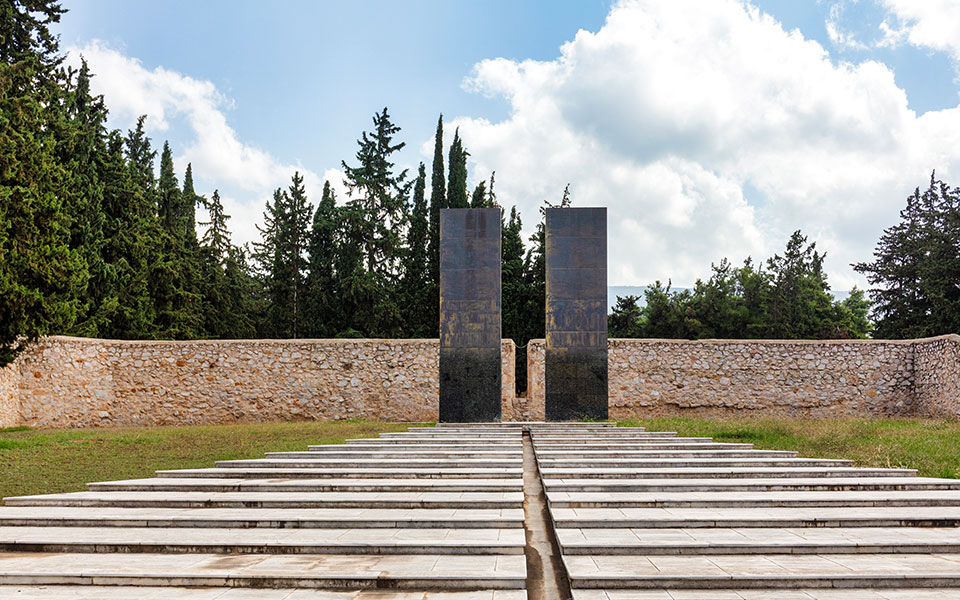
The Altar of Freedom, a place of remembrance for the Greeks executed by the Nazis in 1944.
© Perikles Merakos
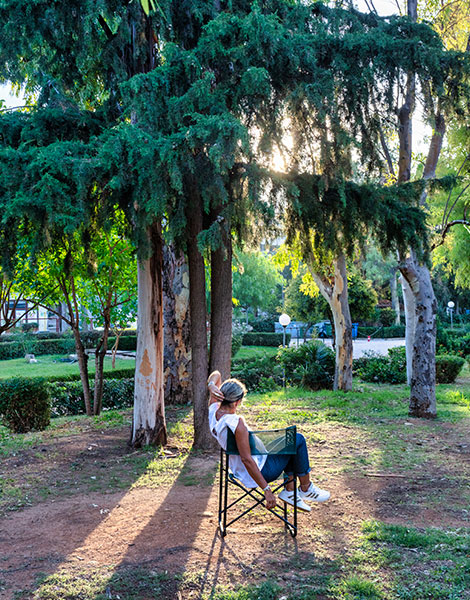
When the organic market winds down around half past five in the afternoon, the older residents of Kaisariani begin their customary stroll through the park, before pausing in the shade of the pines or cypresses near the Altar of Freedom. Around that time, the rest of the park’s “tribes” appear: mothers with small children, boys on bicycles, groups of teenage girls, dog owners, and those simply seeking a breath of fresh air away and a break from the city’s busy rhythm.
Dimitris Psychogios arrived on an after-work walk with Karma, his dog, making a detour between Syngrou Avenue and Ambelokipi. “Karma loves it here,” he said. “There’s grass, space to run, and other dogs to socialize with. I’ve seen worse conditions in other parks, but this one feels cared for. The locals clearly take pride in keeping it clean.”
On any given afternoon, families spread mats on the grass and let their children play freely in the wide space around them. Many residents still hold on to a tradition of picnicking. We met Aria with her two daughters, Melina and Marina, and Emil with his son, Alexis. They’d laid out a sheet on the lawn, and set out homemade food in plastic containers. “We have this green haven right next to our home, and we come whenever it’s hot,” Emil said. “We come almost every day to play and ride our bikes!” interrupted little Melina, jumping on her pink bicycle.
Aria noted that parts of the park have been somewhat neglected. “There’s more attention given to the dogs – they even have their own area – while the playground needs repairs. We’d love to see more trees planted, and more attention paid to the memorial, both to make its history more visible and to ensure it won’t continue to be vandalized. We do what we can for the park,” she said. “We love our city.”
© Perikles Merakos
Throughout the summer and until mid-September, screenings at the municipal open-air movie theater Aiolia begin each evening at nine. It’s a true neighborhood landmark, having operated – under various names and with a few breaks – since 1960. Most moviegoers arrive just ten minutes before the show starts. Nikos Sideris, who sells the tickets, is also the projectionist, keeping an eye on the reels. From Monday to Thursday, the films are shown free of charge; on Fridays and Saturdays, new releases are screened, with tickets priced at just five euros. “Every year we go through dozens of titles proposed by distributors,” he told us. “The final choice comes down to one criterion: films that make people think – even a little.”
“Just a minute, I’ll be right back,” said a regular as she stepped away from the entrance. “Don’t worry, I remember you from last time,” Sideris replied with a smile. A group of students asked whether the ticket price was the same for everyone (it is) and a couple with a gaggle of children in tow fumbled through their pockets in vain for their free-admission pass – Sideris waved them through anyway. It was a small gesture of kindness, but one that Maria Alempaki, a local and frequent visitor to Aiolia, told us captures the spirit of the place.
“It’s not just the cool evening air and the good selection of films,” Alempaki said. “It’s the attitude of people here. Everyone’s friendly; they greet each other, wait patiently in line for tickets or snacks, and are patient even when the card machine isn’t working. There’s a real sense of community.”
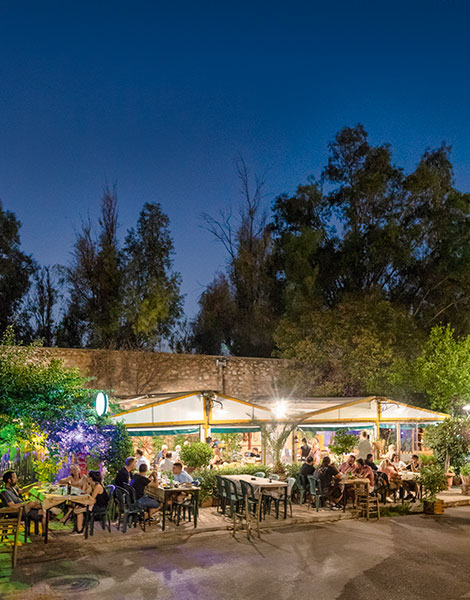
Generations of Athenians have tasted Tsompanakos’s lamb chops.
© Perikles Merakos

Noon at the organic farmers’ market, where all of Kaisariani passes through.
© Perikles Merakos
That night, Nino Rota’s immortal Godfather theme filled the night air and the chatter of children playing in the park faded away. After the film, we shuffled out of the cinema area and into the park, where a few young rappers were testing their freestyle skills under the trees. Our walk ended a little further east, at Tsobanakos, a taverna that feels like an integral part of a visit here. We watched as Theofilos Kanonieris peeled potatoes by hand, and the grill team carefully placed thinly cut lamb chops over the charcoal, preparing a specialty that draws diners from all across Athens.
In the end, Kaisariani leaves no one disappointed – quite the opposite, in fact. It’s the perfect place to come in case you’ve momentarily misplaced your smile and would like to find it again.
Souvlaki joints started appearing in earnest...
Beneath the busy streets of modern...
A natural spa by the Athenian...
Hiking lesser-known paths where history, nature...