Parthenon: How the West Pediment Was Completed
Experienced restoration specialists have completed the...

© Shutterstock
Five years ago now, with great fanfare, talks began between the British Museum and Greece regarding the Parthenon Sculptures. Three years later, the then British prime minister Rishi Sunak canceled a meeting with Kyriakos Mitsotakis because the Greek prime minister mentioned the sculptures in an interview with the BBC. It was a massive, childish and clumsy snub on Sunak’s part, but Greece gracefully continued with the talks in spite of it.
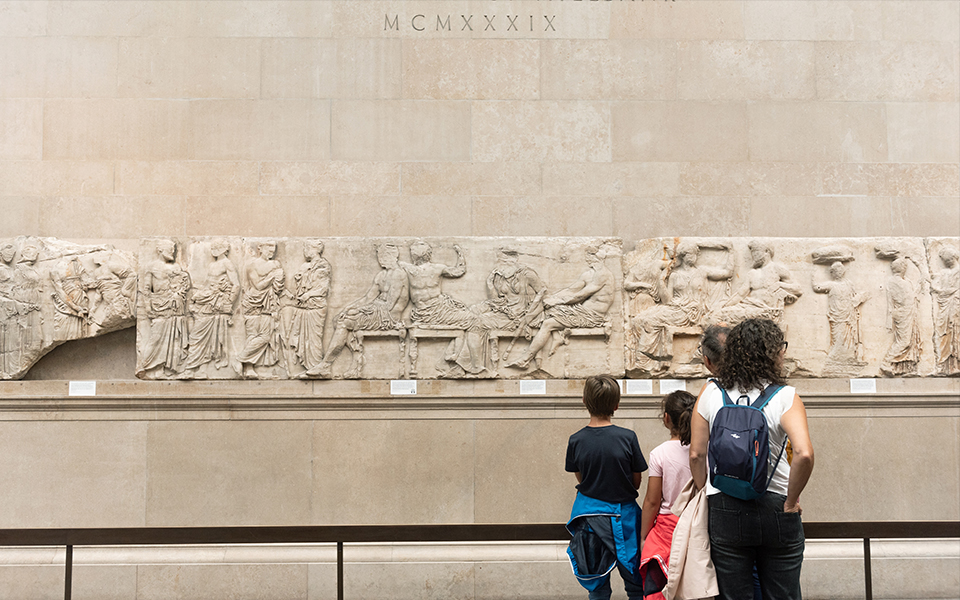
It’s been said that George Osborne, a former Chancellor of the Exchequer, wanted to make history and to be the man who found a solution for this long unresolved issue. He had been newly appointed as Chairman of the Trustees of the British Museum, and all of us who campaign for return of the sculptures were excited that, at last, something might happen. Could this be the moment of the triumphant return of Phidias’ masterpieces to Athens? Currently housed in the gloomy Duveen Gallery, were they going to be seen again under the Attic light, where they should always have been?
When I read this week that the talks had “collapsed,” I suspected this was hyperbole. The newspaper that ran the story, The Telegraph, is part of the right-wing press with an anti-return agenda and I suspect many of its readers would be happy for the British Museum to hold on to all the many disputed items in their collection, although perhaps in particular the Parthenon Sculptures, without any consideration for whether they truly belong in London.
When I am asked by British folk why I think the sculptures should go back, I simply say “Because they were stolen. Elgin did not have permission to remove them. The Firman does not and never did exist.”
Those who prefer them to remain in London willfully ignore these facts. It’s so well documented, it’s almost tiresome to repeat them. I believe the museum itself hides behind the Museum Act of 1963, but no law is set in stone. The Museum Act was amended, for example, in relation to art stolen by the Nazis. It could equally be amended in relation to art stolen by a British aristocrat trying to please his wife with some sculptures. It’s simply a matter of will.
There hasn’t been an official statement that the talks have ended. More accurately, they seem to have stalled because, after all this time, nothing has moved forward. No agreement, or compromise, or even “arrangement” has been reached.
There is a definite sense of disappointment on the part of all those who hoped (perhaps foolishly) that the British Museum or the British Government or both would be generous to Greece. We are also extremely disappointed with Andy Burnham who, only three years ago, said he believed the sculptures should be returned “with no strings attached”, i.e., without any conditions whatsoever. Now that he is prime minister, he has abandoned this view. Shame.
Nicholas Cullinan, the director of the British Museum, is very pleased right now that he has a sell-out exhibition in the museum, the result of an Anglo-French agreement for the loan of the Bayeux Tapestry. There’s something absurd about any kind of comparison between this quite primitive piece of sewing and the sculptures – there’s no dispute over ownership, it’s in one piece, it’s one thousand years old (relatively new), it’s not of world cultural importance, and, and, and…. The Parthenon Sculptures and the Bayeux Tapestry simply have nothing in common whatsoever. Once again, the sculptures are being insulted and, I think, Greece is, too.
Greece – and all of us in Britain who campaign – should continue to demand that the British Museum does the right thing. It takes patience on our part, but sooner or later, whether it’s a change of regime there, or simply a bolt of lightning hitting their roof, they will see the light. And it will illuminate the truth.
Originally published in Greek at kathimerini.gr
Victoria Hislop is a bestselling British author whose novels include The Island. She is a member of the British Committee for the Reunification of the Parthenon Marbles.
Experienced restoration specialists have completed the...
Two centuries of dispute, diplomacy and...