Poros: The Closest Faraway Island
A weekend on the Saronic Gulf’s...

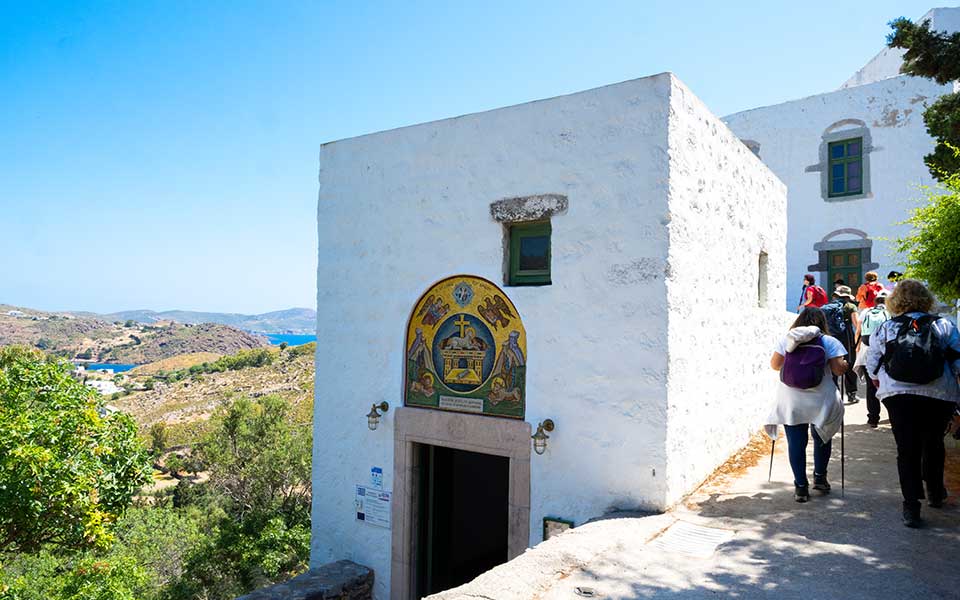
The Monastery of Aghios Ioannis Theologos. Its construction began in 1088 AD by order of Byzantine Emperor Alexios I Komnenos.
© Julia Klimi
Visitors fall in love with Patmos – and that’s why they keep coming back. It becomes a familiar place filled with familiar faces, people who have also been captivated by the island’s magic. The charm of Hora lies in the interplay of light and shadow on its whitewashed walls, the cool arcades with wooden roofs, the tiny courtyards blooming with jasmine, and the traditional mantomata – stone window frames carved with the Byzantine cross. It lies in the marble early Christian columns of the Katholikon (main church) of the Monastery of Aghios Ioannis Theologos, which still serves as the spiritual heart of the island. Its iconostasis, created in 1820 by twelve master woodcarvers from Chios, leaves visitors speechless with its intricate detail.
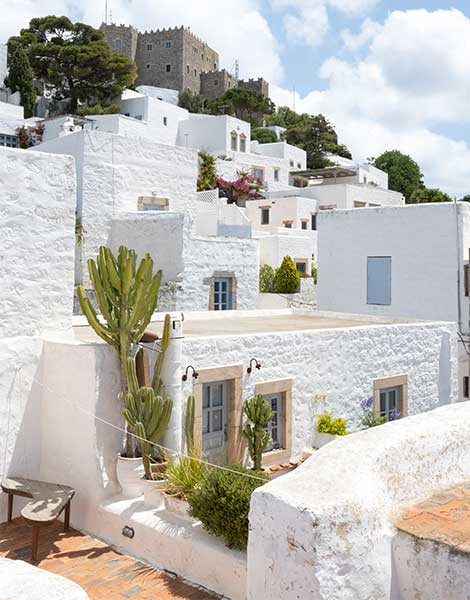
The Allotina neighborhood, west of Hora, was founded by Byzantine families who arrived on Patmos after the Fall of Constantinople in 1453. (Photos: Julia Klimi)
© Julia Klimi
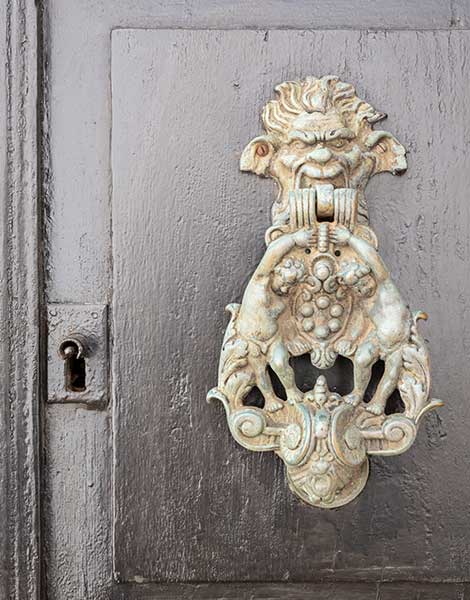
Anthropomorphic door knocker on a historic mansion in Hora.
© Julia Klimi
Equally stunning are the Byzantine arches of the historic Pagostas residence, built in 1597 and owned by the monastery. The space was transformed into a guesthouse by Maria Lemos and Grigoris Kambouroglou, with the help of interior designer Leda Athanasopoulou. Here, traditional Greek simplicity meets curated hospitality: linen breakfast tablecloths, hand-crocheted bed covers, contemporary Greek art on the walls, ceramics, embroidery, fresh flowers in vases, and sykalaki (baby fig preserve) served with linen napkins and genuine warmth.

The “abataro,” a hand-painted wooden screen traditionally placed at the end of the main hall in Patmian mansions, now displayed at the Hora Museum.
© Julia Klimi
The island’s architectural elegance is also found in the abatáros – a hand-painted wooden screen found in Patmian mansions – once a symbol of wealth and status among the merchants and shipowners of Hora. Perhaps the most beautiful one can be seen in the 17th-century mansion of the Kourkoulas family, while another fine example can be found in the Nikolaidis Mansion. Donated in 1959 by Periklis Valvis to the Ephorate of Antiquities of the Dodecanese, the Nikolaidis Mansion was once the ancestral home of his great-grandfather, Filiki Etaireia member Emmanouil Kalos. Today, it hosts a collection of archaeological finds and is open to the public daily from 10:00 to 14:00.
At sunset, make your way up to the castle-monastery’s fortified walls and take in the breathtaking view of the Hora, Ikaria, Fournoi, Samos, Arki, Lipsi, and Leros. As dusk begins to fall, wander once more through the labyrinth of alleys and enjoy a drink at Stoa, the little bar in Aghias Levias Square. A favorite gathering spot for both locals and foreign residents, it captures the true social pulse of the town. Right next door is Zafeiria’s boutique, where her uncanny instinct for curating clothes, jewelry, bags, and friulane shoes will leave you delighted.
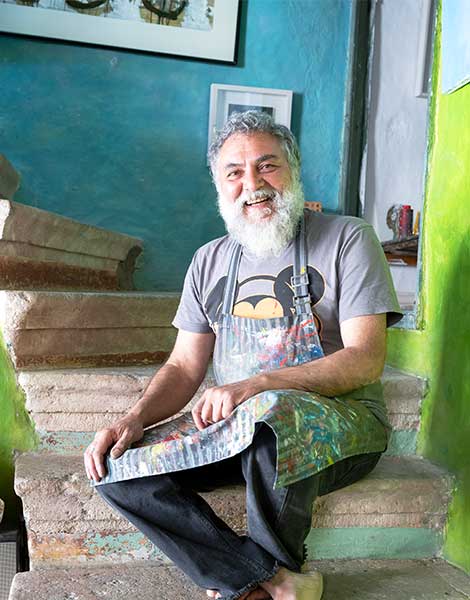
Andreas Kalatzis at his gallery in Hora, where works by renowned Greek artists are on display.
© Julia Klimi
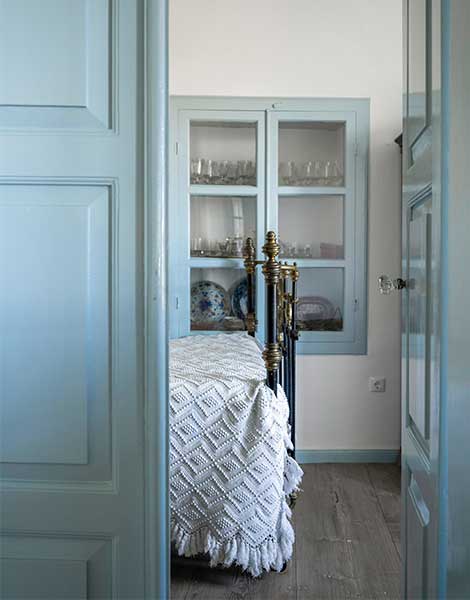
The Nikolaidis Mansion.
© Julia Klimi
No visit is complete without a stop at the gallery of Andreas Kalatzis, which features works by important Greek artists – including the ceramics of Maria Koubourli and the sculptures of Yiannis Pappas. In the mornings, the space fills with children drawing under Andreas’s guidance, affirming his belief that “children are a source of imagination and joy.”
Nearby is Maria Papakonstantinou’s AW Creative Jewelry, showcasing masterpieces of contemporary Greek jewelry inspired by the island itself and its centuries-old tradition in gold and silversmithing. Just next door you’ll find Koukoumavla, Despina’s little shop of wonders, which has brought new life to the once-closed Municipal Market. And for a truly magical sunset, hike up to the Prophet Elias chapel, perched on the highest peak of the island.
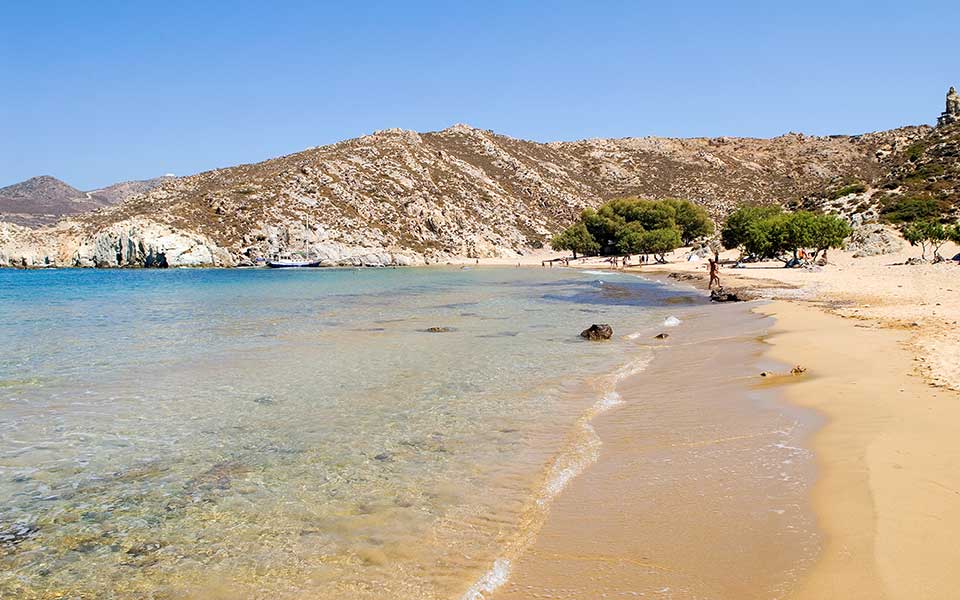
Psili Ammos beach, with its tamarisks and small taverna, is well worth the 20-minute walk from Diakofti.
© Julia Klimi
When dawn breaks, a 20-minute hike will lead you to Psili Ammos, the most beautiful sandy beach on Patmos. Whether you like playing in the waves, building sandcastles, or even enjoying a bit of nude sunbathing, it’s the perfect place to unwind. After your swim, head straight to Dionysia’s seaside taverna under the shady tamarisks for a plate of delicious local goat stew.
For more athletic swimming, head to Livadi Geranou and swim all the way across to the tiny islet of Aghios Georgios. You can also explore Didymes beach for an ice-cold beer from the canteen or visit Lambi with its colorful pebbles and the seaside taverna serving fresh red mullet straight from the sea. If you’re in the mood for a sociable beach scene, Kampos offers sunbeds, beach bars, and watersports. Relax on the stylish lounge sofas of Atmos by Dimitris Konstantinidis or at the much-loved George Place, which, although relocated, is still a favorite.
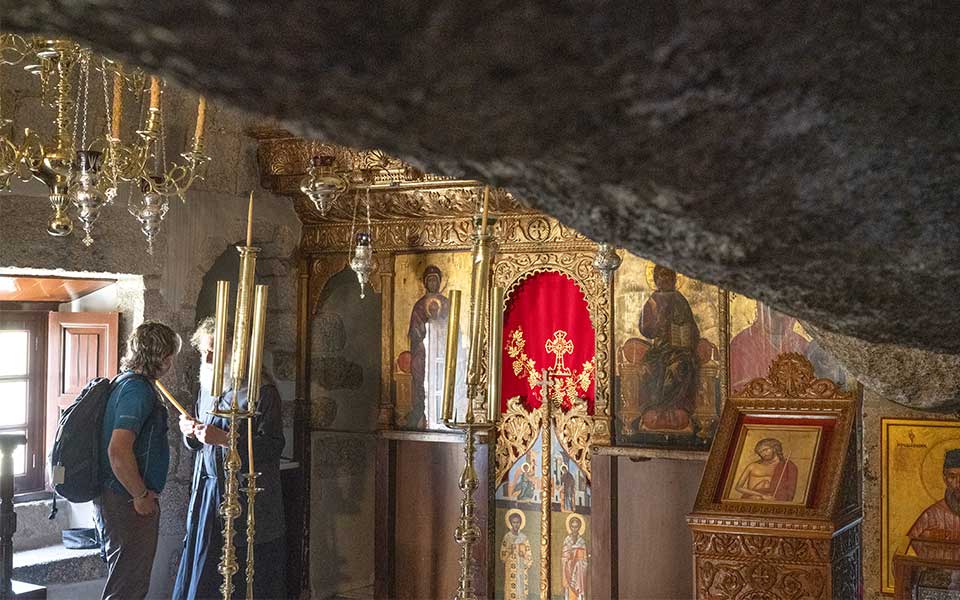
The Cave of the Apocalypse, where Aghios Ioannis is said to have received his divine revelations.
© Julia Klimi
In Petra, near the iconic Kalikatsou rock, lies Patoinos Estate, the project of Greek-Swiss Joseph Zisiadis (gr.patoinos.ch). His aim? To remind this once-rural society of the value of self-sufficiency. On 30 acres of land leased from the Monastery after 12 years of persistence, he planted native grape varieties Assyrtiko and Mavrothiriko. A visit to the estate’s winery in Vagia is well worth your time. There you’ll meet Franco-Swiss viticulturist and oenologist Dorian Amar, and sample Assyrtiko wine crafted using biodynamic principles, in a limited production of just 6,000 bottles per year.
Locals and visitors alike reportedly have a blast each year during harvest season, reviving one of the island’s oldest traditions. In addition to establishing Patmos’ own seed bank, Patoinos has also spearheaded school vegetable gardens, teaching children the values of agriculture, viticulture, and composting. The estate also produces exceptional extra virgin olive oil from the Koroneiki variety.
© Julia Klimi
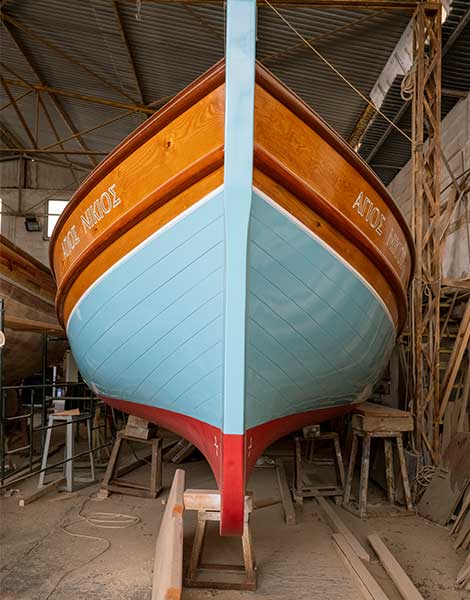
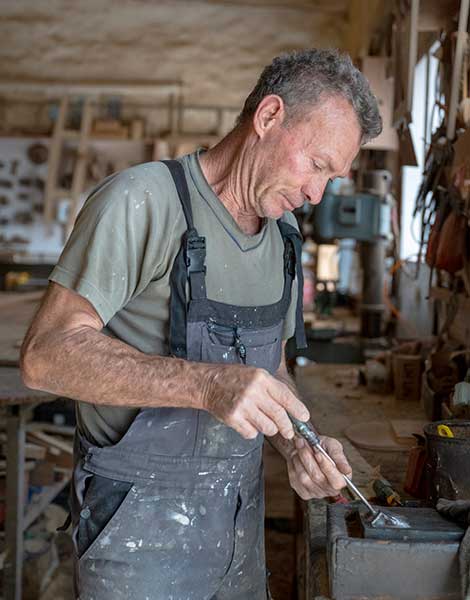
“Aghios Nikios”, a classic wooden varkalas built using a 1930s design at the shipyard in Diakofti. Commissioned by the Papastratos Foundation for the Municipality of Halki, it runs on solar power.
© Juia Klimi
For a glimpse into the island’s maritime heritage, head to Sozon Kamitsis’ shipyard in Diakofti. There, shipwright Konstantinos Chorianopoulos and his team breathe life into traditional wooden boats like the trechantiri and the perama, and even handmade wooden kayaks. It’s where locals still turn when they want a custom-built vessel crafted with time-honored skill.
If you’re visiting in August, don’t miss the early morning procession of the icon of the Virgin Mary through the alleys of Hora on August 14th. Women stand in their doorways, sprinkling rosewater as the icon passes by. On August 15th, the feast of the Dormition of the Virgin, the spotlight turns to the vibrant celebration at the chapel of Panagia tou Geranou, known for its unique and heartfelt atmosphere.
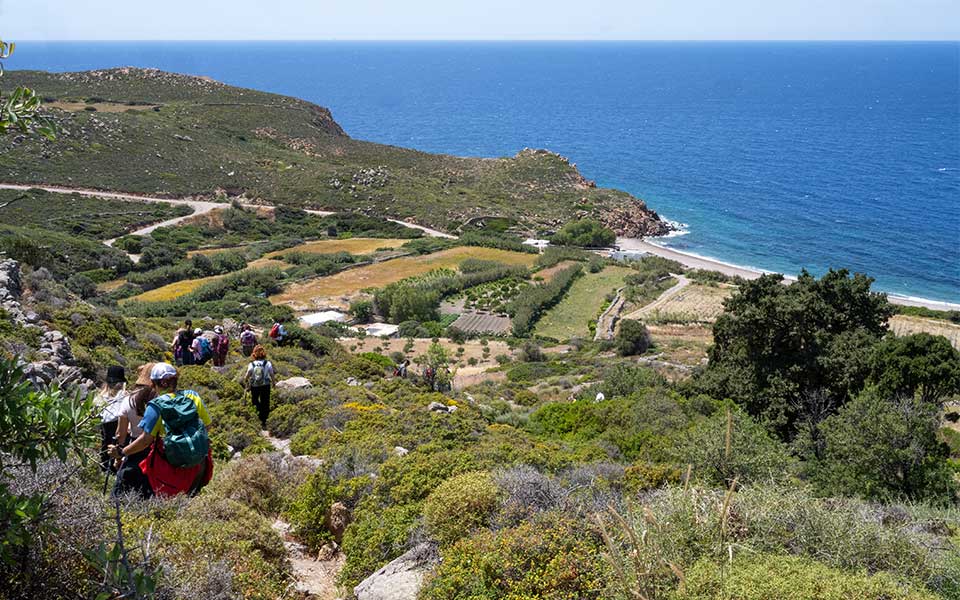
Kipoi Beach sits midway along the 2.5-km hiking route Hora-Kipoi-Holy Monastery of the Annunciation-Hora.
© Julia Klimi
September is the perfect time to explore the island’s Cultural Paths (monopatiapolitismou.gr). The most popular route is the one connecting Skala to Hora (1.7 km), a fascinating hike that takes you past the Cave of the Apocalypse, the historic Patmiada School, and a serene forest of pine and cypress trees.
The Cave of the Apocalypse, where Aghios Ioannis is said to have received his divine visions, radiates awe and reverence. Nearby, the Patmiada School, one of Europe’s oldest schools, has operated continuously since 1713.
Another recommended trail is the 2.5-kilometer circular route Hora-Kipoi-Holy Monastery of the Annunciation-Hora, offering panoramic views over the sea and fertile valleys dotted with carob trees, lemon groves, and vineyards. You can also follow an easy 3-kilometer trail from Hora to Grikos and Diakofti, with curious little goats keeping you company along the way.
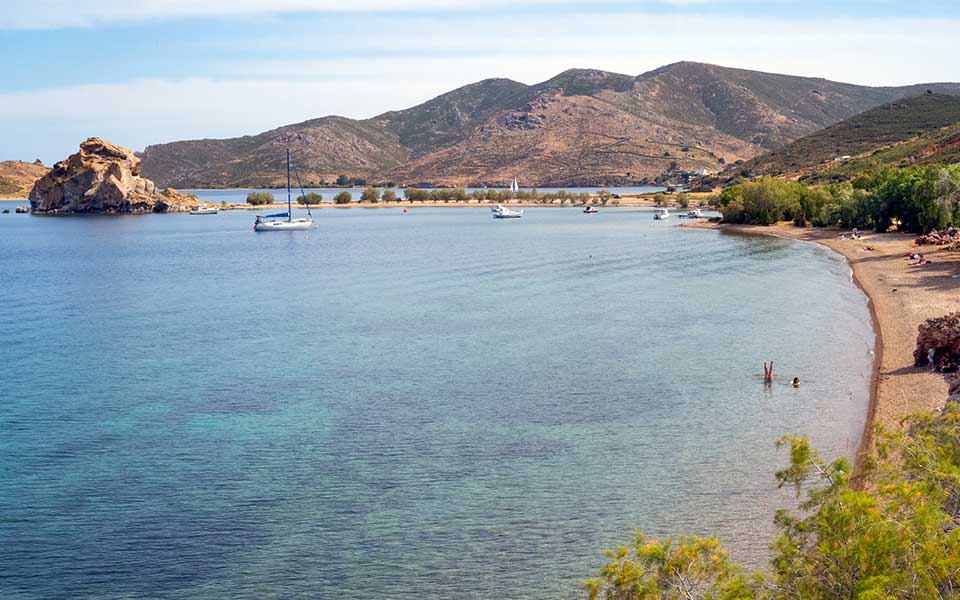
Petra Beach, located next to the striking Rock of Kalikatsou.
© Julia Klimi
For breakfast or brunch, head to Benetos Hora (Tel. (+30) 22470.345.37), an all-day spot offering a wide variety of sandwiches and small plates in a stylish setting. Don’t miss your morning coffee at Houston in Skala (Tel. (+30) 22470.324.05) and be sure to pick up local cheese pies and traditional pouchia (sweet pastries filled with almonds and spices) from Feggaros bakery, either in Skala or Hora.
For a leisurely ouzo or tsipouro accompanied by octopus fritters and delicious home-style dishes, Giagkos Pantheon (Tel. (+30) 22470.312.26) is a great choice. Lampi Taverna (Tel. (+30) 22470.314.90), located on its namesake beach, serves fresh fish straight from the sea, as does To Trechantiri (Tel. (+30) 22470.340.80), a classic seaside taverna in Skala known for its laid-back vibe and honest seafood.
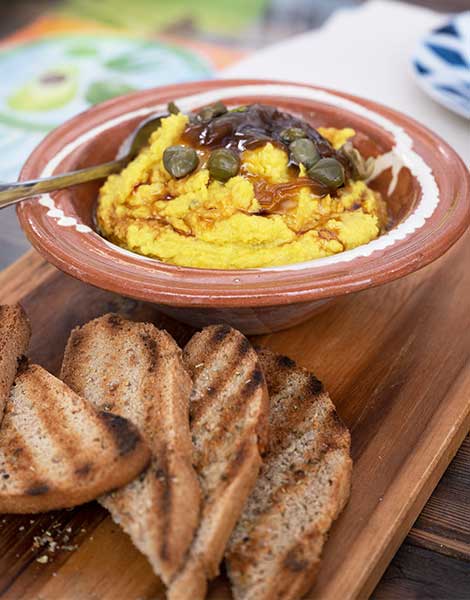
Pernera Vegan in Skala serves Mediterranean dishes made with love and organic ingredients.
© Julia Klimi
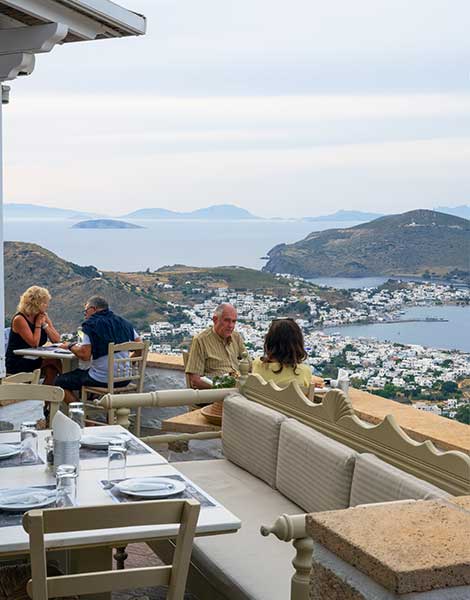
Loza Restaurant, offering breathtaking views over Skala.
© Julia Klimi
For something plant-based, try Pernera Vegan (Tel. (+30) 22470.316.87), also in Skala, where lovingly prepared Mediterranean dishes are made with organic ingredients and creative flair. At Loza (Tel. (+30) 22470.324.05), a terrace restaurant with a sweeping view over Skala, order the sea bream fillet with wild greens and enjoy Michalis’ warm hospitality.
The island’s most celebrated gourmet dining experience remains Benetos in Sapsila (Tel. (+30) 22470.330.34), a refined restaurant that uses produce from its own organic garden and fresh seafood supplied daily by fishermen from nearby Kalymnos.
A weekend on the Saronic Gulf’s...
From kafeneia serving souma and meze...
Experience Spetses in its most enchanting...
A decades-old ritual, Sikinos’ ferry dives...