Margarites: The Potters’ Village of Rethymno
In Margarites, Crete’s historic pottery village,...

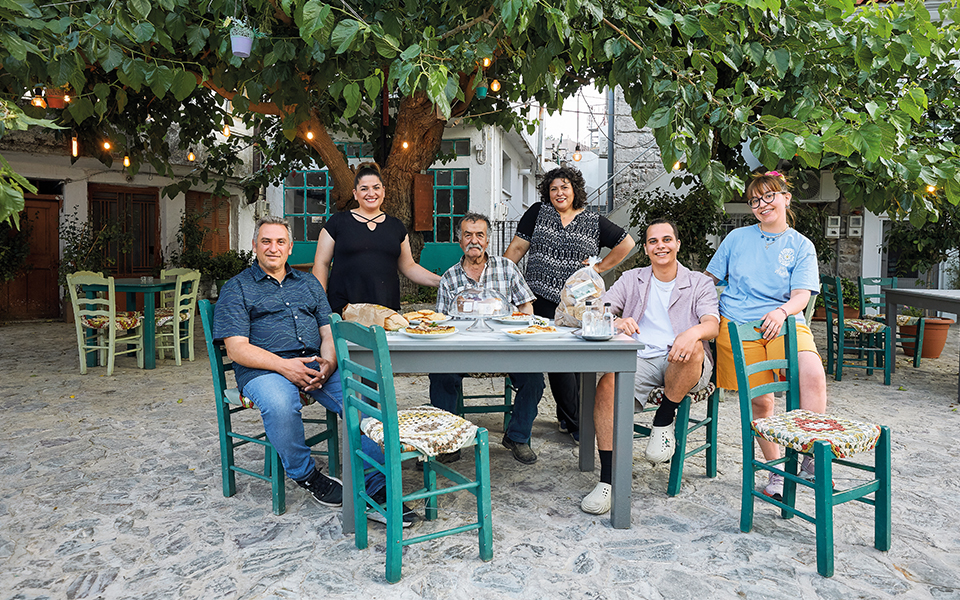
Nikos Georgoulis, Roula Giakoumi-Zannikou, Barba-Yiannis Apostolis, Evi Katsoni, Argyris Zannikos, and Eirini Kritouli are behind the five businesses operating in the village.
© Yannis Zindrilis
In the kitchen of Makelos, the village’s historic taverna, Mrs. Maria kneads flour and water with practiced ease, her hands deftly shaping the dough, while we watch. Everyone here in Pityos, a mountain village in northern Chios with just 45 permanent residents, knows Makelos for its handmade pasta, but today, there’s much more to discover.
We pinch off small pieces of dough. We roll the dough around spartoxylo – a slender stick cut from the hardy yellow-blossomed shrub that colors northern Chios each May – rub it gently between our palms, and watch it stretch into pasta. Once the stick is pulled out, what remains is a hollow piece of pasta. It’s not difficult, but it does require care. This hands-on cooking lesson is just one of several immersive experiences now offered in Pityos, a village making a serious effort to reinvent itself through alternative tourism. The goal isn’t just to attract visitors, but also to encourage former residents to come back for good.
In the 1950s and ’60s, Pityos was home to 600-700 residents and even had a school with 80 students. However, it is surrounded by mountains which force a channel of cold air through the village, making it the chilliest spot on the island. Each November, the shepherds that made up most of its population would embark on a two-day trek to southern Chios, where they spent the colder months. The village’s winter population dropped to about 250, with just 20 students left in the school. And when a new road was finally built, rather than sparking development, it only hastened the exodus.
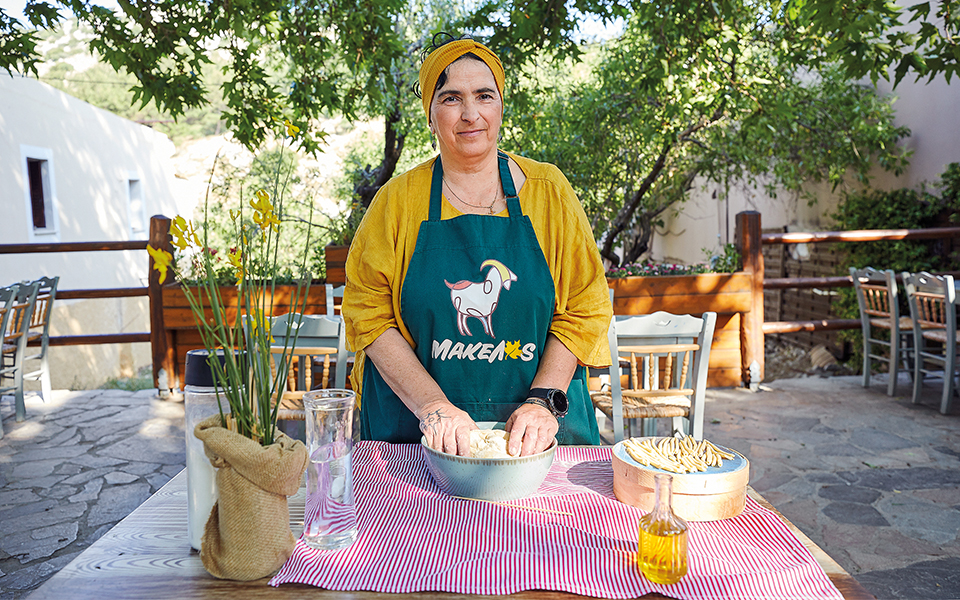
Maria makes handmade pasta in the yard of Makelos.
© Yannis Zindrilis
The population of Pityos eventually dwindled to just 36 inhabitants, with an average age of 75. And this is how it was when journalist Nikos Georgoulis found his way there. A native of nearby Pantoukios, he had already left both Athens and a career in journalism in search of a different kind of life. He found himself drawn to Pityos every time he passed through. When the lease for the old Makelos taverna – then closed for two years – came up for auction, he took it over. “Villages can’t be saved by subsidies,” he says. “Handouts disappear. What’s needed is a plan that generates real income, that makes a place attractive to new businesses. That’s how you get young people to work here and that’s how you stabilize the population.”
He rallied the villagers, and together they founded the social cooperative enterprise “Pityos Destination.” The vision? A grassroots revival rooted in local culture, offering meaningful activities, hands-on experiences, and traditional workshops. “Why not share the countless stories of this place and make use of local know-how? How to milk, make cheese, bake bread in the wood-fired oven, weave on the vertical loom, harvest olives and wild greens, prepare handmade pasta. That was the idea,” he explains.
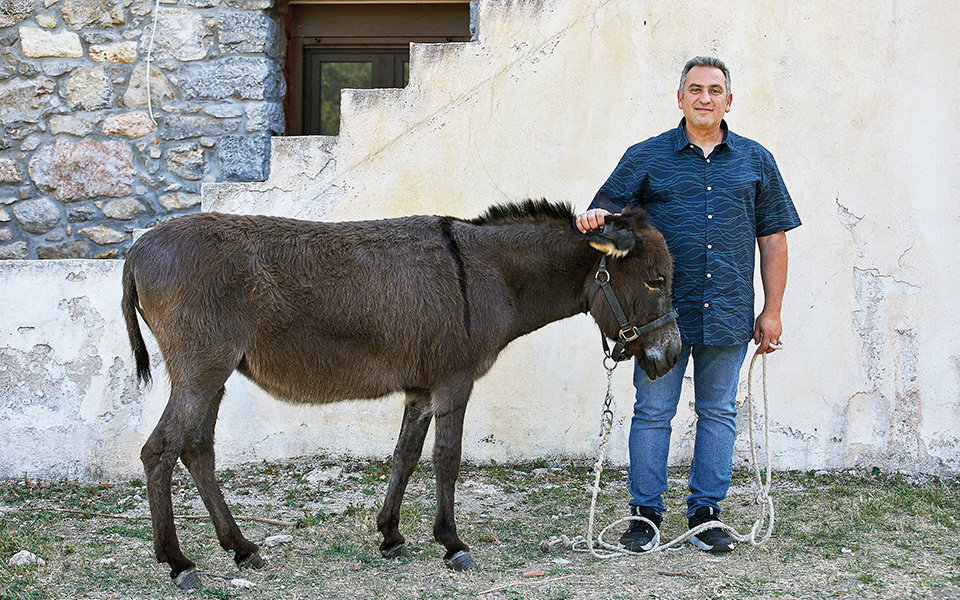
Nikos Georgoulis with one of the donkeys that will be hosted at the donkey park being prepared by the Social Cooperative Enterprise "Pityos Destination".
© Yannis Zindrilis
The success of Makelos, which now draws diners from across Chios, became the spark. But why should visitors come just for a meal when they could also experience the rest of the village?
“When I started, there was just Giorgis’ café, in a rather sorry state, and Yiannis’ bakery – a legendary figure here, now 82 years old – who has never left us without bread, not even on Sundays, New Year’s Day, or Easter. We’re the only village with fresh, hot bread every single day. Today, Makelos has grown into one of the island’s top restaurants. Giorgis’ café has been taken over by his niece Evi, who moved back permanently and is working miracles. Roula and Tolis converted the old school into a guesthouse with a grill and they’re doing excellent work. The youngest villagers, Irini (27) and Argyri (23), opened the Murtilo café-patisserie. We’ve even set up a donkey farm, which will be fully operational by the end of July. From 36 residents we have grown to 45. For the first time in decades, Pityos is beginning to thrive, with the average age finally falling.”
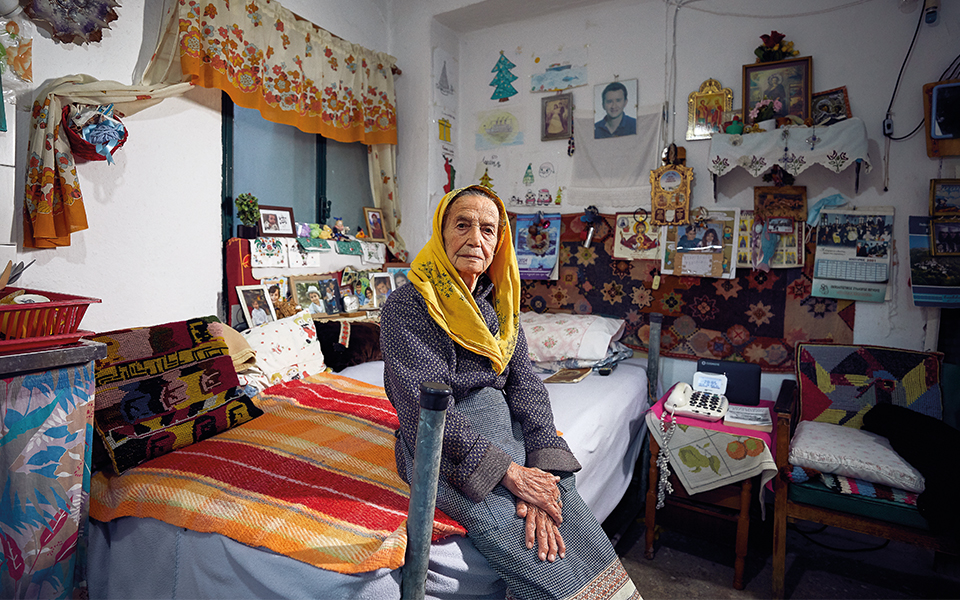
Anna Kolarou at her home in Pityos, one of the last grandmothers who still go about wearing the traditional headscarf and apron.
© Yannis Zindrilis
In 2019, the villagers organized the first Livestock Festival, held on the last weekend of July. Since then, they’ve hosted four more, and the event has become one of the island’s most beloved celebrations. Locals sang and danced their traditional songs, which were recorded with the help of a musicologist and then shared throughout the village via QR codes. That digital archive has since inspired another revival: traditional dance classes. They also launched Talking Walls, a graffiti initiative inspired by Homer and even secured a license to operate a travel agency to help develop tourism in northern Chios.
Workshops are steadily taking shape: Maria teaches the craft of handmade pasta, Yiannis the baker offers lessons in making wood-fired bread, his wife Despina teaches weaving on the vertical loom, and Olympia will teach cheesemaking. “For now, we’re running pilot programs for schools, and they’ve been very successful,” says Georgoulis. “By next year we’ll be ready to welcome adults. There’s more work ahead, but we’ve already laid the groundwork for Pityos to become a model for other northern Chios villages. Chios has no choice but to lead the way in developing a different tourism model. People think the island doesn’t want tourism, but the truth is, it doesn’t need it. That privilege allows us to evolve, to aim for something better, not just quick fixes.”
“That was the best thing that Nikos did,” says Evi, as we gather with the local entrepreneurs to share their homemade delicacies. “He’s the outsider who saw the place differently. At first, we didn’t quite believe him – we are stubborn people. He had to go through an initiation. But he swept us along, and now things are happening.”
In Margarites, Crete’s historic pottery village,...

Just a short distance from Athens,...

More and more Europeans retire to...

Anyone who has visited Tsintzina, the...