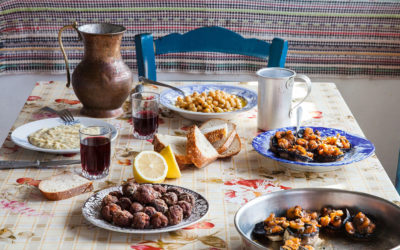
Recipe: Original Sifnos Chickpea Stew (Revithada) in a...
The signature dish of the island...

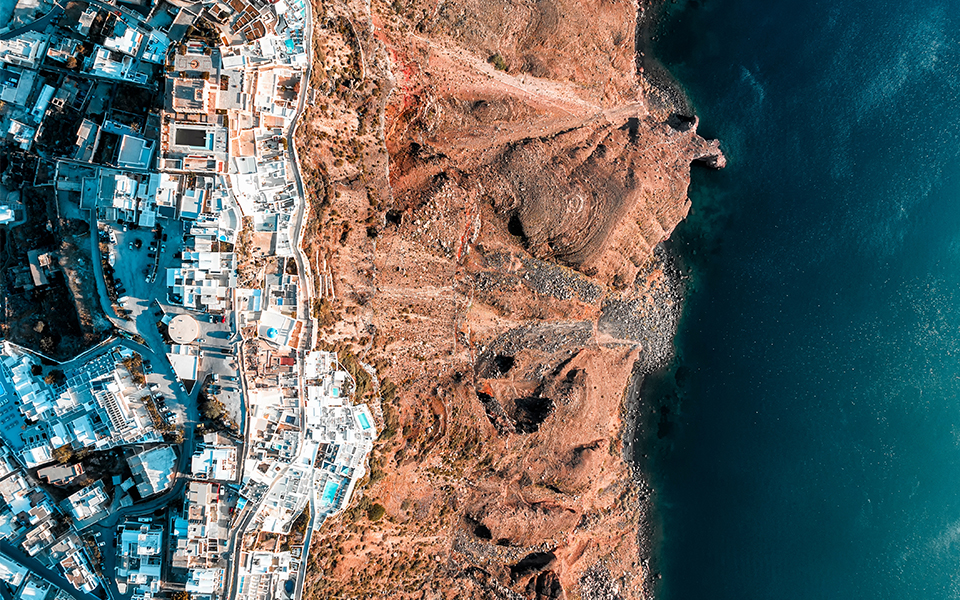
© Shutterstock
Caldera Beach is known for its breathtaking view. Surrounded by impressive cliffs, it’s the perfect spot if you want to swim while enjoying the sight of the villages in the distance, the volcano, and Aspronisi. Access is very easy, as you can reach it by car.
Vlychada Beach, located on the southern side of the island, is one of the most unique. The white cliffs, shaped by volcanic forces, form an otherworldly landscape. It’s ideal if you’re looking for peace and relaxation. Vlychada connects with the smaller Eros Beach; walking along the coast, you might even come across riders on horseback by the sea.
Koloumbos Beach lies on the northeastern side of Santorini and takes its name from the nearby underwater volcano. It’s worth visiting to admire its impressive rock formations. It is often windy, making it a great spot for fun in the water.
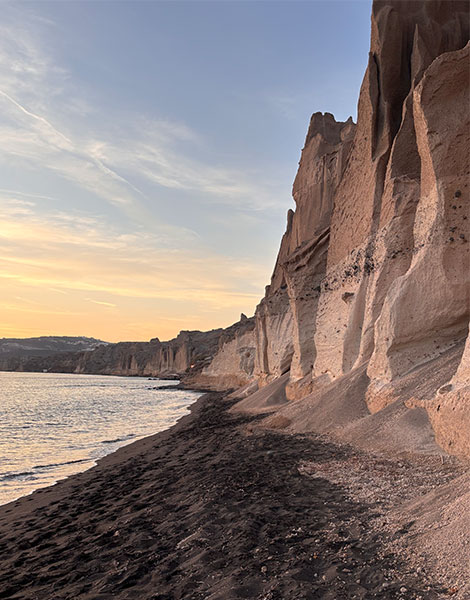
Vlychada Beach.
© Eva Loudi
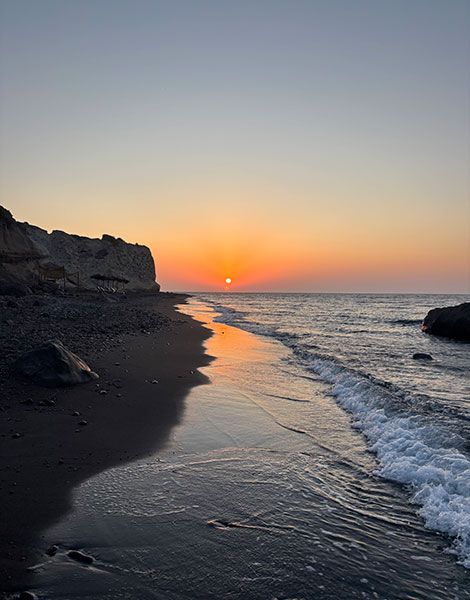
Sunset at Kouloumpos Beach.
© Eva Loudi
The stone steps from the church of Aghios Haralambos will take you to the picturesque courtyard of Metaxi Mas, a traditional tavern in Exo Gonia. The owners always welcome guests with rusks, raki, cheese, and olives.
Krinaki is a small, authentic tavern in the village of Finikia, nestled among old cave houses and half-ruined canavas. The courtyard tables offer an unobstructed view of the village. Its simple menu showcases thoughtfully prepared dishes and rich local flavors.
Wander the winding alleys of Vothonas to find Vothonaki, an intimate space with just a few tables, mellow lighting, and a curated music playlist. It’s a perfect place to enjoy home-cooked meals and traditional Santorinian dishes in a quiet setting.
Craving sea views? Head to Lava in Perissa, where you can dine almost at the water’s edge. If available, try the stuffed cherry tomatoes, a flavorful local delicacy.
For a timeless experience, visit Aktaion restaurant in Firostefani, just beside the church of Aghios Gerasimos. With its vintage interior and local recipes, it feels like stepping into another era.
All of the above taverns also offer vegetarian options.
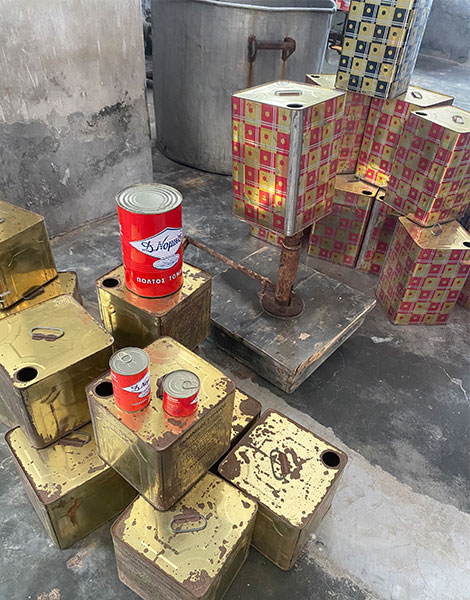
At the Tomato Industrial Museum.
© Eva Loudi
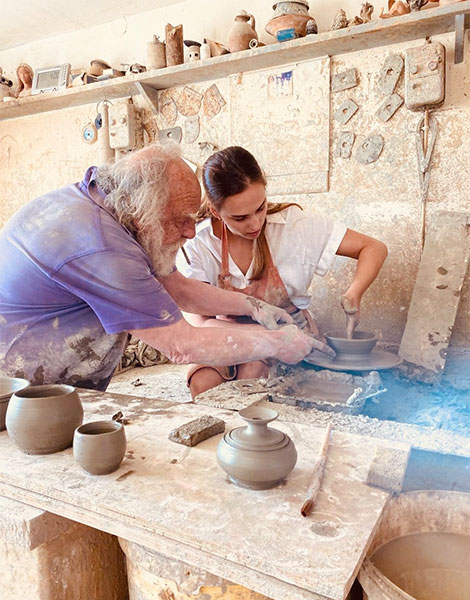
Pottery class with Andreas Makaris.
© Eva Loudi
For those who want to dive deeper into the culture and traditions of the island, Santorini offers unique activities that are well worth experiencing. At the old D. Nomikos tomato factory (Tel. (+30) 22860.851.41 or [email protected]), transformed into the Tomato Industrial Museum in 2014, you can explore the original machinery and the process of making tomato paste. The tour includes an audio guide and a short film with stories from former workers. At the end, you’ll have the chance to taste the tomato paste, create your own can, and seal it using an old canning machine. At the museum entrance, there is also a café where you can sample local products.
In Megalohori, you can take pottery lessons at the workshop “Homa & Nero” (Earth & Water). There, Andreas Makaris, one of the island’s most renowned ceramists, will introduce you to the art of ceramics while also sharing stories about old Santorini. A warm welcome with a glass of wine or tsipouro, authentic conversations, and his unique sense of humor make the class an unforgettable experience.
In the same village, you’ll also find Symposion, a cultural center housed in an early 20th-century winery. Here, you’ll enjoy an immersive experience that blends music, art, and mythology, through interactive tours, exhibitions of traditional musical instruments, workshops, and original performances. The program is designed for both adults and children, making Symposion an ideal choice for the whole family.
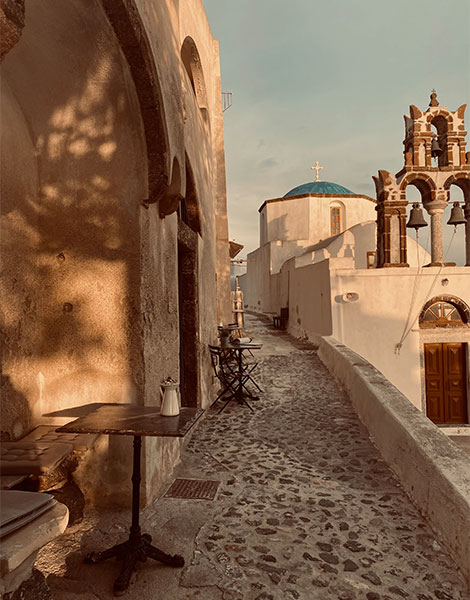
Stroll through the alleys of Pyrgos.
© Eva Loudi
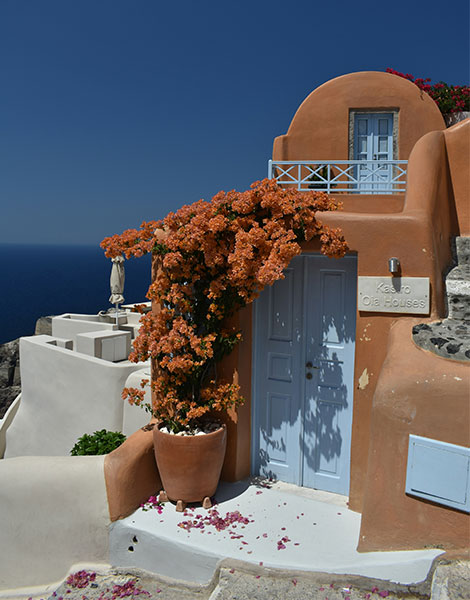
Oia
© Unsplash
Just beyond the modern village of Akrotiri lies one of the Aegean’s most significant prehistoric settlements. The prehistoric city of Akrotiri is truly unique, showcasing the advantages that made Thira one of the most significant prehistoric centers of the Aegean. The island’s strategic position and proximity to Crete played a decisive role in its prosperity and development. The city of Ancient Thera was founded in the 8th century BC by Dorian settlers and remained, until the end of antiquity, the urban, administrative, and religious center of the city-state of Thera. Keep in mind that it is built on the hill of Mesa Vouno, so it’s best to visit on a cooler day. The view from there is truly breathtaking.
Don’t miss the open-air cinema in Kamari. Sun loungers and director’s chairs, a cocktail bar, nachos and popcorn are all part of the experience. Arrive early, as there are no reservations and seats fill up quickly.
While Oia may be famous for its sunsets (and the crowds that applaud them), quieter alternatives abound. Along the road to Akrotiri, there are many great spots to enjoy the view, with highlights including the Akrotiri Lighthouse or the Venetsanos Winery, where you can watch the sunset with a glass of wine in hand. Alternatively, climb to Pyrgos Kallistis Castle, a medieval hilltop village with narrow alleys and panoramic vistas that capture the island’s full beauty at dusk.
How to get to Santorini
Travelers can reach Santorini from Athens either by air or sea. The quickest way is a direct flight from Athens International Airport, which takes about 45–50 minutes. Alternatively, ferries depart from Piraeus Port and Rafina Port, with high-speed ferries taking around 4–5 hours and conventional ones about 7–8 hours.
Where to stay
Santorini offers accommodations for every budget, but for something truly special, consider Aghios Artemios, a restored 15th-century settlement. Formerly used by pilgrims, the vaulted rooms now provide a unique, tranquil stay in traditional island architecture.
The signature dish of the island...

Locals share their memories of behind-the-scenes...
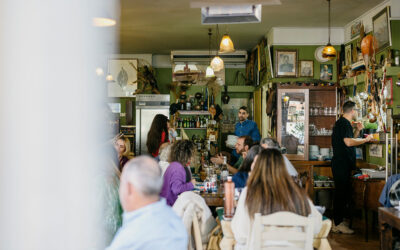
Explore the tavernas of Nikaia, Moschato,...
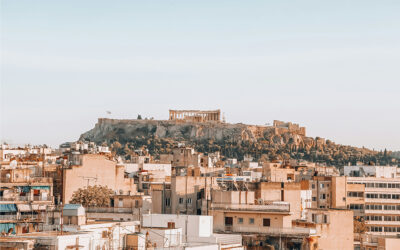
Six Athenians tell us about their...