Weekend Escape: Kalambaka and the Monasteries of Meteora
A perfect weekend getaway: wander among...

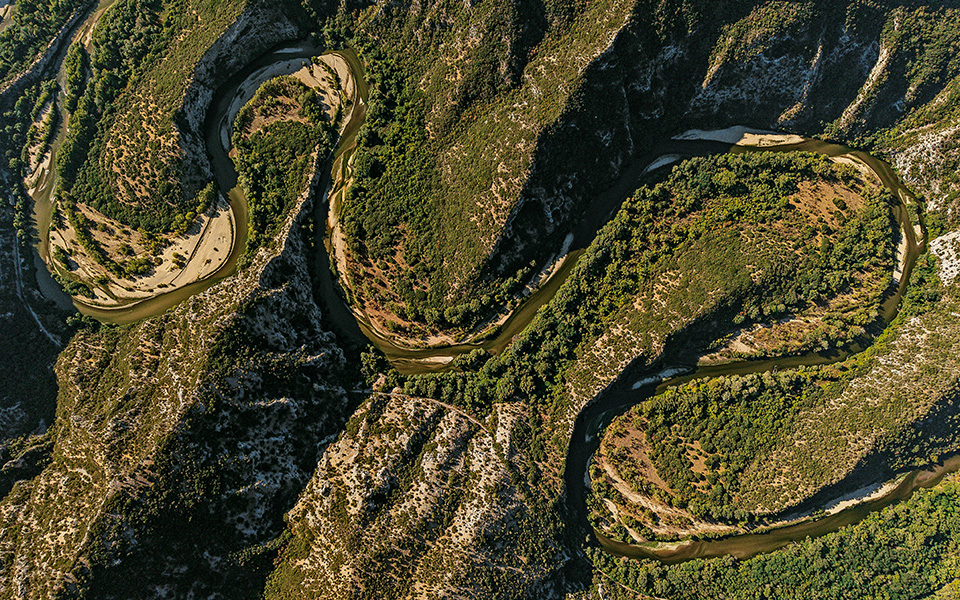
The famed meanders of the Nestos River.
© Dimitris Tosidis
Wild horses have taken over the abandoned village of Imera; they roam the riverside forests and the slopes of Mt Tsal, and galloping away the moment they sense human presence. In the Nestos Delta, where farm workers tend to kiwi orchards, jackals number in the hundreds. In the middle of the Nestos River itself stand herons, calmly fishing, while at Livera the Forest Service lays out a feast for the vultures. Eels ply the river waters, searching for a path to the sea, while at Komnina near the river banks, tavernas serve Black Sea delights such as kremmydofoustoura and lyres.
Of all these tales that I have heard and from all that I have seen, I cannot decide which is the most beautiful story connected to the Nestos. A protagonist in the lives of all in this area, the great river, worshipped in antiquity as a god, springs from Bulgaria’s Rila Mountains, crosses the regions of Drama and Xanthi and, after a journey of 240 kilometers, empties into the Thracian Sea at the border with the regional unit of Kavala.
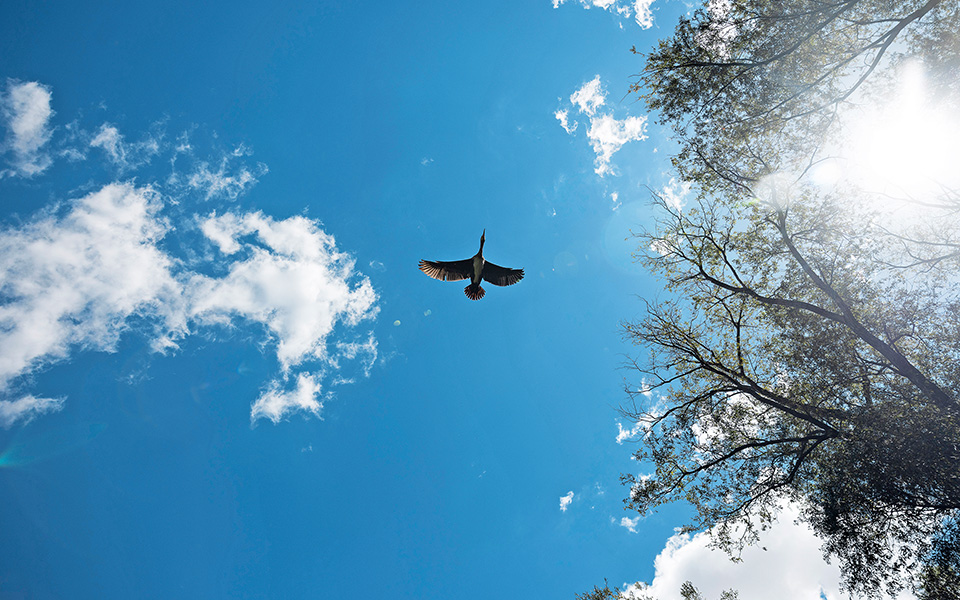
A cormorant in flight over the river.
© Dimitris Tosidis
Its cliffs are nesting sites for vultures and birds of prey, and playgrounds for climbers; its forests provide refuge for woodpeckers, pheasants and campers. Its waters quench the thirst of both wild and domestic animals, generate energy through the Thissavros and Platanovrysi hydroelectric dams, create fertile soils in the plains of Chrysoupoli and Xanthi, and, via the irrigation dam at Toxotes, provide water to countless agricultural fields. The narrow section of the river known as the Straits is famed for its beauty, as is the forest of Galani, while the vast delta system – once 135,000 acres before its reduction in the 1950s for agricultural expansion – remains one of Greece’s most important wetland ecosystems and is home to the renowned Kotza Orman Forest.
People have always been drawn here – farmers, livestock breeders, entrepreneurs and, in recent years, birdwatchers and other tourists. They are nourished by the river, both literally and metaphorically.
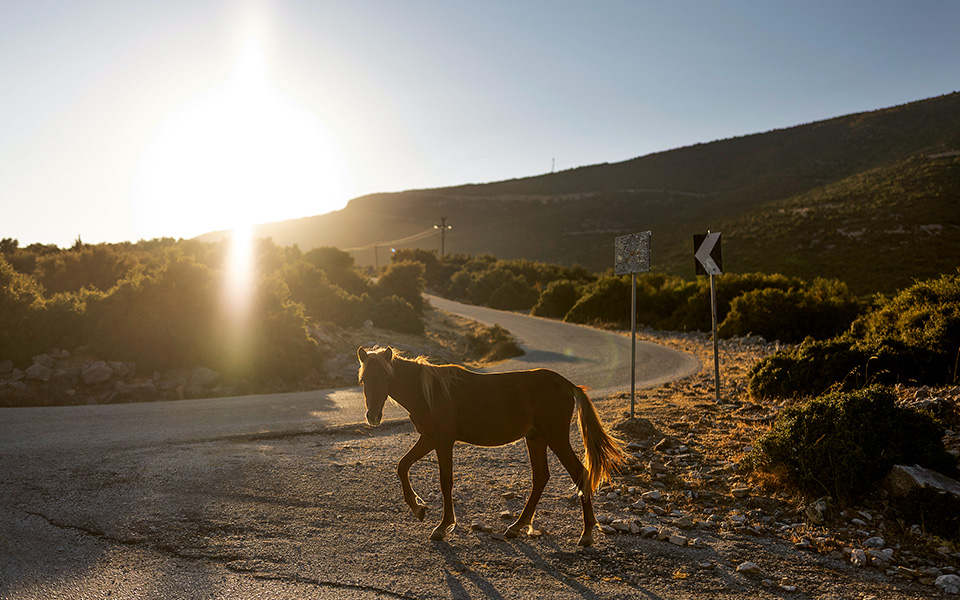
The wild horses that roam freely often appear before hikers and drivers.
© Dimitris Tosidis
According to O.F.Y.PE.K.A. (the Natural Environment and Climate Change Agency), 21 species of fish live in the Nestos, six of them endemic. A total of 277 bird species have been recorded, including Greece’s only population of wild common pheasants, which inhabit the delta. Otters, wolves, roe deer and the largest number of jackals in the country also make the river region their home. I’ve lost count of how many hoopoes I’ve seen during my hikes here, nor can I tally the number of horses that I’ve encountered: animals released into the wild in the 1960s that now live in a semi-feral state. I searched in vain for the pair of golden eagles that are known to nest in Stavroupoli, but in the Delta I witnessed, right before my eyes, a dramatic chase of a hare by a jackal.
The most captivating story is might be the one about the vultures that I heard in Stavroupoli, at the Reception Center of the Forest Service. Panagiotis Vafeidis, Head of Forest Protection, leads a determined effort to protect local vultures, a species under threat. Until 2012, the Nestos was home to the largest vulture colony in mainland Greece and one of the most important in the Balkans, with more than 15 breeding pairs. Then someone laced a dead horse with poison, perhaps intending to kill wolves, foxes or even bears; instead, almost all the adult vultures succumbed, and the colony collapsed.
In 2019, the Forest Service, together with several partners, joined an INTERREG program and constructed a feeding station to attract and support a new colony, and an observation hide from which to monitor them.
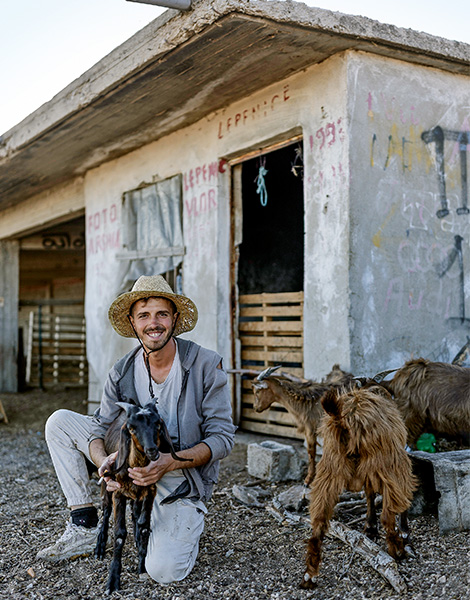
On the slopes above the river, you will also encounter livestock farmers with their animals.
© Dimitris Tosidis
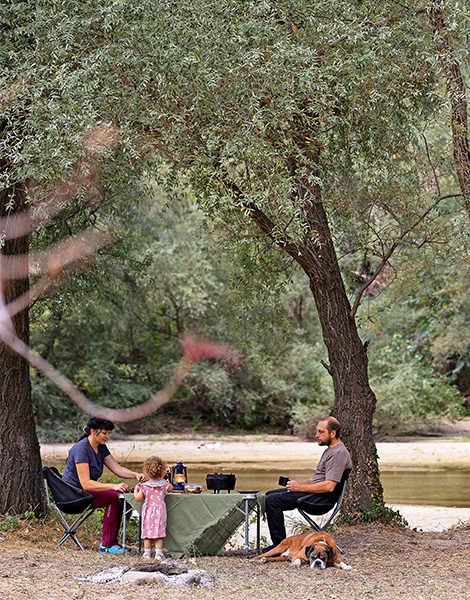
Ilias Germantzidis, Ralou Vlachopoulou, little Anny, and four-legged Hector having a picnic on the banks of the Nestos.
© Dimitris Tosidis
Six years later, the population has recovered to approximately fifty percent of its previous size, with 25 individuals once again flying over the area, including eight nesting pairs. The favorable climate, the cliffs, and the availability of water create an ideal refuge for them. “The feeding simply accelerated the process. Unfortunately, poisoning incidents are very common in Thrace, and scavengers always pay the price. It’s unfair, because species like the wolf, for example, can replenish their numbers quickly, while vultures reproduce late in life and lay only one egg. Our feeding station, which is supplied with 200-400 kilos of meat per week, also supports migratory species that stop here to rest, such as the Egyptian vulture, as well as young native vultures; the latter do not settle until the age of four, when they begin to breed and nest,” Vafeidis said.
The Forest Service is open to the public. It screens informational videos, welcomes school groups, and operates a remote camera system that allows visitors to watch the vultures feeding in real time. Together with the Forest Service of Didymoteicho and several other partners, it also participates in a cross-border LIFE program aimed at restoring the black vulture population.
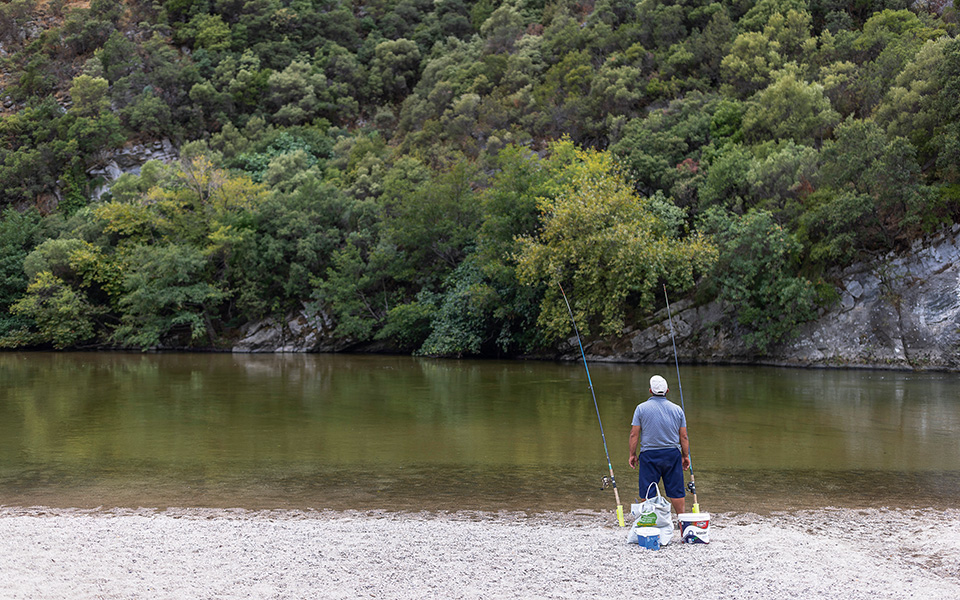
Fishing on the Galani riverside beach, a magical landscape where many set up tents and swim in August.
© Dimitris Tosidis
Within the waters of the Nestos, another major initiative is underway in support of the river’s eels. The Lifeel project is taking place in both Greece, on the Nestos, and in Italy, on the Po. In Greece, the partner organization is the Fisheries Research Institute (FRI) of the Hellenic Agricultural Organization Demeter, with ichthyologist Argyris Sapounidis as scientific lead. As part of the program, satellite transmitters were attached to 12 eels from the Nestos to monitor their journey to the Sargasso Sea, the mysterious destination where they travel to reproduce. (For centuries, all European eels have reproduced and died there; the newborn eels, carried by ocean currents, eventually find their way back.)
The project isn’t limited to tracking: responding to an EU recommendation urging all member states to facilitate eel migration, the FRI installed Greece’s first pilot metal fish ladder at the Toxotes dam. Designed specifically for eels, it restores connectivity between the upstream and downstream sections of the river, opening a pathway for young eels to enter the river system.
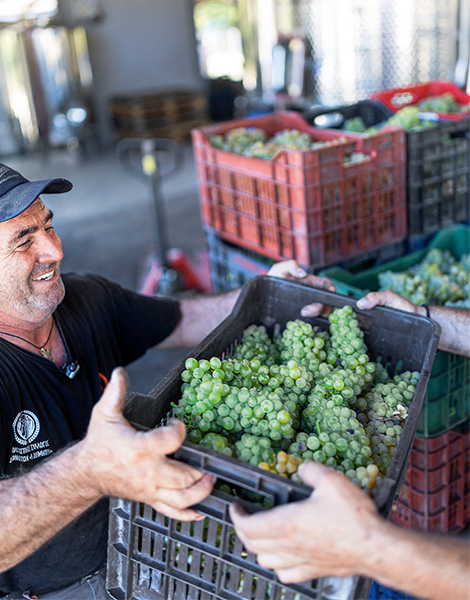
In the midst of the grape harvest at Passas Winery in Stavrochori.
© Dimitris Tosidis
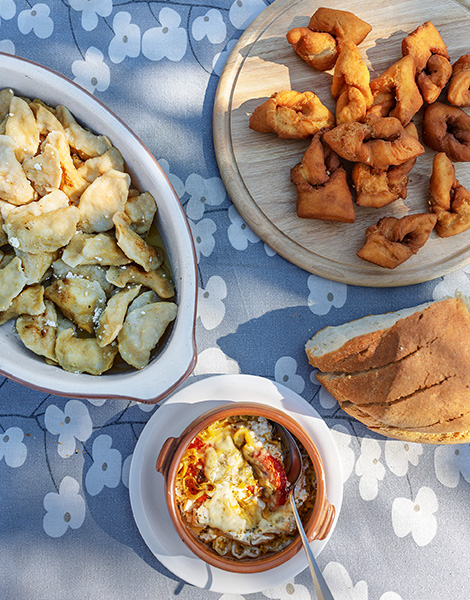
A Pontic spread with ôtia and varenika pasta by Gefsi Touloumidi, in Komnina.
© Dimitris Tosidis
“The Nestos River determines the quality of our wine. It creates cold conditions and huge differences between daytime and nighttime temperatures. This leads to smoother ripening of the vines and better balance between sugars and acids. On the other hand, the increased humidity affects us negatively, but we apply specific cultivation practices to improve ventilation,” said Giorgos Papadopoulos, owner of Passas Winery in Stavrochori, a village of 28 residents. His vineyard, which lies just 300 meters from the river, is home to five grape varieties, including the local Mavroudi, and Papadopoulos is working to open the winery to visitors in order to attract people to the area villages.
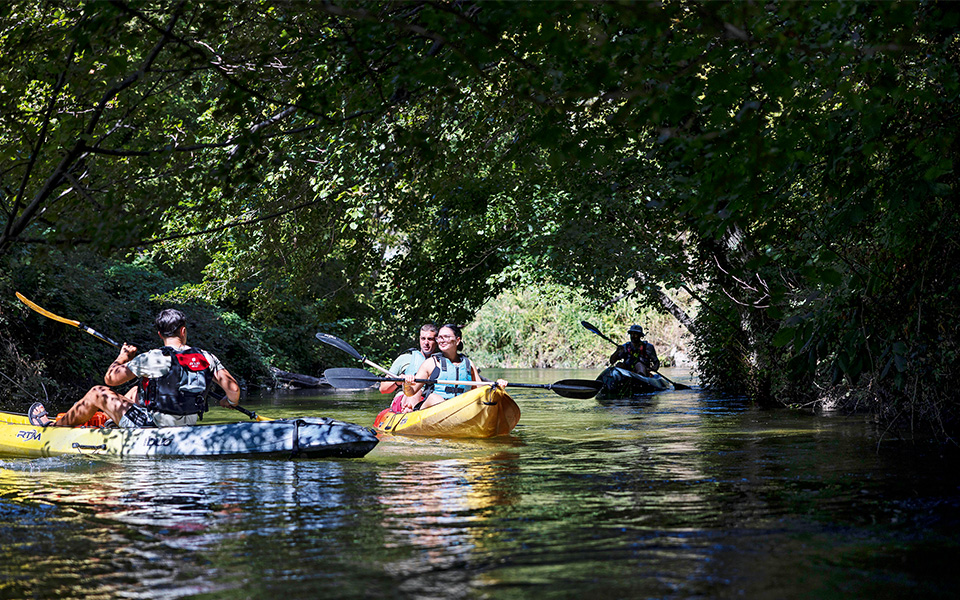
Rafting on the calm waters of the Nestos is a unique experience.
© Dimitris Tosidis
The same goal is shared by Gefsi Touloumidi in the village of Komnina, populated by descendants of Black Sea Greeks, where she runs a small honey-producing business under the brand name “Meligeysis.” Wishing to promote both tourism and population growth here, she chose to remain in the village with her family, where she produces and processes honey. She organizes tastings, presentations, visits to the hives, and workshops on how to make beeswax ointments; she plans to offer apitherapy as well. Proud of her bees – which depend on water from the Nestos for their survival – and of the traditions of her ancestors, who came from Santa on the south coast of the Black Sea, she serves ôtia or tsirichtá, traditional Black Sea dough products, with her blossom honey. This honey, dark in color thanks to the river’s flowers and herbs, is her signature variety.
Although the area around the river and the villages there (known collectively as the Nestohoria) are charming places to explore, they are not touristic; it is Galani, with its recreation area, that attracts the greatest number of visitors to the region. There, since 2010, Ilias Michailidis (at present through his company Riverland) has been offering kayaking and other activities and watching visitor numbers grow steadily. “When I started,” he told me, “this type of tourism was in its infancy. Just before the pandemic, the area’s popularity started to rise, and immediately afterward, with people looking to return to nature, it became a hot destination. But Nestos remains authentic, and we must preserve it as such. If we approach it purely as a business and scale it up, it will no longer be what we know.”

The Kotza Orman Forest once covered 125,000 stremmas, but due to land clearing in the 1950s only 4,500 stremmas remain today.
© Dimitris Tosidis
And indeed, in August the river’s tranquil nature is threatened, as both the riverside beach and the aesthetic forest are overrun with tents and swimmers. Even the small snack bar at the riverbank beach, a useful presence constructed in harmony with the landscape, should not be playing music (especially that kind of music, and at that volume).
Eleni Petropoulou, an engineer and the owner of the guesthouse Kokkymelon in Toxotes, also supports keeping things small-scale. Her guesthouse is housed in the former residence of a prominent Ottoman tobacco merchant. She converted the building in 2008 for the simple purpose of saving it, at a time when tourism had not yet reached Nestos. Since then, she has seen nothing but growth and a trend of visitors turning away from the coast of the regional unit of Xanthi in search of other experiences.
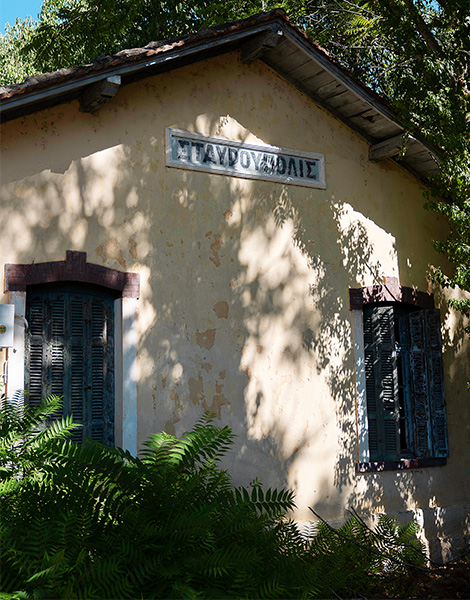
The decommissioned railway station of Stavroupoli.
© Dimitris Tosidis
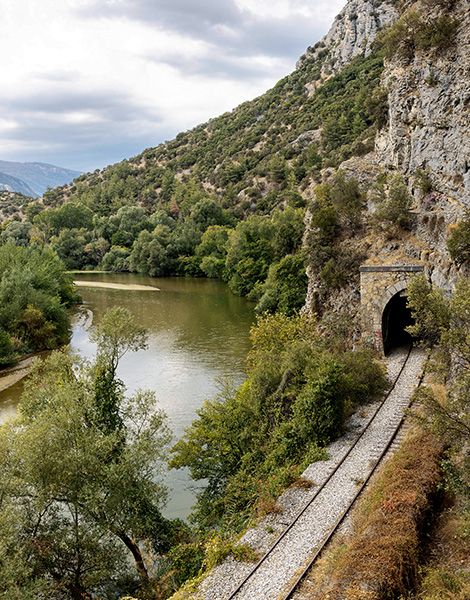
The hiking trail alongside the railway tracks passes by bridges, train stations, and impressive stone-built tunnels.
© Dimitris Tosidis
One such activity might be hiking the Nestos Trail, either from Stavroupoli or Kromniko to Galani. As I walked through the Straits, at times below towering cliffs, other times in riverside forests, and now and then alongside the railway line with its bridges, stations and impressive tunnels, it dawned on me that this is one of the most beautiful hiking routes in Greece, and oddly still not well known. As for walking near the tracks, there is no danger; the passenger train that once ran the Alexandroupoli-Thessaloniki route stopped operating during the pandemic, and the small Nestos Environmental Train had ceased running even before that. With their disappearance, this corner of the country lost not only a vital means of transportation for locals but also a unique experience for visitors.
Remarkably, older options are still in place. Ilias Germantzidis, co-owner with his wife Ralou Vlachopoulou of the cartographic company Route, which also works on restoring old trails, said of the route that I took through the Straits: “This is the route the old tobacco traders used; parts of the old cobbled paths are still preserved.” The couple, who conducted the study for the restoration of that route, have also created a map used in educational programs carried out along the Nestos. With their two-year-old daughter, they recently moved house from Xanthi to Toxotes, motivated primarily by the natural beauty of the Nestos area. They came, they told me with a smile, so as to be nourished by the Nestos, too, both physically and mentally.
An exchange between Gefsi Touloumidi and Ilias Michailidis seemed to capture the spirit of this place, as she asked him, acknowledging his foundational role in promoting local tourism, “What would this Nestos region be without you?” To which he replied quite sagely: “What would I be – and what would any of us be – without the Nestos?”
A perfect weekend getaway: wander among...

Where tropical fruit trees thrive beside...
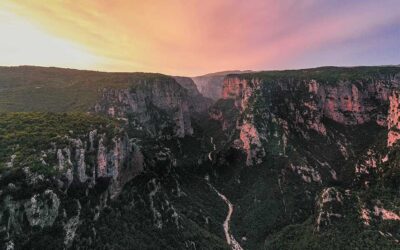
One of the most impressive canyons...

A springtime haven of wildlife, scenic...