Beyond the Guidebook: Thessaloniki According to 6 Insiders
Six locals share their favorite bars,...

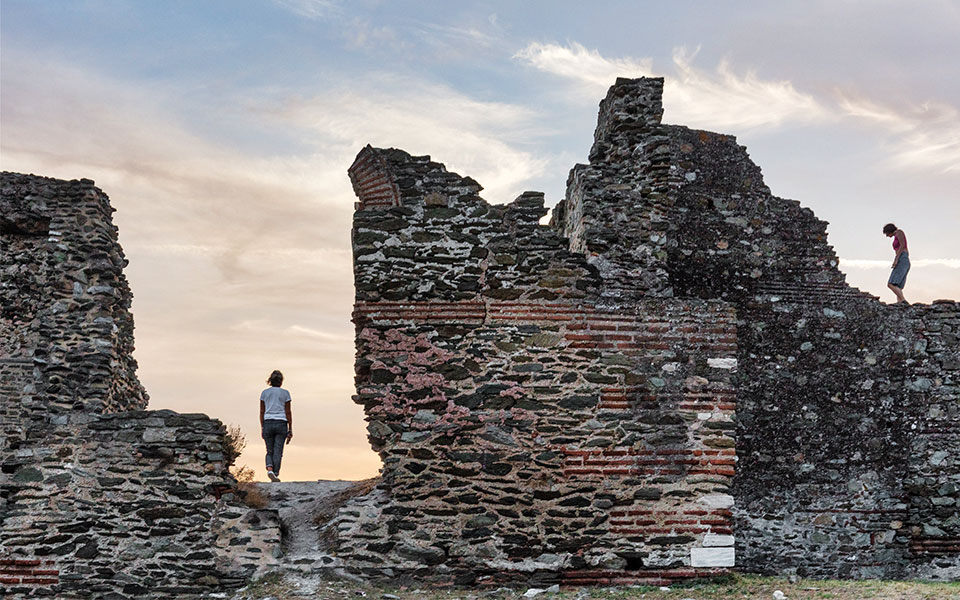
The view from Thessaloniki’s Byzantine walls is truly unique.
© Perikles Merakos
The Thessaloniki International Film Festival may still be a few weeks away (this year it runs from October 30 to November 9), but autumn is the perfect time to visit the city for more than just cinema. The International Fringe Festival of Performing Arts takes place October 8-12 across eight venues, while the Reworks Festival (September 24-28) fills the city with electronic music. Around the same time (September 25-28), the Thessaloniki Beer Festival takes over the grounds of the International Exhibition Center.
Just behind the seafront on the city’s southeastern side are the districts of Exoches and Depo. The name Exoches (“Countryside”) harks back to the early 20th century, when Thessaloniki was still concentrated around its center and this area was largely farmland and open space. Soon, grand villas began to rise here, shaped by the architectural movements of the era. The area still known as Depo – from the French pronunciation of that term – was the site of the tram depot when Thessaloniki’s horse-drawn public transportation system began operating in 1893.
Start your walk at the Yeni Mosque, built in 1902 by Italian architect Vitaliano Poselli, and continue down Vasilissis Olgas Avenue, where most of the Exoches mansions are located. Among them are the former residence of Turkish merchant Osman Ali Bey, today housing the Center for Byzantine Research; the Villa Kapandji; the Villa Mordoch; and the Villa Allatini. While most are not open to the public, the structures are striking even from the outside. Need an energy boost? Stop along Vafopoulou Street for a coffee at To Oraion Depo (18 Vafopoulou) or a meal at Ouzeri Antheon (7 Vafopoulou).
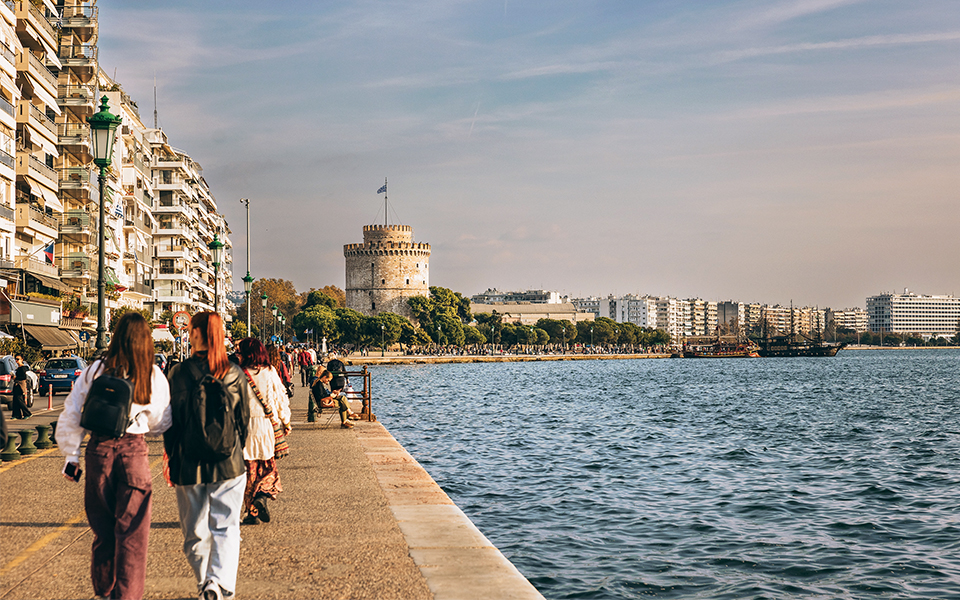
View of the seafront, with the White Tower in the background.
© Olga Deikou
The Archaeological Museum of Thessaloniki is itself a listed monument, a prime example of 1960s modernism designed by acclaimed architect Patroklos Karantinos. Inside, it houses one of the largest archaeological collections in Greece, with rotating selections and thought-provoking temporary exhibitions. The permanent displays include artifacts from across Macedonia as well as items testifying to the city’s historical evolution.
Running until December, the exhibition In the Cave: Stories from Darkness to Light presents 296 objects spanning from the Paleolithic era to modern times, discovered in 30 caves. (6 Manoli Andronikou, open daily 09:00-17:00 until November 1, when it closes on Tuesdays. General admission €8).
Just outside the city center, in Thermi, NOESIS – The Science Center and Technology Museum draws visitors of all ages with its wide array of activities. Explore the Technology Museum, which includes numerous interactive exhibits, or catch a 3D screening at its state-of-the-art theater. (At the 6-km marker on the Thessaloniki-Thermi highway, Tue-Fri 09:00-17:00, Sat-Sun 11:00-19:00, closed Mondays; admission €12, with discounts for children and family tickets).
View this post on Instagram
It’s common to see lines outside Diagonios (2 Fanarioton Sq.), as diners wait for a table at this popular eatery. The house specialty here is the succulent soutzoukakia (spiced meatballs), served with a sprinkle of bukovo chili flakes on the side.
Down in the Ladadika district near the port, the buzz is constant at Bakaliarakia tou Aristou (4 Fasianou), where crispy, golden-fried cod and french fries are served on parchment paper. The menu also features smoked mackerel and a variety of meze.
Thessaloniki is equally famous for its gyros, wrapped in generously sized pita or bread rolls. At Kostas (15 Emmanouil Fili, Pylaia), the pork gyros is particularly flavorful, and the expertly grilled chops and patties are outstanding as well.
Δείτε αυτή τη δημοσίευση στο Instagram.
The ON Residence (5 Nikis, onresidence.gr) is housed in a listed 1926 building designed by French architect Jacques Mosset to house the offices of the “Olympus-Naoussa” brewery; the building was abandoned for over 20 years before reopening as a hotel in 2022. Its 60 rooms, some with sea views, offer all modern comforts and conveniences.
Another city landmark, the Electra Palace (9 Aristotelous Sq., electrahotels.gr) presides over the city’s central square. It stands opposite the Olympion cinema, the main venue of the Thessaloniki Film Festival. Expect stylish comfortable rooms, impeccable service, and views across the city and sea.
For those who favor minimalist aesthetics, The Modernist (32 Ermou, themodernisthotels.com) occupies a renovated 1920s building in the heart of the city and offers sleek, design-driven accommodation in a prime central location.
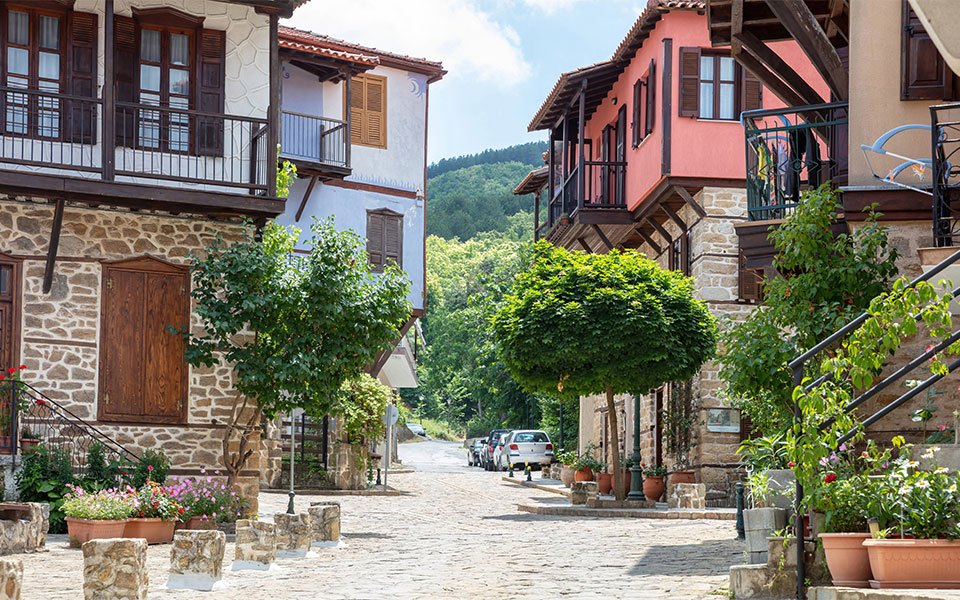
Arnaia
© Shutterstock
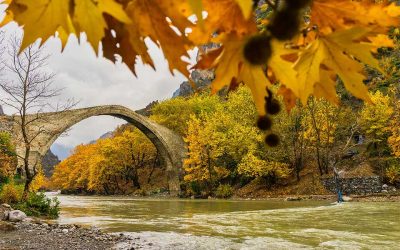
The lush slopes of Mt Holomon, blanketed with fir trees and dotted with picturesque villages such as Arnaia, lie about 75 kilometers to the east of Thessaloniki. Roughly the same distance separates the city from Lake Kerkini in the north, with its tranquil waters and charming lakeside villages.
The shelves of downtown city shops are full of local flavors: premium nuts from Vatikiotis (24 Vatikioti), Pontic cheeses from Rayan (13 Balanou), fiery bukovo chili, and an array of fragrant spices. For full-fat sheep’s milk yogurt, you’ll have to join the line outside Dorkada (66 Kassandrou), and the same holds true for the namesake dessert at Armenovil (102 Mitropoleos).
Thessaloniki isn’t just its bustling center and waterfront. Explore its suburbs with a seafood feast by the beach in Peraia or Kalamaria or a walk through the Seih Sou Forest, or other city neighborhoods with a wander down the narrow lanes of Ano Poli (“Upper Town”) or a stop for a cup of coffee with a view in the Kastra district.
Six locals share their favorite bars,...
From olive presses and traditional costumes...
The Thessaloniki-born winemaker welcomes us to...
Discover Greece’s islands in September with...