Stani: The Dairy Shop That Holds All of...
Full of delicious flavors and happy...

© Konstantinos Tsakalidis
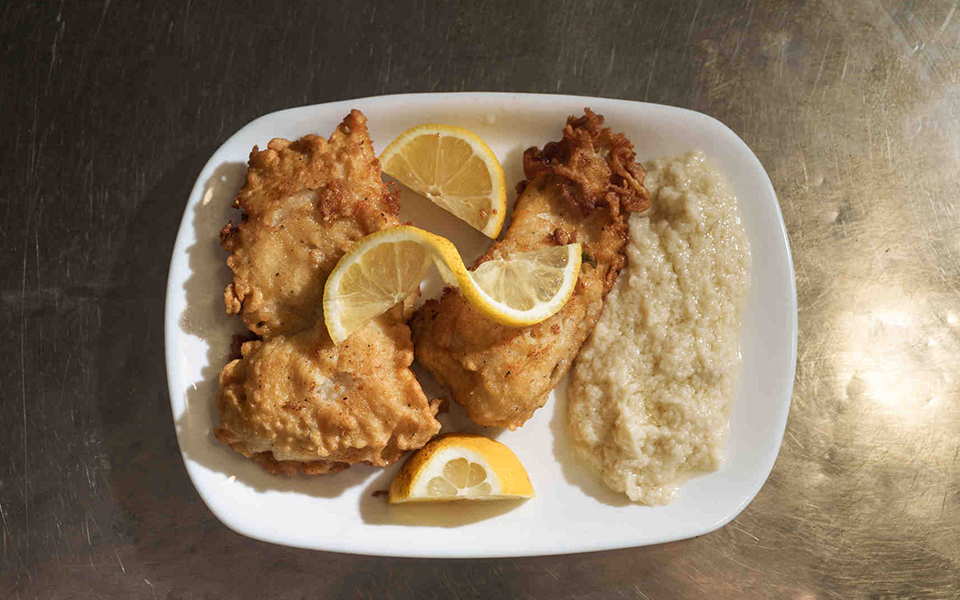
On the morning of March 25, Greece hums with celebration. Blue and white (“γαλανόλευκη”) flags ripple from balconies, schoolchildren march through town squares, and brass bands echo down village streets. But beyond the parades, military flypasts, and patriotic pride, another unmistakable signal fills the air: the scent of batter-fried cod sizzling in hot oil, drifting from kitchens and tavernas alike.
It’s a dish that appears, as if by magic, on just about every table across the country – crispy fried “bakaliaros” paired with a hearty dollop of pungent “skordalia,” the beloved garlic dip. But why this particular meal on Greece’s most important national day?
The answer lies in the unique nature of March 25 itself. It is, in fact, a double celebration. On the one hand, it commemorates the outbreak of the Greek War of Independence in 1821, when Greeks rose up against Ottoman rule. On the other, it marks the Feast of the Annunciation, one of the most joyful days in the Christian calendar, when the Archangel Gabriel announced to the Virgin Mary that she would bear the Son of God.
This religious dimension is key to understanding the food.
The Annunciation falls during Lent (“nistia”), the great fasting period leading up to Easter, when the faithful traditionally abstain from meat, dairy, and fish (in other words, anything with a backbone). Yet March 25 is one of the rare exceptions: fish, along with oil and wine, is permitted in celebration of the feast. The only other comparable day is Palm Sunday, marking Christ’s triumphal entry into Jerusalem. For those observing the fast, this makes the Annunciation a welcome – and eagerly anticipated – moment of relief.
Despite Greece’s vast coastline and myriad islands, for much of its history fresh fish was far from guaranteed. Many communities lived inland – thanks to near constant pirate raids – or in mountainous regions, where access to seafood was limited and often prohibitively expensive. Preservation, too, was a constant concern.
Enter salted cod – “bakaliaros.” Imported from the Atlantic coasts of northern Europe as early as the 15th century, it was inexpensive, easy to transport, and, crucially, long-lasting. In an age before refrigeration, it became the fish of the people.
By the time March 25 came around each year, salted cod was often the only practical way for households across the country to mark the Annunciation with fish. Over time, it became firmly embedded in the day’s traditions – long before the anniversary of the 1821 Revolution gave the date its national significance.
And then there is “skordalia.” This unapologetically bold garlic dip – typically made with puréed potatoes (or sometimes bread or nuts), generous amounts of olive oil, and a splash of vinegar – provides the perfect counterpoint to the crisp, salty fish. Its punchy flavor is part of the appeal, but garlic has long held a place in Greek folk tradition too, associated with strength and vitality. Revered for its antimicrobial properties, it has also been valued as a natural defense against illness – and, when paired with a plate of salt-laden cod, it may even help to lower blood pressure.
Today, the pairing feels inseparable. Whether served at home, in a neighborhood taverna, or enjoyed outdoors alongside the day’s festivities, “bakaliaros and skordalia” bring together the religious and the national, the humble and the celebratory.
What began as a practical solution – how to eat fish far from the sea – has evolved into a cherished ritual, one that connects modern Greece with its past in the most delicious way possible.
And if you’d like to bring a taste of this tradition to your own table, why not try making it at home with this classic recipe.
Full of delicious flavors and happy...

A classic, irresistible combination, deeply tied...