Patmos: Experiencing One of Greece’s Most Sacred Easters
Holy Week and Easter on the...


© Shutterstock
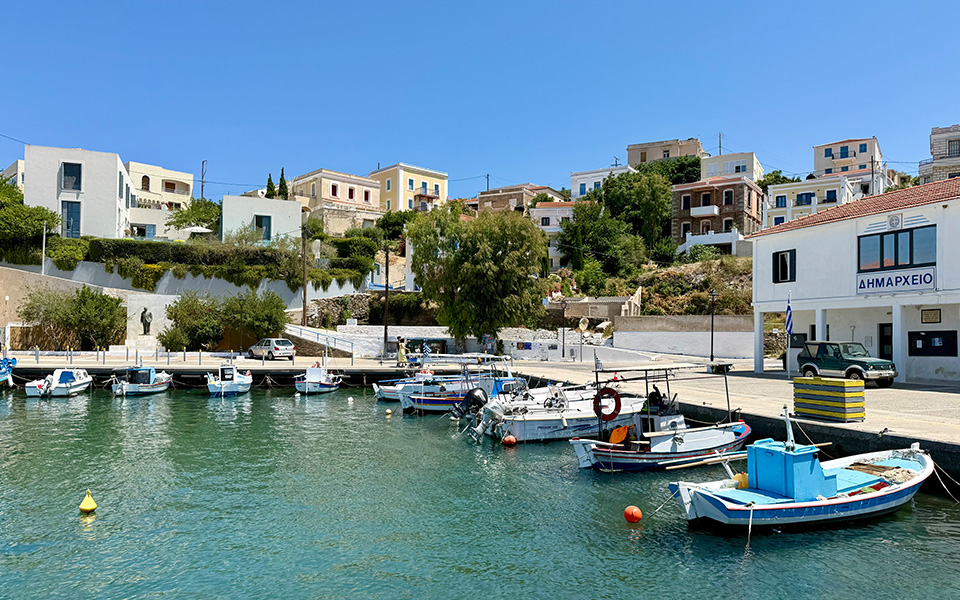
In one of the most beautiful straits of the Aegean, between northern Chios and Turkey’s Karaburun Peninsula, lies a cluster of small islands and rocky islets protected by the European Natura 2000 network for their outstanding natural beauty. They are known collectively as Oinousses, although each island has its own name. Only Oinoussa – the largest of the islands, known locally as Aignousa – is inhabited. From its shores, the surrounding islets seem almost within reach, making it easy to understand why generations of islanders have built their lives around the sea.
Also known as the island of shipowners, Aignousa is the birthplace of many of Greece’s leading shipping families. The nearby islets of Pateroniso and Laimoudiko bear the names of some of these dynasties, while dozens of statues lining the waterfront honor the island’s benefactors. By the 1960s, Oinousses had earned a place among the world’s leading maritime centers.
© Aspasia Kakari
According to local tradition, the first modern settlement on Aignousa was established in the 18th century at the site known as Kastro by shepherds who arrived from Kardamyla on Chios. A century later, the village expanded toward what is now Mandraki. Around the same time, as one English traveler observed, the islanders “turned from sheep to ships,” and the island of seafaring captains acquired its first grand captains’ mansions.
To appreciate the architecture of the traditional settlement, which climbs the hillside from the waterfront to Horio – as locals call the upper part of the village – stroll along its cobbled lanes from the harbor to the Church of Aghios Nikolaos, and from Tourkos Beach in the east to the chapel of the Three Hierarchs in the west. Largely untouched by the beautification trends that have reshaped many tourist destinations, the village retains its authentic character. Elegant mansions stand alongside modest, low-built homes, and beyond a handful of cafés and souvenir shops, most businesses still serve local residents rather than tourists, preserving the village’s understated character.

Tourkos Beach
© Aspasia Kakari
A must-see for first-time visitors to Aignousa is its Maritime Museum, located just behind Plateia Naftosynis (Seafarers’ Square). Originally established in the 1980s as a small gallery showcasing works by Chios-born sailor and painter Aristides Glykas, it was transformed into the Oinousses Maritime Museum thanks to a donation by Antonis and Nikolas Lemos.
Today, the museum houses paintings, ship models and a fascinating collection of maritime artifacts, including diving suits, radio equipment, dynamometers and old sea chests spanning the era from 19th-century sailing vessels to modern ships. Among its standout exhibits are an 18th-century lighthouse lantern fitted with French crystal lenses from the islet of Panagia, and Antonis Lemos’ remarkable collection of miniature ships and historic travel pistols. Particularly moving are the intricate ship models crafted by French prisoners during the Napoleonic Wars, who fashioned them from whale bone, animal bones and even strands of their own hair – a powerful testament to human ingenuity and resilience.
The museum is open daily during the summer months until 2 p.m., and admission is free.
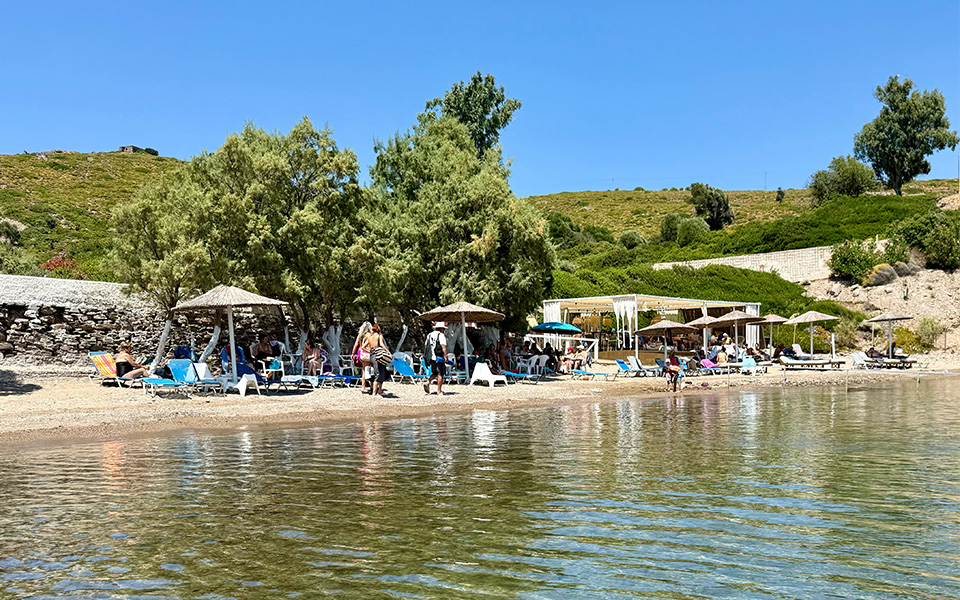
Bilali is the island’s only beach with amenities and a popular gathering spot for those looking for a livelier atmosphere.
© Aspasia Kakari
Legend has it that a ship was sold to finance the construction of this monastery, one of the island’s most important landmarks, which overlooks the coast of Chios from Tselepi Bay on the western side of Aignousa. Its frescoes were created from designs by the celebrated painter Fotis Kontoglou, and the monastery also houses one of his original icons. Set amid lush coastal scenery, where tradition holds that the Apostle Paul may have landed on his journey to Rome, the monastery complex includes the main church, a striking 12-meter-high cross, and several picturesque chapels and shrines.
Founded in the 1960s by Katigo Patera, who later became a nun, the monastery follows the Julian Calendar. It is open daily from morning until 2 p.m., and again from 4 p.m. until sunset; one of the finest times to visit is when the golden evening light makes the views across the Aegean especially memorable.

The view from Pateroniso Café-Restaurant.
© Aspasia Kakari
Fringed by mastic trees, fig trees and, in places, vineyards, the coastline of Oinousses is dotted with secluded coves and unspoiled beaches. Most are blissfully quiet, with fine pebbles or soft sand, while umbrellas (provided by the municipality) and tamarisk trees provide welcome shade. The beaches along the northern coast are the most remote, though they are often more exposed to the wind and waves. Those to the south tend to be calmer and are therefore more popular. Several, including Kathisma and Kakopetria, are within walking distance of the village for visitors willing to tackle the island’s rolling hills.
Among the favorites are Kastro (also known as Apiganou Beach) and Fokia on the western coast, Hochlakas and Katsika in the north, and Aghios Ioannis and Aspalathrokampos in the east. Bilali is the island’s only beach with amenities and a popular gathering spot for those looking for a livelier atmosphere. It’s also the perfect place to enjoy a chilled Bilali Rosé, a refreshing signature cocktail made with mastiha liqueur, homemade rose preserve and freshly squeezed lemon, served to the soundtrack of laid-back summer music.

© Aspasia Kakari
Outside Oinousses’ only bakery, the aroma of freshly fried katimeria is impossible to resist. Mrs. Niki’s square cheese pies sell out almost as quickly as they leave the pan, preserving a culinary tradition brought to the island by refugees from the village of Meli after the Asia Minor Catastrophe of 1922.
Oinousses is particularly known for its octopus braised in wine and its bourekakia filled with wild greens and cheese. One standout dish is the shrimp kritharoto served at Glaros, on the waterfront, which is also celebrated for its rich fish soup and excellent home-style cooked dishes. Other long-standing favorites include the harbor cafés-restaurants Pateroniso and Palio Teloneio, while Rodostamo, a charming trattoria above the village, is the go-to choice for well-executed Italian cuisine.
Apart from the weeks around Aug. 15, when families reunite and grandchildren return from Athens, London, and elsewhere, Oinousses remains remarkably peaceful even at the height of summer. The island attracts mostly Greek visitors and yachts that anchor in its sheltered bays. As a result, fresh fish can sometimes be surprisingly hard to find, as much of the daily catch ends up on the tables of private boats. Even so, Oinousses remains an ideal destination for travelers seeking complete relaxation, the tranquil atmosphere of the North Aegean and a vacation that doesn’t require a car. Visitors wishing to reach the monastery or the island’s more remote beaches need only ask at the local café, grocery store or kiosk, and someone will usually arrange for a local driver to take them there for a reasonable fare. In short, Oinousses is one of those rare islands where it takes very little time to slip into the slow pace of life and leave the stress of everyday life behind.
During the summer season, Oinousses is connected to the port of Chios by daily ferry services. Every morning, the small passenger boat Aghios Nikolaos also departs from the harbor of Lagada, on the northeastern coast of Chios, with tickets costing just €2. In addition, ferry services connect Oinousses with Piraeus three times a week.
Holy Week and Easter on the...

Ride the wind at Laguna, wander...

With traditional festivals in September and...

Nine snapshots capture the cosmopolitan charm,...