Earthworks Bring to Light Elaborate Ancient Burial in…
The unusually elaborate pithos burial dates…

© Konstantinos Tsakalidis
It didn’t happen overnight. Nor was it easy. But in July 2025, the six great Minoan palace centers of Crete – Knossos, Phaistos, Malia, Zakros, Zominthos, and Kydonia – were unanimously added to UNESCO’s World Heritage List. With that, one of the oldest advanced civilizations in Europe received the global recognition it has long deserved.
The decision, made at the 47th session of the World Heritage Committee, followed an exhaustive, years-long process involving extensive documentation, landscape interventions, and cross-institutional cooperation. More than two decades ago, a solo nomination attempt for Knossos was quietly shelved due to serious concerns about its surroundings. It would take another twenty years – and a 600-page nomination dossier – to convince the international community that these six sites weren’t just remnants of the Bronze Age, but touchstones of world history.
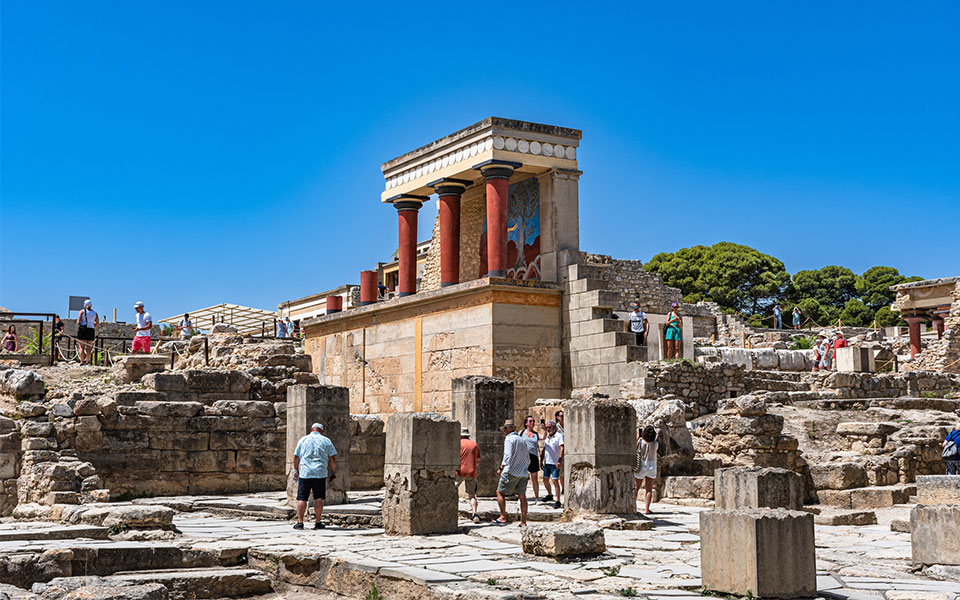
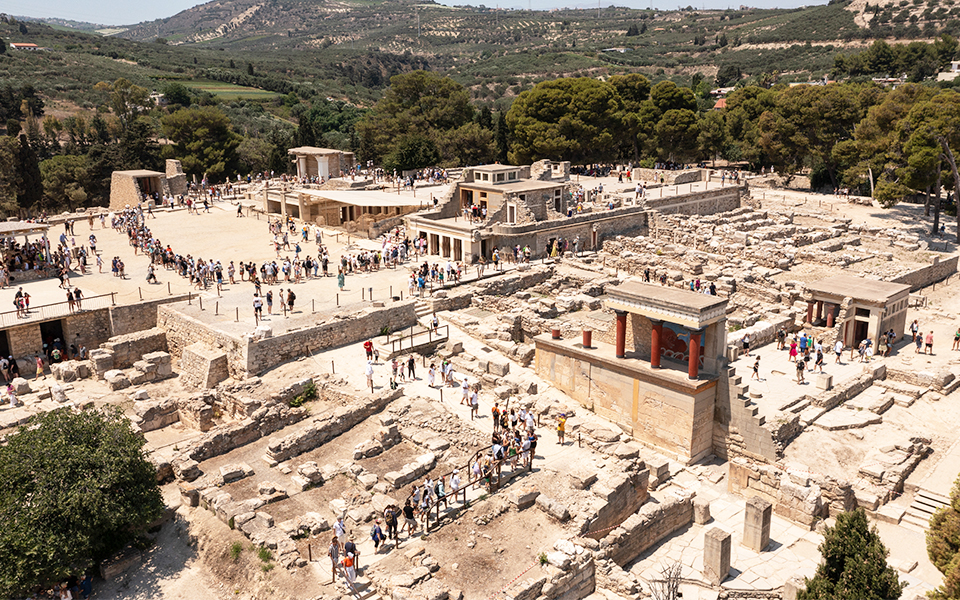
Knossos (pictured), Phaistos, Malia, Zakros, Zominthos, and Kydonia recognized for their outstanding universal value, authenticity, and integrity.
© Shutterstock
The Minoan civilization, which flourished from roughly 1900 to 1100 BCE, was centered on Crete and gave rise to one of the first literate, urban societies in Europe. The palaces were not merely royal residences, but complex administrative, economic, and religious hubs, each offering a window into an early society that traded with Egypt, the Levant, and the wider Mediterranean. Monumental architecture, vibrant frescoes, advanced drainage systems, and early writing systems like Linear A and B testify to their sophistication and reach.
While Knossos – long associated with the myth of the Minotaur and the Labyrinth – is the best known, each of the six palaces played a vital role in the history of Minoan Crete. From the coastal strength of Zakros to the high-altitude mystery of Zominthos, these sites reveal the diversity and ambition of a culture that remains, to this day, partly enigmatic.
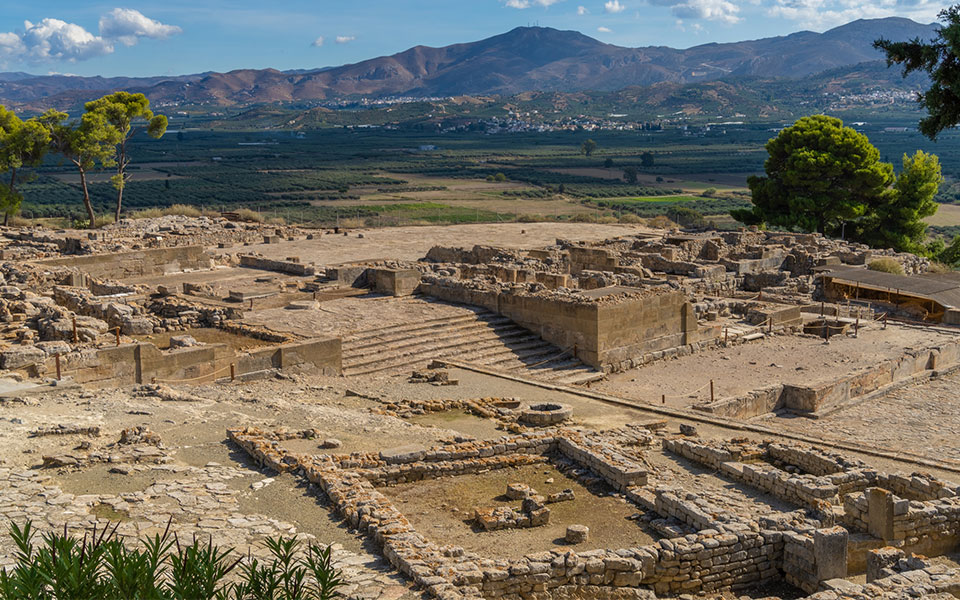
The Palace of Phaistos. The six Minoan palaces, dating from 1900 to 1100 BCE, were recognized for their outstanding universal value
© Shutterstock
The path to recognition was anything but straightforward. In 2014, five of the six palaces (excluding Zominthos) were included in Greece’s national Tentative List, a prerequisite for full UNESCO nomination. But early efforts to build a submission stalled. It wasn’t until 2018 that a coordinated dossier began to take shape, eventually incorporating Zominthos and addressing past shortcomings in access, landscape preservation, and visual integrity, especially around Knossos, where commercial clutter and unauthorized structures had compromised the site’s image.
By January 2025, the final version of the nomination had evolved into a model of holistic planning. It included a long-term management plan, a strategy for climate resilience, and an “integrated spatial investment” framework developed in collaboration with the Region of Crete, the Hellenic Ministry for Climate Crisis and Civil Protection, the University of Athens, local archaeological services, and more.
The committee recognized not only the cultural value of the sites themselves, but also the commitment to protect them into the future. Greece’s Culture Minister Lina Mendoni, present at the session, described the vote as a “triumph,” and with good reason: the Greek nomination was the only one adopted unanimously this year, and it was met with warm praise from delegates across the board.
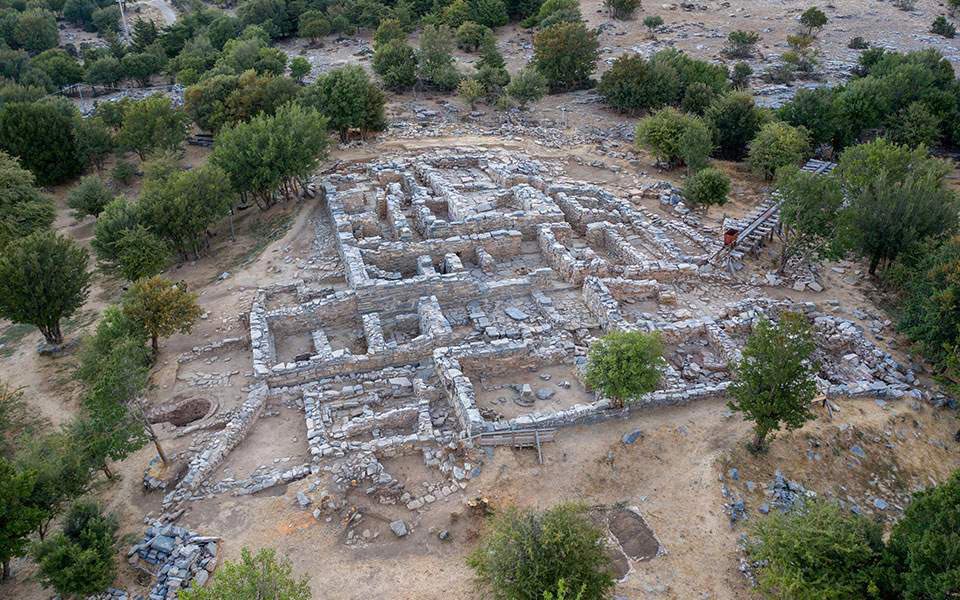
First discovered in 1982, excavations at the mountainside Zominthos palace site started in 1983.
What does this new status mean for the sites themselves? Visibility, certainly – but also responsibility.
“The UNESCO designation brings a powerful international brand,” Mendoni noted. “But it also brings obligations. Whatever Greece has committed to in terms of preservation, access, and landscape management must now be delivered, regardless of who holds office.”
Indeed, Greece must now confront longstanding issues, such as the presence of illegal structures near Knossos. The minister was unequivocal: the state must find the mechanism to remove them.
Beyond the recognition of the past, attention is already turning to the future. Greece’s next goal: the inscription of Mount Olympus, submitted as a natural and cultural heritage site in a joint proposal by the Ministries of Culture and Environment. Also on the horizon: the ancient city of Nicopolis.
For now, however, there is cause to celebrate. The Minoan palaces, with their sweeping staircases, light wells, and painted halls, have once again taken their place in the world. Not as ruins, but as living legacies.
This article originally appeared in kathimerini.gr.
The unusually elaborate pithos burial dates…

The approved expansion integrates historic architecture,…
Reconstructing the lost polychromy and meaning…
A nationwide survey highlights improved services,…