A Road Trip Through Eastern Crete
The roads may twist and climb...

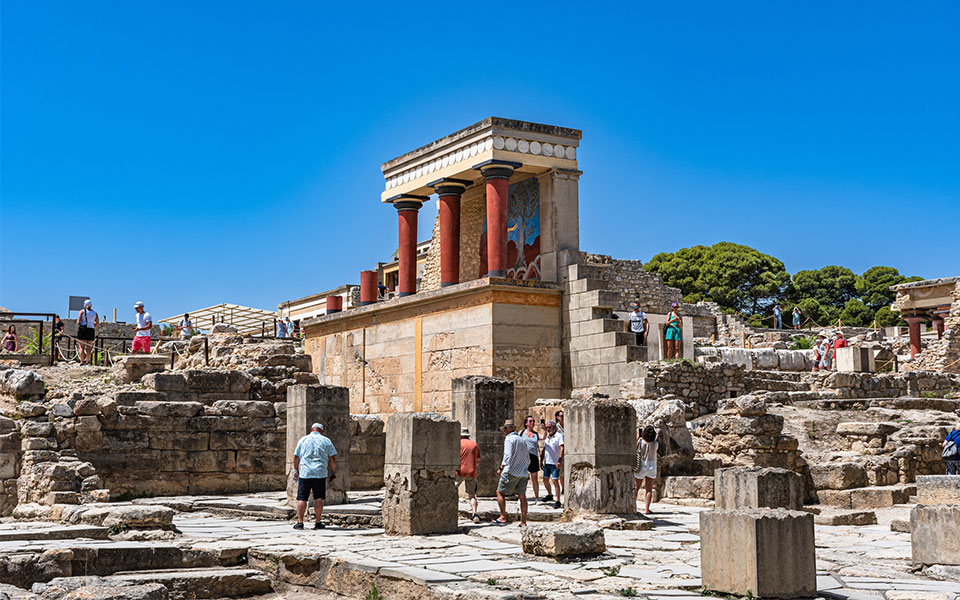
Knossos (pictured), Phaistos, Malia, Zakros, Zominthos, and Kydonia recognized for their outstanding universal value, authenticity, and integrity.
© Shutterstock
An important new milestone has been reached in the preservation of Greece’s cultural heritage: six Minoan palatial centers in Crete – Knossos, Phaistos, Malia, Zakros, Zominthos, and Kydonia – have been officially inscribed on the UNESCO World Heritage List. Following decades of intensive negotiations, the decision recognizes the significance of the Bronze Age Minoan civilization, which flourished on the island from around 1900 to 1100 BC and is considered Europe’s earliest advanced society.
The Minoans built large, complex palaces that functioned not only as royal residences but also as religious, administrative, and economic hubs. These sites, with their multistorey architecture, brightly colored frescoed walls, paved courtyards, and advanced infrastructure – including sophisticated drainage systems and early writing scripts (Linear A and B) – offer unparalleled insight into a society that developed extensive trading connections across the Aegean, mainland Greece, and the wider Mediterranean world.
With their new status as UNESCO World Heritage sites, the palaces now stand as internationally recognized cultural landmarks. For those planning a trip to Crete, here’s what every visitor should know before stepping into the heart of Minoan civilization.
Knossos
© Shutterstock
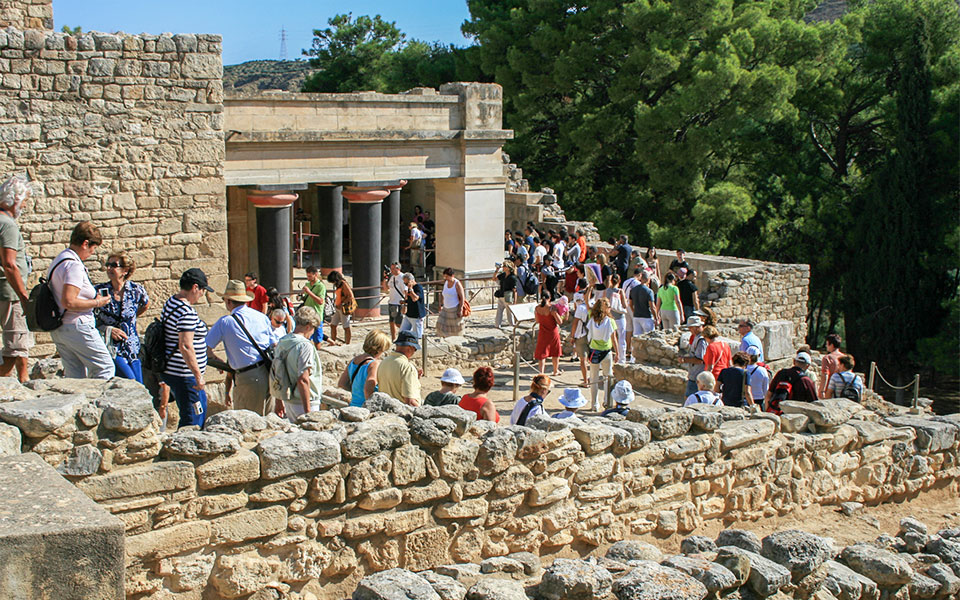
Just south of Heraklion lies Knossos, the largest and most iconic of Crete’s Minoan palaces. Thought to be the seat of the mythic king Minos and home to the fabled Labyrinth and Minotaur, Knossos is where the term “Minoan” was born, coined by British archaeologist Sir Arthur Evans during his landmark excavations beginning in 1900.
Between 1900 and 1350 BC, Knossos evolved into a vast complex of more than 1,000 interlinked rooms, intricately designed with light wells, painted frescoes, storerooms, and ceremonial spaces. Evans’ reconstructions – using reinforced concrete – remain controversial, but undeniably dramatic. Scholars believe Knossos served as the religious and administrative heart of Minoan society.
Highlights of the archaeological site, the second-most visited in Greece behind the Acropolis, include the Throne Room, the Grand Staircase, and the famous bull-leaping frescoes. The West Court, once used for large-scale processions, and the massive pithoi-lined storage magazines offer insight into the workings of Minoan ceremony and economy.
Though only a small portion has been excavated (around 2 to 3 percent), Knossos continues to reveal new secrets. Easily accessed by public transport, it offers guided tours, an on-site café, and proximity to the excellent Heraklion Archaeological Museum – home to many original artifacts.
For more in-depth information on Knossos, click here.
The Phaistos Disc
© Shutterstock
From the urban scale of Knossos, head south to Phaistos – a palace complex perched above the fertile Messara Plain. Unlike Knossos, the ruins here remain largely unaltered by modern reconstruction, allowing visitors to see the site much as it was first uncovered in the early 20th century.
Phaistos emerged as a major center of Minoan power around 1900 BC. Over the next three centuries, it was destroyed and rebuilt several times – most notably after a fire around 1700 BC – reflecting both its importance and its resilience. Like other palatial centers, it served administrative and ceremonial functions, overseeing agriculture and trade across southern Crete.
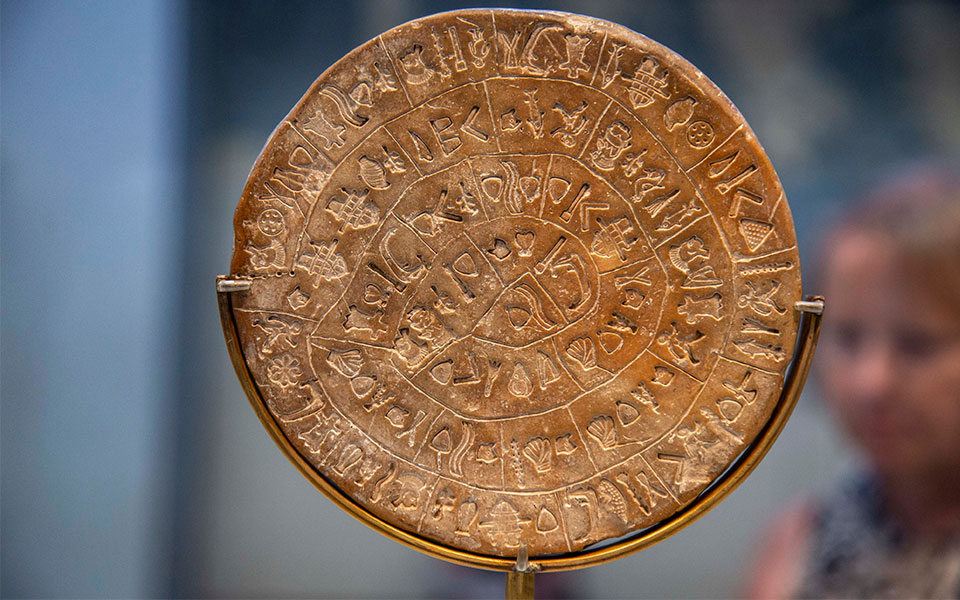
Its greatest enigma, however, is the Phaistos Disc, discovered in 1908 by Italian archaeologist Luigi Pernier. This 15cm clay disc, imprinted with a spiral of mysterious-looking and, as yet, undeciphered pictographic symbols, remains one of the enduring mysteries of Bronze Age archaeology. The original is displayed in the Heraklion Archaeological Museum.
Today, visitors can explore the expansive Central Court, the monumental West Propylon, and a network of storerooms and staircases that hint at the site’s complexity. With its elevated position and sweeping views toward Mt. Ida (Psiloritis), Phaistos is best visited in the early morning or late afternoon, when the landscape is bathed in soft southern light and cooler temperatures.
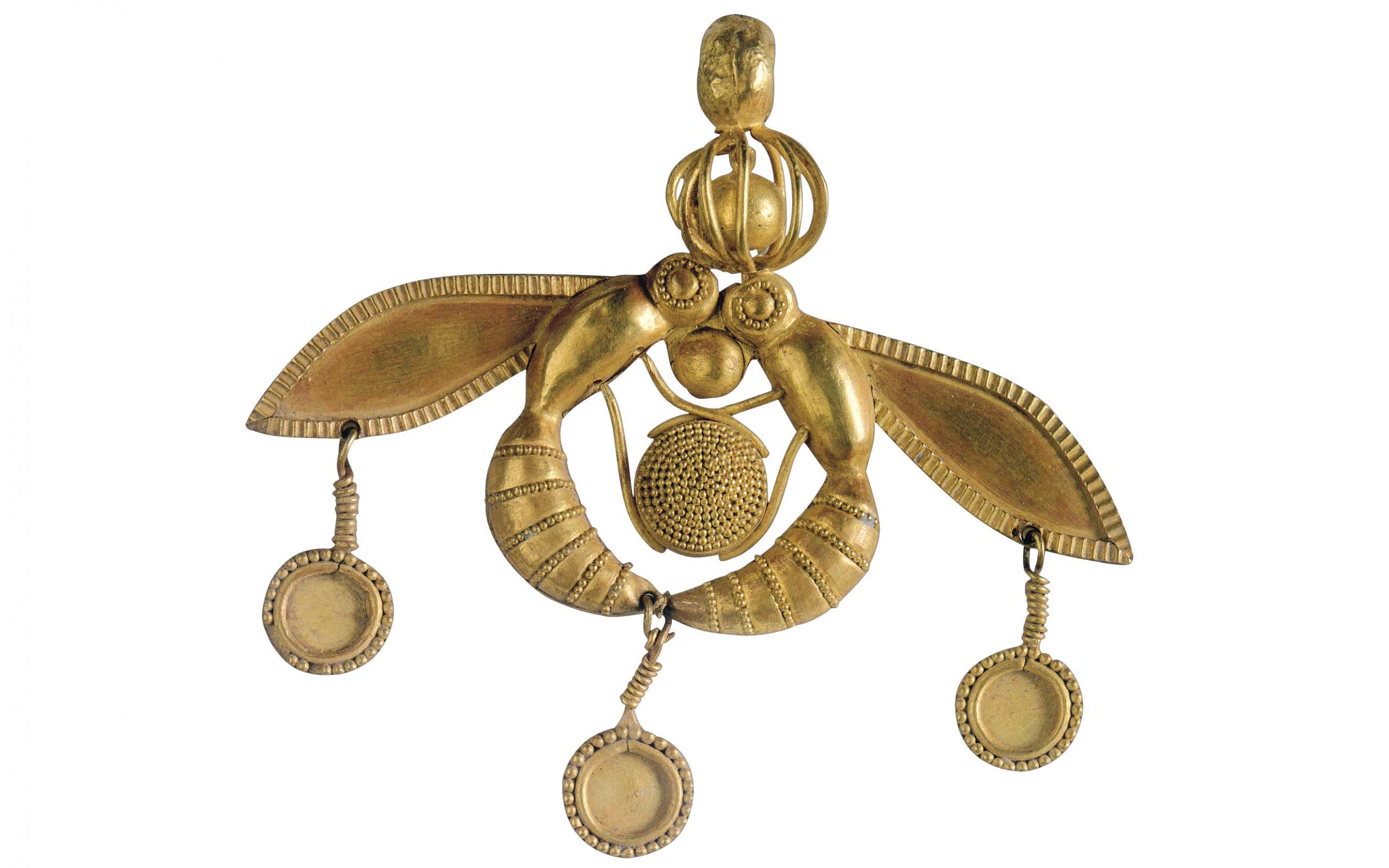
The golden bee pendant is a masterpiece of Minoan ingenuity and design.
© N/A
East of Heraklion, on Crete’s north coast, lies Malia – the third-largest Minoan palace. The site was first excavated by French archaeologists in the early 20th century and has since provided valuable insight into Minoan architecture and daily life.
Malia’s palace flourished between 1900 and 1450 BC, during the Protopalatial and Neopalatial periods, serving as both a religious and administrative center. Its minimal reconstruction allows visitors to engage with the ruins as they were originally uncovered – windswept and open to the elements.
The site is best known for the exquisite gold “honeybee pendant,” discovered in a nearby grave at the Chrysolakos (“pit of gold”) necropolis. Dated to around 1700 BC, the pendant – now housed in the Heraklion Archaeological Museum – is a masterpiece of Bronze Age craftsmanship and reflects the symbolic importance of bees in Minoan culture as harbingers of abundance, fertility, and renewal.
Visitors can explore the Central Court, a series of storage and industrial areas (notably Area M), and the necropolis itself. The terrain can be uneven, so sturdy footwear is recommended.
Zakros
© Shutterstock
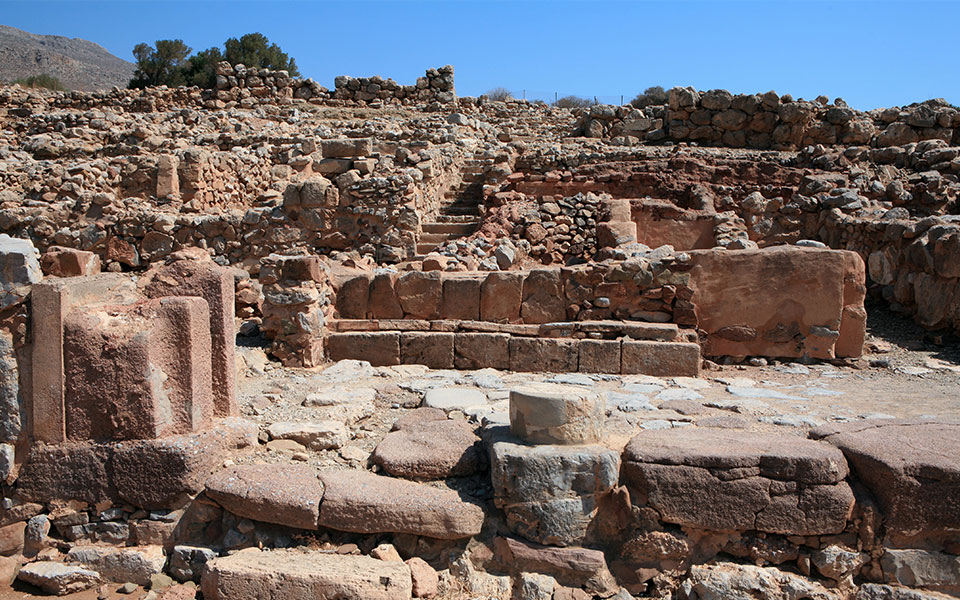
Traveling to the far east of Crete, visitors will find Zakros – a secluded palace tucked into a sheltered bay on the island’s easternmost coast.
Zakros flourished as an important maritime trading hub, its harbor linking Crete to Egypt, the Levant, and Cyprus. Initial excavations were undertaken by the British School at Athens in the early 20th century, but it was in the 1960s that Greek archaeologist Nikolaos Platon uncovered the well-preserved New Palace complex, which covers more than 8,000 square meters.
Visitors can explore the large Central Court, royal apartments equipped with advanced drainage and water systems, and storerooms filled with remnants of large “pithoi” (storage jars). A lustral basin, used for ritual bathing, and workshops, which revealed significant numbers of bronze tools, clay tablets, and inscribed seals, emphasize the site’s spiritual and industrial significance.
Nearby, the Gorge of the Dead – a dramatic limestone ravine used for burials – adds another layer to the site’s story.
Zominthos
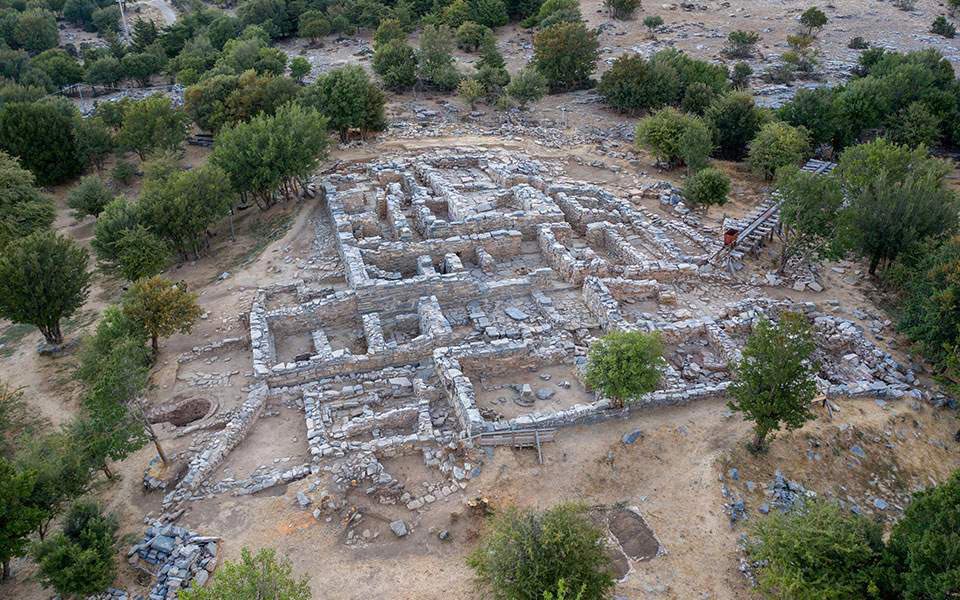
In contrast to the coastal setting of Zakros, Zominthos sits high in the mountains, 1,200m above sea level on the northern slopes of Mt. Ida (Psiloritis). Its altitude makes it unique among Minoan palatial sites, and its discovery has significantly expanded what archaeologists understand about Minoan presence in Crete’s interior.
Excavations began in 1983 under the direction of archaeologist Yannis Sakellarakis. Following his death in 2010, work has continued under his long-time collaborator and wife, Dr. Efi Sapouna-Sakellaraki. Over the years, archaeologists have uncovered a multistory complex of more than 100 rooms, thought to have functioned as a ceremonial center or seasonal residence. Its position along a sacred route from Knossos to the sacred Cave of Zeus (Ideon Andron) suggests its importance within regional religious networks. Evidence of permanent settlement at the site dates back to around 1800 BC.
The architecture at Zominthos is notable for its fine masonry, drainage systems, and intricate layout, which includes workshops, cult spaces, and elite quarters. Finds such as flint tools, stone bowls, processed rock crystal, and conical “egg cups” point to a wealthy, skilled population likely connected to the palace at Knossos.
Zominthos is not currently open to the public, as excavation and conservation efforts are still ongoing.
For more information on the archaeological research at Zominthos, click here.
In the heart of Hania’s Old Town, beneath streets lined with Venetian and Ottoman-era architecture, lies the ancient Minoan center of Kydonia. While much of the site remains hidden beneath the modern urban fabric, excavations focused on the area of Kastelli Hill have gradually revealed one of the most significant Minoan settlements in western Crete.
Archaeological work here, ongoing since the early 1980s, has uncovered the remains of a large palatial complex that reached its zenith in the 14th–13th centuries BC. Among the most notable features is a 200-square-meter hypostyle hall (its roof supported by columns), likely used for administrative or ceremonial purposes – an architectural rarity in Minoan Crete.
Finds include pottery workshops, fresco fragments, seal impressions, and a Linear A tablet depicting a warrior figure. One of the most striking artifacts is the so-called “Seal of the Ruler,” alongside remains that suggest a rare instance of human sacrifice – a young woman, possibly ritually killed in response to a catastrophic earthquake sometime in the 13th century BC. Archaeologists believe the palace served as an important hub that linked Late Minoan elites with their Mycenaean counterparts from the Greek mainland.
While full public access is still in development, Kydonia’s inclusion in the UNESCO World Heritage listing highlights its growing recognition as a key Minoan center – a buried palace layered beneath one of Crete’s most visited towns.
For more on the findings at Kastelli Hill, click here.
The roads may twist and climb...

Step into a world of castles,...

Cretan cuisine lives on from home...

These sites may not make every...