The Best Ancient Sites to Visit this Fall...
Step beyond Athens this autumn and...

© Shutterstock
In Greek, the word for autumn is fthinoporo (φθινόπωρο) – which means the “season when fruits diminish.” It’s very poetic, but not really true; when the last of the peaches and watermelons leave the market, an abundance of fruits and nuts come in to take their place. Here’s a look at the rich harvests of Greek autumn, and the many traditional delights made with them.
A primarily agrarian society for centuries, and a sociable and generous one, too, Greece has always prized hospitality and a gracious, well-run household. The result is a host of inventive ways to keep and enjoy the fruits of harvests, from jewel-like glyko koutaliou, or preserves, and liqueurs to wholesome pies and combinations of dried fruits and nuts.

© Shutterstock
Early autumn sees the market fill with many different varieties of table grapes, but there’s much more that grapes have to offer than just a fresh fruity bite. The juice of whole pressed grapes is called moustos (“must”); most of that liquid is fermented to become wine, or distilled into tsipouro, tsikoudia, or raki (all local spirits), but some is set aside and boiled with ash to halt the natural fermentation process. The resulting juice is made into a much-loved seasonal pudding – moustalevria – whose name combines the words “moustos” and “alevri,” the latter a Greek word for flour, which is used here as a thickening agent. Moustos is also boiled down into a syrup called petimezi – the sweetener of choice for moustalevria, it also finds its way into many contemporary Greek dishes.
The Black Corinthian grape – originally from Achaia – is dried to make premium black currents (stafydi). The Vostizza variety has PDO status, while the island of Zakynthos lends its name to its own PDO Zante currants. In the last half of the 19th century, Greece’s superb currants were in great demand and were a key export, playing a strong role in the Greek economy.
Black currants remain a staple throughout the year as a nutritious snack on their own and as a key ingredient in a number of sweets, including stafidopsomo, a baked breakfast treat of choice for many Greek schoolchildren.

Figs
© Shutterstock
If the cicada is the soundtrack of Greek summer, the fig tree is its perfume. Figs only reach full ripeness as August draws to a close, arriving with a splash and taking over Instagram feeds; they’re really photogenic! Lots of them, such as the PGI Royal fig which thrives just outside of Athens around Markopoulo and Vravrona, are enjoyed fresh throughout autumn, but they’re also famously good for drying. The island of Evia is prime fig territory, with two PDOs for dried figs – Kymi figs, and the Taxiarchis fig, the latter of which was brought over by the refugees of Asia Minor. Dried figs stuffed with walnuts are a traditional and nourishing winter snack.
Figs make their quiet debut in spring. The trees bring forth small, firm, green early figs. These make a fantastic glyko koutaliou which tastes more like fig trees smell rather than like ripe figs. Ripe autumn figs, on the other hand, make a delicious marmalade, as tasty on a cheese platter as it is on bread.
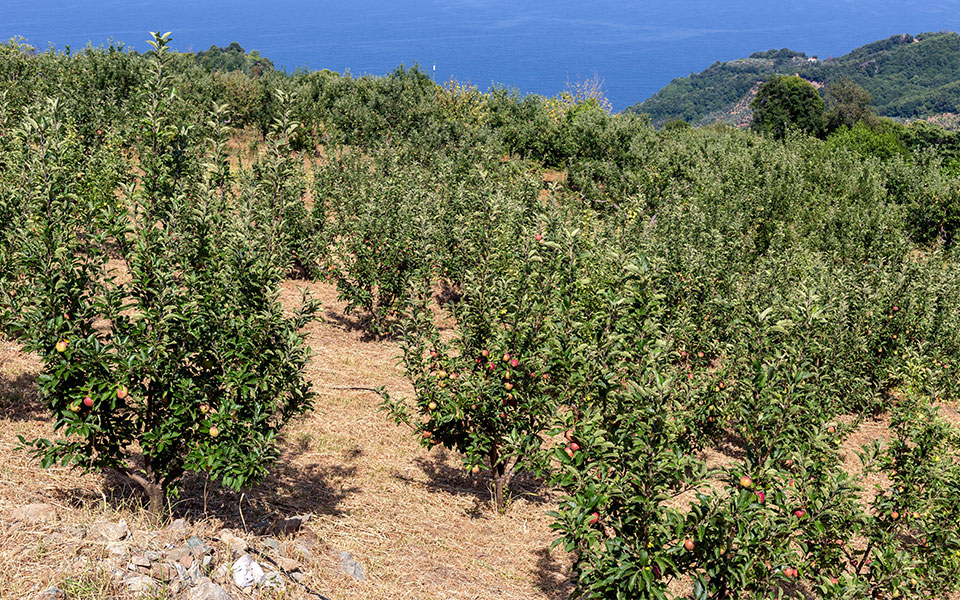
Pilio’s famous PDO Zagorin apples.
© Shutterstock
Greece produces a wide variety of apples, beginning with Pilio’s famous PDO Zagorin apples and the small and fragrant PDO Firikia Piliou. Western Macedonia is also excellent apple territory, with fine orchards around Florina and Kastoria producing apples for domestic use as well as export.
In the Peloponnese, Tripoli in Arcadia is also known for fine apples, especially the PDO Mila Delicious Pilafa Tripoleos. Table apples of all kinds are a constant throughout the winter, while others make their way into milopita, or apple pie, which comes in countless versions, all scrumptious.
While the simple green Crystallia pear is the most common variety, Greece grows many different kinds of excellent pears. Kontoules, or “little short ones,” show up as of August; October brings, among others, the Williams, the suave, long-necked Abate Fetel and the Conference varieties, which remain in the markets throughout autumn and into winter. Pears take well to spices, especially cloves, and make fine preserves, too.
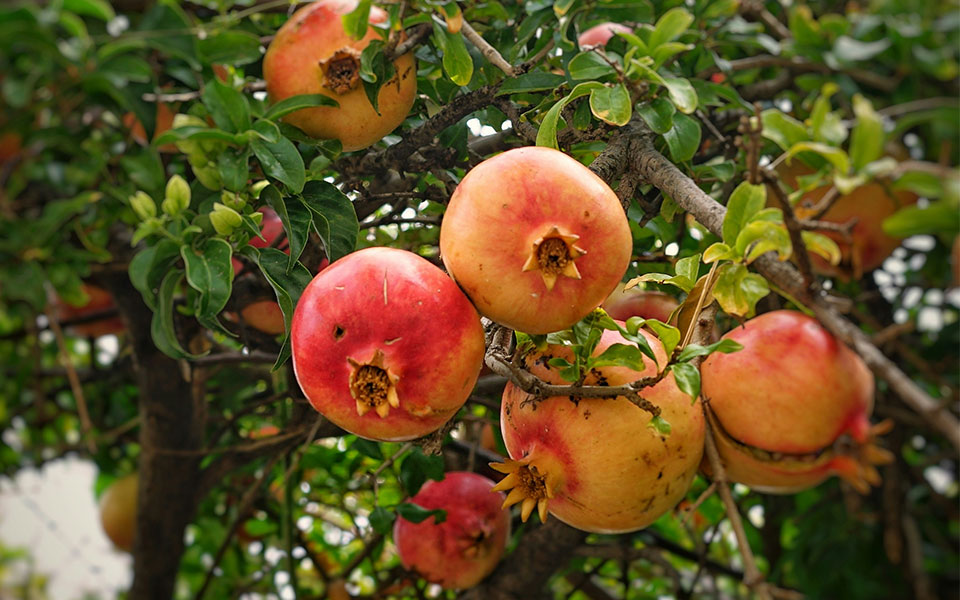
Pomegranates
© Unsplash
With its abundant seeds, each encased in a tiny layer of juicy ruby-colored fruit, the pomegranate has been a symbol of fertility and rebirth in Greece since ancient times; they still figure in New Year’s Eve celebrations as a symbol of good fortune. Called rodi in Greek, pomegranates start appearing in the markets around September and remain well into the winter, making a glamorous addition to the holiday table and beyond. Packed with polyphenols, they’re a powerful antioxidant, while their bracing tangy-sweet juice makes a well-balanced liqueur. The juice can be boiled down into pomegranate molasses, a zippier cousin of the grape-based petimezi and a staple in the cuisines of the Levant.
Pomegranates grow well in many regions of Greece, but the variety Rodi Ermionis, which grows in Ermioni in Argolida, is especially good and has been given PDO status.
With orbs of deep gold hanging from branches that are relatively bare when the fruits are ripe, a persimmon tree is an ornament to the garden. They’re plentiful in the northern regional units of Pella and Imathia. The fruits come in two shapes: either round wth a pointed tip, or flatter. The flat ones are sweet and yet still crisp. The round ones are soft and sweet when fully ripe but very bitter otherwise. Honey-sweet with a delicate flavor, these soft persimmons are delicious on their own, and their pulp is also good in a sticky cake.
© Shutterstock
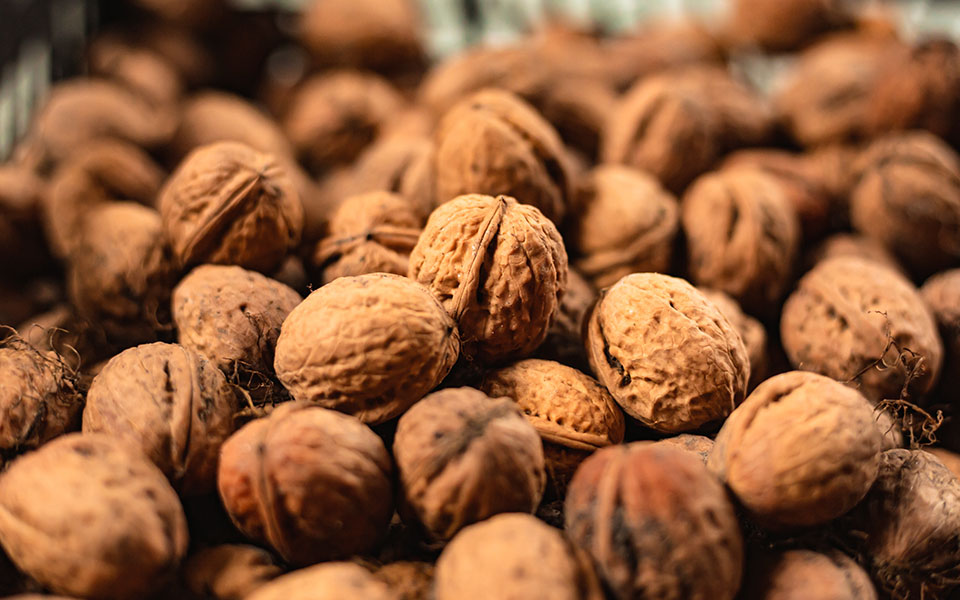
Walnuts serve in so many capacities. Before their shells have fully formed, the unripe walnuts are harvested to make an aromatic bitter-sweet liqueur and a sophisticated glyko koutaliou. The outer hulls of ripe walnuts were once used to make dye for hand-spun threads and yarns.
The season’s new walnuts start to appear in October. There’s a degree of anticipation around the fresh harvest of fat, sweet nutmeats but they keep well and are a year-round essential. They are, for instance, the star of karydopita, a rich and airy cake infused with syrup that’s popular throughout Greece but especially so in Laconia. Walnuts are also the featured ingredient in the chocolate treats known as kariokes (the most famous come from Xanthi), but they can also be found in all kinds of baked goods all over Greece, and are a fabulous addition to salads as well.
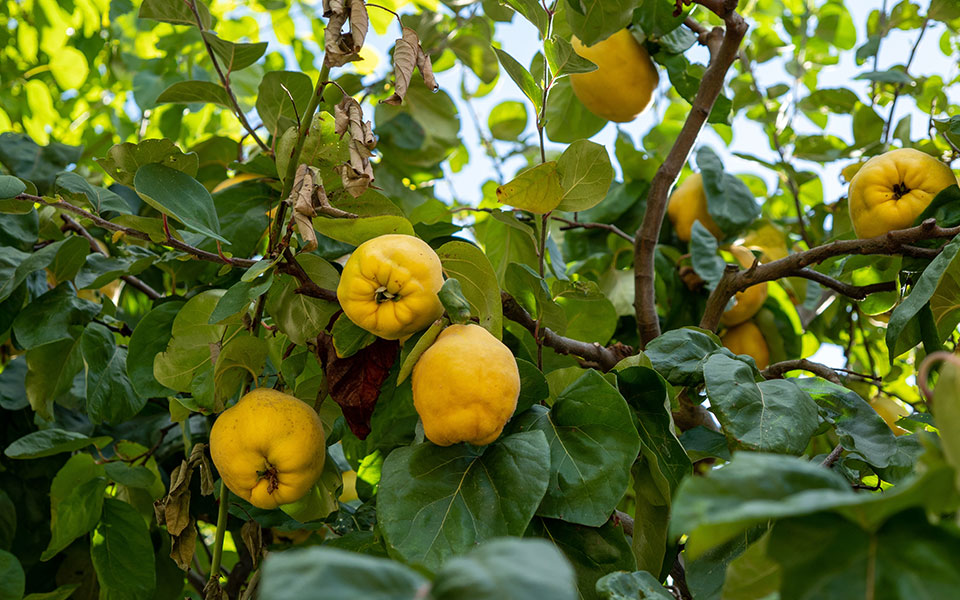
Quinces
© Shutterstock
Later in October, golden quinces – kydonia in Greek – ripen for harvest. They look like a very large pear and are extremely hard and very fragrant, filling the house with their aroma. Bitter when raw, they change completely when you cook them. Baked quinces – halved, cored, and sweetened with some sugar – are a popular dessert throughout autumn and winter. They turn rosy in the oven and, being naturally rich in pectin, form their own jelly-like sauce. This characteristic really shines through in kydonopasta – the Greek membrillo – a perfect kitchen project for autumn. First you boil the peels and cores to extract their pectin, then use that liquid to cook the fruit into a pulp. Kydonopasta takes patience (and some forearm strength) as you need to continually stir your fruit over low heat until it reduces and thickens. The result is a delicious, sliceable deep red paste which keeps well when wrapped and refrigerated. Kydonopasta is the best thing ever to happen to a cheese platter.
Quince is also wonderful in savory recipes, such as this risotto, or even in an update to a classic fasolada.

Chestnuts
© Shutterstock
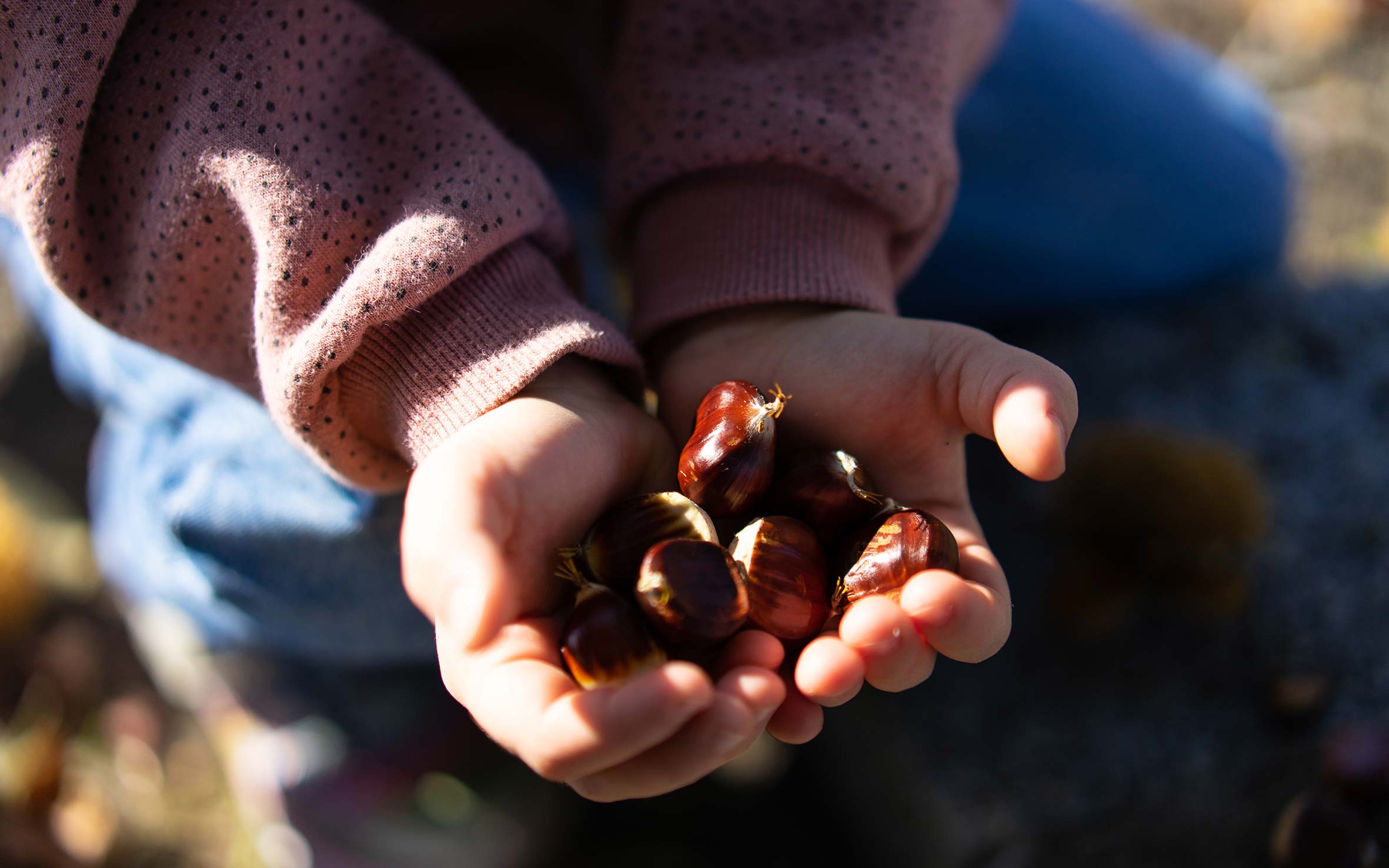
Chestnuts, an autumn mainstay, are in themselves a cause for celebration, with chestnut festivals happening in various mountain towns throughout Greece. The scent of roasting chestnuts fills the streets of Greece throughout winter, but they’re also delicious simply scored and boiled. Chestnuts make a wonderful glyko koutaliou – like a Greek marron glacé in a jar. In savory preparations, they’re a revelation. Simmered with wine, pearl onions, a little tomato, and sweet spices, chestnuts help create an unbeatable stifado.
Greece’s autumn harvest is full of inspiration, brightening the table well into winter. It’s always worth making regular trips to the market to see what is new and in season.
Step beyond Athens this autumn and...
Discover the rich flavor of homemade...

When the summer crowds depart, Greece’s...
Experience Spetses in its most enchanting...