The Sinking of the Britannic and Its Rediscovery…
Greek and international researchers retrieve artifacts…

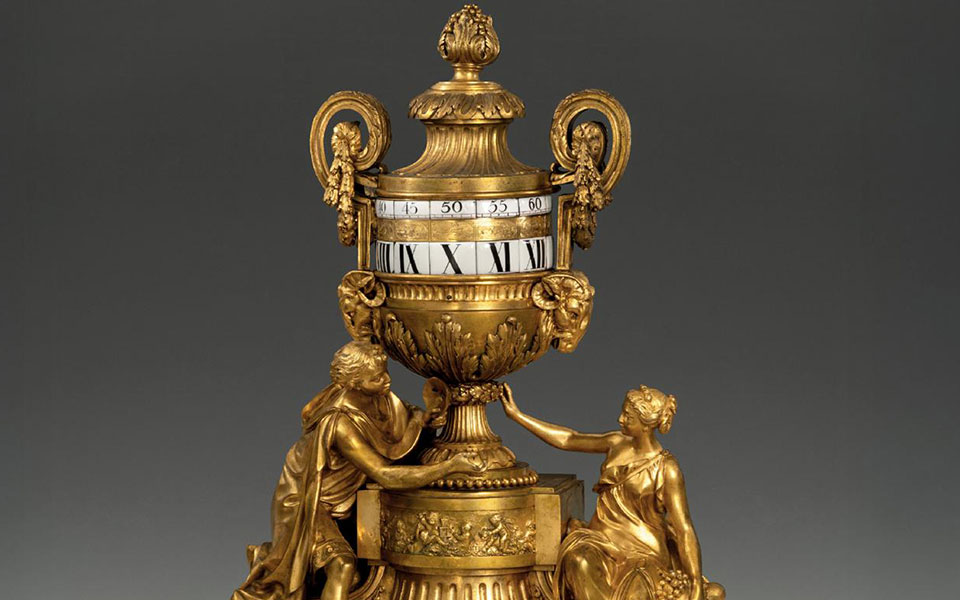
Mechanical table clock in gold-plated bronze and marble, by 18th century French horologist J.B. Baillon.
© Hellenic Ministry of Culture
In a landmark step for the preservation and sharing of modern Greek heritage, the country’s Ministry of Culture has unveiled a pioneering digital archive of the Tatoi Collections, making more than 70,000 artifacts from the former royal estate accessible to the public for the first time. Presented last week at the Benaki Museum by Minister of Culture Lina Mendoni, “The Tatoi Collections: Unlocking the Material Culture and History of a Century” marks a new era for both researchers and culture lovers keen to explore Greece’s royal past.
Tatoi, nestled on the verdant slopes north of Athens, served as the summer retreat for Greece’s former royal family for over a century. Its sprawling grounds and neoclassical mansion once brimmed with life, but, following the abolition of the monarchy in 1974, the 169-hectare estate languished in neglect for decades. Thousands of portable objects – furniture, artworks, jewelry, books, garments, and even personal mementos – were left piled within the estate’s historic buildings.
Under the coordinated efforts of the Ministry of Culture, and with funding from national and European sources, a vast program of conservation and restoration has been underway since 2019. “Despite the unquestionable historical importance of the Tatoi estate – as well as its high environmental value – it remained neglected and unused by the Greek State for decades, due to ideological fixations and a mistaken attitude toward our modern history,” Minister Mendoni said at the launch event.
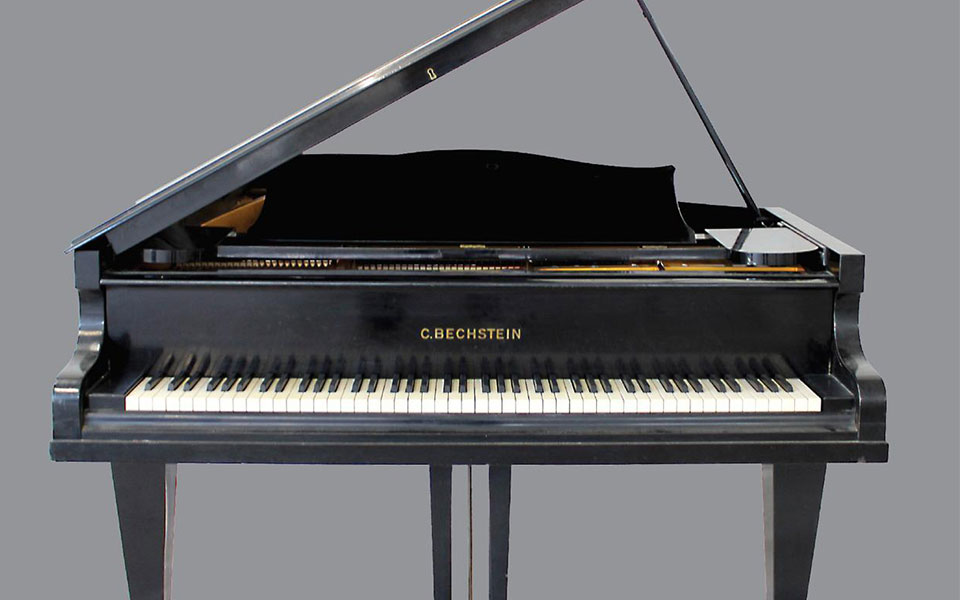
Black wooden grand piano bearing the name of the manufacturer: C. Bechstein.
© Hellenic Ministry of Culture
The heart of the project is a new online portal, developed by the Directorate for the Management of the National Archive of Monuments. This portal now offers the largest collection of its kind in Greece, presenting a rare, multi-layered portrait of daily life, political history, and artistic production in Greece and Europe from the 19th to the 20th centuries.
Visitors can browse high-resolution images and detailed descriptions of over 70,000 objects, with additional content to be added as the digitization process continues. The collection is remarkably diverse – extending chronologically and geographically from ancient Greece to the everyday objects of the 1960s, and from Europe to the Far East – including military equipment, religious artifacts, books, and personal memorabilia from members of the ex-royal family. Each object, as Mendoni said, “gains its own voice and place within a broader narrative that connects the past with the present.”
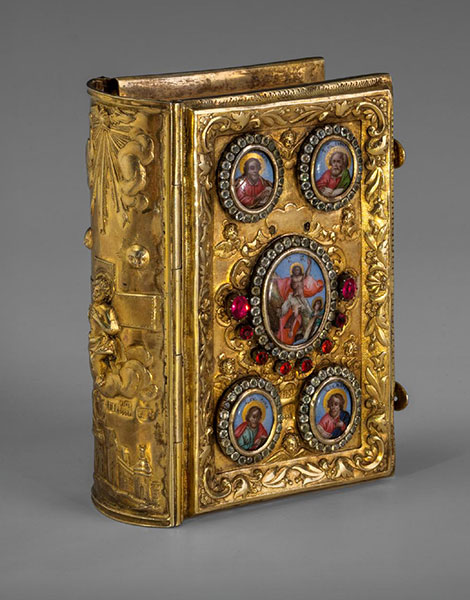
An ornate “Tetraevangelion” – Four Evangelia/Gospel Books – dated to 1840.
© Hellenic Ministry of Culture
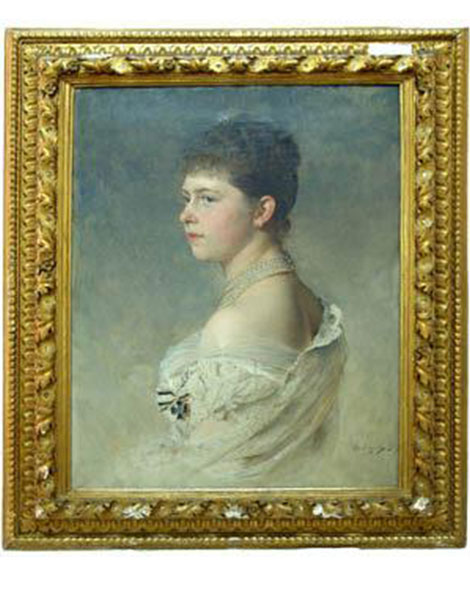
A portrait of Sophia, by the Austrian painter Heinrich Anton von Angeli.
© Hellenic Ministry of Culture
The digitization of the Tatoi collections is not just about preservation, but also about “democratizing” access to culture. The National Archive of Monuments, now fully operational, serves as a dynamic digital foundation for recording, managing, and promoting Greece’s cultural heritage to a wider audience. It provides the tools for evidence-based planning and adaptive management, ensuring the sustainability of national treasures in a changing world.
The Ministry’s ambitious vision extends beyond the digital. By 2026, the first phase of restoration and enhancement works at Tatoi will be complete, transforming the estate into an open, green space for recreation, education, and cultural activities. Plans include new museum spaces, walking trails, and year-round events – offering both locals and travelers a new cultural landmark just outside Athens.
With the launch of the online portal and the accompanying publication, “Unlocking Tatoi,” the public is offered a tantalizing preview of a collection that has long been hidden from view. The digitized artifacts – eventually expected to exceed 90,000 – along with an extensive archive of documents, photographs, and other paper materials from the estate, will serve as valuable tools for research, education, and cultural engagement, both in Greece and abroad.
As Minister Mendoni noted, “The documentation and digitization of the Tatoi Collections is not merely an act of preservation – it is an act of knowledge and responsibility toward history.” For anyone with a passion for Greek culture, art, or history, Tatoi’s treasures are now just a click away.
To explore the collections, visit tatoicollections.culture.gov.gr
Greek and international researchers retrieve artifacts…
The Acropolis Museum unveils its pioneering…
Greece's Ministry of Culture has approved…
The two are to discuss the…