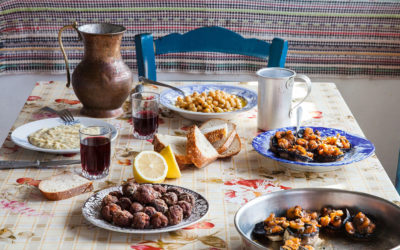
Stories Told by the Stones of Crete
A forgotten world comes to life...


Rhamnous, north of Agia Marina, is one of the largest archaeological sites in Attica.
© Olga Charami
If you’ve ever stood shoulder-to-shoulder with hundreds of tourists at the Acropolis or queued for an unobstructed photo at Delphi or Knossos, you’ll know that Greece’s most famous ruins can sometimes feel more like a scrummage than an escape. But beyond the “big names” lie dozens of lower-profile sites where the past feels more intimate, and the crowds blissfully absent.
Here, among sun-warmed stones and whispering pines, you can wander temple terraces and fortifications in solitude, imagining the ancient world as it once was. From Attica’s quiet coastal sanctuaries to the forgotten battlefields of Boeotia and the shadowed slopes of Crete, these five lesser-known sites reward those who take the road less traveled – offering not just archaeological riches, but the kind of serenity and sense of discovery that made you fall in love with Greece in the first place.
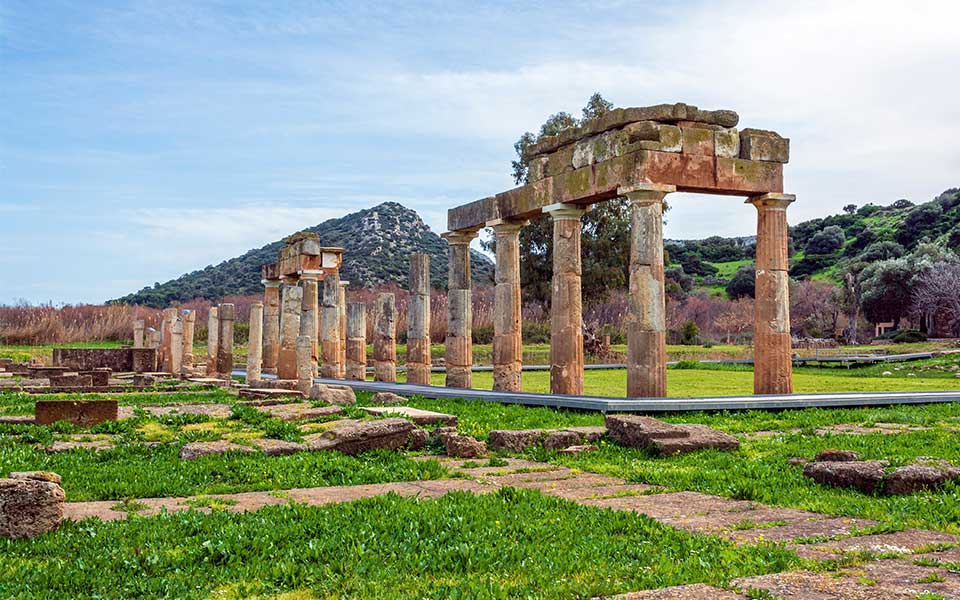
Temple of Artemis at archaeological site of Brauron, eastern Attica.
© Shutterstock
Nestled on the eastern Attic coast, about 35km by road from central Athens, Brauron (modern Vravrona) is a sanctuary of Artemis whose quiet beauty rewards those who like to linger. Instead of grand Parthenon-scale structures, you’ll find a constellation of smaller, deeply evocative ruins – temple foundations, a Π-shaped Doric stoa around a central courtyard, a sacred spring, a Classical-era stone bridge complete with visible wheel-ruts – the oldest known example in Greece – cave shrines, and a modest “heroon” (small temple) of Iphigenia, daughter of Agamemnon.
One of Attica’s original twelve cities, Brauron shows signs of habitation back to the Neolithic period. Its sanctuary to Artemis Brauronia rose to prominence in the 8th century BC, not only as a religious hub but as a center for female coming-of-age rituals. The peculiar “Arkteia” rite, in which young girls served the goddess as “arktoi” (she-bears), marked their transition to womanhood.
Explore the ruins in early morning or late afternoon for the best light. The modest but well laid out Archaeological Museum displays votive offerings, small statues, jewelry, and mirrors once dedicated to Artemis. The site is easily reached by car (around an hour from Athens). Allow two hours for both site and museum, wear sturdy shoes, and check seasonal opening times. With few visitors even in summer, Brauron offers rare quietude – a perfect counterpoint to the bustle of central Athens.

Remains of the Sanctuary of Nemesis, goddess of vengeance and divine retribution, at Rhamnous.
© Shutterstock
Perched on a windswept headland 55km northeast of Athens, Rhamnous rewards the determined visitor with one of the most atmospheric and best-preserved ancient “demes” (regional suburb) in Attica. More than a sanctuary, it was a fortified town – civic, military, and sacred all at once.
The site unfolds over two terraces: a lower sanctuary and an upper acropolis. The sanctuary features twin Doric temples dedicated to Nemesis, goddess of divine retribution, and Themis, goddess of justice. A colossal statue of Nemesis once stood here, sculpted by Agorakritos, a pupil of Phidias (of Parthenon fame). The smaller shrine of Themis housed another famous statue, now in the National Archaeological Museum.
Above, the fortified acropolis preserves walls, towers, and domestic remains that hint at daily life under the watch of an Athenian garrison of “ephebes,” young men starting their military service. Rhamnous guarded the sea route to Euboea, and its strategic location, overlooking the narrow maritime strait, made it one of Classical Attica’s key outposts.
Plan for one and half to two hours to explore both levels (sanctuary and acropolis). The path is rocky and exposed, so bring plenty of water, sunscreen, and good shoes. There’s no on-site museum, but finds are displayed in Athens. Visit in the cooler hours and combine your trip with nearby Marathon for a full day of ancient Attica far from the crowds.
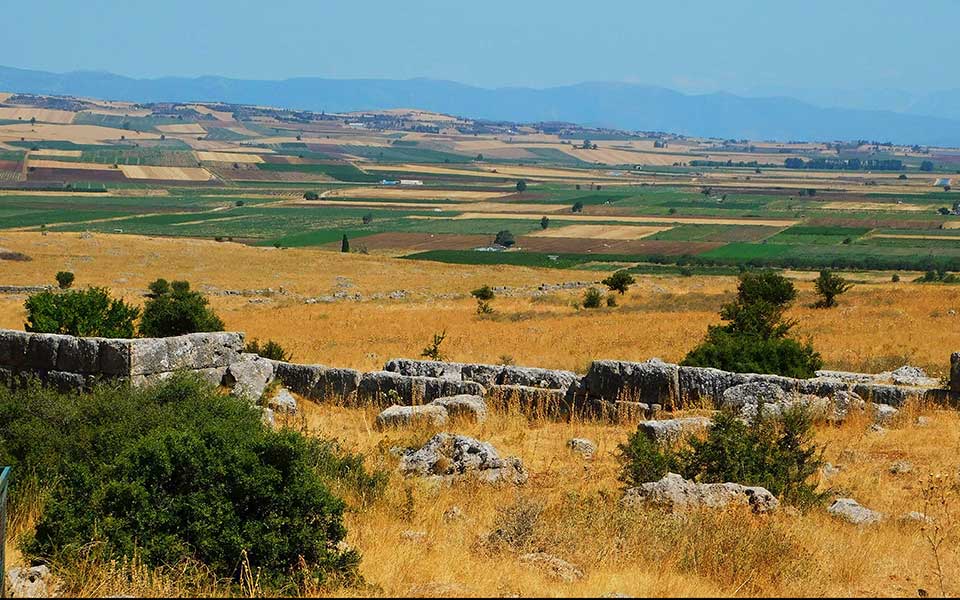
View of the Plataea battlefield, site of the decisive 479 BC Greek victory over the Persians, with the ruins of the ancient city in the foreground.
© Shutterstock
In the rolling plains of Boeotia (Viotia), about 90km northwest of Athens, lies Plataea (Plataiai), the site of one of the most decisive battles in Western history. Somewhat overshadowed by the more famous battles of Marathon (490 BC) and Salamis (480 BC), here, in 479 BC, allied Greek forces led by the Spartan general Pausanias finally, and decisively, crushed the Persian army of Mardonius, ending Xerxes’ invasion and securing the independence of the Greek city-states.
Today, the landscape is peaceful, yet scattered ruins recall the city’s ancient prominence: stretches of its 4.5 km wall, square towers from various periods, and the remains of the Temple of Hera that once held a statue by Praxiteles. You can still see the ruins of the “Katagogion” (guesthouse) that once hosted pilgrims to the Heraion. Excavations in the early 1970s uncovered the altar of Zeus Eleutherios, dedicated to “Freedom,” and a mass grave (“Polyandrion”) believed to contain the fallen heroes of the battle.
Brave Plataea’s story did not end with its victory. As a loyal ally of Athens, it was destroyed and rebuilt several times – notably after the devastating Theban siege (431-426 BC) during the Peloponnesian War – it endured into late antiquity and even Byzantine times.
Give yourself two to three hours to explore the site and the surrounding battlefield plain. Bring a map or guide (printed or audio) to follow the battlefield route and understand where the action unfolded. There’s no on-site museum, but nearby Thebes has an excellent one.
Plataea may not dazzle with monumental columns or sweeping architectural reconstructions – but standing on those plains, with Mount Kithairon rising behind, you feel the gravity of a battle that shaped not just Greece, but Europe itself.
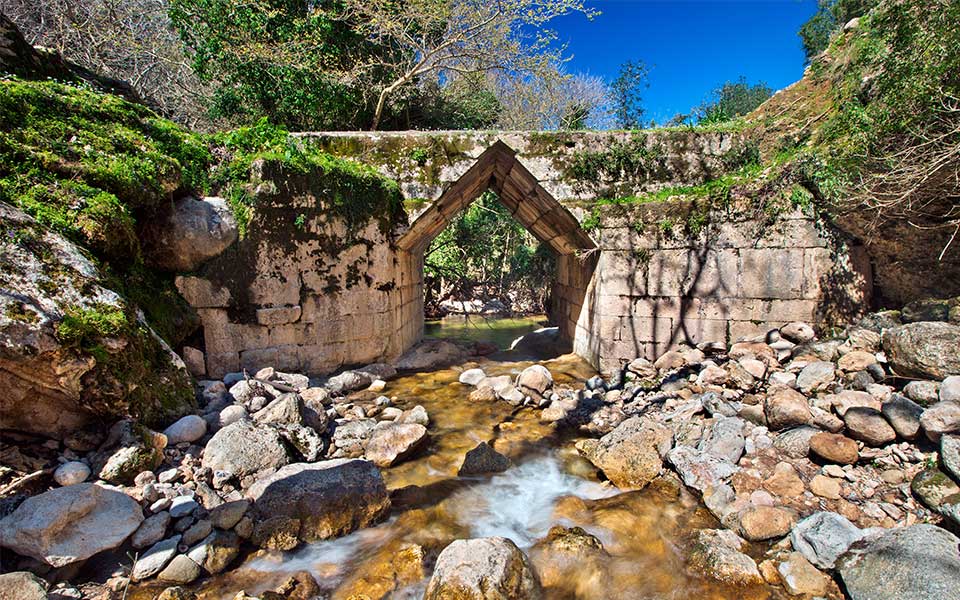
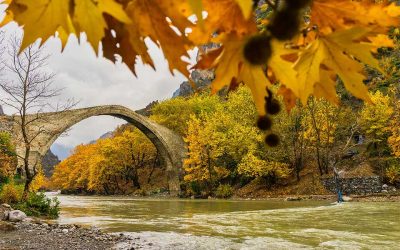
The ancient corbel-arch bridge near the entrance to Eleutherna, likely dating to the Hellenistic period (3rd century BC).
© Shutterstock
High on the northern slopes of Mount Ida (Psiloritis), about 25 km southeast of Rethymno, lie the ruins of Eleutherna, a city that bridges Crete’s mythical and historical worlds. Unlike the Minoan palaces of Knossos or Phaistos, Eleutherna flourished later, during the Geometric, Archaic, and Classical periods, when Crete was redefining itself within the broader Greek world.
Founded by Dorians in the 9th century BC, Eleutherna grew rich from inland trade and craftsmanship. Excavations by the University of Crete have revealed sanctuaries, paved streets, cisterns, and early Christian basilicas scattered along the slopes, and the celebrated Orthi Petra necropolis, where richly adorned female (“Iron Age priestesses”) and warrior burials evoke funeral rites described in Homer. Don’t miss the well-preserved Hellenistic stone bridge at entrance to the archaeological park.
The site’s modern highlight is the Archaeological Museum of Ancient Eleutherna, opened in 2016 – the first fully integrated site museum in Crete. Light, modern, and beautifully curated, it displays jewelry, figurines, and weapons directly from the digs, including the celebrated funerary urn of a priestess.
Eleutherna is about a 40-minute drive from Rethymno and pairs perfectly with the pottery village of Margarites. Allow at least two hours for both site and museum. Bring water and a hat – the upper slopes are exposed – but the sweeping mountain views are worth every step.
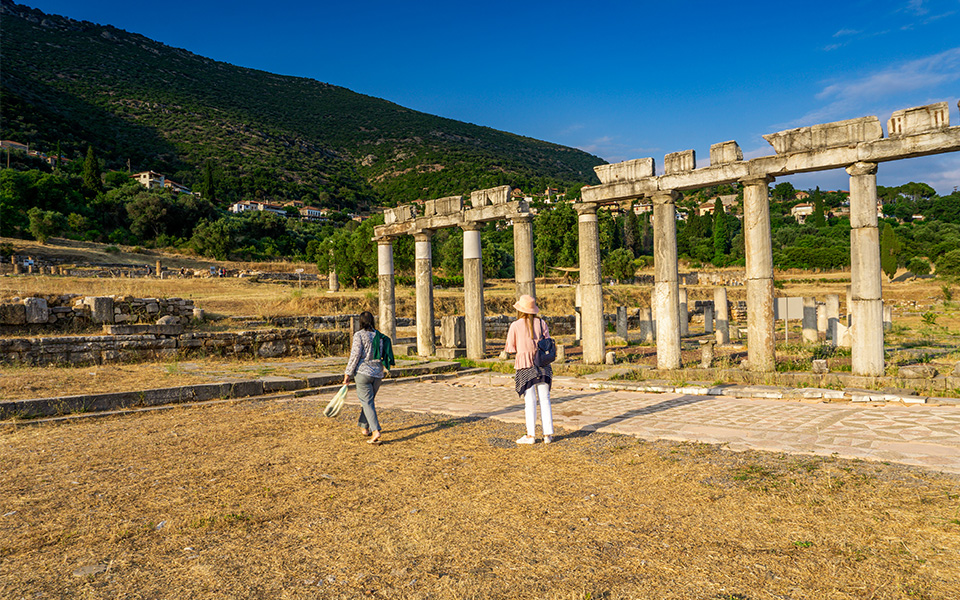
Ancient Messene is one of the best-preserved ancient cities in Greece.
© Shutterstock
Set in a wide, fertile valley beneath Mount Ithome, Messene is one of the most complete ancient cities in Greece – vast, evocative, and, remarkably, always uncrowded. Founded in 369 BC by the Theban general Epaminondas after Sparta’s defeat at Leuctra, it was built as the capital of a newly liberated Messenia, freed after centuries of Spartan rule.
Today, the site’s scale still impresses: massive defensive walls, the Asklepieion (the religious and civic heart of the city), theater, stadium, gymnasium, a hero shrine of Arsinoe, and even residential quarters survive in situ. Ongoing excavations led by Professor Petros Themelis since 1986 have turned Messene into a “living museum” of ancient urbanism and one of Greece’s most rewarding archaeological experiences.
Though relatively well known to scholars, Messene remains surprisingly under-visited – a quiet contrast to other sites in the Peloponnese, like Olympia or Mycenae. Allow at least two hours to explore, or three if you plan to wander the entire lower city. The small on-site museum displays sculptures, inscriptions, and artifacts from local houses and sanctuaries. The ruins lie near the modern village of Mavrommati, about 30 minutes northwest of Kalamata. Don’t forget to bring plenty of water, sun protection, and your camera – the view from the stadium toward Mount Ithome is unforgettable.
A forgotten world comes to life...
From Neolithic findings to haunting legends,...

This spring, five majestic peaks across...

From Samos to Crete, we've selected...