What Makes Corfu’s Easter Special?
From clay-pot smashing and philharmonic processions...

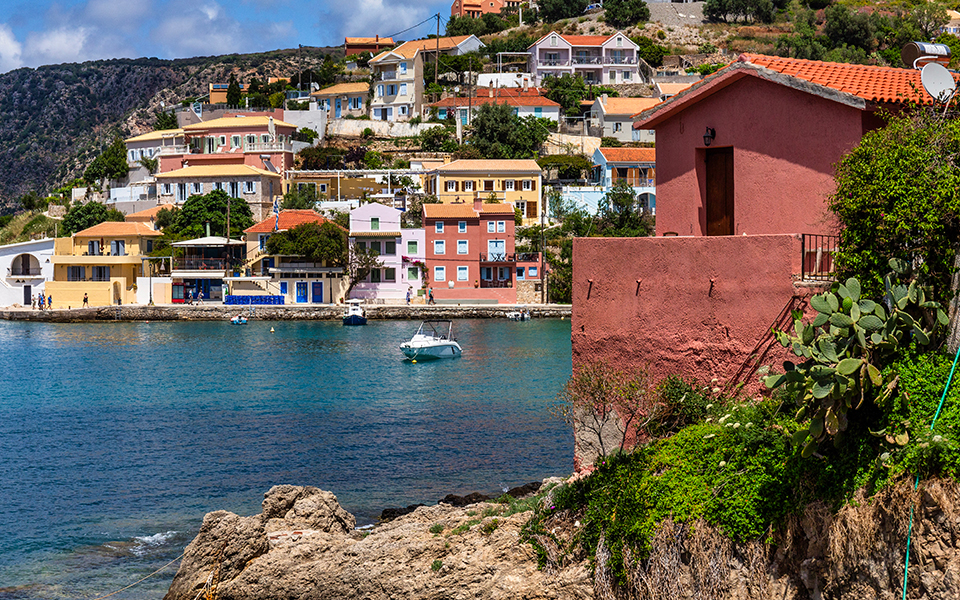
Assos
© Perikles Merakos
Kefalonia is one of those islands that impresses with its natural beauty but wins you over with its authenticity. You may come for its internationally renowned emerald beaches, but you stay for the experiences that bring you closer to the island’s traditions, gastronomy, nature and people. From fishing and horseback riding to wine tasting and stargazing, experiential tourism is gaining ground among travelers seeking a deeper connection with this lush Ionian island and finding it on farms, in small harbors, along trails and on mountain peaks. These are places cruise ships and even tour buses rarely reach: places where locals and visitors come together, the island’s heritage is generously shared, and no one seems to be in a hurry. Flavors are more intense, laughter is louder and the stars shine brighter.
“There are quite a few tourists nowadays who no longer want to spend all day by the pool wearing an all-inclusive wristband,” says Haritos Haritatos, a former pharmacist who, together with his two brothers, revived the family vineyard in Kladata, just outside Lixouri. Since 2012, he has been offering wine-tasting experiences to visitors from around the world. “When people come to the estate and have a good time tasting a good wine, our own olive oil and local cheeses, once they return home they associate that positive experience with Greece as a whole.”
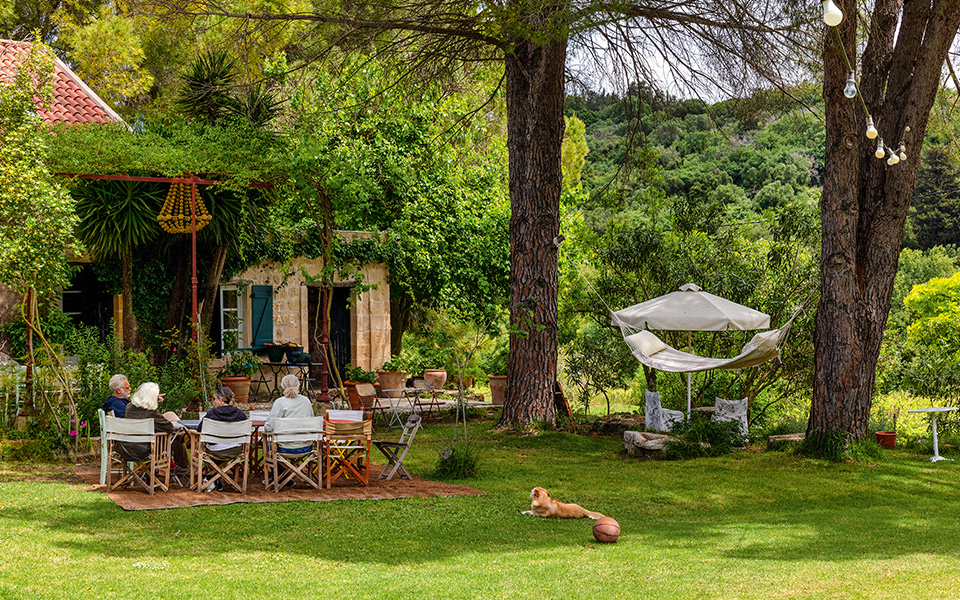
Afternoon relaxation in the garden of the historic Charitatos family farmhouse, in Kladata, Paliki.
© Perikles Merakos
Visitors to Haritatos Estate can tour the vineyards and the family’s historic farmhouse while tasting a selection of single-varietal wines accompanied by local products. “We knew it was never going to be a fine-dining journey,” writes English foodie Freddie Rothwell after his visit. “But it was something far better: real cooking. Honest food, local wine, and the kind of hospitality that reminds you why people fall in love with Greece in the first place.” Haritatos Estate also stands out for its zero-waste philosophy, which has long been an integral part of its vision. Indeed, most experiential tourism activities in Kefalonia are rooted in environmentally friendly practices and closely connected to the island’s primary sector.
“Today, what is being presented is a somewhat sanitized version of traditional Kefalonia. Tradition cannot be separated from the primary sector,” says Pantelis Defteraios, a livestock farmer and riding instructor in the Throgano area of Sami. “Tourists come, take their tour and leave. Only the more romantic traveler – the kind who has loved the island since the 1980s – stays longer,” adds the owner of Kefalonia’s Horse Riding Stables.
A third-generation livestock farmer, he offers not only riding lessons but also equestrian experiences for visitors who want a closer look at life on the farm and the chance to explore the area on horseback. Before getting into the saddle, participants are asked to care for the horses, brushing and saddling them themselves. The stables currently have eight horses. “I could work with more,” he says, “but I don’t want the activity to become purely tourist-oriented. I don’t want to lose touch with either horse riding or livestock farming.”

Horseback riding on Sami beach with Pantelis Defteraios of Kefalonia’s Horse Riding Stable.
© Perikles Merakos
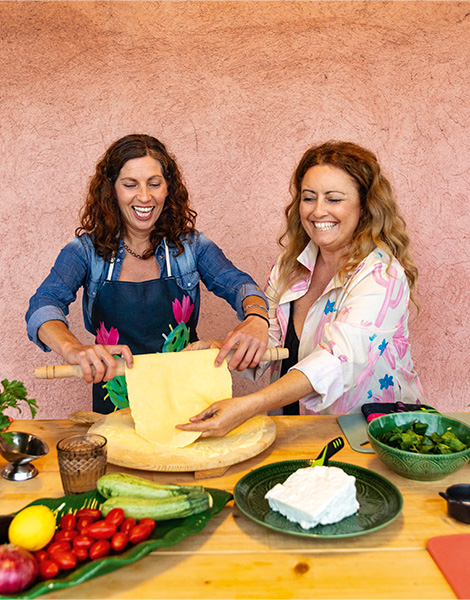
Cooking classes with Maggy Papadatou at Opuntia Farm.
© Perikles Merakos
Agronomist Maggy Papadatou takes a similar approach. Although her ultimate goal is to devote herself entirely to primary production, she decided to offer hands-on culinary experiences, organizing farm-based cooking classes using the prickly pears she grows with her husband in the Livathos area. “Not long ago, we visited an estate in Spain, just outside Madrid. They offered us wine and onions roasted in the ground, wrapped in newspaper. We saw how many different things they were doing on farms there and decided to open ours up to visitors too.”
Although growing prickly pears – still relatively unfamiliar on the Greek market – is something of a gamble, Maggy and her husband, Othonas, chose the crop with both the island’s labor shortage and the effects of climate change in mind. Prickly pears can withstand extreme weather conditions and require little irrigation or special care. This is particularly important on an island like Kefalonia, where the shortage of agricultural workers makes intensive cultivation difficult. At Opuntia – named after the prickly pear’s Latin name – places in the cooking classes fill up quickly, primarily with Americans, as well as visitors from the UK, the Netherlands and Germany. “Greeks are unlikely to pay to learn how to cook,” Maggy remarks.

A moment to catch your breath, with views of the rare fir forest and the Ionian islands from Mount Ainos National Park.
© Perikles Merakos

A boat ride through the Cave of the Nymphs, the underground lake cave of Melissani, where the god Pan was worshipped in antiquity.
© Perikles Merakos
Greeks are also a minority among those who try fishing tourism aboard Captain Michalis’ traditional fishing boat. Some wait until the last minute to book, by which time all the places have already been taken, while others consider the experience too expensive. “You’ll pay 50 euros for a sunbed here, so why not come aboard a fishing boat and get to know the sea and the people who make their living from it?” asks Spyros, who, together with his wife Eleftheria, chose to experience fishing tourism during their honeymoon. “It’s not just about swimming in the open sea and eating fresh fish; you’re also supporting the people who keep Greece’s maritime traditions alive.”
Michalis Mesoloras’ boat received Greece’s first fishing tourism license in 2015, when the Greek state gave professional fishermen the opportunity to develop an alternative source of income while reducing their fishing activity. “Fish stocks have declined dramatically in recent years,” says Antonia Vasileiou, Michalis’ wife and president of the Panhellenic Association of Fishing Tourism Professional Fishermen. “The boat had become our Titanic, dragging us to the bottom, until this license came as a gift,” Antonia recalls. “Thanks to these excursions, fishermen can earn an income without having to overfish, visitors enjoy a unique experience aboard a traditional fishing boat, and, at the same time, we give the sea some room to ‘breathe.’”
Today, Antonia and Michalis offer one of the island’s most successful experiential tourism activities, welcoming up to 12 guests at a time aboard their nearly 15-meter-long traditional wooden liberty fishing boat. Visitors get to experience the Ionian Sea, learn fishing techniques and, at the end of the day, sit down together to share the fresh catch. “We used to catch three tons of lobster a year and still didn’t have enough money for fuel. Now I catch 300 kilos a year and my pockets are full,” Captain Michalis concludes.

In the Sami area, the forest slopes all the way down to the sea.
© Perikles Merakos
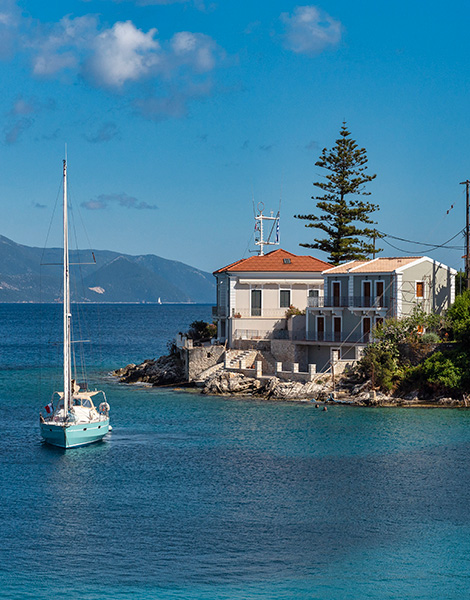
Fiskardo, the fishing village that has evolved into Kefalonia’s most cosmopolitan destination.
© Perikles Merakos
It is no coincidence that Kefalonia’s beaches frequently feature on lists of the world’s best. Among the dozens of options, a handful stand out for views that are quite literally breathtaking. Don’t leave without taking a dip in the crystal-clear waters of Antisamos, the beach made famous by Captain Corelli’s Mandolin, framed by the lush landscape of Sami on the island’s eastern coast. Head west to admire the striking shades of blue and white at Myrtos Beach from above. Continue a little farther south and either follow the roughly 40-minute hiking trail or take a sea taxi from the hillside village of Zola to spend the day swimming in the secluded cove of Fteri, recently ranked the second-best beach in the world by World’s 50 Beaches. Then head southwest to Petani Beach for one of the most spectacular sunsets in the Ionian.
Just as impressive as Kefalonia’s coastline are its caves, an entire subterranean kingdom extending beneath the central and western parts of the island. Although the wait can exceed an hour, especially on August weekends, it is worth queuing for a traditional boat ride through Melissani Cave Lake, where the god Pan was worshipped in antiquity. Also known as the Cave of the Nymphs, this underground wonder is considered one of Kefalonia’s most iconic geological attractions. Six kilometers farther south lies Drogarati Cave. Reaching a depth of around 95 meters, it features the vast “Chamber of Exaltation,” renowned for its exceptional acoustics, and is one of the few caves in Greece to host concerts.
Of Kefalonia’s more than 300 villages and settlements, those in the north stand out – not only because their names do not share the characteristic “-ata” ending found across much of the island, but also because they retain a distinctive atmosphere and aesthetic.
Fiskardo, which escaped the devastating 1953 earthquakes largely unscathed and thus preserved some of its 18th-century charm, is perhaps the island’s most cosmopolitan destination. A stroll around its picturesque harbor, from the Roman Cemetery to the Venetian Lighthouse, is a must. A little farther south lies photogenic Assos, with its colorful houses and 16th-century Venetian castle. Although boutique hotels and tourist accommodation now seem to dominate at the expense of everyday village life, the landscape surrounding Assos remains, without question, one of the most beautiful in the Ionian.
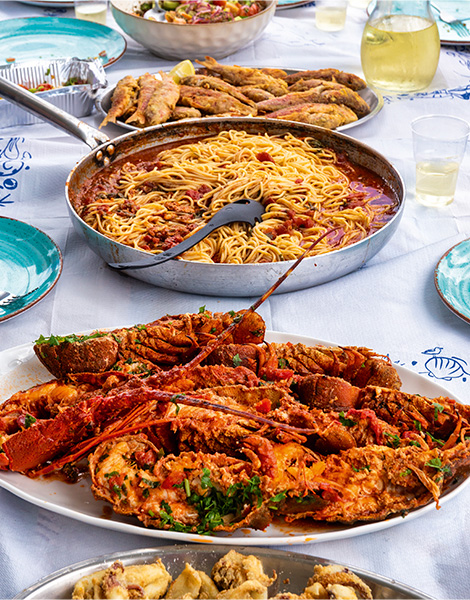
A meal prepared with the day’s catch, served aboard Captain Michalis’s wooden Liberty fishing boat.
© Perikles Merakos

Hauling in lobsters and slipper lobsters off the coast of Kefalonia.
© Perikles Merakos
Captain Michalis’ traditional wooden fishing boat sets sail at 8:30 in the morning from the small harbor of Aghia Pelagia, near the airport, to haul in the nets and fill the table with cuttlefish, octopus, red mullet, parrotfish and crabs – as well as the highlights of the experience: lobster and slipper lobster. The dishes prepared in the boat’s tiny galley offer some of the most authentic flavors Kefalonia’s sea and land have to offer. The trip lasts around eight hours, depending on weather conditions, and costs €100 per person (€60 for children up to 12 years old).
Rising to 1,628 meters, Mount Ainos is not only the most important protected area in the Ionian Islands but also Greece’s only certified Dark Sky Park, making it an ideal destination for stargazing. Every summer, the Natural Environment and Climate Change Agency, often in collaboration with the Orion Astronomical Society of Patras, organizes free stargazing evenings. Depending on planetary positions and weather conditions, visitors can experience the darkness of the night sky as our ancestors knew it before light pollution, observing planets, constellations and other celestial bodies through telescopes.

Wine tasting at Haritatos Estate, featuring single-varietal wines made from the local Vostilidi, Muscat and Mavrodaphne grapes.
© Perikles Merakos

Harvesting prickly pears at the organic Opuntia Farm in Livathos.
© Perikles Merakos
The stories of a family of doctors and pharmacists who always knew how to make good wine still echo among the vines and stone walls of the 19th-century farmhouse, one of the few to survive the devastating earthquakes of 1953. Today, Haritatos Estate in Kladata – which was practicing regenerative agriculture long before the term entered the modern sustainability vocabulary – cultivates three grape varieties: Vostilidi, Muscat and Mavrodaphne. A range of tasting experiences is available, priced from €25 to €45 per person.
Did you know that prickly pears are considered one of the best remedies for a hangover? Maggy Papadatou will introduce you to her favorite superfood, show you around her Opuntia farm and teach you how to prepare everything from Kefalonian riganada to prickly pear jam, using organic, locally sourced ingredients. At the end, you’ll sit down to enjoy the dishes you prepared, cooked in a wood-fired oven and served overlooking the family’s prickly pear farm and the lush Livathos plain. Cooking classes take place twice a day, at 11:00 in the morning and 7:00 in the evening. The menu changes according to the seasonal produce available. Participation costs €65 for the morning session and €135 for the evening session.
“When you sit in a chair on the beach, you often – even unintentionally, because you’re relaxing – make nature adapt to you. Horseback riding, on the other hand, requires you to adapt to nature,” says horse-riding instructor Pantelis Defteraios. If you weigh up to 95 kilos, you can ride Filippos, Hector, Hermes and the stable’s other horses along a route stretching from Drogarati Cave to Sami Beach, through lush green trails. Alternatively, shorter and longer routes are available for exploring Kefalonia’s cave region. The riding experiences are suitable even for children, provided they wear the helmet and protective safety vest supplied by the stable. The shortest route for beginners lasts around two hours and costs €80.
From clay-pot smashing and philharmonic processions...

A contemporary expression of island heritage,...

A nutrition expert explains why extra...

As development reshapes the Cycladic island,...