The Capital’s Canopy: How Trees Shaped Athens
Athens has always been graced with...


The museum entrance on Kallirois Avenue, seen at night.
Long before it became home to contemporary art, the FIX building occupied a special place in Athens’ collective memory. More than a landmark, it stood as a symbol of a changing city, its history intertwined with the evolution of modern Athens itself.
Today, the National Museum of Contemporary Art Athens occupies the former FIX brewery, one of Greece’s most important industrial sites. The building remains closely associated with the modernist face of postwar Athens, yet its location reveals an even older layer of the city’s history. Standing on Kallirois Avenue, the museum sits above the subterranean course of the Ilissos, one of the three rivers of ancient Athens. Once flowing through the area where Syngrou and Kallirois avenues run today, the river was gradually covered over during the 20th century as the city expanded around it.
Even the avenue’s name preserves a memory of that landscape. Derived from the ancient Greek words “kalos”and “rheo,” Kallirois refers to the “beautifully flowing spring” associated with Kallirroe, Athens’ most important water source in antiquity. The celebrated spring later became linked to the Enneakrounos, the city’s famous nine-spout fountain.
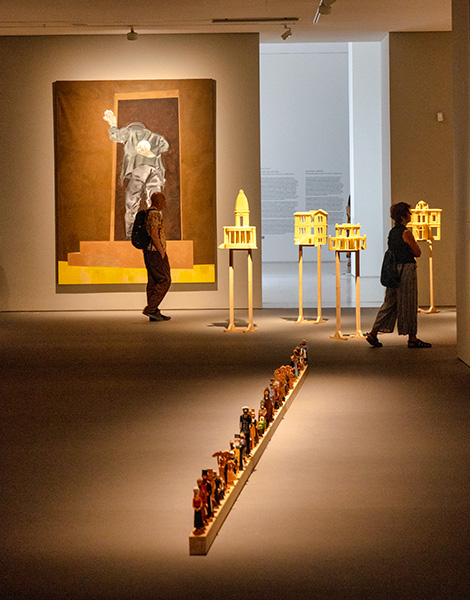
An installation from the exhibition “South by Southeast,” curated by Katerina Gregos.
© Perikles Merakos

A 1973 Pop Art piece by Giorgos Ioannou.
© EMST COLLECTION
The story of the building itself begins with the Fuchs family, whose name, with a slight local alteration, would become synonymous with beer in Greece. Bavarian mining engineer Johann Adam Fuchs arrived in Greece during the reign of King Otto, while his son Johann Georg Fuchs – better known as Ioannis Fix – helped establish what would become the country’s most influential brewery. Brewing was never a family tradition. It began as a practical response to the needs of Bavaria’s expatriate community, who longed for the beer of their homeland. As time passed, however, the enterprise grew into one of modern Greece’s most recognizable brands, giving rise to the name Fix – a Greek version of Fuchs – which became virtually synonymous with beer for generations of Greeks.
The rise of the company mirrored the transformation of the nation itself. From using snow collected on Mt Parnitha to cool its beer to introducing modern refrigeration and bottling technologies, FIX was often at the forefront of innovative thinking. In 1920, the company brought artificial ice-making technology to Greece, helping modernize production and distribution.

The FIX brewery building during the period of its partial demolition in the 1990s.
© NIKOS VATOPOULOS ARCHIVE
Over time, the family developed close ties with the palace and became an official supplier to the royal court. This helped secure a monopoly that lasted for about a century, but it also brought tensions. There were periods when the court placed financial pressure on the company or used it as a political tool. Internal disagreements among the heirs over expansion and partnerships with foreign companies created fractures that affected the course of the business.
The brewery entered a new chapter in the 1950s and 1960s, when celebrated modernist architect Takis Zenetos redesigned the factory. With its expansive glass façades and production spaces visible from the street, the building embodied the optimism and technological ambition of postwar Athens. The Fix family also cultivated strong ties to the arts, supporting musicians, theater groups and other cultural initiatives, a connection that would prove unexpectedly prophetic.
Brewing operations ceased in the late 1970s, and the company declared bankruptcy in 1983. The building was left abandoned, entering a long period of decline, looting and uncertainty. For years, Athenians debated whether the structure should be preserved or demolished. Although part of its northern section was lost in 1995, the majority of the complex survived, paving the way for one of the city’s most significant cultural transformations.
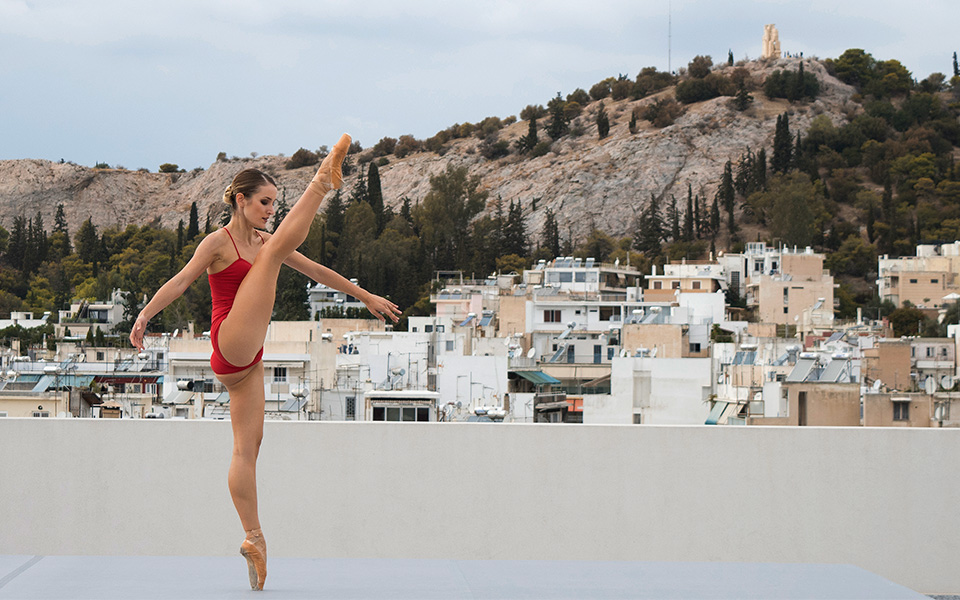
The piece “bodies. ever. stitches,” on the rooftop terrace of EMST, with choreography by Cecilia Bengolea.
© Courtsey of EMST, Photo: Olympianna Miliaki, Asterianna Arvaniti
The story of the institution known as the National Museum of Contemporary Art Athens has been no less eventful. Founded in 1997, the museum spent decades in search of a permanent home. During its early years, it operated without a building of its own, presenting exhibitions and public programs across Athens before moving temporarily to the Athens Conservatoire in 2008.
The transformation of the former FIX brewery into a museum was a complex architectural undertaking. The redesign was entrusted to an international team of architects, with the aim of preserving the defining features of the historic shell while creating a contemporary museum environment. The architects and the museum’s administration agree that the new façade along Kallirois Avenue “highlights the forgotten history of the Ilissos,” reconnecting the building with a natural landscape that has disappeared from view.
The EMST occupies more than 18,000 square meters. The preserved façades on Syngrou Avenue and Ambrosiou Frantzi Street remain central to its identity, while new exhibition galleries, educational spaces and public facilities have been integrated into the former industrial structure. Until recently, the building’s main entrance was painted a vivid red, in a playful reference to painted lips. The color has since been replaced by a more understated gray, as part of a broader aesthetic refresh. The museum’s full opening in 2020 brought to completion a process that had lasted more than two decades, giving Athens a major institution devoted to contemporary culture. For more than a century, the massive structure on Syngrou Avenue has witnessed the transformation of the city around it. Today, behind the distinctive façades designed by Zenetos, contemporary artistic creation meets architectural heritage and the living everyday fabric of Athens.
The museum’s location makes it an ideal starting point for discovering a different side of the city. Just a few steps away lies Koukaki, a neighborhood that in recent years has become popular with locals and visitors alike. Cafés, restaurants, bookstores, workshops and pedestrian streets create an urban setting that combines the character of an Athenian neighborhood with the international energy of a city constantly welcoming new arrivals. In this context, EMST functions as a meeting place for art, architecture, industrial heritage and the city itself. This summer is a particularly interesting time to visit, with three new exhibitions that offer new perspectives on Greece, the Mediterranean and Southeast Europe.
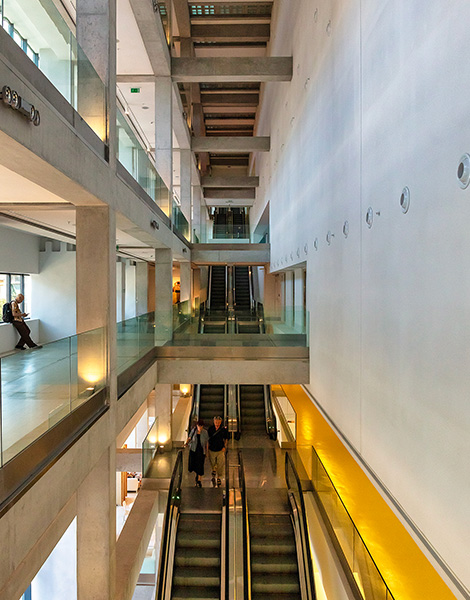
The museum‘s industrial aesthetic. Far right: Magical rooftop views from the restaurant Nyn Esti.
© Perikles Merakos

George Lappas, Truck, 2001 Photographic film, PVC, metal and fluorescent lights, Collection of the National Museum of Contemporary Art Athens. Donation from The Dakis Ioannou Collection.
© Perikles Merakos
The group exhibition “South by Southeast,” curated by the museum’s artistic director Katerina Gregos, forms the centerpiece of this year’s exhibition program. Through more than 100 works by 50 artists from over 20 countries, the show brings together recent acquisitions, donations, works from EMST’s permanent collection and selected loans reflecting the museum’s collecting policy over the past five years. Its appeal lies not only in the geographical breadth it covers – the Mediterranean, Southeastern Europe, the Balkans and the Near East – but also in the way it brings to light shared experiences, cultural affinities, population movements and historical trajectories. Greece is presented not as the peripheral edge of a continent but as a meeting point between different worlds. This approach places the country at the center of a broader cultural map shaped over centuries by exchange, conflict and coexistence. On the same floor, the museum’s “Spotlight” section focuses on George Lappas, one of the most important figures in contemporary Greek sculpture. Marking ten years since his death, the exhibition brings together works from the museum’s collection and selected loans, highlighting his contribution to expanding the language of sculpture beyond the static object. Light, movement, architecture and the human figure all play central roles in his practice.
The third exhibition, “Voices” by Margarita Athanassiou, takes a more intimate approach. Presented on Level -1, the three-channel video installation combines archival material, personal testimony, and original footage to explore memory, family history and the transmission of experience across generations.
Different in art media and subject matter, the three exhibitions are linked by shared questions of identity, memory and cultural inheritance. Together, they trace a path from broad collective narratives to deeply personal stories.
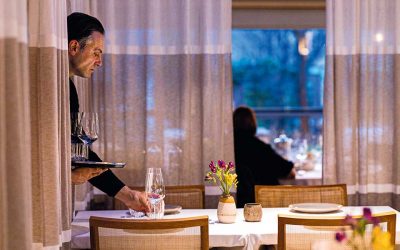
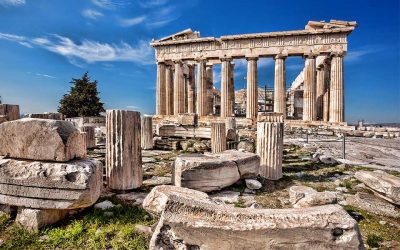
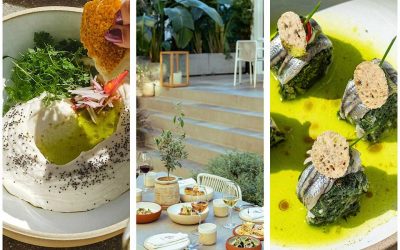
The visit culminates on the museum’s fourth floor and rooftop terrace. From here, Athens reveals itself as an urban landscape where different historical periods coexist within a single panorama. The Acropolis, the Pnyx, the Odeon of Herodes Atticus, and Lycabettus Hill all come into view. This level is also home to Nyn Esti, where Greek ingredients and culinary traditions are interpreted through a contemporary lens. The restaurant provides a fitting conclusion to the viewing experience, moving the conversation around culture, creativity and location from the galleries below to its own bold menu.
Athens has always been graced with...
Souvlaki joints started appearing in earnest...

Old and new haunts, stories from...
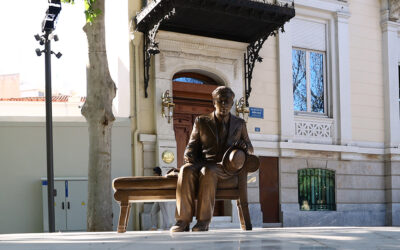
A new statue on Dionysiou Areopagitou...