Don Dines in Athens: In/Out Eating
Not all surprises are pleasant, but...


© Angelos Giotopoulos
Forests of pine, cypress and cedar, plains dotted with wildflowers, and steep slopes that lead down to beautiful sandy beaches make Kos an island well worth exploring on foot, especially in spring. Its archaeological wealth, abandoned villages, picturesque chapels, wetlands and views of nearby islands make hiking here even more rewarding.
Czech Andrea Simunkova and her Cretan husband Manolis Kouklakis organize nature excursions every Sunday until May, when the heat begins to intensify. Routes range from the summit of Mount Dikeos (864 m) to the lush landscapes of Asfendiou and the scenic Kefalos area, with views of the iconic islet of Kastri and its charming chapel of Aghios Nikolaos. Open to all levels, these hikes offer one of the best ways to discover Kos before the summer crowds arrive.
Kos Hiking Group – visit their page on Facebook.

The famous landmark of the island, the Asclepieion, where Hippocrates taught medicine.
© Angelos Giotopoulos

Casa Romana, in the city of Kos.
© Angelos Giotopoulos
Kos can be seen, in its entirety, as an open-air archaeological park, home to an impressive mosaic of monuments spanning multiple eras. It is largely thanks to these archaeological treasures that the island developed as a tourist destination. As Kos-born author and psychiatrist Kostas Kogiopoulos writes, “Governor Mario Lago, in the late 1920s, believed that the islands’ history and natural beauty could attract visitors, and he launched a program to promote them and build hotels.”
Within this context, in 1927 architect Rodolfo Petracco designed the island’s first essentially modern hotel, the Albergo Gelsomino, at the junction of Hippokratous and Vasileos Georgiou II streets. Its architecture combines eclectic influences with Gothic and Venetian elements, reflecting the spirit of the era.
In addition to the landmarks from the Italian period, be sure to visit the Archaeological Museum and the Asclepieion, the island’s most famous archaeological site, where Hippocrates once taught. Also noteworthy are Roman monuments such as the Casa Romana, the Roman Odeon and the Baths, as well as the Knights’ castles of Neratzia and Antimachia, the Defterdar Mosque and the Ottoman baths.

© Angelos Giotopoulos
Sunset rides – or, for the fortunate, excursions under the full moon – pony rides for children, and even bareback swims in the sea for experienced riders: horseback riding offers one of the most distinctive ways to experience the long stretch of white sand that runs from Tigaki to Marmari, before it fills with sunbeds and umbrellas in the summer months.
Greek-Australian Erika Mastorou, who specializes in therapeutic horseback riding, has created a thoughtfully designed farm with thirty-five horses of various breeds. Her farm offers tailored experiences for both beginners and seasoned riders. Open year-round, it also gives visitors the chance to encounter other animals up close, including llamas, deer, peacocks and rabbits.

© Angelos Giotopoulos
The sheep at the Drosos family farm – at the foothills of Dikeos, the highest mountain on Kos – seem to do much of the work. Grazing freely across 10 hectares of aloe, they are the farm’s natural “caretakers,” maintaining the cultivation of this medicinal plant, long valued for its beneficial properties – from healing wounds to soothing digestive issues and arthritis.
At the Pandrosia farm in the Amaniou area, near the village of Pyli, visitors can watch the sheep at work, plant and harvest organic aloe, taste fresh gel straight from the plant, and create their own essential oil. A walk through the botanical garden – filled with lavender, thyme, oregano and savory – is equally rewarding, as are the hands-on activities offered in the farm’s “mud field.”

© Angelos Giotopoulos
© Angelos Giotopoulos
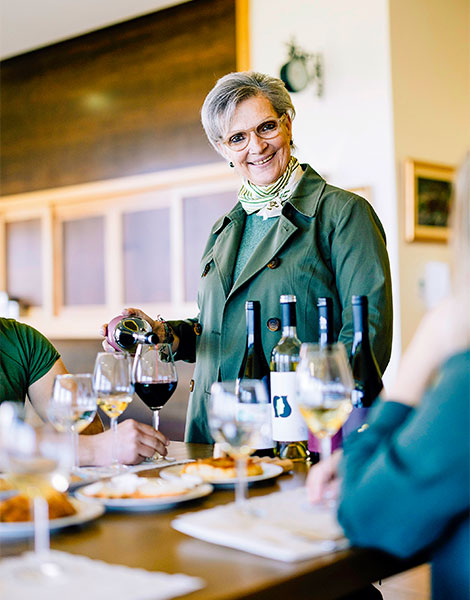
Thirty different Greek grape varieties are cultivated according to the principles of “ecological engineering” in the vineyards of the Triantafyllopoulos family, who played a key role in securing Protected Geographical Indication (PGI) status for Kos wine in 2007.
Their winery is in the Miniera area of Asfendiou, whose vineyards supplied many Mediterranean ports in antiquity. It offers distinctive wine tourism experiences with views of Kalymnos and Pserimos. Guided visits take guests through every stage of production, from vinification and aging to bottling and tasting. The family’s collection of more than 200 paintings by Greek artists and its archive of tools and machinery that trace the island’s winemaking history are also of interest.

Flavors of the sea at Nikolas o Psaras.
© Angelos Giotopoulos
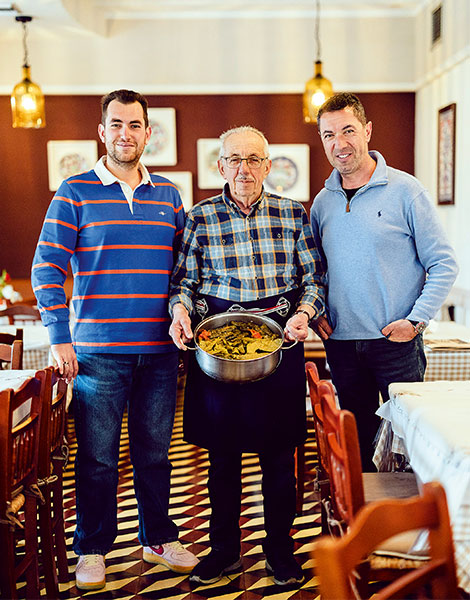
Ali of the eponymous restaurant, with his son and grandson.
© Angelos Giotopoulos
In spring, there’s no need to book a table at the island’s best-loved eateries. It’s also the perfect time to meet the people of Kos, before the pace of the tourist season picks up.
In the town center, at the corner of Artemisias and Thessalou streets, O Ali (Tel. (+30) 22420.218.60) – run by Ali, his namesake grandson and his sons, Hasan and Ahmet –continues the culinary tradition of the Hatzisouleiman family, who opened the Asklipios taverna in Platani (Kermetes) in 1986. The menu is known for its kebabs, acem pilaf, stuffed vine leaves and savory pies.
The town is also home to some of Kos’s best fish tavernas, open year-round. Nikolas o Psaras (4 Antimachou, Tel. (+30) 22420.230.98) offers a wide variety of shellfish and fresh fish sourced from Kalymnos fishermen, and Votsalakia (10 G. Averof, Tel. (+30) 22420.265.55) is known for its grilled shrimp, calamari and homemade fried potatoes.
For a meal with a view, Oromedon (Tel. (+30) 22420.699.83) in Zia – the highest inhabited village on the island – serves traditional Dodecanese dishes prepared in a wood-fired oven, including stuffed goat, pork with chickpeas and bulgur, and a variety of vegetable pies.
Another standout is Arap’s taverna (Tel. (+30) 22420.284.42), in the area known as “Turkish quarter” in the village of Platani. Here, the menu draws on Anatolian influences, featuring cumin-spiced soutzoukakia, yogurt-based vegetable dishes and the distinctive çökertme kebab.
Not all surprises are pleasant, but...

Spring is the best time to...

Since 1928, this family-run wine taverna...
Join expert guides and trained truffle...