Archaeological Sites Hosting Culinary Events
Ancient ruins meet modern recipes as…

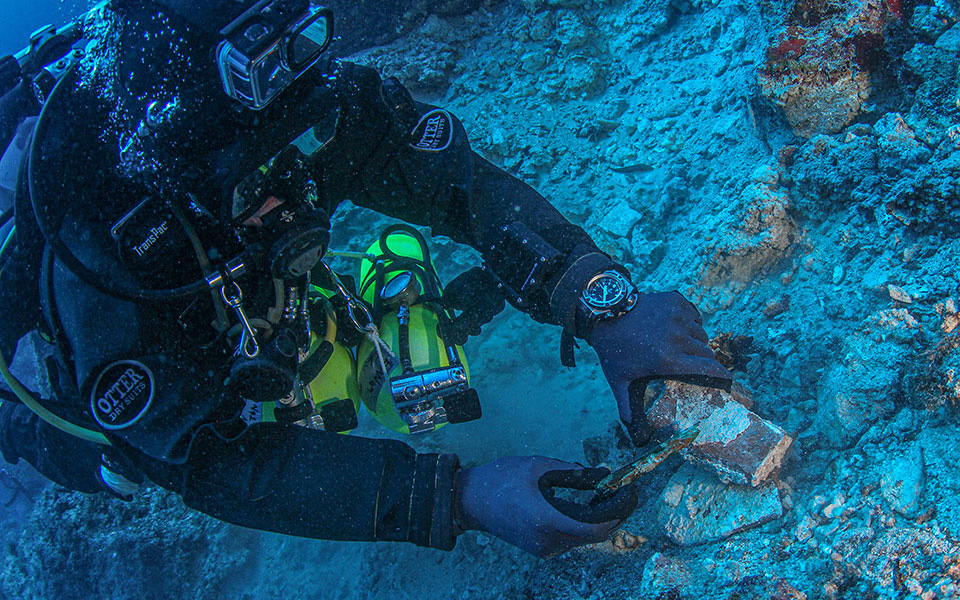
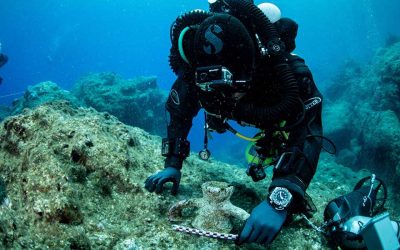
Part of an ongoing five-year program (2021–2025), the second phase of underwater archaeological research at the Antikythera shipwreck, conducted from May 23 to June 15, 2022, has led to significant discoveries. According to a press release from the Ministry of Culture and Sports, the latest finds include:
A marble statue base, preserving the nude lower limbs of a human figure, encrusted with a thick layer of marine deposits. Due to the extent of encrustation, a detailed description is not yet possible.
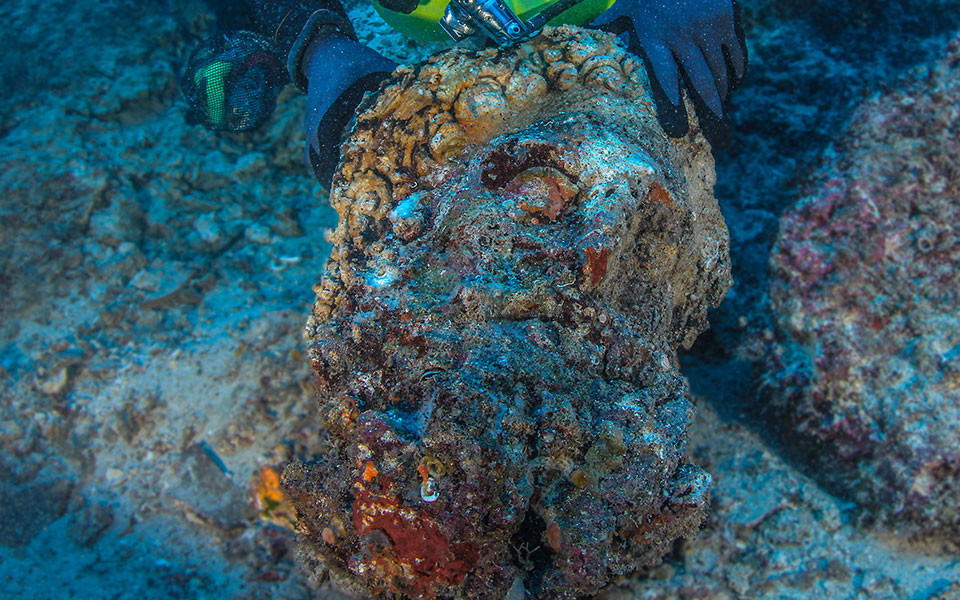
A marble bearded male head of a mythological character, tentatively identified as Heracles of the Farnese type and referred to as the “Antikythera Heracles.” The head likely corresponds to the headless statue (no. 5742) in the National Archaeological Museum, recovered by sponge divers in 1900.
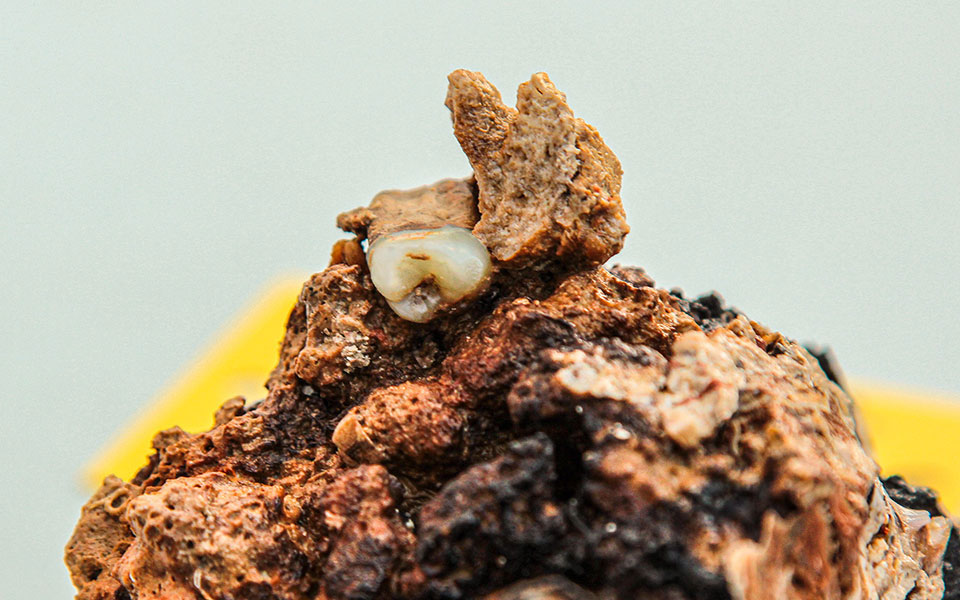
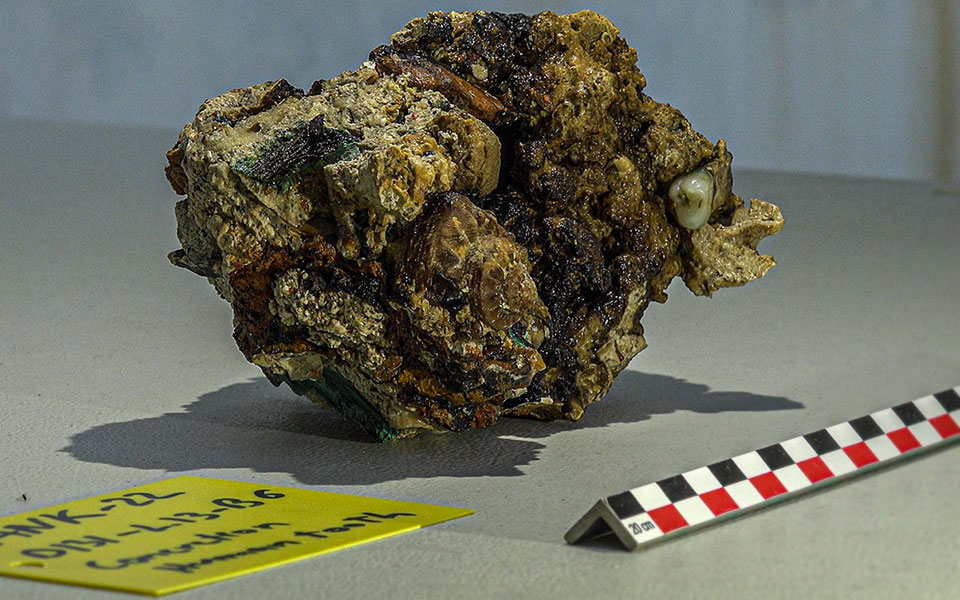
The most surprising find: two human teeth embedded in a solid mass containing traces of copper. DNA analysis of the material may provide insights into the individual’s sex and genetic profile.
Numerous items from the ship’s rigging: copper and iron nails, the lead stock of a wooden anchor, and amorphous metal masses coated in thick marine deposits. Some of these may conceal decorative or symbolic elements that can only be uncovered through X-ray analysis.
The recovered artifacts were carefully packaged under the guidance of the Conservation Department and safely transported to the facilities of the Underwater Antiquities Ephorate.
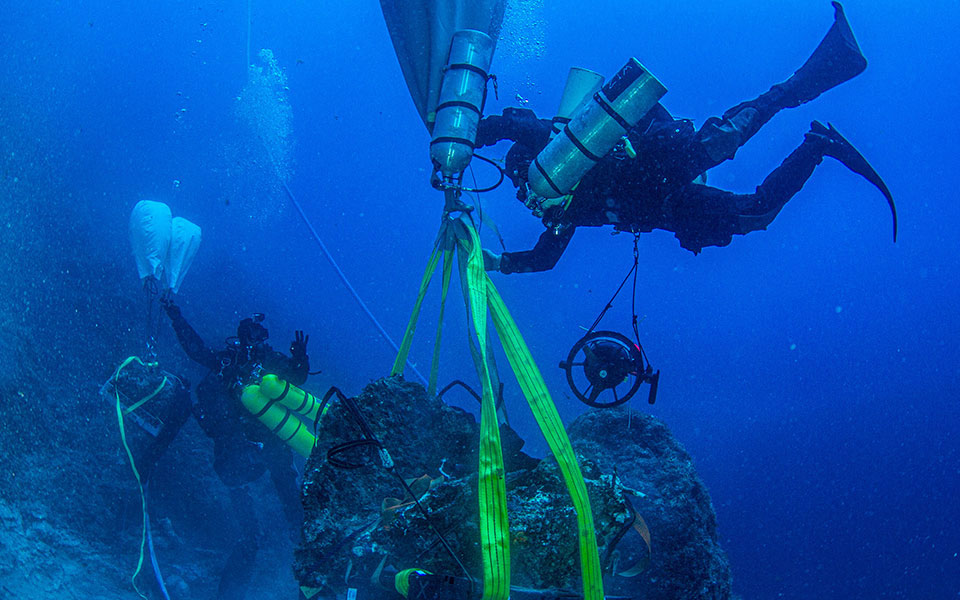
According to the same announcement, the excavation began with the removal of large, multi-ton boulders covering sections of the wreck. Special lifting bags were used, inflated via an innovative air-filling system developed by Hublot Xplorations.
The project, conducted under the auspices of the President of the Hellenic Republic, is carried out by the Swiss School of Archaeology in Greece. It is led by Dr. Angelikí G. Símossi, Head of the Archaeological Service of Evia, and Professor Lorenz Baumer, Classical Archaeology Chair at the University of Geneva, under the supervision of the Underwater Antiquities Ephorate.
In addition to the project directors, participants included Professor Carlo Beltrame and researcher Dr. Elisa Costa of the University of Venice; Orestis Manousos; Dr. Isaac Ogloblin; and University of Geneva researcher Alexandros Sotiriou, who led field operations. Divers Haris Mitrou, Nikos Giannoulakis, and Dimitris Romios also participated, along with four experienced members of the Port and Maritime Security Underwater Operations Unit of the Hellenic Coast Guard: Aris Machairidis, Dimitris Chatziaslan, Dimitris Kiossis, and Giorgos Lytribis.
The underwater excavation was carried out by trained divers using mixed-gas systems. Technical and scientific support was provided by Hublot’s R&D team and the specialized vessel Typhoon, donated by the Athanasios K. Laskaridis Charitable Foundation. The dive operation was coordinated by retired Vice Admiral Alexandros Palatianos, in collaboraiton with the Hublot Xplorations team – Mathias Buttet, Michel Blumenthal, Aloïs Aebischer, and Diego Carven – under the supervision of diving architect Aikaterini Tagonidou from the Underwater Antiquities Ephorate.
The University of Geneva’s Faculty of Science (Laboratory of Crystallography and Department of Earth Sciences) provided on-site lab equipment for preliminary analysis. The primary sponsors of the research are the Aikaterini Laskaridis Foundation and Swiss watchmaker Hublot. Additional support came from the Swiss Nereus Research Foundation – established to promote Antikythera studies – and Cosmote, the project’s communications sponsor.
The Ministry extended personal thanks to Panos Laskaridis and the Mayor of Kythera, Efstratios Charchalakis, for their continued support. Gratitude was also extended to the residents of Kythera and Antikythera for their commitment to the project.
Source: kathimerini.gr
Ancient ruins meet modern recipes as…
After a decade closed, the Archaeological…
Recent research at the site of…

Archaeologists believe the temple-shaped building discovered…