Reimagining the National Archaeological Museum
The approved expansion integrates historic architecture,…

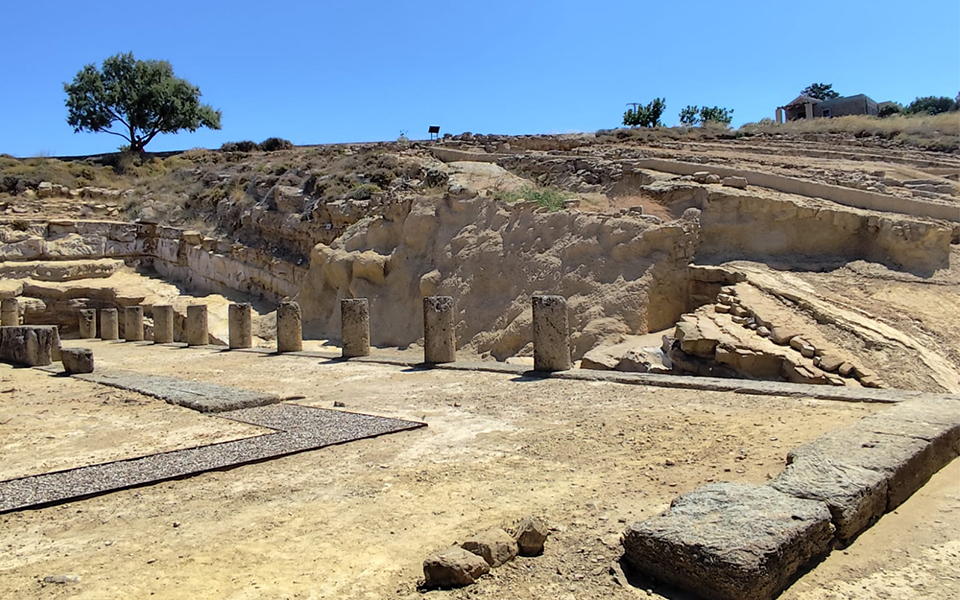
Archaeological site of the Sanctuary of the Kabeiroi.
© Greek Ministry of Culture
After almost a decade behind closed doors, the Archaeological Museum of Limnos has reopened to the public. Housed in a handsome neoclassical building in Myrina’s picturesque Romeikos Gialos district, the museum had fallen silent after earthquake damage in 2014. Now, following a complete restoration and redesign, it’s ready to welcome visitors with a reimagined exhibition that brings the island’s long history vividly to life.
Inside, the story unfolds from the Late Neolithic settlement of Poliochni – often called Europe’s earliest urban center – through the classical sanctuaries of Hephaistia and the Kabeiroi, and on to the Byzantine era. Among the treasures on display are elegant marble statues, clay figurines, and artifacts that speak of ancient myths, practices, and rituals once woven into everyday life.
One of the island’s most evocative legends is that of Philoctetes, the Homeric hero marooned on Lemnos en route to Troy, whose cave can still be visited on the rugged northeast coast.
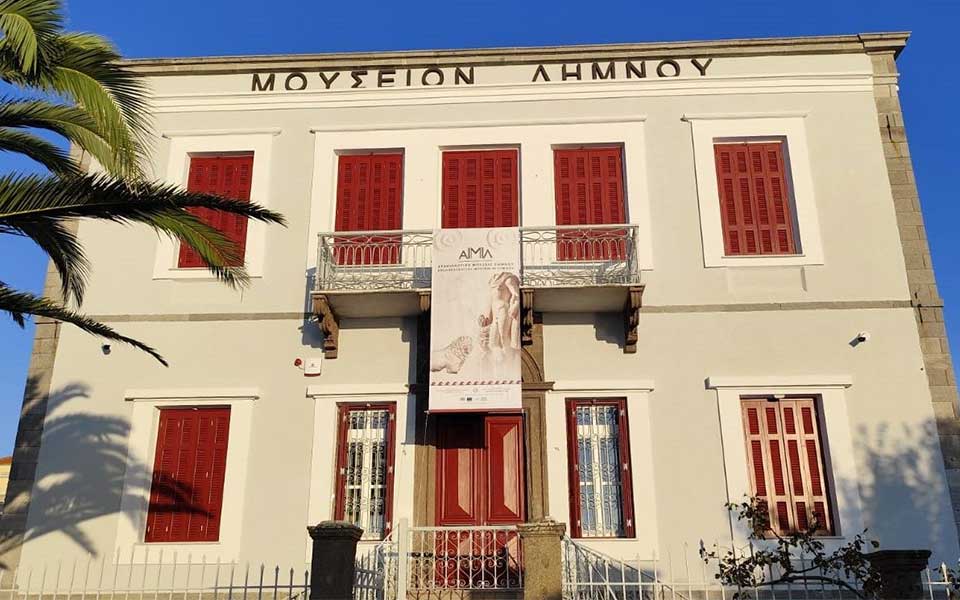
The newly restored Archaeological Museum of Limnos.
© Greek Ministry of Culture
The exhibition is designed to be more than a static display. Redesigned galleries, carefully planned lighting, and modern interpretation aim to make the island’s past engaging for everyone, from casual visitors to dedicated history buffs. The €3 million restoration, overseen by the Lesvos Ephorate of Antiquities and funded through the North Aegean Regional Operational Program, has turned the building into a cultural showcase for Limnos.
For Greece’s Minister of Culture, Lina Mendoni, the reopening is about more than bricks and mortar. “Delivering a museum to a local community is not merely a joyful occasion. It is an act of honoring a place’s long-standing historical continuum,” she said at the inauguration. Culture, she added, is also “a developmental tool” that creates jobs and supports local economies – a point underscored by the fact that this is the 28th museum restored in Greece since 2019.
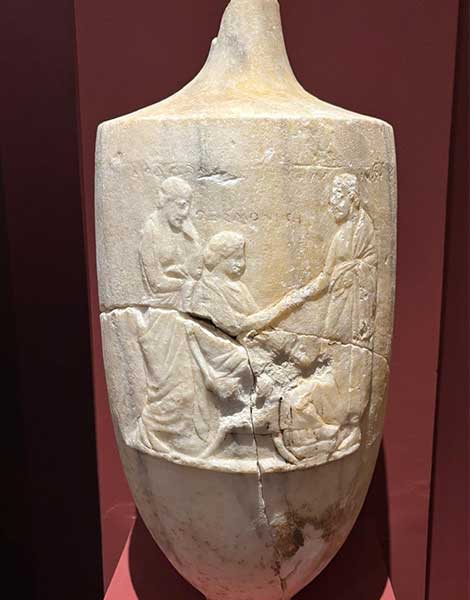
The funerary stele of Thesmoniki.
© Greek Ministry of Culture
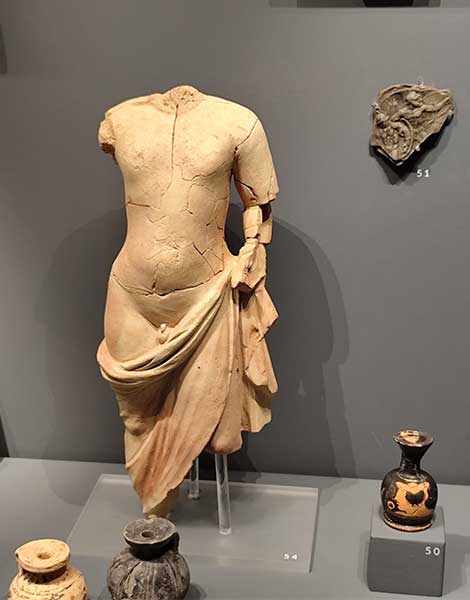
Clay figurine of a semi-nude male figure, from Hephaistia.
© Greek Ministry of Culture
The museum is just the beginning. The Ministry has committed an unprecedented €17.5 million to cultural projects on Limnos – the largest investment the island has ever seen.
Work is already underway at the mysterious Kabeirion, the Sanctuary of the Kabeiroi (chthonic deities), where new trails and audio tours will soon bring visitors closer to one of Greek antiquity’s most enigmatic cult sites. The 19th-century Church of Saint Demetrios in Kontopouli is slated for a full restoration, while in Kondias, the Municipal Gallery of Contemporary Balkan Art is getting a major upgrade.
At Hephaistia, a €1.6 million project – developed in collaboration with Greece’s National Theater and the cultural non-profit DIAZOMA – will improve access to the ancient theater, already the atmospheric stage for summer performances beneath the stars.
And there’s more to come. Plans for a new Diachronic Archaeological Museum promise to add yet another cultural landmark in the years ahead.
All this is unfolding on an island that still feels like Greece once did: wide golden beaches, volcanic hills, and quiet villages where life moves at its own unhurried pace. Now, with fresh opportunities for discovery, Limnos invites travelers to pair sunlit shores with a cultural journey deep into its extraordinary past.
The approved expansion integrates historic architecture,…
Ancient ruins meet modern recipes as…

Twenty-nine rare antiquities spanning 5,000 years…
Cinema meets conservation as Alonissos launches…